Explore Tunis, neighbourhood by neighbourhood
The medina of Tunis, the Bardo Museum and the Ville Nouvelle — plus everything reachable on a day trip from Tunis: Carthage, the Roman north-west around Bizerte and Tabarka, the Sahel coast and the Sahara.
Must-visit areas
The medina of Tunis, the Bardo Museum with its mosaics, and the bay of Carthage with Sidi Bou Said form the core of any first trip to Tunis.

Carthage
Carthage: the Punic and Roman ruins scattered across a Tunis suburb, the multi-site ticket, and an honest guide to what's worth your time.

Dougga
Dougga, a UNESCO-listed hilltop Roman town near Teboursouk, with the most complete theatre, capitol and baths surviving anywhere in North Africa.

El Djem
El Djem's Roman amphitheatre in one visit: opening hours, ticket price, how to get there from Tunis, Sousse or Kairouan, and how long you actually need.

Hammamet
Hammamet's walled medina, the Dar Sebastien gardens and long sandy beaches on Tunisia's Cap Bon coast, about an hour from Tunis.

Kairouan
Kairouan day trip guide: the Great Mosque, Aghlabid basins, medina souks, Sidi Sahbi mausoleum, honest prices and how to get there from Tunis.

Sidi Bou Said
Sidi Bou Said, the blue and white clifftop village near Tunis: what to see, when to go, what it costs, and how to get there by TGM train.

Sousse
Sousse pairs a UNESCO medina and ribat with a package-tourism beach strip. What to see, what to skip, and how to pair it with Monastir and El Jem.

Tunis
Tunis city guide: the medina, Avenue Habib Bourguiba and the Bardo, with honest advice on timing, transport, food and what to skip.

The medina of Tunis
The medina of Tunis: souks, Ez-Zitouna mosque and the old palaces, with a realistic route and honest notes on what's worth your time.
More to explore
Cap Bon with Hammamet and Nabeul, the Roman ruin-cities of the north-west, and the Sahel coast around Sousse and Kairouan — for a second visit or a longer trip.

Le Bardo
Le Bardo district and its national museum: the world's largest Roman mosaic collection, with honest timing advice and how to combine it with Tunis.

Bizerte
Bizerte's old fishing port, Spanish fort and canal, plus day-trip access to Cap Angela, Ichkeul National Park and ancient Utica.

Bulla Regia
Bulla Regia is a Roman site near Jendouba famous for villas built partly underground to escape the heat, with mosaics still in place.

Douz
Douz is where the Sahara begins: a Thursday livestock souk, camel treks and dunes, but a genuinely long haul from Tunis. Here's what to expect.

Kelibia
Kelibia's Byzantine fortress, working fishing port and the best beaches on the Cap Bon peninsula, a full day from Hammamet or Nabeul.

La Goulette
La Goulette, the port town at the edge of Tunis: ferry terminal, seafood restaurants, the old Spanish fort, and its multicultural past.

La Marsa
La Marsa, Tunis's affluent seaside suburb at the end of the TGM line: cafés, corniche, market, and how it fits into a Tunis itinerary.

Matmata
Matmata's pit-dwelling villages, carved into soft sandstone hills, are still inhabited homes as well as the real Star Wars set of Luke Skywalker's farm.

Monastir
Monastir travel guide: the Ribat film-set fortress, Bourguiba's mausoleum, the marina and Skanes beaches, plus honest advice on airport confusion.

Nabeul
Nabeul's Friday market, pottery workshops and orange-blossom stills, a short trip from Hammamet on the Cap Bon peninsula.

Tabarka
Tabarka is a pine-backed coastal town near the Algerian border, known for its Genoese fort, coral history and jazz festival.

Tozeur
Tozeur is the mud-brick oasis town where the Tunisian Sahara begins, with a working palm grove, a walkable old quarter and its own small airport.

Ville Nouvelle and Avenue Habib Bourguiba
Avenue Habib Bourguiba and the Ville Nouvelle: colonial-era Tunis, its cafés, the cathedral and the theatre, and how it links to the medina.

Yasmine Hammamet
Yasmine Hammamet, the purpose-built resort zone south of Hammamet: marina, replica medina, beaches, and how it differs from the real town.
Off the beaten path

Aïn Draham
Aïn Draham is a small hill town in the Kroumirie forest, known for cork oak woodland, cooler air and wild boar country, near Tabarka.

Belvédère and Mutuelleville
Belvédère park and Mutuelleville: Tunis's leafy residential districts, the zoo, embassy row cafés and a quieter side of the capital.

Chott el Jerid
Chott el Jerid is a vast, cracked salt pan between Tozeur and Douz, crossed by a causeway road with mirages, salt roses and roadside stalls along the way.

El Haouaria
El Haouaria's Roman quarry caves, sea cliffs and falconry tradition, at the far northern tip of the Cap Bon peninsula.

Gammarth
Gammarth, the resort suburb at the northern tip of the Tunis coast: hotels, beaches, golf, and how to use it as a base.

Hammam Lif
Hammam Lif, the low-key town south of Tunis at the foot of Jebel Boukornine: hiking, the old Bey's palace, and a beach without the crowds.

Ichkeul National Park
Ichkeul is a UNESCO-listed wetland near Bizerte, a lake and marsh system that hosts hundreds of thousands of migratory birds each winter.

Kerkouane
Kerkouane, a UNESCO-listed Punic city on Cap Bon left untouched by Roman rebuilding, with the clearest street plan of Carthaginian life anywhere.

Korbous
Korbous, a small thermal spring town on Cap Bon's western coast, where hot mineral water has drawn bathers to the cliffs since Roman times.

Ksar Ghilane
Ksar Ghilane is a warm natural spring and a wall of dunes at the edge of the Grand Erg Oriental, reached by 4x4 or camel, with a ruined Roman fort nearby.

Les Berges du Lac
Les Berges du Lac: Tunis's modern lakeside business district, its hotels, malls and waterfront, and who it actually suits.

Mahdia
Mahdia is a Sahel fishing town with a Fatimid past, a walled medina and beaches far calmer than Sousse or Hammamet. What to see and how to get there.

Port El Kantaoui
Port El Kantaoui is a purpose-built marina resort near Sousse, not a historic medina — what the golf, beach and boat trips cost, and who it suits.

Tamerza and the mountain oases
Tamerza, Chebika and Mides are palm oases in a canyon landscape near the Algerian border, with an abandoned village, a waterfall and a canyon used in film.

Testour
Testour is a small Andalusian-founded town on the Medjerda river, known for its distinct mosque minaret and a natural stop between Tunis and Dougga.

Utica
Utica was likely founded before Carthage itself, one of the earliest Phoenician settlements in North Africa, now a quiet inland ruin near Bizerte.

Zaghouan
Zaghouan is a mountain town near Tunis with a Roman water temple, the source of the ancient Carthage aqueduct, and hiking on Jebel Zaghouan.
Best day trips from Tunis on GetYourGuide
Verified deep-linked GetYourGuide tours. Book through these links and we earn a small commission at no cost to you.
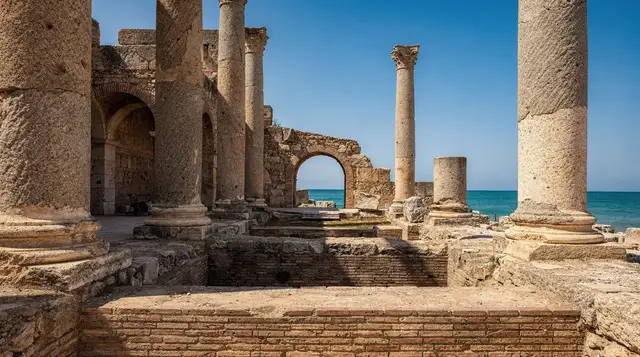
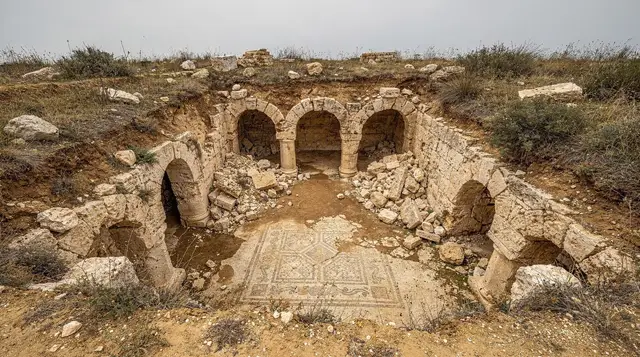
These are our own photographs of Tunisia, not the operator's pictures of this tour — open the tour page to see those.

Good to know about Tunis destinations
Tunis rewards a neighbourhood-by-neighbourhood approach rather than a single checklist, and this destinations hub organises the six regions that matter, from the capital itself out to the edge of the Sahara. At the centre, Tunis combines the UNESCO-listed medina around the Ez-Zitouna Mosque — its courtyard open to visitors, its prayer hall reserved for worshippers — with the wide colonial-era boulevards of the Ville Nouvelle and the mosaic collections of the Bardo Museum, one of the richest in the Mediterranean.
A short TGM ride away, Carthage and the bay group the Punic and Roman ruins of ancient Carthage with the blue-and-white hill town of Sidi Bou Said, the seafront suburb of La Marsa and the ferry port of La Goulette. Cap Bon, the peninsula east of the capital, holds the resort towns of Hammamet and Nabeul, known for its pottery, along with Kelibia, the Punic town of Kerkouane and the hot springs at Korbous.
Inland, the Roman north-west spreads the ruin-cities of Dougga and Bulla Regia across rolling farmland, alongside the Andalusian town of Testour, the market town of Zaghouan below its own mountain, and quieter Utique on the coast; further north, Bizerte's old port and the wetlands of Ichkeul National Park extend the region toward Tabarka. South along the coast, the Sahel groups the holy city of Kairouan, the UNESCO medina of Sousse, the amphitheatre at El Djem — one of the best-preserved in the Roman world — and the resort towns of Monastir and Mahdia.
Furthest out, the Sahara is reachable from Tunis on a two- to three-day circuit through Douz, Tozeur, the troglodyte village of Matmata, the salt flats of Chott el Jerid and the desert camp at Ksar Ghilane, rather than as a single day out. Together these six regions give a first-time visitor a realistic sense of how far Tunis reaches, and this hub links through to a fuller destination-by-destination breakdown of each one.
Frequently asked questions about Tunis destinations
What's the best area to base yourself in for a first visit to Tunis?
Most first-time visitors base themselves in central Tunis, within walking distance of the medina and a short TGM ride from Carthage and Sidi Bou Said. Staying in the Ville Nouvelle puts you close to restaurants and transport links; the coastal suburbs of La Marsa or Gammarth suit travellers who want a beach nearby. There's no single right answer — it depends on whether heritage sites or the seaside matter more to your trip.
Which day trip regions does this hub cover?
This hub covers Carthage and the bay, Cap Bon, the Roman north-west, the Sahel and the Sahara, each reachable from a Tunis base with day trips or, for the Sahara, a two- to three-day circuit. Every region has its own dedicated page with practical planning details.
Is the Roman north-west worth visiting alongside Tunis itself?
Yes — Dougga and Bulla Regia are among the best-preserved Roman sites in North Africa, and neither gets the crowds that Carthage does. They pair naturally with the Andalusian town of Testour or a stop in Zaghouan, and both are manageable as a single day trip from Tunis.
What's the difference between the medina of Tunis and the Ville Nouvelle?
The medina is the walled historic core around the Ez-Zitouna Mosque, with narrow souks, artisan workshops and centuries-old houses. The Ville Nouvelle is the colonial-era district built from the late 19th century onward, centred on Avenue Habib Bourguiba, with wider boulevards, cafés and the modern city's main shopping streets. Most visitors walk between the two in a single afternoon.
How far can I realistically get from Tunis on a day trip?
Carthage, Sidi Bou Said and most of Cap Bon are comfortable half-day or day trips. Dougga, Bulla Regia, Kairouan and El Djem are further but still doable in a long day by car or organised tour. The Sahara is the exception — Douz, Tozeur and Matmata need a two- to three-day circuit, not a single day out.