Tunisian food: a first-timer's guide
What is Tunisian food like compared to other North African cuisines?
Tunisian food is spicier than its Moroccan or Algerian neighbours, built around harissa, olive oil and fresh seafood along the coast. Couscous is the national dish, but daily eating leans on brik pastries, lablabi soup and grilled fish rather than the tagines and pastilla associated with Morocco. Expect bold chilli heat, lots of bread, and strong mint tea after most meals.
Tunisian food surprises a lot of first-time visitors, mostly because it doesn’t match the North African cliché they arrive with. There’s no tagine simmering for hours here, or at least not the Moroccan kind. Instead you get a cuisine built on chilli heat, olive oil, fresh bread and whatever came off the boat that morning. It’s closer in spirit to a Mediterranean coastal cuisine with a serious Arab-Andalusian backbone than to its western neighbours, and it rewards a bit of homework before you sit down. This guide covers the staples, the spice cupboard, how meals are structured through the day, and what to actually expect on a plate in Tunis, Hammamet and Sousse.
| Aspect | What to expect |
|---|---|
| National dish | Couscous, usually on Fridays |
| Spice level | Medium to hot — harissa is standard, not optional |
| Typical meal cost | Around 15-35 TND (€4.50-€10.50) at a local restaurant |
| Best area to eat | Tunis medina and La Marsa for range and quality |
| Vegetarian-friendly | Workable but requires some vigilance around stock and shared oil |
Harissa and the Tunisian spice cupboard
Harissa is the closest thing Tunisia has to a national condiment, and it shapes the character of the whole cuisine more than any single dish does. It’s a paste of dried red chillies, garlic, olive oil and a spice mix that usually includes caraway and coriander seed, and it turns up on the table before you’ve even ordered — often with bread and olives as a starter you didn’t ask for but will be charged a small amount for. Restaurant versions vary wildly in heat, from a mild table condiment to something that will genuinely catch you off guard, so it’s worth tasting a little on bread before spooning it liberally onto a main course.
Beyond harissa, the everyday spice cupboard leans on caraway (kammoun), coriander, cinnamon in savoury dishes, and tabil, a dried spice blend of coriander, caraway, garlic and chilli flakes that goes into stews and grilled meat marinades. None of this is subtle in the way some people expect Mediterranean food to be subtle — Tunisian cooking likes flavour up front. If you want a deeper dive into the spice side specifically, there’s a dedicated guide to harissa and Tunisian spices that goes further into regional variations and how to buy it to take home.
Couscous: the national dish, and its regional forms
Couscous is Tunisia’s Friday lunch institution, traditionally the dish that gathers a family together at the end of the week, and it’s UNESCO-recognised as part of the region’s intangible heritage. Tunisian couscous differs from its neighbours mainly in the sauce: it’s typically a red, harissa-tinted broth rather than the yellow, saffron-and-spice version more associated with Morocco. Fish couscous is a coastal speciality worth seeking out around La Goulette and along the Sousse waterfront, while lamb or chicken couscous with root vegetables is the more common inland version.
Portion sizes at tourist-facing restaurants are often scaled down and the sauce muted for foreign palates, so if you want the real, fiery version, smaller neighbourhood places tend to deliver it more honestly than anywhere with a laminated multilingual menu. There’s a full breakdown of the dish and its cousin brik in the couscous and brik explained guide, which is worth reading before you order if you want to understand what you’re being served.
Brik: the fried egg pastry everyone eventually eats standing up
Brik is a thin, almost paper-like pastry (malsouka) folded around a filling — classically a whole raw egg, tuna, capers and parsley — then fried quickly so the egg yolk stays runny inside a crisp shell. Eating one without breaking the yolk down your hand is a genuine local skill, and most visitors fail at least once before they learn the trick of eating it standing up, angled away from their clothes, which is exactly how a lot of Tunisians eat it too. It’s a starter more than a main, usually costing around 5-9 TND (€1.50-€2.70), and it’s one of the most reliable street and café orders you’ll find anywhere in the country.
Guided tour of the medina of Tunis with Tunisian street food tasting is a good way to try brik alongside several other street staples in one sitting, with someone who can point out the better stalls before you commit to a plate on your own. For a more personal take on the mess of eating one solo, the blog post on eating brik standing up covers the technique in more detail than any menu ever will.
Tunisian tajine: not what you think it is
This one trips up almost every first-time visitor, so it’s worth being direct about it: a Tunisian tajine has nothing to do with the Moroccan stew of the same name, and it isn’t cooked in a conical clay pot either. It’s a dense, baked dish of eggs, cheese and usually meat or vegetables, closer in texture and construction to a crustless quiche or a firm frittata than to anything simmered. It’s typically cut into squares or wedges and served at room temperature or slightly warm, often as part of a mezze spread rather than a hot main course straight from the oven.
If you order “tajine” expecting a saucy stew with vegetables piled around a piece of lamb, you’ll be confused by what arrives — and that confusion is common enough that it’s worth mentioning to anyone travelling on to Morocco afterwards, since the word means something completely different there. If you’re weighing up a wider first trip between the two countries, the Tunisia vs Morocco for a first trip guide covers a few more of these false-friend moments.
Lablabi: the chickpea soup that runs at odd hours
Lablabi is a warming chickpea soup built on a garlic and cumin-spiced broth, poured over stale bread, then topped with a soft or poached egg, harissa, capers, olive oil and sometimes preserved lemon or tuna. It’s cheap, filling, and traditionally a breakfast or late-night dish rather than a lunch order — you’ll see it served at small hole-in-the-wall spots as early as dawn and again well after midnight, which makes it one of the more useful things to know about if you’re jet-lagged or just hungry at an unusual hour. A bowl typically runs around 4-7 TND (€1.20-€2.10).
It’s an unglamorous dish by design, closer to comfort food than to anything a restaurant dresses up for visitors, and that’s exactly its appeal. The stalls doing it best are rarely the ones with English menus.
Seafood along the coast
Given the coastline, seafood is a serious part of Tunisian eating rather than an afterthought, particularly around La Goulette, La Marsa and the ports near Sousse. Grilled fish sold by weight, fried calamari, octopus salad and the fish version of couscous mentioned earlier are all worth prioritising over inland meat dishes if you’re near the water.
La Goulette specifically has a reputation as the go-to seafood strip for Tunis residents on a weekend, with rows of grill restaurants where you pick your fish from a display case before it’s weighed and cooked. There’s a dedicated guide to seafood in La Goulette and La Marsa if that’s a priority for your trip, covering which spots are tourist-priced and which aren’t.
Mechouia salad, a smoky roasted pepper, tomato and garlic salad usually dressed with olive oil and sometimes topped with tuna and boiled egg, is another coastal-leaning staple that pairs naturally with grilled fish and turns up on most mezze spreads.
Bread, olive oil and pastries
Khobz tabouna is the traditional Tunisian bread, baked in a tabouna clay oven and recognisable by its slightly domed, chewy texture and scorched underside. It’s the bread you’ll be handed by default at most local restaurants, and it does real work at the table — used to scoop lablabi, mop up harissa-stained oil, and generally stand in for cutlery more often than you’d expect. Olive oil underpins nearly everything here; Tunisia is one of the world’s largest olive oil producers, and the quality at even modest restaurants is often better than what most visitors are used to at home.
On the sweet side, makroudh — semolina pastry filled with date paste, fried or baked, then dipped in syrup — is the most recognisable Tunisian pastry, alongside various baklawa styles that differ from the Turkish or Levantine versions mainly in their heavier use of almond and orange blossom water. Pastry shops in the Tunis medina and around Sidi Bou Said sell these by weight, and it’s normal to buy a small mixed box rather than committing to a single type. The Tunisian pastries and sweets guide goes through the main varieties in more depth if this is a particular interest.
| Dish | What it is | Where to find it |
|---|---|---|
| Harissa | Chilli and garlic paste, served with almost everything | Every restaurant table, souks for jars to take home |
| Couscous | Semolina with harissa-tinted broth, meat, fish or vegetables | Family restaurants, especially on Fridays |
| Brik | Fried pastry with a runny egg inside | Street stalls, cafés, medina food tours |
| Tunisian tajine | Baked egg-and-cheese dish, not a stew | Mezze-style restaurants, home cooking |
| Lablabi | Chickpea soup over bread with egg and harissa | Early-morning and late-night stalls |
| Mechouia | Roasted pepper and tomato salad | Coastal restaurants, mezze spreads |
| Makroudh | Date-filled semolina pastry | Pastry shops in the medina and Sidi Bou Said |
Drinks: mint tea, coffee and where alcohol fits in
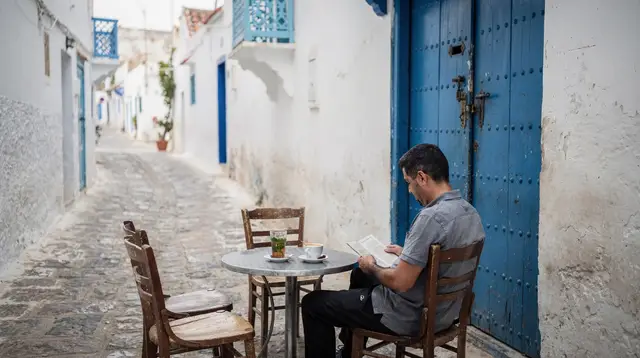
Mint tea, often made with pine nuts (thé aux pignons) as a Tunis speciality, is the default way most meals and café stops end, poured strong, sweet and hot regardless of the season. Coffee culture runs in parallel, with small espresso-style cups and a slower, sit-and-watch-the-street pace that’s worth building into any itinerary rather than treating cafés as a quick refuelling stop. The mint tea and café culture guide covers where this is done best around the capital.
Tunisia is a majority Muslim country, but it isn’t dry — alcohol is legally available and Tunisia has its own wine industry, along with local beer (Celtia is the standard lager). That said, it’s mostly confined to licensed restaurants, hotel bars and specific shops rather than being sold everywhere, and it disappears from general sale in many places during Ramadan. Some traditional restaurants in the medina don’t serve it at all. If wine is a genuine interest, the Tunisian wine guide covers the country’s small but distinct wine regions.
Meal structure and timing
Meal timing in Tunisia runs later than a lot of visitors expect, particularly for dinner. Breakfast tends to be light — bread, olive oil, sometimes a version of lablabi as mentioned above — while lunch, especially the Friday couscous lunch, is often the largest meal of the day. Dinner in restaurants rarely gets busy before around 8pm, and later starts are completely normal, especially in summer.
| Meal | Typical timing | What’s eaten |
|---|---|---|
| Breakfast | 7am-9am | Bread, olive oil, jam, sometimes lablabi |
| Lunch | 12pm-2:30pm | Couscous (especially Fridays), grilled meat or fish |
| Café stop | Any time, especially late afternoon | Mint tea, coffee, pastries |
| Dinner | 8pm onward | Mezze, brik, seafood, tajine-style dishes |
During Ramadan, this entire rhythm shifts: daytime eating in public is largely paused, and the evening iftar meal becomes a major event built around dates, soup (often chorba or lablabi-style), brik and a wider spread than usual once the sun goes down. Visiting during Ramadan is entirely possible but changes what’s open and when — the eating in Tunis during Ramadan guide is worth reading if your dates overlap.
Vegetarian realities
Tunisian food isn’t built around vegetarian eating the way some Mediterranean cuisines are, but it’s workable with a bit of care. Mechouia salad, vegetable couscous, brik filled with cheese or vegetables instead of tuna, and various bean and chickpea dishes are all genuinely meat-free options that appear on most menus. The complication is usually stock — meat or fish stock turns up in soups and sauces more often than the menu makes obvious, so it’s worth asking directly if that matters to you, particularly with lablabi and couscous broths. Shared frying oil for meat and vegetable items is also common at street stalls, which is worth knowing if you’re avoiding meat for reasons beyond simple preference.
Dining customs and tipping
Tunisian restaurant culture is relaxed rather than formal, even in mid-range places, and it’s completely normal for a table of bread, olives and a harissa dip to arrive before you’ve ordered anything — this is usually charged as a small couvert fee rather than being complimentary. Portions tend to be generous, and sharing several starters across a table is common practice rather than something you need to ask permission for.
Tipping isn’t obligatory but is genuinely appreciated and increasingly expected in restaurants used to visitors — rounding up the bill or leaving around 5-10% is standard practice, more in cash than added to a card payment. The tipping in Tunisia guide covers the wider picture beyond restaurants, including taxis and guides. For a sense of what a day of eating actually costs across meals, snacks and drinks, the budget tool and the is Tunis expensive post are both useful references, and the currency tool is handy for converting dinar prices on the fly.
If you’d rather have a local explain all of this in person rather than read about it, La Marsa: Tunisian cooking class with market tour pairs a market visit with hands-on cooking, which answers most of the “what am I actually eating” questions in one afternoon. For a shorter, tasting-led option outside the capital, both Hammamet: Street Food Tour with Local Guide and Sousse: Street Food Walking Tour with Tastings cover a similar spread of dishes in those coastal towns.
Frequently asked questions about eating in Tunisia for the first time
Is Tunisian food very spicy?
It’s spicier than Moroccan or Algerian food on average, mainly because of harissa’s role as a near-default condiment, but “spicy” here usually means warming chilli heat rather than punishing. You can ask for harissa on the side almost anywhere if you’d rather control the heat yourself.
What’s the difference between Tunisian and Moroccan tajine?
They share only the name. Moroccan tajine is a slow-cooked stew, often named after the conical clay pot it’s cooked in. Tunisian tajine is a baked dish of eggs, cheese and usually meat or vegetables, served in squares, closer to a quiche than a stew.
Is it safe to eat street food in Tunis?
Busy stalls with high turnover, particularly for brik and grilled items cooked to order, are generally a safe and reliable choice. As with most destinations, it’s the food that’s been sitting around at room temperature rather than freshly fried or grilled that’s worth being more cautious about.
Can vegetarians eat well in Tunisia?
Reasonably well, though it takes a little effort. Mechouia salad, vegetable couscous, cheese-filled brik and various chickpea and bean dishes are all solid options, but it’s worth asking about stock in soups and sauces, since meat or fish stock is used more often than menus make clear.
What should I try if I only have one meal in Tunis?
A plate of couscous, ideally on a Friday when it’s most traditionally served, gives you the clearest single introduction to the cuisine’s flavour profile. If timing doesn’t allow that, a lablabi followed by brik covers two of the most distinctive dishes in one sitting.
Is alcohol available in Tunisia?
Yes, in licensed restaurants, hotel bars and specific shops, and Tunisia produces its own wine and beer. It’s not sold as universally as in most European countries, and availability tightens during Ramadan, so it’s not something to assume you’ll find at every restaurant.
How much should I tip at a restaurant in Tunis?
Around 5-10% in cash is standard at restaurants used to visitors, and rounding up the bill is common at more local spots. It’s appreciated rather than strictly obligatory, but increasingly expected in tourist-facing areas.
What’s the best area in Tunis to try a range of Tunisian food?
The Tunis things-to-do hub and the Tunis medina destination guide both cover this in more depth, but broadly the medina gives the widest concentration of street food and small local restaurants, while La Marsa and Sidi Bou Said suit sit-down café culture and seafood. The food and drink hub rounds up more specific options across both.
Do I need to book restaurants in advance in Tunis?
Generally no, except for well-known seafood spots in La Goulette on weekends, when locals turn out in numbers. Most medina and neighbourhood restaurants operate on a walk-in basis without issue.
Tunis food & drink tours on GetYourGuide
Verified deep-linked GetYourGuide tours. Book through these links and we earn a small commission at no cost to you.
These are our own photographs of Tunisia, not the operator's pictures of this tour — open the tour page to see those.