Tunisia or Morocco for a first trip?
Should my first North Africa trip be Tunisia or Morocco?
Tunisia is the easier, more compact first trip: a genuinely walkable capital, a coastline you can cross in an afternoon, Roman ruins as dense as anywhere in the Mediterranean, and a Sahara that's reachable within a day's drive of Tunis. Morocco is bigger and more varied — the Atlas mountains, Marrakech and Fes both worth days each, a longer Atlantic and Mediterranean coastline — but that scale means more internal travel and a longer trip to see properly. If you have a week or less and want to cover ground without feeling rushed, Tunisia fits better. If you have ten days or more and want more geographic variety, Morocco has more to offer.
Tunisia and Morocco get mentioned in the same sentence constantly, and for good reason: both sit on the Mediterranean and Atlantic edge of North Africa, both mix Arab, Berber and French colonial history into cities built around old medinas, and both have become established, well-served destinations for European travellers looking for something outside the usual circuit.
But they’re genuinely different trips, not variations on the same one, and the honest comparison isn’t about which country is “better” — it’s about which fits a first-timer’s available time, budget and appetite for distance. This page compares them directly on the points that actually change a trip: size, cost, safety, Roman versus Islamic-era heritage, ease of independent travel, and how far you can realistically get in a week.
| Where | Tunisia: compact, roughly 400 km north to south of populated territory. Morocco: substantially larger, coast to Atlas to Sahara |
| Cost | Both budget-friendly by European standards; Tunisia is generally the cheaper of the two on food and transport |
| Time needed | Tunisia: a week gives a genuinely full trip. Morocco: ten days or more is closer to comfortable for the same breadth |
| Getting there | Both roughly 2.5–3.5 hours by direct flight from most western European hubs |
| Best time | Tunisia: October–April, avoiding peak summer heat. Morocco: similar, with the Atlas adding cooler high-altitude options |
Size and how far you can actually travel
This is the single biggest practical difference. Tunisia’s populated, tourist-relevant territory is genuinely compact — Tunis, the northern coast, Kairouan and the Roman interior, and the desert gateway towns of the south are all reachable within a day’s drive of each other or of the capital, which means a one-week trip can realistically include the capital, the coast and a taste of the Sahara without feeling like a series of exhausting transfers.
How many days do you need in Tunis? and one week in Tunis and its region both work from this compactness directly. Morocco covers considerably more ground — Marrakech, Fes, the Atlas mountains and the Sahara near Merzouga sit at real distances from each other, often six or more hours apart by road, which means a first-timer’s week in Morocco tends to mean choosing one region properly rather than attempting all of them, or accepting several long travel days.
Cost: both affordable, Tunisia generally cheaper still
Neither country will strain a European travel budget the way western Europe itself does, but Tunisia tends to run somewhat cheaper across the board — street food, local transport, mid-range hotels and museum entry are all generally less expensive than Moroccan equivalents in comparable cities, partly reflecting Morocco’s more established, higher-volume international tourism market driving prices up in its headline destinations.
What a trip to Tunis actually costs and the budget planning tool break down real Tunisia numbers. That said, the gap narrows outside Morocco’s most touristed cities, and both countries offer a genuinely wide range depending on how you travel — backpacking either can be done cheaply, and either can be done in comfort without excessive cost.
| Tunisia | Morocco | |
|---|---|---|
| Geographic scope | Compact; capital, coast and desert within a day’s reach of each other | Larger; regions often 6+ hours apart by road |
| First-trip time needed | A genuinely full week | Ten days or more for comparable breadth |
| General cost level | Generally cheaper across food, transport, mid-range hotels | Slightly higher, especially in headline tourist cities |
| Roman-era heritage | Dense and exceptionally well preserved (Dougga, El Djem, Carthage) | Present but comparatively limited (Volubilis) |
| Sahara access from the capital | Within a day’s drive from Tunis | A longer overland trip from Marrakech or Fes to Merzouga |
| Mountain scenery | Limited (Kroumirie forests, Jebel Zaghouan) | Significant (High and Middle Atlas) |
Roman heritage: Tunisia’s clearest edge
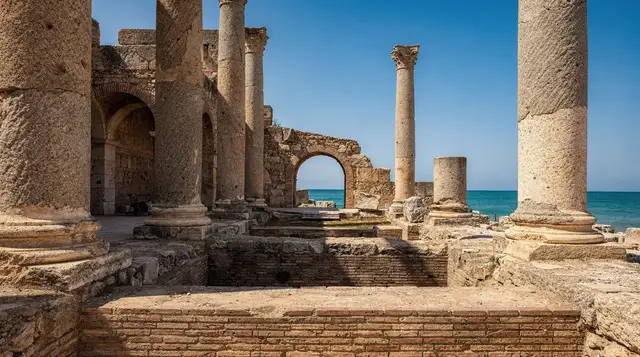
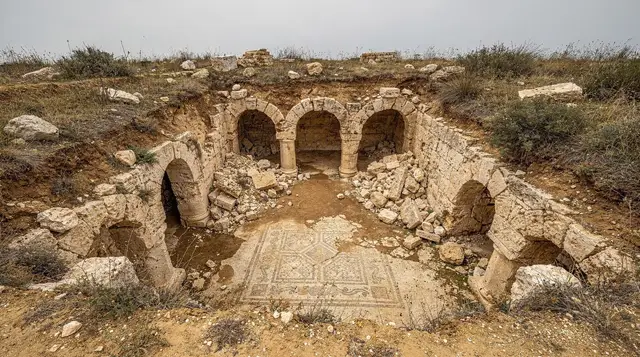
If ancient history, specifically the Roman era, is a genuine draw for your first North Africa trip, Tunisia has a real, measurable advantage. The country holds an unusually dense concentration of exceptionally well-preserved Roman sites — Dougga, widely regarded as one of the best-preserved Roman towns in North Africa, the vast amphitheatre at El Djem, and Carthage itself, spread across the coast just outside the capital.
Roman sites near Tunis, ranked and Dougga: the best-preserved Roman town in North Africa cover what’s genuinely worth the detour. Morocco’s most significant comparable site, Volubilis near Meknes, is a real and worthwhile ruin but doesn’t match Tunisia’s breadth or density of comparably preserved locations. For a first trip weighted specifically toward ancient history rather than Islamic-era architecture or mountain scenery, this tips meaningfully toward Tunisia.
A day trip discovering Kairouan and El Jem covers two of Tunisia’s genuine heritage highlights, the fourth holiest city in Islam and one of the best-preserved Roman amphitheatres anywhere, in a single organised day — a fairly efficient illustration of how much heritage density Tunisia packs into a compact geography.
The Sahara from each country
Both countries offer real Sahara access, and both are commonly marketed around it, but the practicalities differ. From Tunis, the desert gateway towns of Douz and Tozeur are reachable within a single long day’s drive, roughly six to seven hours, which is why a genuine Sahara add-on fits comfortably into a one-week Tunisia trip. A three-day Sahara desert camel trek from Douz illustrates how directly a Tunisia-based Sahara excursion connects to the rest of a trip.
Morocco’s most famous Sahara access point, Merzouga near the Erg Chebbi dunes, sits considerably further from Marrakech or Fes, typically involving an overnight stop en route through the Atlas mountains, which makes it a bigger commitment of both time and distance, albeit one that comes paired with genuinely spectacular mountain scenery along the way that Tunisia’s flatter route to the south doesn’t offer.
Mountains: Morocco’s clearest edge
If dramatic mountain landscape is what you’re after, Morocco has the clearer advantage. The High and Middle Atlas ranges offer scale, altitude and hiking that Tunisia’s more modest hill country, around Aïn Draham’s Kroumirie forests or Jebel Zaghouan, simply doesn’t match. Hiking trails on Cap Bon and climbing Jebel Zaghouan cover Tunisia’s best options honestly, but they’re modest hikes by comparison, not multi-day mountain trekking. Anyone whose first North Africa trip is primarily about mountain scenery and trekking will find Morocco offers meaningfully more.
Safety and ease of independent travel
Both countries are well-established, safe destinations for international visitors by any reasonable standard, with tourist infrastructure built up over decades in both cases. Is Tunis safe? An honest answer covers Tunisia’s specifics directly. Where the two differ somewhat is in the intensity of tourist-facing hassle in the most visited areas — Marrakech’s medina in particular has a reputation, not entirely undeserved, for more persistent touting and higher-pressure bargaining than Tunis’s medina typically involves, though this varies considerably by season and specific location within either city.
Tourist traps and scams in Tunis and bargaining in a Tunisian souk without getting it wrong cover Tunisia’s version of this honestly. Neither difference should be a deciding factor on its own, but it’s a real, commonly reported distinction between the two.
Solo and female travellers
Both countries are visited regularly and successfully by solo and female travellers, and neither should be ruled out on that basis alone. Travelling solo in Tunis and Tunisia for female travellers cover Tunisia’s specific considerations, which broadly mirror the standard advice for either country: dressing modestly outside beach resorts, expecting more attention in busy market areas, and being selective about walking alone late at night in unfamiliar districts. Neither country presents a fundamentally different risk profile from the other for a first-time solo visitor exercising ordinary caution.
Food: different strengths
Both cuisines share North African staples like couscous, but they diverge in emphasis. Tunisian food leans more heavily on chilli heat, most visibly through harissa, and includes dishes like brik, a thin pastry parcel fried and filled with egg, that don’t have a close Moroccan equivalent. Tunisian food: a first-timer’s guide and harissa and the Tunisian spice cupboard cover this in depth.
Morocco’s food culture is built more around slow-cooked tagines and a wider range of sweet-savoury combinations, with mint tea playing an even more central social role than it does in Tunisia. Neither is objectively better; the choice comes down to whether spice-forward or slow-braised cooking appeals more.
Visa and entry requirements
Both countries are straightforward for most European, North American and many other passport holders, generally allowing visa-free entry for tourist stays of up to ninety days, though requirements do vary by nationality and it’s worth confirming current rules before booking either trip rather than assuming they haven’t changed.
Visas and entry rules for Tunisia covers Tunisia’s specifics directly, including passport validity requirements and what to expect at Tunis-Carthage or Enfidha-Hammamet airport on arrival. Morocco’s entry process is broadly similar in structure for most nationalities, though the two countries’ rules don’t always match exactly, so checking each independently rather than assuming parity is the safer approach if your itinerary might include both on a longer trip.
Getting around once you’re there
Independent travel logistics differ meaningfully between the two. Tunisia’s rail network connects several of the country’s major towns, and louages, shared taxis that leave once full, cover routes the trains don’t reach, making independent travel without a rental car genuinely workable for a confident traveller. Louages: how Tunisia’s shared taxis work and trains in Tunisia cover both options.
Morocco’s equivalent network of trains and grand taxis serves a similar function across a larger area, though the greater distances involved mean more hours spent in transit for the same number of stops. Car hire is common and straightforward in both countries for travellers who prefer to self-drive rather than rely on shared transport, with Tunisia’s more compact road network generally making a self-drive itinerary less demanding to plan than Morocco’s larger one.
A realistic first week: what fits
For a first trip of around a week, Tunisia’s compactness lets you cover a genuine mix without feeling rushed: a few days in Tunis and its immediate coast, a Roman-heritage day or two inland, and a taste of the Sahara if the schedule allows it. A six-day tour from Tunis, Sousse or Monastir covering southern Tunisia is a reasonable illustration of how much ground a well-planned week can cover without excessive transfer time.
For travellers wanting a genuinely comfortable southern add-on rather than a basic camp, a South Tunisia tour with a luxury desert bivouac stay shows the more comfortable end of what’s available. The equivalent week in Morocco, by contrast, more realistically covers one region properly — Marrakech and a nearby Atlas excursion, say — rather than the full breadth of coast, mountains and desert that the country as a whole offers.
If you’re weighing tour size too
Regardless of which country you choose, the private-versus-group decision applies equally to either. Private or group tours in Tunisia? covers that trade-off in detail specifically for Tunisia, and the same underlying logic — cost against flexibility — carries over to Morocco’s equivalent tour market.
Mistakes to avoid
Frequently asked questions about choosing Tunisia or Morocco
Which country is cheaper for a first trip?
Tunisia, generally, across food, local transport and mid-range accommodation, though the gap narrows outside Morocco’s most touristed cities like Marrakech and Fes.
Which is better for Roman history?
Tunisia, clearly. Dougga, El Djem and Carthage together offer a density and quality of preserved Roman sites that Morocco’s comparable site, Volubilis, doesn’t match on its own.
Which is better for mountain scenery?
Morocco, with the High and Middle Atlas offering scale and trekking that Tunisia’s more modest hill country doesn’t provide.
Can I see the Sahara properly on a one-week trip to either country?
More easily from Tunisia, where Douz and Tozeur sit within a single day’s drive of Tunis. From Morocco, reaching Merzouga from Marrakech or Fes typically requires an overnight stop, making it a bigger piece of a short trip.
Is one country safer than the other for a first-time visitor?
Both are well-established, safe destinations for international travellers. The more notable difference is the intensity of tourist-facing hassle in the busiest medina areas, which is somewhat more persistent in parts of Marrakech than in central Tunis.
Which country suits a shorter trip, say five to seven days?
Tunisia, given its compact geography — a week covers the capital, coast, Roman heritage and a Sahara taste without excessive transfer time, which the same duration struggles to do across Morocco’s larger territory.
Is the food very different between the two countries?
Related but distinct. Tunisian cooking leans more on chilli heat and dishes like brik; Moroccan cooking centres more on slow-cooked tagines and a wider range of sweet-savoury pairings.
Should solo or female travellers prefer one country over the other?
Both are regularly and successfully visited by solo and female travellers using ordinary precautions. Neither presents a fundamentally different risk profile that should decide the choice on its own.
Popular Tunis experiences on GetYourGuide
Verified deep-linked GetYourGuide tours. Book through these links and we earn a small commission at no cost to you.
These are our own photographs of Tunisia, not the operator's pictures of this tour — open the tour page to see those.