Tunisian pastries and sweets
What are the Tunisian pastries worth trying first?
Makroudh, a diamond-shaped semolina cake filled with date paste and either fried or baked before being dipped in syrup, is the pastry most associated with Tunisia. Baklawa and kaak warka (rolled almond pastries dusted in sugar) are close behind, and both are far better bought fresh from a dedicated pâtisserie than from a supermarket shelf.
Tunisian pastries lean heavily on three things: semolina rather than wheat flour, dates rather than refined sugar as a filling, and a soak in syrup or honey after baking rather than icing on top. That combination produces something denser and less sweet-tasting on first bite than French-style pâtisserie, even though the sugar content is often just as high once the syrup has soaked all the way through. This page covers the pastries you’ll actually encounter walking through Tunis — what’s in them, which ones are worth seeking out fresh, and where a shop earns the trip versus where a supermarket shelf will do fine.
| Where | Dedicated pâtisseries in the medina and Ville Nouvelle, market stalls, some cafés |
| Cost | Roughly 1–3 TND (about €0.30–1) per piece, sold by weight or by the piece |
| Time needed | 20–30 minutes for a shop visit; longer if you want to watch or learn to make one |
| Getting there | Walkable in central Tunis; most good pâtisseries cluster around the medina and Avenue Bourguiba |
| Best time | Year-round, though quantities increase sharply around Eid and Ramadan |
Makroudh: the pastry most associated with Tunisia
Makroudh is the pastry visitors are most likely to be handed as a first taste, and for good reason — it’s the one most specifically Tunisian rather than shared broadly with neighbouring cuisines. It’s a diamond-shaped semolina cake, made from a dough enriched with a little oil, filled with a thick date paste pressed into the centre before baking or shallow-frying, then dipped in a hot sugar syrup while still warm so it soaks all the way through rather than sitting as a glaze on top.
Two versions are common: makroudh el-koucha, baked, slightly firmer and less sweet, and the fried version, softer and noticeably richer. Both are sold everywhere from dedicated pâtisseries to market stalls, but freshness matters more here than with most pastries — a piece made that morning is markedly better than one that’s sat in a display case for days, since the syrup soak dries out and the semolina toughens.
Baklawa and kaak warka: the almond family
Baklawa in Tunisia follows the same broad family found across the eastern Mediterranean — thin pastry layers, chopped nuts, syrup — but Tunisian versions lean more on almonds and pistachios than walnuts, and tend to be cut into smaller, denser pieces than the Levantine style some travellers will know. Kaak warka is a different shape entirely: a rolled, crescent-shaped pastry filled with a smooth almond paste, baked until pale gold, and finished with a heavy dusting of icing sugar rather than syrup. It’s less sweet on first bite than makroudh, since the sugar sits on the outside rather than soaked through, and travels slightly better as a result, which makes it a common choice for a gift box rather than something eaten immediately.
Kaak and ghraiba: the everyday biscuits
Alongside the more elaborate syrup-soaked pastries sits a category of drier, simpler biscuits meant for everyday eating rather than celebration. Kaak (a different item from kaak warka despite the shared name) are ring-shaped, semolina-based biscuits, sometimes plain and sometimes filled with dates, closer to a rusk in texture than a soft pastry — the kind of thing served alongside tea rather than as a dessert in its own right. Ghraiba is a shortbread-style biscuit, crumbly and rich with either almond or coconut worked through the dough, usually round and cracked slightly on top. Neither needs refrigeration or careful handling, which makes both far easier to pack for the trip home than anything syrup-based.
Where the good pâtisseries actually are
Quality varies more between pastry shops in Tunis than between the pastries themselves, and a shop that’s clearly making everything on site — visible ovens, trays coming out warm, a queue of locals rather than only tourists — is a reliable sign worth trusting over a shopfront stacked with pre-boxed trays. The medina has several long-standing pâtisseries worth seeking out specifically rather than buying from the first stall you pass, and Avenue Habib Bourguiba and the surrounding Ville Nouvelle streets have a handful of well-regarded French-Tunisian bakeries that do both styles well.
A walk through a walking route through the medina of Tunis that factors in a pastry stop partway through is a reasonable way to combine the two, and the medina of Tunis destination page has more on the general layout.
Pastries sit comfortably alongside the rest of the local table, so it helps to read this page next to the wider Tunisian food guide and the street food in Tunis, which cover the savoury side of a day’s eating. If you are building a longer wander around the old town, the souks of Tunis and the restaurants of the Tunis medina make natural neighbours for a pastry stop.
Comparing the main pastries
| Pastry | Base | Filling / topping | Texture | Best bought |
|---|---|---|---|---|
| Makroudh | Semolina | Date paste, syrup-soaked | Dense, moist | Fresh, same day |
| Baklawa | Filo-style layers | Almonds, pistachios, syrup | Layered, sticky | Fresh, boxed for travel |
| Kaak warka | Rolled pastry | Almond paste, icing sugar | Soft, dry-finished | Fresh or boxed, travels well |
| Kaak (ring) | Semolina | Plain or date | Dry, rusk-like | Any time, keeps well |
| Ghraiba | Shortbread | Almond or coconut | Crumbly | Any time, keeps well |
Buying to eat now versus buying to take home
This is worth thinking through before you buy, since the two goals push toward different pastries. Anything syrup-soaked — makroudh especially — is at its best within a day or two and doesn’t travel well over a long flight, since the texture changes as it dries and the syrup can leak if not packed carefully. Kaak warka, kaak and ghraiba all keep considerably better, often for a week or more without refrigeration, and are the more sensible choice if the pastries are meant as a gift rather than an immediate snack. Most established pâtisseries will box a mixed selection for travel on request and know which of their own products hold up best, so it’s worth asking rather than guessing.
Ramadan and Eid: when the pastry shops are busiest
Pastry consumption in Tunisia rises sharply around Ramadan and especially Eid, when family visits are built around trays of sweets and pâtisseries produce far higher volumes than the rest of the year. Visiting during this period means fresher stock and a wider range on display, but also longer queues and shops that sell out of popular items earlier in the day than usual. If your trip overlaps with either period, travelling in Tunisia during Ramadan and eating in Tunis during Ramadan both cover how daytime eating and restaurant hours shift, which affects pastry shop hours as much as any other food business.
Learning to make them, rather than just buying them
Watching a pastry made rather than only eating the finished product changes how you understand a dish that looks fairly plain from the outside but takes real skill to get right — particularly the syrup timing on makroudh, which needs to hit the pastry while both are still warm. A traditional Tunisian cooking class with Jiji in Tunis generally covers a savoury dish alongside a sweet one, giving a fuller sense of a Tunisian kitchen than a pastry shop counter can.
A traditional Tunisian cuisine cooking class in Tunis runs on similar lines with a different host, useful as a second option if dates or group size don’t line up with the first. For those staying on the coast rather than in Tunis itself, a VIP medina walking tour in Yasmine Hammamet with a local guide takes in food stops including pastries as part of a wider medina walk, a reasonable alternative if a full cooking class doesn’t fit the schedule.
For a broader look at what ends up on a Tunisian plate before dessert arrives, couscous and brik explained and harissa and Tunisian spices are good companions, and cooking classes in Tunis compares the formats side by side.
Buying at the market versus a dedicated shop
A Tunisian cooking class with a market tour in La Marsa is one of the more direct ways to see how pastry ingredients — semolina, dates, almonds, orange blossom water — are actually bought and priced before they end up in a finished pastry, which gives useful context for judging what you’re paying for in a shop afterward. Market stalls sometimes sell pastries directly too, generally cheaper than a dedicated pâtisserie but more variable in quality and freshness; a shop with a visible bakery on site remains the safer bet if this is your only chance to try a given pastry.
Pairing pastries with tea, the way it’s actually done
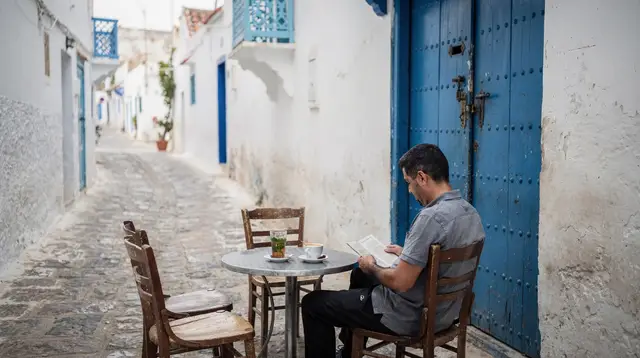
Tunisian pastries are rarely eaten alone — they’re paired with mint tea, usually heavily sweetened and sometimes with pine nuts floated on top, and the pairing is worth understanding as a single habit rather than two separate things. The tea’s sharpness and heat cut through the density of a syrup-soaked pastry in a way that makes the combination genuinely work better than either alone, which is part of why café culture in Tunisia leans so heavily on the pairing.
Mint tea and café culture in Tunisia covers the tea side in more depth, and the cafés of Sidi Bou Said is worth reading if you want somewhere specific to sit down with both rather than eating a pastry standing at a counter.
Beyond Tunis: regional specialities worth knowing
While most of the pastries above are found across the country, a few towns have specific reputations worth knowing if your trip extends beyond Tunis. Kairouan is particularly associated with makroudh, considered by many Tunisians to make the definitive version, and a stop there is a reasonable reason on its own to try it fresh rather than waiting until Tunis. Nabeul and the wider Cap Bon area are known more for almond-based sweets given the region’s almond orchards. If Kairouan is on your route, the medina of Kairouan and a day trip to Kairouan both cover the wider visit alongside the food.
Nabeul’s reputation for craft runs beyond food too, and Nabeul pottery and ceramics is worth a look if you pass through. For a slower, morning-style account of eating in the city, what a Tunisian breakfast looks like shows how sweet things fit into an ordinary day.
Mistakes to avoid
Frequently asked questions about Tunisian pastries and sweets
What’s the single pastry I should try if I only try one?
Makroudh, and specifically a freshly made piece rather than a pre-boxed one. It’s the pastry most specifically associated with Tunisia rather than shared broadly with neighbouring cuisines.
Are Tunisian pastries very sweet?
Yes, generally, though the sweetness comes from syrup soaked through rather than icing on top, which changes how it hits compared to Western-style pastries. Kaak warka, with its dusted sugar rather than syrup, tends to read as less sweet on first bite.
Which pastries travel well for taking home?
Kaak warka, kaak and ghraiba all keep well without refrigeration, often for a week or more, and are the sensible choice for a gift box. Makroudh and baklawa are best eaten within a day or two of purchase.
Is it worth going to a specific pâtisserie rather than a market stall?
If freshness and quality matter to you, yes. A shop clearly baking on site is a more reliable choice than a market stall, though stalls can be cheaper and are fine for a casual taste.
Do I need to visit Kairouan to try good makroudh?
No, but Kairouan has a strong reputation for it specifically, and many Tunisians consider it the best version in the country. Tunis has excellent pâtisseries too, so it’s not essential.
Can I learn to make these pastries rather than just buying them?
Yes — most cooking classes in Tunis cover at least one sweet dish alongside a savoury one, which gives a fuller picture of technique, particularly the syrup timing that’s easy to get wrong at home.
What should I drink with a Tunisian pastry?
Mint tea, usually heavily sweetened, is the standard pairing and genuinely improves the experience by cutting through the pastry’s density. See mint tea and café culture in Tunisia for more.
Are these pastries available outside Ramadan and Eid?
Yes, year-round, though volume and freshness both increase around those periods as demand for family gift trays rises. Outside those windows, stock is more limited but still reliably available at any established pâtisserie.
Tunis food & drink tours on GetYourGuide
Verified deep-linked GetYourGuide tours. Book through these links and we earn a small commission at no cost to you.
These are our own photographs of Tunisia, not the operator's pictures of this tour — open the tour page to see those.