Four days in Tunis and Cap Bon
Four days is enough to see the two very different sides of this part of Tunisia without rushing either of them: a dense, walkable capital with a working medina and one of the best mosaic collections anywhere, and a green coastal peninsula where Punic ruins sit next to package resorts and pottery towns. This itinerary spends the first half in Tunis itself and the second half looping Cap Bon, the peninsula east of the capital, using a single organised day tour to cover the awkward stretch of coast road that most visitors would otherwise need a car for. It assumes no rental car and a mid-range budget: comfortable but not luxury hotels, taxis and louages rather than private drivers for the Tunis legs, and one paid tour for the Cap Bon loop.
| Where | Tunis, then Hammamet, Nabeul, Kelibia and Kerkouane on Cap Bon |
| Cost | Roughly 900 to 1,400 TND per person for four days, mid-range |
| Time needed | Four full days, five nights if arriving late on day one |
| Getting there | Tunis-Carthage airport, then bus or louage on to Hammamet |
| Best time | March to June or September to November |
Why four days works for this particular route
Tunis on its own rewards two full days without feeling padded, and Cap Bon’s highlights — the beaches around Hammamet, the pottery workshops of Nabeul, the fishing town of Kelibia and the ruins at Kerkouane — genuinely need at least a day and a half rather than a rushed afternoon squeezed in from the capital.
Splitting the trip roughly fifty-fifty avoids the two most common mistakes: doing Cap Bon as a single long day trip from Tunis, which turns into a lot of driving for not much time on the ground, or spending all four days on the coast and treating Tunis as an afterthought. Four days also happens to match the length of the main Cap Bon day tour that most operators run, so the itinerary lines up naturally with what is actually bookable rather than working around it.
Day 1: arrival and the medina of Tunis
Most flights land at Tunis in the late morning or early afternoon, which leaves enough of the first day for the medina without needing an early start. Head straight for the Ez-Zitouna mosque area — non-Muslim visitors can enter the courtyard but not the prayer hall itself, and the courtyard alone is worth the walk for the columns salvaged from Carthage and Roman sites across the country.
From there, follow the souks radiating out from the mosque: the perfume souk, the chechia (felt hat) makers, and the gold souk are the most atmospheric, and a walking route through the medina makes it easy to see the main streets without doubling back constantly. Dar Ben Abdallah, a restored eighteenth-century mansion turned museum of everyday life in old Tunis, is a good mid-afternoon stop when the souks get warm and crowded.
By early evening, walk out through Bab Bhar into the Ville Nouvelle and along Avenue Habib Bourguiba, the French-built boulevard that still functions as the city’s civic spine, with its cafés, the cathedral and the National Theatre. Dinner here or back near the medina edge is an easy way to end a jet-lagged first day without a long taxi ride.
Day 2: the Bardo museum and a slower look at the capital
The Bardo museum, in a former Husainid palace on the western edge of the city, holds the largest collection of Roman mosaics in the world and deserves a proper morning rather than a rushed hour; the complete visitor guide is worth reading before you go, since the sheer size of the collection makes it easy to miss the standout rooms if you wander without a plan. Getting there is straightforward by taxi or the metro léger, and a reasonable visit runs two to three hours.
In the afternoon, use the remaining time in Belvédère park or the quieter Berges du Lac district if you want a break from ruins and souks, or return to the medina for shopping now that you know what is worth buying after day one’s reconnaissance — see the souks of Tunis and what is actually worth buying for guidance on carpets, leather and ceramics before you commit to a purchase. In the early evening, take a bus or louage on to Hammamet; the journey takes around an hour on a reasonable road, and arriving before dark makes checking in and finding dinner considerably easier.
Day 3: the Cap Bon loop by organised tour
This is the day that makes the itinerary work without a car. Rather than trying to string together local buses between four towns in a single day, book a single organised loop that covers Kelibia, Kerkouane and the smaller stops in between. Hammamet: The Golden Triangle of Cap Bon - Kelibia, Kerkouane and Korbous runs the full circuit in a single long day from Hammamet, which is exactly where this itinerary has you staying by this point.
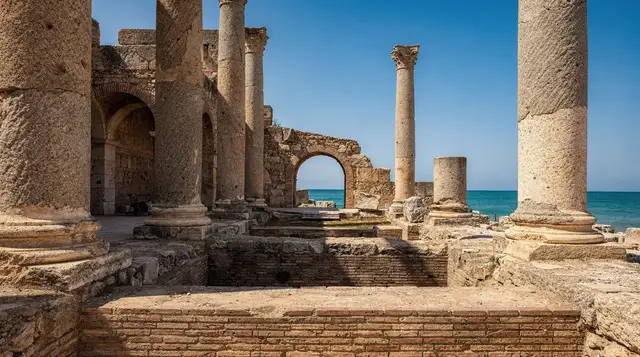
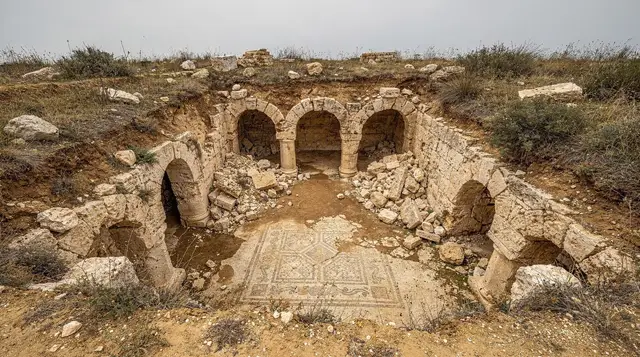
Kerkouane is the standout stop: the only Punic city in Tunisia never rebuilt by the Romans, so its street plan, house foundations and bathtubs survive almost untouched, unlike Carthage where later construction has erased most of the Punic layer. Kelibia’s fishing harbour and its hilltop fort add a different texture to the day, and Korbous’s thermal springs, if the itinerary includes a stop there, are a curiosity rather than a highlight.
If that particular tour is sold out or the timing does not suit, two close alternatives cover almost the same ground: Cap Bon Tour: Kerkouane, Kelibia and Hawaria and VIP Cap Bon Tour: Kelibia, Haouaria, Kerkouane and Korbous, the second running as a smaller-group VIP version at a higher price. All three visit essentially the same towns; the differences are group size, pickup flexibility and whether lunch is included, so compare on those points rather than expecting a different day out.
Day 4: Nabeul and the return
Nabeul, Cap Bon’s largest town, is Tunisia’s pottery capital, and a morning here before heading back is a natural way to close the loop. The workshops along the main road into town sell everything from tourist-grade ashtrays to genuinely well-made ceramics, and the Friday market is worth timing your visit around if your dates allow it.
Hammamet: A Trip Around Cap Bon and Nabeul is a shorter, half-day version of the loop that focuses specifically on Nabeul and the immediate coast if you would rather do this leg separately from the full Cap Bon circuit on day three, though most travellers on this itinerary will already have covered Kelibia and Kerkouane by this point and just need a Nabeul morning.
From Nabeul or Hammamet, allow around ninety minutes to two hours to get back to Tunis-Carthage airport by bus, louage or taxi, depending on flight times; afternoon or evening departures work more comfortably than an early-morning flight given the distance.
Getting around without a car
Tunis itself is walkable for the medina and manageable by taxi or metro léger for anything further out, covered in more detail in getting around Tunis. Between Tunis and the Cap Bon towns, louages — Tunisia’s shared taxis that leave when full rather than on a fixed timetable — are the standard local option and are explained fully in louages explained; they are cheap and frequent on this route but require a bit of patience and no fixed schedule to plan around.
For the Cap Bon loop itself, the organised day tour genuinely replaces the need for a car, since public transport between Kelibia, Kerkouane and Korbous on the same day is impractical without your own vehicle. Travellers who would rather self-drive the whole route can read hiring a car in Tunisia for what that alternative actually involves.
What this itinerary leaves out
Four days is not enough to add Sidi Bou Said, Carthage or a Sahara excursion without cutting into the time this route gives Cap Bon, and stretching any single day to fit in an extra destination usually means arriving somewhere tired and rushing through it. If Carthage and Sidi Bou Said matter more to you than the Cap Bon loop, one week in Tunis and its region covers both without the same compromises. This itinerary also skips the western interior entirely — Dougga, Testour and Bulla Regia are a different direction from Cap Bon and do not combine well with it inside four days.
Budget for four days
| Category | Approximate cost (mid-range) |
|---|---|
| Accommodation, 5 nights | 600 to 900 TND total for two people |
| Cap Bon day tour | 90 to 140 TND per person |
| Local transport (louages, taxis, metro léger) | 60 to 100 TND total |
| Meals | 40 to 70 TND per person per day |
| Museum and site entry (Bardo, Kerkouane) | 30 to 40 TND per person total |
These figures are ballpark rather than fixed: Tunisian dinar prices move, and roughly 1 TND equals a little under €0.30 at recent rates, so treat every number here as an order of magnitude to budget around rather than a quote.
Frequently asked questions about this Tunis and Cap Bon route
Can this itinerary be done in reverse, starting on the coast?
Yes, and it works just as well starting in Hammamet and finishing in Tunis before a flight home, particularly if your flight arrives into Enfidha rather than Tunis-Carthage airport, which sits closer to the Cap Bon side of this route.
Is a rental car worth it for this specific route?
Not really. The medina of Tunis is easier without a car, and the one leg that benefits from private transport — the Cap Bon loop — is already covered efficiently by an organised tour at a lower cost and stress level than self-driving unfamiliar coastal roads.
How much walking does this itinerary involve?
A fair amount on days one and two inside the Tunis medina, which has uneven paving and no vehicle access in the old core; days three and four are mostly seated in a tour vehicle or bus with shorter walks at each stop.
Could this trip be shortened to three days?
It would mean cutting either the second Tunis day or compressing Cap Bon into a single rushed loop without the Nabeul morning; three days works better as three days in Tunis focused purely on the capital, with Cap Bon left for a return trip.
Is Hammamet a good base for the Cap Bon days, or should I stay in Nabeul instead?
Hammamet has considerably more accommodation choice and the day tours are generally set up to depart from there, which is why this itinerary bases you there rather than in the smaller town of Nabeul.
Do I need to book the Cap Bon tour in advance?
In shoulder season, a day or two ahead is usually enough, but during July and August, when Cap Bon’s beach resorts fill up, booking further ahead avoids a sold-out tour on your only available day.
Is Kerkouane worth visiting if I am not especially interested in archaeology?
It is a smaller, quieter site than Carthage or Dougga, so if ruins genuinely do not interest you, the fishing town of Kelibia and its fort may be the more rewarding stop on the same tour rather than Kerkouane itself.
What language do the Cap Bon tour guides use?
Most Cap Bon day tours run in French and English at minimum, with other languages depending on the specific departure; check the listing for your chosen date if you need a language other than those two.
Best day trips from Tunis on GetYourGuide
Verified deep-linked GetYourGuide tours. Book through these links and we earn a small commission at no cost to you.
These are our own photographs of Tunisia, not the operator's pictures of this tour — open the tour page to see those.