Tunis does not perform for visitors the way Marrakech or Cairo sometimes do. The capital of Tunisia runs on its own schedule, and the medina, the Bardo museum and the wide French-built boulevards downtown are working parts of a city of nearly three million people, not a stage set. That makes it a slightly slower place to like at first sight, and a much better one to actually get to know over three or four days.
| Where | Northern Tunisia, on the Gulf of Tunis, 10km from the coast at La Goulette |
| Cost | Budget around 60-90 TND (18-27 EUR) a day outside accommodation, more in the Berges du Lac hotels |
| Time needed | 3-4 days for the city, longer with day trips |
| Getting there | Tunis-Carthage airport, 8km from downtown, 20-30 minutes by taxi |
| Best time | March-May and October-November |
Getting your bearings in a city built in layers
Tunis reads best as three cities stacked on top of each other. The oldest is the medina, the walled Islamic city founded in the 7th century, entered through gates like Bab Bhar and centred on the Ez-Zitouna mosque. Around it, the French protectorate built a European new town in the late 19th and early 20th centuries: wide boulevards, wrought-iron balconies and the cathedral on what is now Avenue Habib Bourguiba.
Further out again are the newer districts — leafy Belvédère, the diplomatic quarter around Mutuelleville, and the glass towers of Les Berges du Lac on reclaimed land beside the lake.
Most visitors base themselves near the medina or on Avenue Habib Bourguiba, both walkable to the main sights. The Berges du Lac hotels are more comfortable and closer to the airport, but every trip into the old city becomes a taxi ride rather than a walk, which changes the rhythm of a short stay. For a first visit, staying central is worth the trade-off in polish.
The medina: the reason most people come
The medina is a UNESCO-listed maze of around 700 monuments packed into a few hundred metres, and it rewards getting lost more than it rewards following a fixed route. The souks near Bab Bhar sell mostly for tourists — leather, spices, ceramics — while the souks further in, like Souk El Attarine for perfume and Souk El Berka, the old slave market turned jewellery souk, are closer to what Tunis actually shops for. A guided walking route through the medina is worth doing on day one, precisely because it gives you a mental map before you get properly lost on day two.
At the centre of it all is the Ez-Zitouna mosque, the oldest in Tunis and one of the oldest in North Africa. Non-Muslims cannot enter the prayer hall, but the courtyard is open for a small fee, and it is worth the few dinars for the view of the minaret and the sense of scale. A visitor guide to what you can and cannot see at Ez-Zitouna saves an awkward conversation at the door. Dar Ben Abdallah, a restored 18th-century merchant house turned museum of traditional Tunis life, gives a useful counterpoint: it is one of the few places in the medina where you go inside a real house rather than looking at a facade.
Book a guided cultural walking tour of the medina and city centre if this is your first visit — a two-and-a-half-hour walk with a local guide answers most of the “what am I looking at” questions that come up in the first hour of independent wandering.
Avenue Habib Bourguiba and the ville nouvelle
Step out through Bab Bhar and the city changes register. Avenue Habib Bourguiba is Tunis’s answer to a Parisian boulevard: plane trees, pavement cafés, the Théâtre municipal in flowing art nouveau ironwork, and the Cathédrale Saint-Vincent-de-Paul at the eastern end. The clock tower at Place du 14 Janvier 2011 marks the point where the avenue meets the medina gates, and it is as good a landmark as any for meeting points or just getting your bearings after a day inside the old city.
This is also where Tunis does its café culture properly. Sit at one of the pavement tables with a glass of mint tea or a small, strong coffee and watch office workers, students and pensioners share the same stretch of pavement — a mix that the resort towns further south rarely offer. A closer look at the Ville Nouvelle and Avenue Habib Bourguiba covers the buildings and cafés worth a detour, and where the boulevard’s atmosphere thins out toward the port.
The Bardo: a museum that needs a proper morning
The Bardo National Museum, in a former beylical palace a few kilometres from the centre, holds the largest collection of Roman mosaics anywhere in the world — a direct result of Tunisia’s density of Roman sites from Carthage to Dougga to El Djem. It is not a museum you skim in forty minutes; the mosaic rooms alone, several of them ceiling-height and floor-to-floor, take the better part of two hours to see properly. Go with at least a half day, and go in the morning, since the light in the palace’s inner rooms is better and the coach groups tend to arrive after 11am.
A closer look at Le Bardo covers the district around the museum and how to combine it with the rest of a day. For the museum itself, a complete visitor guide and a room-by-room look at the mosaics of the Bardo are both worth reading before you go, since the museum’s own signage is patchy in places. A half-day tour combining the Bardo museum and the Tunis medina is a practical way to see both without working out taxis and timing yourself, and it tends to be less rushed than trying to fit both into one independent day.
| Site | Typical time needed | Best time to go |
| Medina souks | Half day minimum | Morning, before the midday heat and crowds |
| Ez-Zitouna courtyard | 20-30 minutes | Outside prayer times |
| Bardo museum | 2.5-3.5 hours | Weekday morning |
| Avenue Habib Bourguiba | 1-2 hours walking | Late afternoon into evening |
| Dar Ben Abdallah | 45 minutes | Any time it’s open |
Getting around the city
Central Tunis is genuinely walkable, and the medina has to be walked — cars cannot follow you into most of it anyway. Beyond the centre, the TGM light rail is the easiest way out to Carthage, Sidi Bou Said and La Marsa, running from Tunis Marine station roughly every 15-20 minutes and taking about half an hour to reach Sidi Bou Said.
Inside the city, the metro léger tram network covers routes the TGM does not, including Belvédère and out toward the Berges du Lac. For longer trips into the countryside, louages, Tunisia’s shared taxis, leave from set stations once they fill up with passengers, and they are considerably cheaper than a private driver if you don’t mind waiting.
Taxis in Tunis are metered and cheap by European standards, but it is worth reading a short guide to taxis in Tunis before your first ride, since drivers sometimes claim the meter is broken, especially from tourist-heavy pickup points near the medina gates or the airport. Insisting politely on the meter, or agreeing a price before getting in if it genuinely is broken, avoids most of the friction.
Food: where Tunis actually eats
The best Tunisian food in the city is rarely in the restaurants closest to Bab Bhar. A short walk into the medina or over to the streets around the central market turns up better and cheaper options: brik pastry fried to order, couscous with fish or lamb depending on the day, and the harissa-forward flavour that runs through most Tunisian cooking. Street food in Tunis and where to eat in the medina both name specific stalls and addresses rather than vague neighbourhoods, which matters more here than in a city with denser restaurant listings online.
A morning at the central market, a few streets back from Avenue de France, is worth building into a day even if you don’t cook: the fish counters, the olive stalls and the produce piled by the crate give a better sense of what Tunis eats day to day than any restaurant does.
Day trips that work from a Tunis base
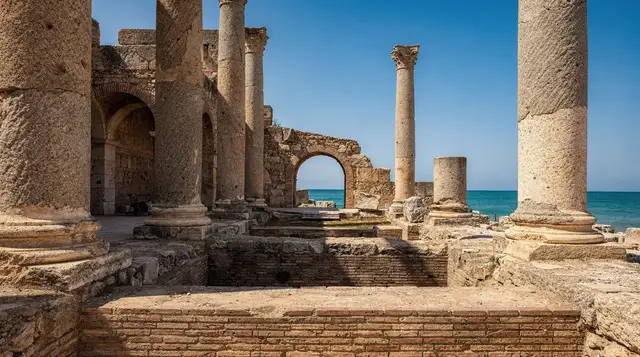
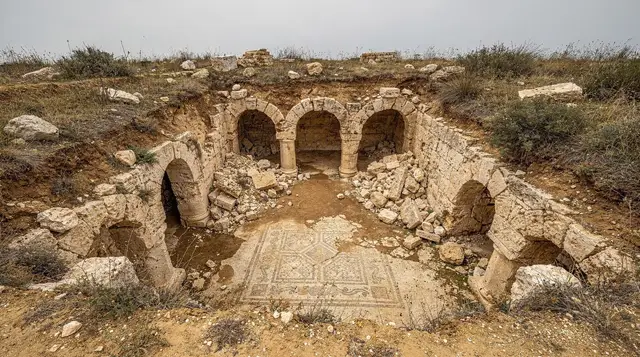
Tunis is a genuinely good base for day trips, better in some ways than staying in Hammamet or Sousse, because the TGM and reasonably priced taxis put Carthage, Sidi Bou Said and La Marsa within an hour door to door. Carthage itself — the Roman and Punic ruins, not a single site but a scattered set of them across a modern suburb — deserves at least half a day, and the multi-site ticket is worth understanding before you go, since it is not obvious from the ticket booths themselves how it works.
Further afield, Dougga and Bulla Regia are both doable as day trips with an early start, and the best day trips from Tunis ranks the realistic options by how much driving they actually cost you against how much you see. For a single well-packed day, Carthage and Sidi Bou Said in a day is the trip most first-time visitors end up doing, and for good reason — it needs no car and no early alarm.
A guided tour combining the Bardo, Ez-Zitouna and the medina packages the city’s three headline sights into one day with a driver and a guide, which suits visitors on a tight schedule better than stringing the three together independently by tram and on foot.
Planning notes: money, safety and timing
Tunisia’s currency is the Tunisian dinar (TND), and it is a closed currency — you cannot buy it before arrival, and you should not leave with a large amount, since exchanging it back outside the country is difficult. ATMs at the airport and around Avenue Habib Bourguiba are reliable, and a rough exchange rate to keep in your head is around 3.3 TND to the euro, though it moves and you should check before a trip rather than trust a number in an article. Money and payments in Tunisia covers card acceptance, which is patchier than most European visitors expect outside hotels and larger restaurants.
On safety, Tunis is, on an ordinary day, a city where the usual capital-city precautions apply — watch bags in crowded souks, agree taxi fares or insist on the meter, avoid unlit medina alleys late at night — rather than anywhere requiring special caution. Is Tunis safe? An honest answer goes into more specific detail, including areas that are fine by day but better avoided after dark. If you’re travelling alone, travelling solo in Tunis and Tunisia for female travellers both cover the practical questions that come up before a first solo trip.
Mistakes to avoid
Frequently asked questions about visiting Tunis
Is Tunis worth visiting on its own, or only as a base for day trips?
Tunis stands on its own. The medina and the Bardo museum are destinations in their own right, not just staging points for Carthage or the Sahara, and a visitor who only passes through misses the best mosaic collection in the world and one of the best-preserved old cities in North Africa.
How much does a day in Tunis typically cost?
Outside accommodation, a comfortable day — museum entry, a sit-down lunch, tea stops, local transport — runs somewhere around 60-90 TND, roughly 18-27 EUR at current rates. Street food and shared taxis bring that down considerably; hotel restaurants and private drivers push it up.
Do I need a guide to see the medina, or can I do it alone?
You can absolutely walk the medina alone, and getting slightly lost is part of the experience. A guide adds context — which building is which, why a certain door is painted that colour, what a shopkeeper is actually weighing on the scale — that is genuinely hard to pick up from a map alone, especially on a first visit.
Is it easy to get from Tunis to Carthage and Sidi Bou Said without a car?
Yes. The TGM light rail runs from Tunis Marine station out to both, and it’s the way most residents make the same trip. No car or organised transfer is necessary for a day trip along that line.
What language do people speak in Tunis?
Tunisian Arabic is the everyday language, and French is widely spoken as a second language from the colonial period, used on menus, signs and in most tourist-facing interactions. English is common in hotels and among younger people but not universal, so a few French phrases go further than English alone.
Is the Bardo museum open every day?
The Bardo, like most Tunisian state museums, keeps a weekly closing day and adjusts its hours seasonally, so it’s worth checking current opening times before you build a day around it rather than assuming a fixed schedule year-round.
How does the medina compare to Marrakech’s for someone who has already been there?
Quieter and less oriented toward tourist spectacle. The Tunis medina still functions as a genuine commercial district for the city, with fewer snake charmers and hard-sell stalls than Marrakech’s most touristed lanes, which some visitors find more comfortable and others find slightly less immediately dazzling.
Can I drink tap water in Tunis?
Tap water in Tunis is treated and generally safe by local standards, but many visitors prefer bottled water simply because the taste and mineral content differ from what they’re used to, and stomachs adjusting to a new place can be sensitive regardless of water safety.
Is a rental car useful for a Tunis city trip?
Not for the city itself — parking is difficult and the medina is pedestrian by nature. A car becomes useful only if you’re combining Tunis with independent trips further afield, like the north-west forests or Cap Bon, where public transport options thin out.