Driving the Cap Bon loop
I rented a small hatchback in Tunis on a whim, mostly because the Cap Bon peninsula kept coming up in conversation as somewhere people drive rather than get taken to, and I wanted to know why. The loop I ended up doing — out through Nabeul, down to Kelibia, across to Kerkouane and El Haouaria, then back along the coast toward Hammamet before cutting inland to Tunis — took a full day and left me with sore forearms from an unfamiliar gearbox and a genuine sense that this stretch of coast is undersold. Nothing on it is dramatic in the way Sidi Bou Said photographs are dramatic, but the accumulation of small stops adds up to more than any single one of them would suggest on its own.
| Where | Cap Bon peninsula, roughly 60–140 km from Tunis depending on the stop |
| Cost | Car hire from around 80–120 TND/day, plus fuel; a few TND per site entry |
| Time needed | A full day, ten to twelve hours including stops |
| Getting there | Self-drive from Tunis via the A1 and coastal roads |
| Best time | Spring or autumn; summer traffic through Hammamet slows the loop down |
Why the loop rather than a single stop
Cap Bon rewards a loop more than a single destination because none of its individual towns are built for a full day on their own. Nabeul is thirty minutes of pottery workshops and a produce market that doesn’t need much longer than that; Kelibia is a fort, a beach and a fishing harbour that similarly fill a couple of hours rather than a whole day.
Strung together with the drive itself — which hugs the coast for long stretches and cuts through vineyard country further south — the whole thing becomes a day that’s genuinely varied rather than one attraction padded out. I’d hesitated over whether it was worth the hassle of hiring a car versus booking an organised trip, and having now done both this route and an organised version of a similar drive, I think the honest answer depends on how much you want to linger at any one stop.
Nabeul: pottery first, then the market
Nabeul is Tunisia’s ceramics town, and the workshops along its main roads are genuinely working potteries rather than souvenir fronts, though plenty sell direct to visitors as a sideline. I stopped at two, watched a wheel demonstration I hadn’t asked for but enjoyed anyway, and bought nothing because I didn’t trust my own packing for the rest of the drive — a decision I regretted slightly by the time I got home. Nabeul pottery: workshops, markets and what to buy covers the workshops properly if ceramics are part of the draw; I’d read it after the fact and wished I’d had it before.
A full-day Cap Bon experience covering artisans and ancient history takes in Nabeul’s craft side alongside some of the peninsula’s older sites in one guided day, which solves the pacing problem I had of not quite knowing how long to give each stop.
Kelibia: the fort, the harbour, and not much rush
Kelibia sits at the northern tip of the peninsula with a Byzantine-era fort on a hill above the harbour, and the climb up is short enough to do in trainers rather than proper walking shoes. The town itself moves slowly outside of summer, and the fishing harbour below the fort is a better place to sit for twenty minutes than any café I found closer to the beach. Kelibia as a destination doesn’t demand a long stop, but it’s an easy, unhurried one, and the fort’s views back along the coast toward Nabeul are worth the short detour off the main road.
Kerkouane: Punic ruins nobody rushes to see
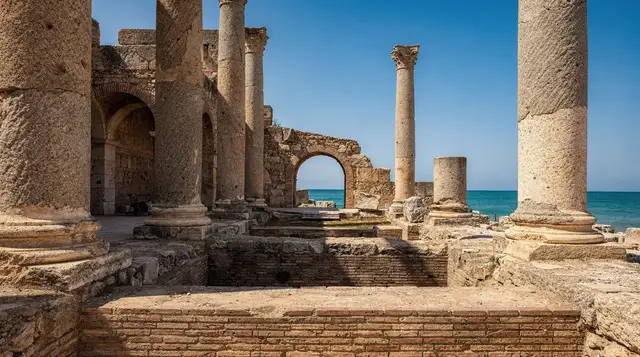
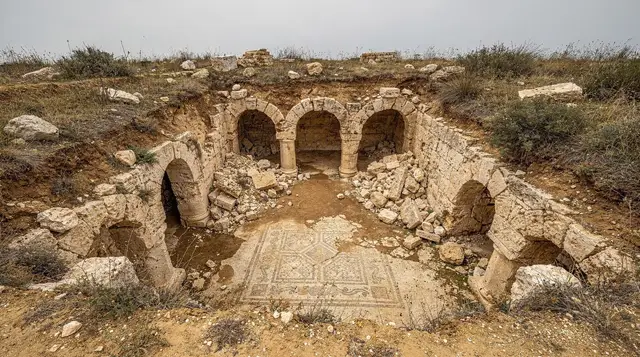
Kerkouane is the peninsula’s genuine oddity — a Punic town abandoned before the Romans ever rebuilt over it, which means what survives is unusually intact for the period rather than buried under later construction. It’s quieter than Carthage by a wide margin, and I had a stretch of maybe ten minutes with nobody else in sight among the house foundations, which doesn’t happen at the more famous Roman sites near Tunis. Kerkouane won’t overwhelm anyone expecting Carthage-scale ruins, but as a stop on a driving loop it’s an honest, low-key highlight rather than a detour that disappoints.
El Haouaria and the caves at the peninsula’s tip
El Haouaria sits right at Cap Bon’s northeastern point, known locally for sandstone caves quarried since Roman times and, in season, for falconry demonstrations that felt more like a genuine local tradition than a show staged for visitors. The road out to the caves is unremarkable, mostly farmland, which makes the sudden cliffside views at the end feel more earned than they probably deserve credit for. It’s not a long stop, but it’s the furthest point of the loop, and turning back from there is where the day genuinely starts to feel like the halfway mark.
Kelibia, Kerkouane and El Haouaria as one guided day
For a version of this stretch of the peninsula without the driving, a Cap Bon tour covering Kerkouane, Kelibia and Hawaria links the same three stops in a single guided day, useful if hiring a car and navigating unfamiliar roads isn’t part of what you’re after. I did it self-drive because I wanted the flexibility to stop wherever looked interesting, but I’d genuinely recommend the guided version to anyone who’d rather not think about parking in three different small towns in one day.
| Stop | Time to allow | Highlight |
|---|---|---|
| Nabeul | 1–1.5 hours | Pottery workshops, produce market |
| Kelibia | 1–1.5 hours | Byzantine fort, fishing harbour |
| Kerkouane | 45 minutes–1 hour | Intact Punic house foundations |
| El Haouaria | 1 hour | Sandstone caves, falconry in season |
The coastal stretch back through Hammamet
Coming back down the eastern side of the peninsula toward Hammamet, the road runs closer to the coast than the outbound leg, and this is where the drive itself becomes the point rather than any single stop. Hammamet makes a sensible place to break for a late lunch before the final stretch inland to Tunis, and it’s also the more sensible base for anyone who’d rather do a shorter, compressed version of this same loop as a day trip rather than a full self-drive circuit from the capital.
A trip around Cap Bon and Nabeul departing from Hammamet is worth knowing about even if you’re not staying there, since it’s essentially a compressed version of the same loop for a day trip rather than a full self-drive circuit.
What I’d do differently next time
Given the choice again, I’d start earlier — I left Tunis at nine and was still driving the final stretch home after dark, which isn’t dangerous exactly but isn’t relaxing either on unfamiliar rural roads. I’d also give Kelibia more time than I did and Nabeul less; the pottery workshops, while genuinely interesting, started to blur together after the second one in a way the harbour at Kelibia never did.
The best day trips from Tunis lists Cap Bon among several other options if the loop as a whole turns out not to suit your pace, and hiring a car in Tunisia is worth reading before booking if this is your first time driving here. Anyone wanting the peninsula folded into a longer trip rather than a single day should look at four days in Tunis and Cap Bon, which spreads the same stops over a more relaxed pace, and the broader day trips hub covers the rest of the region’s options beyond Cap Bon.
A rental car for the Cap Bon loop
The loop starts and ends in Tunis, so what matters is a pick-up that lets you leave early, not a drop-off somewhere else. Aim to collect the car the evening before, or as soon as the desk opens, so the first kilometres out of the city are not already late. That gives you daylight for the final stretch home on unfamiliar rural roads, and room to linger at the harbour in Kelibia instead of rushing past it.
Check that the car is comfortable for a full day of driving, since the driving is part of the appeal here. Confirm the fuel policy and what the rental covers if you pick up a scratch on a narrow village road. If this is your first time behind the wheel in Tunisia, you can compare local options on Localrent for a Tunis pick-up.
Mistakes to avoid
Frequently asked questions about the Cap Bon driving loop
How long does the Cap Bon loop take by car?
A full day, roughly ten to twelve hours including stops, starting and ending in Tunis. It can be shortened by cutting El Haouaria or Kerkouane if time is tight.
Do I need a car, or can I do this loop by public transport?
A car makes it far easier; louages and buses connect the main towns but not the smaller stops like Kerkouane or the caves at El Haouaria efficiently in a single day. A guided day tour is the practical alternative to self-driving.
Is driving in Tunisia difficult for a first-timer?
The rural roads on Cap Bon are manageable and generally quiet outside summer; the harder driving is closer to central Tunis itself. Driving in Tunisia covers the practicalities in more depth.
Which single stop would you keep if I only have half a day?
Kelibia, for the fort and harbour together, followed by Kerkouane if there’s time for one more. Nabeul is easy to do as a shorter stop on the way rather than a full destination.
Is Kerkouane worth the detour if I’ve already seen Carthage?
Yes — it’s a different period and a different kind of ruin, largely undisturbed by later Roman rebuilding, and considerably quieter than Carthage on any given day.
Is the Cap Bon loop suitable in summer?
It’s doable but the Hammamet stretch gets noticeably busier with traffic, and the caves and fort at Kelibia are more comfortable outside the height of midday heat.
What’s the best base for exploring Cap Bon without driving the full loop?
Hammamet or Nabeul both work as a base for shorter day trips into the peninsula, with organised tours available from either.
Can I combine Cap Bon with other day trips from Tunis?
It’s a full day on its own and doesn’t combine well with a separate destination in the same trip, though the best day trips from Tunis is worth reading for how it compares to alternatives if you’re choosing between options rather than trying to fit in two.
Best day trips from Tunis on GetYourGuide
Verified deep-linked GetYourGuide tours. Book through these links and we earn a small commission at no cost to you.
These are our own photographs of Tunisia, not the operator's pictures of this tour — open the tour page to see those.