First impressions of Tunis
I had read enough about Tunis before landing to expect a version of the city that turned out to be only partly right. The guidebooks lean hard on the medina and the blue-and-white postcard of Sidi Bou Said, and both are worth the attention, but neither prepared me for the thirty minutes between the airport and the hotel, which did more to set my sense of the place than any single landmark did. Tunis announces itself gradually — a boulevard first, then a gate, then an alley — and the order in which those things arrive matters more than I expected.
The drive in from Tunis-Carthage airport
Tunis-Carthage airport sits close enough to the centre that the ride in is short, often under twenty minutes without traffic, which is unusual for a capital city and one of the more convenient things about arriving here. What struck me wasn’t the distance but the visible layering of the city on the way: modern apartment blocks and roadside cafés giving way, almost without transition, to the wide French-colonial boulevards of the Ville Nouvelle.
It didn’t feel like a city building up to a historic centre — it felt like several decades sitting next to each other without much effort to blend. For the practical side of that first ride — taxi versus transfer, roughly what it should cost — the Tunis-Carthage airport arrival guide covers what I wish I’d read beforehand, since I paid more than I needed to for a fixed-rate taxi I didn’t have to take.
| Where | Central Tunis, from Tunis-Carthage airport |
| Cost | Airport taxi roughly 15–25 TND (about €4.50–7.50) to the centre |
| Time needed | 20–30 minutes without heavy traffic |
| Getting there | Metered taxi, or a pre-booked transfer if you’d rather not negotiate on arrival |
| Best time to arrive | Daylight, if your flight timing allows it — the first walk is easier to place in your head |
Avenue Habib Bourguiba, the boulevard everyone photographs first
Avenue Habib Bourguiba is the street every arrival photo of Tunis seems to feature, and it earns that reputation on its own terms rather than by default. Wide enough for a central pedestrian strip lined with ficus trees, flanked by cafés with terraces angled toward the passing crowd, it reads less like a colonial leftover than a boulevard the city has kept using on its own terms since independence.
The cathedral, the theatre, the string of newspaper kiosks — none of it is trying especially hard to look historic, and that’s part of what makes it feel lived-in rather than staged for visitors. I sat at one of the terrace cafés with a coffee before doing anything else, mostly to watch how the street worked rather than to plan a route, and it was time well spent.
The medina waits at the end of the avenue
Walk the length of Avenue Habib Bourguiba and it ends, almost without ceremony, at Bab Bhar — also called Porte de France — where the modern city stops and the old one begins. The transition happens over about ten metres. One side of the gate is wide pavement and shopfronts; the other is Rue Jamaa Zitouna, narrow enough that the light drops noticeably, running straight toward the Ez-Zitouna mosque at the medina’s centre.
I’d read that the medina could be disorienting and went in expecting to get lost within minutes, which is more or less what happened, though not in an unpleasant way. A proper first pass benefits from structure rather than pure wandering, and the walking route through the medina of Tunis is the one I wish I’d had printed out on day one instead of day three.
If you’d rather have someone else hold the thread on a first visit, a Tunis medina walking tour takes the guesswork out of the first pass entirely, and it’s a reasonable way to spend the first proper morning before you’ve built up your own sense of the layout. I did the solo version first and a guided one a few days later, and the guided walk filled in a genuine amount that I’d missed — which parts of the courtyards were open to non-Muslims, why one alley smelled of leather and the next of cumin, things that aren’t obvious from a map.
Traffic, taxis and figuring out the meter
Tunis traffic is dense in the way most North African capitals are, but taxis are cheap enough by European standards that it rarely matters much once you understand the system. The sticking point on day one is the meter: some drivers run it without prompting, some need a polite request, and a small number will claim it’s broken and try to negotiate a flat fare instead, usually inflated.
I lost that particular negotiation twice before I got the hang of simply getting out and hailing another cab when a driver refused the meter. It sounds combative written down; in practice it took about four seconds and nobody seemed bothered by it. The guide to taxis in Tunis covers this in more detail than I’m going to here, including approximate fares by route.
| Situation | What actually happened to me | What I’d do differently |
|---|---|---|
| Airport to hotel | Fixed taxi rate, no meter offered | Ask for the meter, or agree the fare before getting in |
| Short medina-adjacent hop | Meter used without asking | Nothing — this is the normal case |
| Evening ride from La Marsa | Driver claimed meter was broken | Got out, took the next cab |
| Longer cross-city trip | Meter used, fair price | Nothing |
What surprised me most in the first two days
Three things didn’t match the picture I’d built up beforehand. The first was how quickly French and Arabic switch mid-sentence in ordinary conversation — not code-switching for tourists, just how the city speaks to itself, and it made me relax about my own patchy French faster than I expected. The second was how few people actually approached me in the medina compared to what some accounts had suggested; the busiest stretch near Bab Bhar has its share of stallholders working the crowd, but a hundred metres further in, most shopkeepers barely looked up.
The third was the food — I’d assumed couscous would dominate every menu and instead spent the first two days eating brik, grilled fish and a startling amount of harissa before couscous even came up, which the first-timer’s guide to Tunisian food would have set me straight on in advance.
None of this is a complaint about the guidebooks so much as a note that a city this layered resists being summarised accurately in a paragraph, mine included. The gap between what I’d read and what I found wasn’t large, but it was specific, and it’s the kind of gap that closes fastest by simply walking rather than by reading one more article before you land — this one included.
Getting oriented before you do anything else
If I were arriving again, I’d spend the first afternoon doing exactly three things: walking Avenue Habib Bourguiba end to end, standing at Bab Bhar without going through it yet, and finding a rooftop café to get a sense of the medina’s shape from above before entering it at street level. None of that requires planning, and all of it made the following days easier to navigate.
For anyone building the trip out properly before arriving, the planning a trip to Tunis guide and the how many days do you need in Tunis guide are worth reading on the flight over rather than after you’ve landed. If you’re short on time, the 24-hour Tunis stopover itinerary is close to what I actually managed on my first, jet-lagged day.
A second walking tour, later in the trip once I’d found my bearings, was worth doing precisely because it wasn’t my first: a walking tour of the city centre and medina connected the Ville Nouvelle and the old city as one continuous story rather than two separate outings, which is closer to how the city actually reads once you know it a little.
Frequently asked questions about a first visit to Tunis
How many days should a first visit to Tunis actually be?
Three to four full days covers the city itself comfortably, with a day trip to Carthage and Sidi Bou Said built in. See how many days do you need in Tunis for a longer answer that accounts for pace, and for trips that also add the Sahara or the coast.
Is Tunis safe for a first-time visitor travelling alone?
Broadly yes, with the same ordinary caution any large capital deserves. The is Tunis safe guide goes into more specific detail than a single line here can, including areas and situations worth extra awareness.
Do I need to speak French or Arabic to get around?
No, but a handful of French phrases go a long way, especially with older shopkeepers and taxi drivers. English is common around hotels and tourist sites but thins out quickly once you’re a few streets into the medina.
What’s the first thing I should actually do after landing?
Walk Avenue Habib Bourguiba before attempting the medina. It’s flat, easy to navigate, and gives you a mental anchor point — Bab Bhar — that makes the old city far less disorienting once you’re ready for it.
Is the medina safe to explore without a guide on day one?
Yes for the main routes, though a guide or a short walking tour of the medina on the first morning genuinely helps with orientation and fills in context a solo walk misses.
How much cash should I carry for the first day?
Enough dinar for taxis, a coffee or two and a light lunch — the currency tool and the money and payments in Tunisia guide cover current rates and where to change money without poor terms.
Do I need a visa arranged before arrival?
It depends on nationality; many visitors don’t. Check the visas and entry rules for Tunisia guide and the visa tool well before booking flights rather than at the airport.
Where did most first-day confusion actually come from?
Not the medina itself, but the taxi meter situation and not having a printed or offline route for the first walk. Both are easy to solve in advance and made the difference between a smooth first day and a slightly frustrating one.
Is it worth staying near the medina or further out in the Ville Nouvelle?
Both work; the where to stay in Tunis guide breaks down the trade-offs, but staying within walking distance of Bab Bhar made my own first two days considerably easier logistically.
tours.First impressions
Verified deep-linked GetYourGuide tours. Book through these links and we earn a small commission at no cost to you.
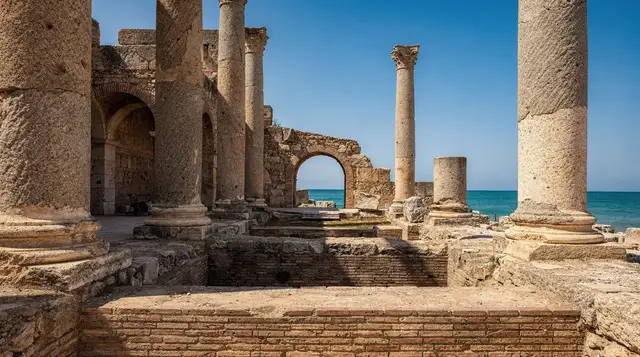
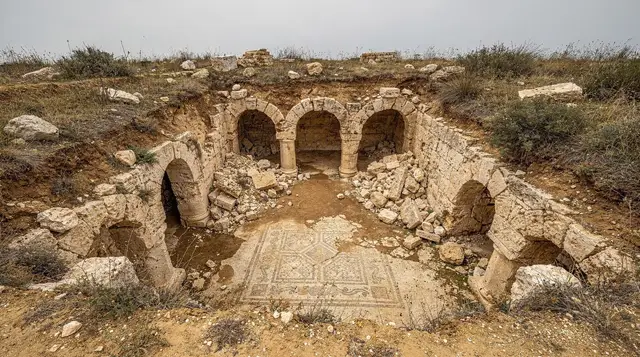
These are our own photographs of Tunisia, not the operator's pictures of this tour — open the tour page to see those.