Tabarka and the coral coast
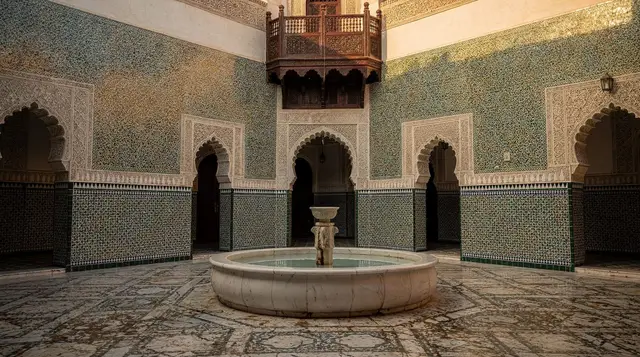
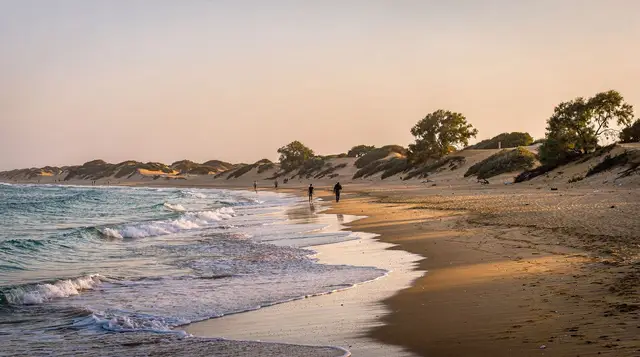
Tabarka sits far enough from Tunis, and far enough outside the standard Carthage-medina-Sidi Bou Said circuit most first trips follow, that almost nobody I met on the rest of my three-week loop through Tunisia had actually been there. That alone made it worth the detour. What I found was a pine-backed coastal town built around coral fishing rather than package tourism, a genuinely striking Genoese fort on its own rocky headland, and a slower pace than anywhere else on a trip that otherwise moved fairly briskly between destinations.
| Where | The far north-west coast, near the Algerian border, roughly 175km from Tunis |
| Cost | A simple hotel room runs 90–150 TND (28–48 EUR) a night; diving trips cost considerably more |
| Time needed | Two full days covers the town, the fort, and a coastal walk without rushing |
| Getting there | A rental car is easiest; trains and louages from Tunis both run but take longer |
| Best time | Late spring through early autumn, when the coast road and pine forests are at their best |
Why the north-west stays off most itineraries
The honest reason Tabarka doesn’t feature on most first-time Tunisia trips is distance and shape: it sits in the opposite direction from the Carthage-Sidi Bou Said-Bardo cluster that dominates a short Tunis trip, and it’s a genuine three-hour-plus drive even with a direct road. Most visitors with limited time understandably prioritise the denser cluster of sights closer to the capital.
I only reached Tabarka because my own trip was long enough — three weeks — to build in a full leg dedicated to the north-west rather than squeezing it into a day trip from Tunis, which honestly wouldn’t do the place justice. Our north Tunisia road trip itinerary covers a version of this loop for travellers with a similar amount of time.
The Genoese fort, and why it earns the detour
Tabarka’s fort, perched on a rocky outcrop just off the modern shoreline and connected by a short causeway, dates to Genoese control of the coral trade here in the sixteenth century, and it’s one of the more photogenic single structures I found anywhere on the trip — weathered stone against pine-covered hills, with the sea on three sides.
It’s not a large site and doesn’t take more than an hour to explore properly, but the setting does most of the work; few other spots in Tunisia combine coastal drama with this specific kind of layered history, Genoese, Ottoman, and French colonial all visible in different parts of the town. Our Tabarka destination guide covers the fort’s history and access details in more depth.
What “coral coast” actually means here
Tabarka built its historic wealth on red coral harvesting, and while the industry is far smaller and more regulated now than in its Genoese-era peak, the town’s identity still runs through it — jewellery shops sell coral pieces, and the harbour still has boats rigged for it, alongside more conventional fishing vessels. I didn’t dive myself, but several other travellers I met there had come specifically for the diving, drawn by underwater terrain considerably less crowded than Tunisia’s more developed coastal resorts further south. Our guide to diving in northern Tunisia covers the coral coast’s dive sites in more detail than my own dry-land visit can offer.
The pine forests above the town
What surprised me most about Tabarka wasn’t the coast itself but the landscape immediately behind it — genuine pine and cork oak forest climbing into the Kroumirie hills, a landscape that felt more Mediterranean-European than anything else I saw in Tunisia, closer in character to parts of Corsica or Sardinia than to the arid interior further south. A short drive inland toward Aïn Draham deepened that impression considerably, with mist settling into the hills on the cooler morning I drove through. Our guide to Aïn Draham and the Kroumirie forests is worth reading if the greener, cooler side of Tunisia interests you as much as it did me.
The drive along the coast from Bizerte
Getting to Tabarka the way I did — driving the coast road from Bizerte rather than cutting inland — turned the journey itself into one of the better parts of the whole detour, with small fishing villages and long stretches of empty coastline between the two towns. It’s a longer route than the direct inland road, but I’d take it again without hesitation for the scenery alone. Our coastal drive guide from Tunis to Bizerte covers the first leg of that same route, which continues on toward Tabarka beyond where that guide’s coverage ends.
Where the north-west fit into a longer loop
Because my trip continued well beyond Tabarka, it’s worth being honest about how this leg connected to the rest of the itinerary rather than presenting it as an isolated weekend trip. After two days on the coral coast, the loop swung back through Tunis and then south, toward Kairouan and the Roman sites further down the country — a genuinely different register of travel, trading pine forests and a quiet fishing harbour for desert-edge heat and archaeological density. Our UNESCO sites of Tunisia itinerary covers a version of this fuller loop, connecting the north-west to the country’s Roman and Islamic heritage sites further south and east.
a tour covering Kairouan, El Djem, and Monastir was how that second leg of the trip actually unfolded once I’d left the north-west behind — a useful contrast piece if you’re weighing a similarly long loop and wondering how the quieter coastal north balances against the denser historical sites further south.
Kairouan, as a counterpoint to Tabarka’s quiet
Where Tabarka felt sparsely visited and unhurried, Kairouan a few days later felt like a genuinely different kind of Tunisia entirely — the country’s fourth holy city of Islam, dense with religious architecture and pilgrimage tradition rather than coastal scenery. I found the contrast valuable rather than jarring; a trip built entirely around either register alone would have felt incomplete. Our guide to Kairouan, the fourth holy city covers what makes it worth the very different kind of visit it demands.
a local experience covering the Great Mosque and a home visit in Kairouan gave me a level of access and context I wouldn’t have found wandering independently, and it’s the single experience from the later, southern leg of the trip I’d most recommend repeating, even setting the north-west comparison aside entirely.
Cap Bon, a third register again
The loop closed with a stretch along the Cap Bon peninsula, back toward Tunis, which offered yet another distinct coastal character — Kelibia’s fishing harbour and Kerkouane’s Punic ruins felt closer in spirit to Tabarka’s working-harbour quietness than to Kairouan’s dense religious architecture, even though geographically Cap Bon sits far closer to the capital. Our Kelibia destination guide and Kerkouane destination guide both cover this stretch of coast in more detail.
a Cap Bon tour covering Kerkouane, Kelibia, and Hawaria closed the loop nicely, and comparing it directly against Tabarka — both fishing towns, both relatively undervisited — was one of the more interesting exercises of the whole three weeks, even though the two coasts don’t resemble each other as much as their shared quietness might suggest.
| Leg of the loop | Character | Pace |
|---|---|---|
| Tabarka and the north-west | Pine forests, coral fishing, Genoese fort | Slow, sparsely visited |
| Kairouan | Dense religious architecture, pilgrimage tradition | Purposeful, historically rich |
| Cap Bon (Kelibia, Kerkouane) | Fishing harbours, Punic ruins | Quiet, closer to Tabarka’s rhythm |
Whether the detour is worth it on a shorter trip
If I’m honest, I wouldn’t recommend Tabarka specifically to a first-time visitor with only four or five days total — the distance eats too much of a short trip’s limited time relative to what it returns. It earns its place on a longer, looping itinerary, or on a dedicated north-west weekend for travellers who’ve already covered the Tunis area on a previous trip and want to see a genuinely different side of the country. Our Tunis trip planning guide is a good starting point for weighing how a north-west detour like this fits against a shorter, more conventional itinerary.
Mistakes to avoid
Frequently asked questions about visiting Tabarka
Is Tabarka worth visiting on a first trip to Tunisia?
Only if your trip is long enough to absorb the distance comfortably — a week or more. On a shorter first visit, time is generally better spent on the denser cluster of sights closer to Tunis.
How do I get to Tabarka without a rental car?
Trains and louages both run from Tunis, though a rental car gives considerably more flexibility, particularly for the scenic coastal route via Bizerte rather than the faster inland road.
What’s the Genoese fort, and is it worth visiting?
A sixteenth-century fortification on a rocky headland connected to the town by a causeway, built during Genoese control of the local coral trade. It’s compact but genuinely photogenic and worth an hour of your time.
Is Tabarka good for diving?
Yes, it’s one of Tunisia’s better-regarded diving areas, with less crowded underwater terrain than more developed resort coasts further south, though conditions vary by season.
How does Tabarka compare to Hammamet or Sousse?
Considerably quieter and less developed for mainstream tourism. It suits travellers looking for scenery and a slower pace rather than beach clubs, nightlife, or resort infrastructure.
Is the Kroumirie forest region worth the extra detour inland?
Yes, if time allows. The pine and cork oak landscape around Aïn Draham offers a genuinely different, greener side of Tunisia that surprises most first-time visitors to the country.
How many days should I set aside for Tabarka?
Two full days covers the town, the fort, and a coastal or forest walk comfortably without feeling rushed, assuming you’re not also trying to fit in extensive diving.
Does Tabarka fit well into a longer loop itinerary?
Very well. It pairs naturally with Bizerte to the east and can anchor a north-west leg of a longer trip that also covers Tunis, the Roman sites, and points further south like Kairouan or Cap Bon.
Beach & coast tours on GetYourGuide
Verified deep-linked GetYourGuide tours. Book through these links and we earn a small commission at no cost to you.
These are our own photographs of Tunisia, not the operator's pictures of this tour — open the tour page to see those.