A north Tunisia road trip in six days
Northern Tunisia looks nothing like the postcard version of the country. Between Tunis and the Algerian border, the coast turns rugged and pine-covered rather than flat and sandy, the interior climbs into the Kroumirie mountains with genuine forest and cork oak rather than desert, and the Roman sites sit half-forgotten in small farming towns instead of behind ticket booths and coach parks.
This six-day route needs a rental car more than any other itinerary on this site, because the whole point is the driving itself: the coast road past Cap Angela, the mountain switchbacks around Aïn Draham, and the quieter back road into Testour and Dougga. A no-car version using organised day tours is covered separately below for travellers who would rather not drive.
| Where | Tunis, Bizerte, Tabarka, Aïn Draham, Testour, Dougga |
| Cost | Roughly 1,300 to 1,900 TND per person for six days, mid-range, plus car hire |
| Time needed | Six full days, five or six nights outside Tunis |
| Getting there | Rental car collected in Tunis, or organised tours as an alternative |
| Best time | April to June or September to November |
Why this route needs a car more than most
Public transport connects Tunis, Bizerte and Tabarka reasonably well along the main coast road, but the interesting detours on this route — the drive out to Cap Angela, the forest roads around Aïn Draham, and the quiet back route between Tabarka and Testour — are simply not practical by bus or louage on a six-day timeline. Hiring a car in Tunisia and driving in Tunisia are both worth reading before you go: roads in the north-west are generally in decent condition on the main routes but narrower and slower in the mountains, and signage outside the major towns is inconsistent enough that offline maps are a genuinely good idea.
Day 1: Tunis to Bizerte
Leave Tunis in the morning and take the coast road north to Bizerte, a drive of a little over an hour that already feels like a different country from the capital. Bizerte’s old port, with its narrow channel lined by low white-and-blue houses, is the obvious first stop, followed by the Spanish fort overlooking the town and a walk along the corniche. The Bizerte day trip guide covers the town in more depth than a single afternoon needs, but is useful for picking which one or two sights to prioritise if you arrive later than planned.
Day 2: Cap Angela and on to Tabarka
Cap Angela, the northernmost point of continental Africa, is a short detour from Bizerte and worth the diversion for the novelty and the empty, windswept coastline rather than any single dramatic sight; the guide to Cap Angela sets expectations honestly.
From there, the coast road continues west toward Tabarka, passing Ichkeul National Park, a wetland reserve around a shallow lake that is a genuinely good stop for anyone interested in birdwatching — see birdwatching in northern Tunisia if that appeals, though it adds an hour or more and can reasonably be skipped by travellers more interested in the coast and forests ahead. Tabarka itself, with its Genoese fort on an offshore islet and a noticeably more relaxed, pine-scented feel than the Tunis-Hammamet coast, is a comfortable overnight base for the next two nights.
Day 3: Tabarka’s coral coast
Spend a full day around Tabarka without driving far: the town’s reputation as the “coral coast” comes from decades as a diving and coral-harvesting centre, and the harbour and old town are worth a slow half-day on foot. In the afternoon, a short drive along the coast toward the Algerian border gives a sense of how quickly the developed coastline gives way to genuinely quiet countryside, though the border zone itself is not somewhere to linger without a specific reason to be there.
Day 4: the Kroumirie forests around Aïn Draham
Drive inland and uphill to Aïn Draham, a hill town surrounded by the Kroumirie forests — cork oak, pine and enough rainfall most winters to make this one of the greenest corners of the country, a genuine surprise for anyone who arrived in Tunisia expecting only desert and coast. The Aïn Draham and Kroumirie forests guide covers walking routes and what the forest actually looks like by season; autumn brings proper colour change, which is unusual for North Africa and worth planning around if your dates are flexible. The town itself is small, so this is a day for slow walks and mountain air rather than a packed sightseeing schedule.
Day 5: south to Testour and Dougga
Leave the mountains and drive south-east toward Testour, a town resettled by Andalusian Moriscos expelled from Spain in the seventeenth century, whose influence still shows in the town’s distinctive Great Mosque, with its clock tower and Andalusian-Islamic architectural details unlike anything else in the country — see the Andalusian towns of Tunisia for the wider context.
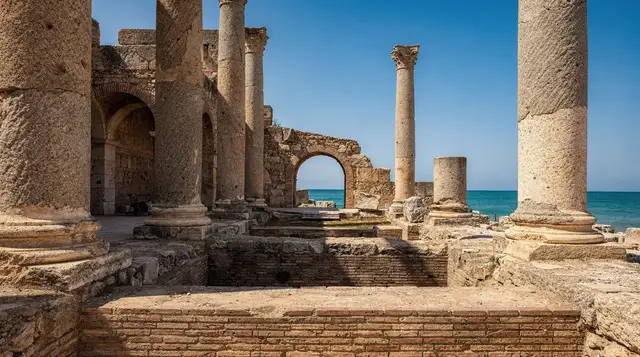
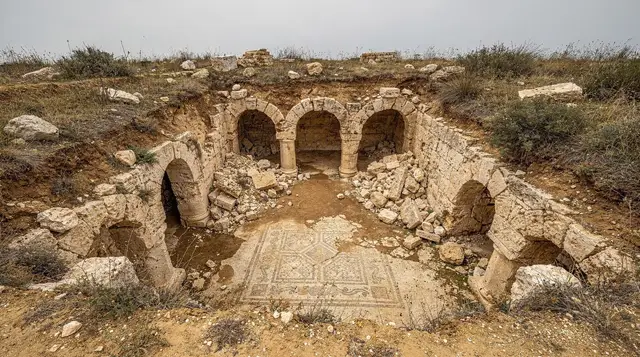
From Testour it is a short onward drive to Dougga, widely considered the best-preserved Roman town in North Africa and easily worth two to three unhurried hours; the complete Dougga guide covers the theatre, capitol and baths in detail. Overnighting in Testour or pushing on toward Tunis in the early evening both work, depending on how much time Dougga takes.
Day 6: Testour, the Medjerda valley and back to Tunis
If you overnighted in Testour, use the morning for a slower look at the town and the Medjerda valley around it — the river that gives the valley its name is Tunisia’s longest and the fertile farmland along it looks markedly different from the coast or the mountains you have just left. The drive back to Tunis takes roughly ninety minutes on reasonable roads, leaving the afternoon free for a last stop in the capital or straight to the airport depending on flight timing.
The no-car alternative
Travellers who would rather not drive can cover much of the same ground with organised day tours based out of Tunis, accepting a different overall shape: shorter time in each place and a return to Tunis each night rather than overnighting on the coast or in the mountains. Tunis or Hammamet: 2-day northern Tunisia tour with a night in Tabarka covers the Bizerte-to-Tabarka coastal leg of days one to three above in a compressed two-day package with one overnight included.
For the Testour and Dougga leg, three separate day tours cover overlapping but slightly different routes: From Tunis: Day trip to Beja, Testour and Dougga with lunch adds the town of Béja to the route, From Tunis: Oudhna, Testour, Djebba and Dougga day tour adds the Roman site of Oudhna closer to Tunis instead, and From Tunis: Testour, Dougga and Zaghouan day tour pairs the same two towns with Zaghouan’s Roman water temple to the south-east instead of Béja or Oudhna.
None of the three includes the Kroumirie forests or Aïn Draham, which is the genuine trade-off of skipping the rental car on this particular route.
A car for Aïn Draham and Kroumirie
The day tours out of Tunis leave out the Kroumirie forests and Aïn Draham, so those are the days where a rental car matters most. If the forests are what draw you to this route, decide on a car early and pick it up in Tunis, since the loop runs from Tunis up to the coast and back. Check what the rental includes for the forest roads, and ask who to call if something goes wrong far from the capital. Because you start and end in the same city, the pick-up and return points should match, and you can compare cars on Localrent for a Tunis pick-up.
Roads and driving notes
| Leg | Approximate drive time | Road conditions |
|---|---|---|
| Tunis to Bizerte | 1 hour to 1 hour 15 | Good, mostly dual carriageway |
| Bizerte to Tabarka | 2 to 2.5 hours | Good coast road, some slower sections |
| Tabarka to Aïn Draham | 45 minutes | Mountain road, narrow in places |
| Aïn Draham to Testour | 2.5 to 3 hours | Mixed, some unpaved farm-road detours possible |
| Testour to Tunis | 1.5 hours | Good, mostly single carriageway |
Fuel is inexpensive relative to European prices, and stations are frequent along the main routes but noticeably sparser in the mountains around Aïn Draham, so it is worth filling up in Tabarka before heading up into the forest rather than assuming you will find a station en route.
Frequently asked questions about a north Tunisia road trip
Is six days enough for this route, or should it be longer?
Six days is workable but leaves little slack; travellers who want a rest day, particularly around Tabarka or Aïn Draham, should budget seven or eight days rather than six.
Do I need a four-wheel-drive vehicle for the mountain roads?
No, a standard rental car handles the paved mountain roads around Aïn Draham without difficulty; four-wheel drive only matters if you plan to leave the paved routes entirely, which this itinerary does not require.
Is northern Tunisia safe for a self-drive road trip?
Yes, the route described here stays well within areas that see regular tourist and local traffic; the border zone near Tabarka is the one area worth treating with more caution and not approaching without good reason.
What is the best time of year for the Kroumirie forests specifically?
Autumn brings genuine colour change in the cork oak forests, which is unusual for Tunisia, while spring offers wildflowers and cooler, greener conditions; summer is drier and less visually dramatic in the forest itself.
Can this itinerary be combined with a Cap Bon or Sahara extension?
Not comfortably within the same trip; both pull in a different direction from this north-western loop, and combining either would need at least three or four additional days rather than an extension of this one.
Is Testour worth an overnight stay, or is a few hours enough?
A few hours covers the Great Mosque and the town centre comfortably; an overnight only makes sense if you want a genuinely slow pace or plan to explore the Medjerda valley further on day six.
How does this route compare to doing Dougga as a simple day trip from Tunis?
A standalone Dougga day trip, covered in a day trip to Dougga, sees the same Roman site without the coast, the forests or Testour; this six-day route is a genuinely different, larger trip rather than an extended version of that single day.
Are there tolls on this route?
No significant tolls apply to the roads used on this itinerary; the main costs are fuel, parking in town centres and the rental car itself.
tours.6 days
Verified deep-linked GetYourGuide tours. Book through these links and we earn a small commission at no cost to you.
These are our own photographs of Tunisia, not the operator's pictures of this tour — open the tour page to see those.