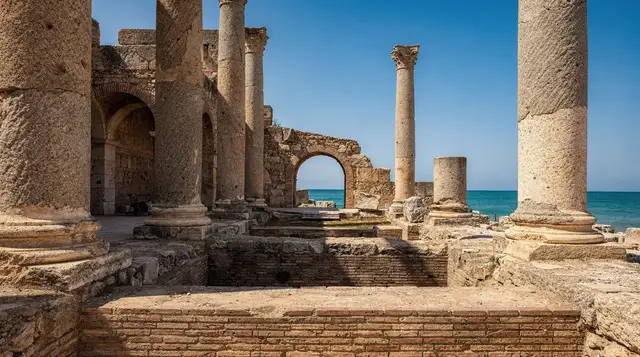
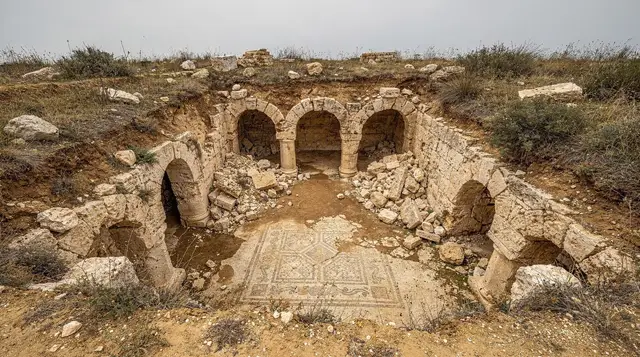
Tabarka sits close enough to the Algerian border that mobile networks occasionally greet you with a welcome text in French for the wrong country. It is a small fishing and resort town wedged between pine-covered hills and a rocky coastline, and it looks and feels different from anywhere else covered on this site. Most visitors know Tunisia for Roman ruins, medina souks and Saharan dunes; Tabarka is cork oak forest, cool evenings even in July, and a coastline that was fought over for its coral long before anyone came for the beach. It is a long way from Tunis, and that distance is the main thing to plan around.
| Where | North-west Tunisia, about 15 km from the Algerian border |
| Cost | Budget around 60-120 TND (18-35 EUR) a night for a room, more for beachfront hotels |
| Time needed | A full day at minimum; an overnight stay is more realistic |
| Getting there | Car or louage from Tunis, around 170 km via Béja |
| Best time | Late spring or early autumn; avoid peak August crowds |
A coastline that was never really about the beach
Tabarka’s old identity was built on coral, not sand. From the sixteenth century the Genoese Lomellini family held a concession to harvest the red coral beds offshore, and they built the fort that still sits on the small rocky islet just off the modern harbour to protect the trade. The fort is closed to visitors inside, but the walk out along the causeway at low tide, with the walls rising above the waves, is worth twenty minutes on its own. Overfishing has thinned the coral beds considerably since then, and the diving schools around the port are candid about it: you will see fish, rock formations and the occasional wreck, but the thick coral gardens divers came for a generation ago are mostly gone.
A couple of dive operators near the marina still run PADI courses and two-tank trips, generally for somewhere around 130-160 TND depending on the season and group size; the nature and hiking hub has more on outdoor activities across this part of the country if diving is not your main interest.
The town itself is modest, built around a single main avenue running down to the port, with a scattering of cafés that fill up in the evening once the day’s heat has gone. It is not a place with a long list of sights to tick off, and that is part of the appeal for people who have already spent a few days moving between Carthage, the medina of Tunis and the Bardo. There is a golf course on the edge of town, one of the older ones in the country, laid out among umbrella pines, and a handful of resort hotels built for a package-holiday market that never fully arrived the way it did in Hammamet or Sousse. That undersubscription is why prices here stay noticeably lower than the east coast.
Getting to Tabarka from Tunis
The drive is the main obstacle. Tabarka is roughly 170 km from Tunis, and the road runs through Béja rather than along the coast, so budget two and a half to three hours by car in normal traffic, more if you get stuck behind slow trucks on the single-carriageway stretches past Béja. There is no railway line out here; the network stops well short of the north-west corner. Louages (shared taxis) run from the Bab Saadoun station in Tunis and are the standard way to travel without a car, typically costing somewhere in the 15-20 TND range for the trip, though prices move with fuel costs and you should expect to pay a driver directly rather than through a fixed ticket system.
| Option | Approx. time | Approx. cost | Notes |
|---|---|---|---|
| Private car / rental | 2.5-3 hours | Fuel + tolls, car hire from ~90 TND/day | Most flexible, best for combining with Ain Draham |
| Louage from Bab Saadoun | 3-3.5 hours | Around 15-20 TND | Departs when full, no fixed timetable |
| Organised day tour | Full day | Varies by operator | Usually bundles Bizerte and the far north rather than Tabarka alone |
| Tabarka airport | N/A | N/A | Has scheduled seasonal charter flights only; not a realistic option for most travellers |
There is a small airport just outside town that occasionally sees seasonal charter flights from parts of Europe, but it is not a scheduled service you can plan a Tunis-based trip around. Most people either drive or take the louage, and most people who do it as a day trip regret not staying the night.
Ain Draham and the forest road
If you are making the effort to come this far north-west, it is worth continuing another 25 km or so up into the hills to Ain Draham, a small mountain town in the middle of the Kroumirie forest. The road climbs steadily and the vegetation changes fast, from coastal scrub to genuinely dense cork oak and pine woodland that would not look out of place in parts of southern France. Together, Tabarka and Ain Draham make a natural two-stop overnight loop, and the full Ain Draham page covers the forest towns and hiking trails in more detail.
The Tabarka jazz festival, and when else to come
Tabarka is best known nationally for a jazz festival that has run, on and off, since the 1970s, usually held in July with a mix of Tunisian and international acts performing in an open-air amphitheatre near the fort. If you are travelling in July it is worth checking the dates before you book, since accommodation fills up and prices rise noticeably during festival week.
Outside of that, the town is genuinely quiet. Late spring, from around late April through June, and early autumn, from September into October, give you warm sea temperatures without the crowded, more expensive peak of August. Winters here are wetter and cooler than the rest of the country; this corner of Tunisia gets the highest rainfall in the country, which is exactly why the forests are so green.
Where to eat and stay
Seafood is the obvious choice, and it is generally fresher and cheaper than what you will find on the more touristed east coast. A grilled fish dish at a harbourside restaurant typically runs 20-35 TND depending on the catch and the season, and the small, family-run places just back from the port tend to be better value than the hotel restaurants. For accommodation, options range from simple guesthouses in town, often 60-90 TND a night for a double room, to a small number of larger resort-style hotels along the coast that can run 150-250 TND or more depending on season and whether they include half board.
Nothing in Tabarka reaches the scale or price of the big Hammamet or Djerba resorts, which is either a relief or a disappointment depending on what you came looking for. The currency tool and the travel tips hub are worth a check before you go, since card acceptance in smaller family-run places out here is less consistent than in Tunis or the main resort towns.
Tunis or Hammamet: 2-day northern Tunisia tour with a night in Tabarka is the most direct way to see the town without driving yourself, combining the journey out with an overnight stay so you are not doing six hours of driving in a single day. If you would rather see the far north as one long loop that also takes in the coast near Bizerte, the Tunisia: 7-day tour from north to south covers Tabarka as one stop within a much bigger itinerary, which suits travellers who want the whole country rather than just the north-west corner.
Combining Tabarka with the rest of the north-west
Tabarka works well as the far point of a loop rather than an out-and-back trip. A common route heads from Tunis through Bulla Regia and on to Tabarka and Ain Draham, returning either the way you came or via Bizerte along the coast. The north Tunisia road trip itinerary lays out a version of this loop over several days, and the Roman sites near Tunis, ranked guide is useful if you want to weigh Bulla Regia against Tabarka’s more forest-and-coast character before committing a full day to either.
Frequently asked questions about visiting Tabarka
How far is Tabarka from Tunis?
Around 170 km by road, which takes roughly two and a half to three hours by car via Béja. There is no direct train, and the drive is the main practical constraint on visiting.
Is there a beach in Tabarka itself?
Yes, a modest town beach near the port and several better stretches of sand a short drive along the coast, though Tabarka is better known for its forested hinterland and diving than for beach resorts on the scale of Hammamet or Sousse.
Can I visit the Genoese fort?
You can walk out to it along the causeway and around its base, but the interior is not generally open to visitors. The walk itself, especially near sunset, is one of the better free things to do in town.
Is Tabarka safe to visit?
Yes, it is a settled, low-key town without particular safety concerns for travellers, though as with any border region it is sensible to stay on main roads and avoid wandering close to the Algerian frontier itself.
Do I need a car to enjoy Tabarka?
A car makes a real difference here, mainly because the best of the region, the Kroumirie forest and Ain Draham, sits a short drive inland. Without one you can still enjoy the town and coastline on foot, but you will miss the hills.
Is diving in Tabarka worth it given the coral is depleted?
It depends what you are after. The wrecks, rock formations and general marine life are still worth a couple of dives, but go in with realistic expectations rather than the reputation Tabarka had decades ago for coral gardens.
What is the weather like outside summer?
Wetter and cooler than the rest of Tunisia; this is the rainiest corner of the country, which explains the forest cover. Winter visits mean fewer crowds but a real chance of rain, and some coastal activities may not run.
Is there anywhere to eat well without a hotel restaurant?
Yes, several small seafood restaurants near the port serve fresh, reasonably priced fish, generally better value and better quality than hotel dining.
How does Tabarka compare to Bizerte for a coastal detour?
Bizerte is closer to Tunis, has its own old harbour and canal, and works better as a single day trip. Tabarka is further, quieter, and pairs naturally with a forest stop at Ain Draham rather than with a quick return to the capital.