Carthage and Sidi Bou Said in a day
Can you visit Carthage and Sidi Bou Said in one day?
Yes, comfortably, and it's the single most popular day trip from Tunis for exactly that reason. The TGM light rail connects both directly to central Tunis, with Carthage's archaeological sites taking a morning and Sidi Bou Said's cafés and viewpoints filling the afternoon. Most visitors manage the full loop in six to eight hours including lunch, without needing a car or an organised tour, though guided options exist for anyone who'd rather not sequence it themselves.
Carthage and Sidi Bou Said sit on the same TGM line out of central Tunis, a few stops apart, which makes combining them into a single day the natural default rather than a stretch. The pairing works because the two places offer genuinely different things: Carthage gives you ruins and layered history going back to the Phoenicians, while Sidi Bou Said gives you a hillside town of blue-and-white streets built for slow café afternoons. This guide sets out a full route for the day, what each stop needs in time and money, and where the two most commonly recommended sequences differ.
| Where | Carthage and Sidi Bou Said, 15–20 km north-east of central Tunis |
| Cost | Under 30 TND (about €9) per person independently; more with an organised tour |
| Time needed | 6 to 8 hours for the full loop |
| Getting there | TGM train from Tunis Marine station |
| Best time | A morning start, year-round, avoiding the hottest midday hours in summer |
The route in outline
The logical sequence starts with Carthage in the morning while temperatures are manageable and the archaeological sites are at their quietest, then moves on to Sidi Bou Said for lunch and the afternoon, when the town’s cafés and viewpoints are at their best in the softer late-day light. Doing it in reverse — Sidi Bou Said first — tends to mean rushing Carthage’s sites once the town’s cafés have eaten into the morning, which is the more common way this day trip goes wrong. The Carthage archaeological sites guide has the detailed site-by-site breakdown that this guide summarises for the purposes of timing.
Morning: Carthage’s Roman and Punic sites
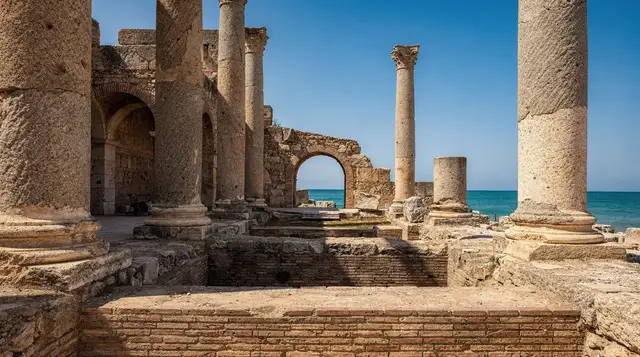
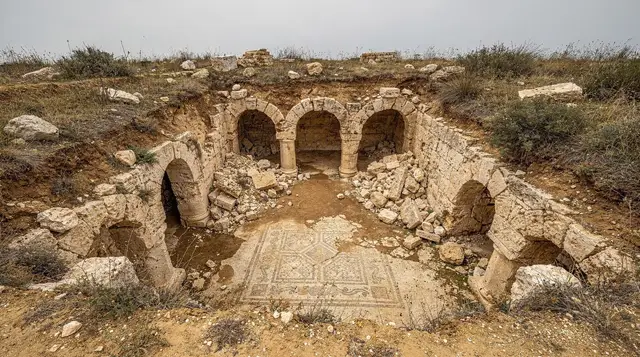
Byrsa hill is the natural starting point, both for its Punic quarter and the national museum that sits atop it, giving useful context for everything that follows across the rest of the site. From there, the Antonine baths and the Punic ports sit close together near the coast, an easy fifteen-minute taxi ride or a longer walk downhill from Byrsa. Budget two to three hours for this core circuit if you want more than a cursory look at each stop — the Byrsa hill and Carthage museum guide, the Antonine baths of Carthage guide and the Punic ports of Carthage guide each go into what’s worth prioritising if time is tight.
The Carthage multi-site ticket covers most of these stops on a single pass, bought at whichever site you reach first, and is considerably better value than paying per site. The Carthage multi-site ticket guide explains exactly what it includes and where the ticket booths are.
| Carthage stop | Time to allow | What it covers |
|---|---|---|
| Byrsa hill & museum | 60–75 minutes | Punic quarter, national museum |
| Antonine baths | 45–60 minutes | Roman bath complex ruins, sea view |
| Punic ports | 30–45 minutes | Phoenician harbour remains |
Midday: getting from Carthage to Sidi Bou Said
The TGM line continues north from Carthage’s stations to Sidi Bou Said, a journey of ten to fifteen minutes, making the transition between the two halves of the day genuinely simple. From the Sidi Bou Said station, it’s a steep but short uphill walk into the town itself — worth knowing in advance if anyone in your group has mobility concerns, since there’s no vehicle access into the pedestrianised centre. The getting around Tunis guide has the wider transport picture if you’re combining this with other stops on the same trip.
Afternoon: Sidi Bou Said
Sidi Bou Said’s appeal is less about individual sights and more about the whole — blue doors and shutters against whitewashed walls, steep cobbled streets, and cafés positioned for views out over the Gulf of Tunis. Café des Nattes, on the main square, is the best-known stop and worth at least a coffee even given its reputation as a tourist fixture, while the quieter streets above and below the main drag reward slow wandering without a fixed itinerary. Budget two to three hours here, more if you want a proper sit-down lunch rather than a quick café stop.
The town’s viewpoints toward Carthage and the bay are best appreciated in the softer light of late afternoon, which is part of why the Carthage-first sequence tends to produce a better day overall. The Sidi Bou Said complete guide and the cafés of Sidi Bou Said guide both go deeper into what the town offers beyond a first walk-through.
Doing it as an organised tour instead
For anyone who’d rather not sequence the TGM stops and ticket logistics independently, several guided options cover the same ground with a driver and guide included. From Tunis: Half-Day Tour to Carthage and Sidi Bou Said compresses the day into a faster half-day format for anyone with limited time, moving through the Roman and Punic sites before ending in Sidi Bou Said without the full afternoon this guide otherwise recommends.
For the fuller version with the same core route but the day’s pace stretched out and lunch included, Tunis: Medina, Carthage and Sidi Bou Said private day trip with lunch and Tunis: Carthage, Sidi Bou Said and Medina private day tour both add a stop in the Tunis medina to the same circuit, useful for a first full day in the country covering the capital’s core highlights in one guided loop.
For travellers who also want the Bardo museum’s mosaic collection folded into the same day, Tunis: Medina, Carthage, Sidi Bou Said and Bardo private tour is the most complete single-day option, though it makes for a genuinely long day and suits travellers with only one full day in Tunis rather than those with time to spread things out.
Combining with the medina instead of doing it as a standalone day
If your itinerary already has a separate day set aside for the Tunis medina, keeping Carthage and Sidi Bou Said as their own dedicated day tends to give each stop more breathing room than folding all three into a single marathon. The medina walking route guide covers that separate day in detail, and the how many days in Tunis guide helps weigh whether your overall trip length supports splitting things out this way.
Where to eat along the way
Lunch fits most naturally in Sidi Bou Said rather than at Carthage, where food options within the archaeological park are limited to a handful of small cafés rather than proper restaurants. Sidi Bou Said’s cafés cluster around the main square and along the streets leading up from it, ranging from tourist-facing spots with sea views to quieter corners favoured by locals. A plate of grilled fish with a view over the bay is the obvious choice for anyone wanting a sit-down meal rather than a quick pastry and coffee. The seafood in La Goulette and La Marsa guide covers a nearby alternative if you’d rather eat on the way back toward Tunis instead of in Sidi Bou Said itself.
Photography and the best viewpoints
Sidi Bou Said rewards a camera more than almost anywhere else within easy reach of Tunis, and the light matters more here than at most stops on this route. Late afternoon sun catches the blue doors and whitewashed walls at their best, which is another reason the Carthage-first sequence works better than the reverse. The upper streets near the town’s highest points give the clearest views back down toward the bay and, on a clear day, toward Carthage itself. At Carthage, the terrace above the Antonine baths offers the single best sea view of the morning half of the day, worth a few unhurried minutes rather than a quick photo and move-on.
Budget breakdown for the day
| Item | Approximate cost |
|---|---|
| TGM return fares (both legs) | 2–3 TND |
| Carthage multi-site ticket | ~12 TND (about €3.50) |
| Café stop in Sidi Bou Said | 8–15 TND |
| Sit-down lunch | 20–35 TND |
| Total, independent | Roughly 45–65 TND (€14–€20) |
This compares favourably with an organised half-day or full-day tour, which typically runs from 60 TND upward per person once a driver, guide and lunch are included, though the tour removes the need to plan transport, tickets and timing yourself. The Tunis budget guide has the wider cost context if this is one stop among several in a longer trip.
When to go
Spring and autumn give the most comfortable conditions for the walking this day involves, particularly the exposed terraces at Carthage’s Roman sites and the steep streets of Sidi Bou Said. Summer is workable with an early start and plenty of water, but the shadeless stretches at Carthage get genuinely uncomfortable by early afternoon. Winter works well for the archaeological sites but can mean a chillier, occasionally rainy Sidi Bou Said afternoon — worth checking the Tunis weather month by month guide before locking in a date.
Mistakes to avoid on this route
Frequently asked questions about the Carthage and Sidi Bou Said day trip
Can you really do Carthage and Sidi Bou Said in a single day without a car?
Yes — the TGM light rail connects central Tunis to both directly, and the whole loop typically takes six to eight hours including lunch and a proper look around each stop.
Which should you visit first, Carthage or Sidi Bou Said?
Carthage first is the better sequence, since it puts the more exposed, sun-dependent archaeological sites in the cooler morning hours and saves Sidi Bou Said’s cafés for a relaxed afternoon.
How much does this day trip cost independently?
Under 30 TND (roughly €9) per person covers the TGM fares and the Carthage multi-site ticket, before food, making it one of the cheapest full days available from Tunis.
Is a guided tour worth it for this route?
It suits travellers who’d rather not manage the TGM stops and ticket logistics themselves, or who want to combine the day with the medina or Bardo museum in one guided loop.
How much walking is involved?
A moderate amount — Carthage’s sites are spread across a park requiring some walking or short taxi hops between them, and Sidi Bou Said involves a steep uphill walk from the train station into the town centre.
Is Sidi Bou Said worth visiting if you’ve already seen similar hillside towns elsewhere?
Yes, on its own terms — the specific combination of the blue-and-white architecture, the café culture, and the view back toward Carthage makes it distinct rather than interchangeable with other coastal towns.
What’s the best time of year for this day trip?
Spring and autumn offer the most comfortable walking conditions for both halves of the day; summer works with an early start, and winter is fine for Carthage but can mean a cooler, occasionally wet Sidi Bou Said afternoon.
Can this day trip be combined with the Tunis medina in one day?
Yes, on an organised private tour, though it makes for a long day; independent travellers with more than one day available often get more out of keeping the medina as a separate outing.
Roman & Punic site tours on GetYourGuide
Verified deep-linked GetYourGuide tours. Book through these links and we earn a small commission at no cost to you.
These are our own photographs of Tunisia, not the operator's pictures of this tour — open the tour page to see those.