Accessible travel in Tunis
Is Tunis accessible for travellers with reduced mobility?
Only partially. The medina's uneven cobblestones, stepped alleys and lack of ramps make independent wheelchair or walker use genuinely difficult in the old town, and several major sites, including parts of the Bardo museum and most archaeological ruins, have uneven ground or stairs with no step-free alternative. Modern Tunis — Les Berges du Lac, Ville Nouvelle's main boulevards, and purpose-built resort hotels on the coast — is considerably easier, and private transfers and guided tours can bridge much of the gap for the harder sites.
Tunis is an old Mediterranean capital built long before accessibility was a design consideration, and it shows most clearly in exactly the places visitors most want to see: the medina’s tangled, cobbled alleys, and archaeological sites laid out across uneven excavated ground. This isn’t a reason to rule out a trip if you or a travelling companion has reduced mobility, but it does mean planning around the city’s real limitations rather than assuming ramps, lifts and level pavement will be there when needed. This guide covers what actually works, what doesn’t, and where paying for private transport and guiding genuinely solves problems that public infrastructure won’t.
| Where | Applies most acutely in the medina and at archaeological sites; modern Tunis is easier |
| Cost | Private transfers and guided tours cost more than public transport but solve most access gaps |
| Time needed | Build in more time than usual for any medina or site visit |
| Getting there | Private vehicle transfer is the most reliable option across the city |
| Best time | Cooler months, since uneven ground and heat together are more tiring |
The honest starting point
Tunisia has made only partial progress on accessibility infrastructure compared with Western Europe, and Tunis reflects that unevenly: newer developments and international hotels tend to meet a reasonable modern standard, while the historic core and most archaeological sites simply weren’t built with wheelchairs, walkers or limited stamina in mind. Kerbs are inconsistent, dropped kerbs are rare outside the newest boulevards, and lifts are far from guaranteed even in buildings that clearly have stairs and multiple floors. None of this makes Tunis impossible to visit with reduced mobility — plenty of travellers do it successfully — but it does mean the trip works better when planned around known constraints rather than discovered on the day.
The medina: the hardest part of the city
The medina of Tunis is the single biggest accessibility challenge in the destination, and it’s worth being direct about why: the alleys are narrow, frequently stepped rather than sloped, paved in old, uneven cobblestone or worn stone that’s been polished smooth by centuries of foot traffic, and busy enough with pedestrian and occasional vehicle traffic that manoeuvring a wheelchair or walker through the crowds adds a further layer of difficulty beyond the surface itself. Some stretches, particularly around the main souk thoroughfares near Ez-Zitouna mosque, are relatively wide and manageable for a short distance with assistance; others narrow into stepped lanes that simply have no accessible alternative route.
A realistic approach for a visitor with limited mobility is to treat the medina as a place for a shorter, assisted visit to its most level, central stretches rather than attempting the kind of extensive wandering that able-bodied visitors do. Going with a companion, or on a guided tour where the guide can identify the flattest practical route in advance, makes a meaningful difference.
Tunis: Cultural walk through the capital’s most beautiful sights can be discussed with the operator in advance for a route adapted to mobility needs, and covers a version of the medina’s core sights without assuming a full, extensive walking circuit. The medina walking route guide is useful groundwork even if you plan to shorten or adapt it, since it flags which stretches are relatively level.
Museums and indoor sites
The Bardo museum, the country’s premier collection of Roman mosaics, is only partially accessible: the ground floor’s main halls are reasonably navigable, but a significant part of the collection is displayed across upper floors reached by stairs, and lift access, where it exists, isn’t always reliable or clearly signed for visitor use. Anyone planning a Bardo visit with mobility needs is well served contacting the museum or a tour operator in advance to confirm current lift access, since renovations and operational status change. The Bardo museum complete guide covers the collection’s layout in detail, which helps in deciding which galleries matter most if a full circuit isn’t practical.
Smaller dar museums in the medina, converted from historic townhouses, are frequently worse rather than better on this front, since many retain original stepped courtyard entrances and multiple half-flights between rooms with no modern retrofit. The medina palaces and dar museums guide is worth reading with this in mind before planning a visit around one specifically.
| Site type | Typical accessibility | Notes |
|---|---|---|
| Bardo museum | Partial | Ground floor manageable; upper floors stepped |
| Medina dar museums | Limited | Historic courtyards, frequent internal steps |
| Carthage archaeological park | Limited | Uneven excavated ground, some gravel paths |
| Modern Tunis hotels | Good | Purpose-built with lifts and level access |
Archaeological sites
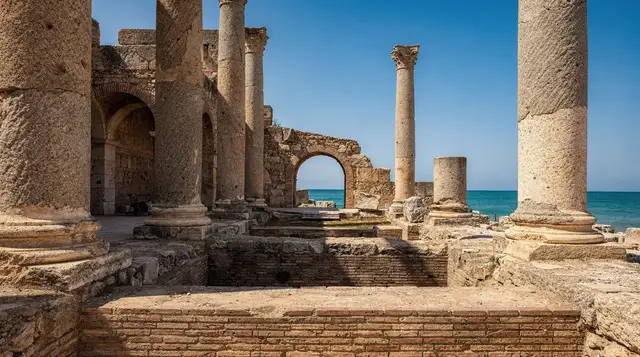
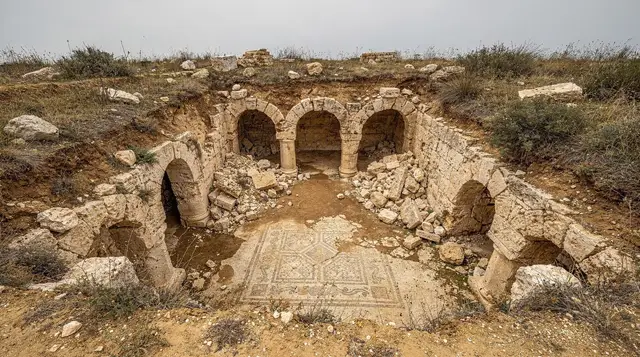
This is the second major constraint, and it’s structural rather than fixable: archaeological sites by their nature preserve excavated ruins, and Carthage, Dougga, El Djem and similar sites all involve walking across uneven ground, loose gravel, low stone thresholds and occasionally genuine stairs, particularly at El Djem’s amphitheatre, where the upper tiers are reached by worn stone steps with no lift alternative. The El Djem amphitheatre guide and Carthage archaeological sites guide both describe the physical terrain in enough detail to judge in advance what’s realistic.
Ground-level viewing is usually still possible even where the fuller circuit isn’t — El Djem’s arena floor and lower tiers are accessible without the same climbing required for the top rows, and much of Carthage’s Antonine baths and Punic ports sit on relatively level parkland paths rather than genuine ruins requiring scrambling. Dougga is the most physically demanding of the well-known sites, spread across a genuinely large hillside with minimal level ground; the Dougga complete guide is worth reading closely if mobility is a significant factor in deciding whether to include it.
Transport
Private vehicle transport is by far the most reliable way to move around Tunis with reduced mobility, since it removes the variables of station access, vehicle boarding and unpredictable walking distances that public transport introduces. The TGM light rail has platform-level boarding at most stations but older rolling stock that isn’t consistently step-free, and the TGM guide is worth checking for current accessibility notes before relying on it.
Standard taxis are ordinary saloon cars without wheelchair-accessible modification as standard, so anyone travelling with a wheelchair that doesn’t fold into a normal boot should arrange this specifically in advance rather than assuming a street-hailed taxi will accommodate it.
Tunis: Carthage, Sidi Bou Said & Medina private day tour is a practical option precisely because it removes the unpredictability of public transport for a full day covering several sites, with a private vehicle and driver arranged around your own pace. For journeys beyond central Tunis, From Tunis: Full-day El Jem and Monastir tour similarly bundles transport with the visit itself, which is considerably easier than coordinating a self-driven day trip around uncertain parking and walking distances. The getting around Tunis guide and car hire in Tunisia guide cover the wider transport picture if a private hire car with driver suits your trip better than guided tours.
Where to stay
Modern hotels in Les Berges du Lac and along the northern coast toward Gammarth are generally the most reliably accessible accommodation in the Tunis area, purpose-built with lifts, level entrances and, at the larger international chains, accessible rooms designed to a recognisable modern standard.
Smaller riads and guesthouses inside or near the medina, whatever their charm, are considerably less consistent: many occupy converted historic buildings with internal stairs, raised thresholds and no lift, and accessibility should always be confirmed directly with the specific property rather than assumed from photos or general listings. The where to stay in Tunis guide breaks down neighbourhoods and property types in more detail, which is a useful starting point before contacting properties individually about specific access needs.
A gentler alternative day
Not every day in Tunis needs to involve the medina or an archaeological site. Beginner pottery workshop on a quiet farm near Tunis takes place on level rural ground away from the city’s toughest terrain, and is worth considering as a lower-intensity alternative activity that still offers a genuine cultural experience without the physical demands of a full medina or ruins circuit — worth discussing directly with the operator in advance regarding specific access needs at the venue.
Sidi Bou Said and other hillside towns
Sidi Bou Said, the whitewashed hilltop town popular for its cafés and viewpoints, adds a further layer of difficulty on top of the medina’s general terrain problems: the town is genuinely steep, with its main pedestrianised street climbing at a noticeable gradient over cobblestones from the lower car park and TGM station up toward the main square and café terraces. There’s no vehicle access to the upper town, and no accessible alternative route around the incline, which makes it one of the more physically demanding stops on a typical Tunis day out despite its short overall length.
Visitors with limited stamina or mobility are better served allowing generous time, resting at the shaded café terraces partway up, and treating the climb itself as the main physical commitment of the visit rather than an incidental detail. The Sidi Bou Said complete guide describes the layout in enough detail to judge realistically what the climb involves before committing to it.
Carthage’s museum at Byrsa hill presents a similar, smaller-scale challenge: the hilltop site itself is reached by a climb, and once there, the museum’s galleries are spread across more than one level with limited lift provision. The Byrsa hill and Carthage museum guide is worth reading alongside the wider Carthage guide when deciding how much of the site to prioritise.
Restaurants, cafés and everyday access
Away from major sights, everyday accessibility in Tunis is a mixed picture that mirrors the city generally: modern restaurants and cafés along Avenue Habib Bourguiba and in Les Berges du Lac tend to have level or ramped entrances and reasonably wide interior spacing between tables, while smaller, older establishments in the medina and Ville Nouvelle’s side streets frequently have a raised step at the entrance and tightly packed seating with little room to manoeuvre. Toilets, where available at all in smaller cafés, are rarely accessible-standard. None of this is unusual for an older Mediterranean city, but it’s worth building into day-to-day expectations rather than assuming a level of consistency you’d find in a newer destination.
Practical planning tips
Contact hotels, the Bardo museum and any tour operator directly about specific access needs well before travelling, since availability of lifts, ramps and adapted vehicles isn’t always reflected accurately in general listings. Build extra time into any itinerary involving the medina or an archaeological site, since uneven ground is more tiring and slower to navigate than level pavement, even with assistance. A private driver for the full day removes a large share of the unpredictability that public transport introduces.
Frequently asked questions about accessible travel in Tunis
Is the medina of Tunis wheelchair accessible?
Only partially. Some central stretches are relatively level, but much of the medina involves cobbled, uneven or stepped alleys with no accessible alternative route, making a full independent circuit difficult.
Is the Bardo museum accessible for visitors with limited mobility?
Partially. The ground floor’s main halls are reasonably navigable, but a significant part of the collection sits on upper floors reached by stairs, with lift access not always reliable.
Are taxis in Tunis wheelchair accessible?
Standard taxis are ordinary saloon cars without wheelchair modification as standard. Adapted transport should be arranged specifically in advance rather than assumed.
Which archaeological sites are easiest for visitors with reduced mobility?
Carthage’s Antonine baths and Punic ports sit on relatively level parkland paths compared with more demanding sites like Dougga, which spreads across a large, largely unlevel hillside.
Are modern hotels in Tunis accessible?
Generally yes, particularly larger international properties in Les Berges du Lac and along the northern coast, which are more likely to have lifts and accessible rooms than historic medina guesthouses.
Is private transport worth it for accessible travel in Tunis?
Yes, it’s the most reliable way to manage unpredictable walking distances and station access issues that public transport in Tunis doesn’t fully solve.
Can a guided tour be adapted for mobility needs?
Many can, particularly private tours where pace and route can be discussed with the operator in advance; it’s worth raising specific needs directly when booking rather than assuming a standard itinerary will fit.
Is El Djem’s amphitheatre accessible?
The arena floor and lower tiers are reachable without significant climbing, but the upper tiers are reached by worn stone steps with no lift alternative.
Trip-planning essentials on GetYourGuide
Verified deep-linked GetYourGuide tours. Book through these links and we earn a small commission at no cost to you.
These are our own photographs of Tunisia, not the operator's pictures of this tour — open the tour page to see those.