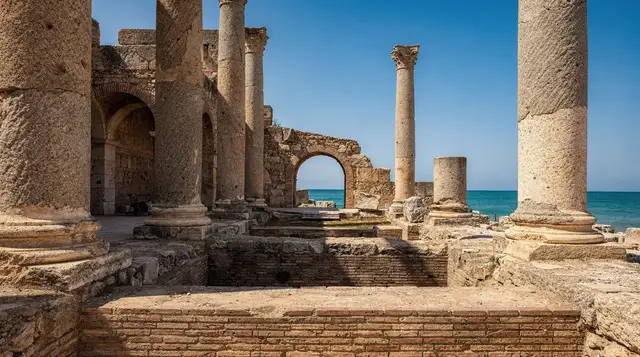
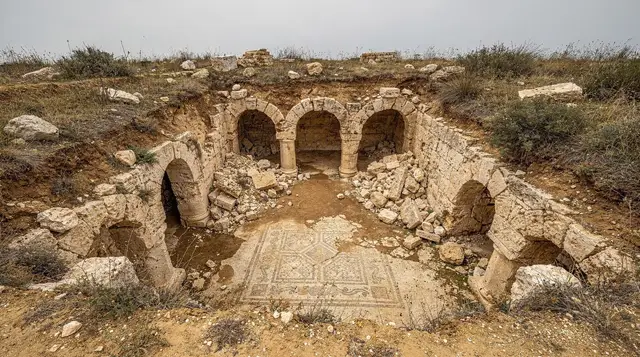
El Djem, from the top tier
Most visitors to El Djem spend their time on the arena floor, understandably, since standing where gladiators once stood is the whole draw for a lot of people. I did that too, and then noticed the stone stairways leading up into the tiers and decided the climb looked more interesting than another ten minutes at ground level. It was. From the top, the amphitheatre stops being a ruin you walk around and becomes a piece of engineering you can actually read, tier stacked on tier, built to move thousands of people in and out efficiently, on a scale that’s hard to register from below.
What the ground floor doesn’t show you
At arena level, El Djem’s amphitheatre is genuinely impressive, one of the best-preserved Roman amphitheatres anywhere, larger than the arena at Pompeii and rivalled in North Africa by nothing else standing. The El Djem amphitheatre: a complete guide covers the ground-level visit properly, the underground chambers where animals and equipment were once stored, the arena floor itself, the sheer thickness of the outer walls. What it can’t fully convey without photographs from height is the structure’s scale relative to the modern town around it, a smallish agricultural centre that the third-century amphitheatre still dwarfs completely.
| Level | What you see | Effort required |
|---|---|---|
| Underground chambers | Storage rooms, animal pens | Minimal, flat access |
| Arena floor | The performance space itself | Minimal |
| Middle tiers | Structural detail, partial views | Moderate stairs |
| Top tier | Full panorama over town and plain | Steeper stone stairs, some uneven surfaces |
The climb itself
The stairways are original stone, uneven in places and without handrails for much of the route, which is worth knowing before you start if mobility or vertigo are a concern. It isn’t a difficult climb by any serious measure, ten to fifteen minutes at a steady pace, but it demands more care than a modern staircase would, and sensible shoes make a real difference. Nobody rushes you and there’s no additional ticket for going up; it’s included in the standard entrance, which makes the relatively modest number of visitors who bother to climb all the way up slightly surprising.
What you actually see from the top
Looking down, the full geometry of the amphitheatre becomes obvious in a way it simply isn’t from the arena floor, tier after tier of stone seating curving around the oval below, the underground passages visible as dark openings at the centre. Looking out, the view runs over the rooftops of modern El Djem, a town that grew up literally in the amphitheatre’s shadow, and beyond it the flat agricultural plain of the Sahel stretches to the horizon in every direction, olive groves and open fields with almost nothing to interrupt the view. It’s a genuinely different way of understanding the site, closer to how a Roman engineer might have thought about it than the tourist’s-eye view from ground level.
A city tour of Mahdia by bike or e-scooter is a good way to fill the rest of a day trip that starts with El Djem, covering a coastal town with its own distinct character within a reasonable drive.
How much time to actually budget
Most guided day trips allow an hour to ninety minutes at the amphitheatre, and that’s enough if you move efficiently between the underground chambers, the arena and a climb to at least the middle tier. Getting all the way to the top and taking time to actually look around adds perhaps twenty minutes to that, worth building in deliberately rather than hoping it happens organically at the end of a rushed visit. A day trip to El Djem covers the logistics of getting there and back from Tunis, Sousse or Hammamet if you’re planning the visit independently.
| From | Approximate driving time |
|---|---|
| Tunis | 2.5–3 hours |
| Sousse | 45–60 minutes |
| Hammamet | 1.5 hours |
| Mahdia | 45 minutes |
The museum, and whether it’s worth the extra time
A short walk from the amphitheatre, the archaeological museum holds mosaics recovered from villas around the town, a smaller, quieter counterpart to the amphitheatre itself. The archaeological museum of El Djem is worth thirty to forty minutes if your schedule allows it, less essential than the amphitheatre itself but a reasonable way to round out the visit without adding much time.
Combining El Djem with the coast
Most day trips from the Sahel coast pair El Djem with one or two coastal towns, and the combination works well since the amphitheatre alone, however impressive, is a fairly compact single-site visit. A city tour of Monastir covers the ribat and marina of a town with a genuinely different, coastal character from El Djem’s inland plain setting, and Sousse and Monastir in a day lays out a route combining both towns if you’d rather arrange the day independently.
Sousse itself has its own archaeological museum, a smaller counterpart to El Djem’s collection, worth folding into the same day if the pace allows it. Further afield on the Cap Bon peninsula, a full-day Cap Bon experience covering artisans and ancient history gives a sense of how much variety sits within a few hours’ drive of Tunis, even for visitors who’ve already dedicated a day specifically to El Djem.
Where El Djem sits among Tunisia’s Roman sites
Roman sites near Tunis, ranked by what you actually see places El Djem consistently near the top of most serious comparisons, and having now seen both the ground floor and the view from above, I understand why. Few Roman sites anywhere let you experience the structure’s engineering this directly, and fewer still let you do it without an extra fee or a separate booking. Roman Tunisia in five days builds a full itinerary around sites like this one if the amphitheatre leaves you wanting more, and the best day trips from Tunis is worth a look if El Djem is only one stop on a longer wish list.
Mistakes to avoid
Frequently asked questions about visiting El Djem’s amphitheatre
Is climbing to the top tier included in the standard entrance ticket?
Yes, there’s no separate fee for access to the upper levels; the stairways are open to all ticketed visitors during normal opening hours.
Is the climb difficult?
Not technically difficult, but the original stone stairs are uneven and lack handrails in places, so it demands more care than a modern staircase and isn’t ideal for anyone with significant mobility limitations.
How long should I plan for a full visit, top tier included?
Around ninety minutes to two hours to properly cover the underground chambers, the arena floor and a climb to the top, plus the nearby museum if time allows.
Is El Djem worth visiting if I’ve already seen the Colosseum in Rome?
Yes — it’s smaller than the Colosseum but far better preserved in places, and considerably less crowded, which changes the experience of the site substantially.
What’s the best time of day to visit?
Morning or late afternoon, both to avoid the midday heat, since the amphitheatre offers very little shade at any level.
Can El Djem be visited as a day trip from Tunis?
Yes, though it’s a longer drive, around two and a half to three hours each way, so it’s more commonly combined with an overnight stay on the Sahel coast or paired with closer sites.
Is the museum worth the extra time?
It’s a worthwhile addition if you have thirty to forty minutes spare, with well-preserved mosaics recovered from villas around the town, though it’s secondary to the amphitheatre itself.
How does El Djem compare to other Roman sites in Tunisia?
It’s consistently ranked among the top Roman sites in the country for what you can actually see and access, standing apart from sites like Dougga or Bulla Regia, which are larger in footprint but architecturally less dramatic.
Roman & Punic site tours on GetYourGuide
Verified deep-linked GetYourGuide tours. Book through these links and we earn a small commission at no cost to you.
These are our own photographs of Tunisia, not the operator's pictures of this tour — open the tour page to see those.