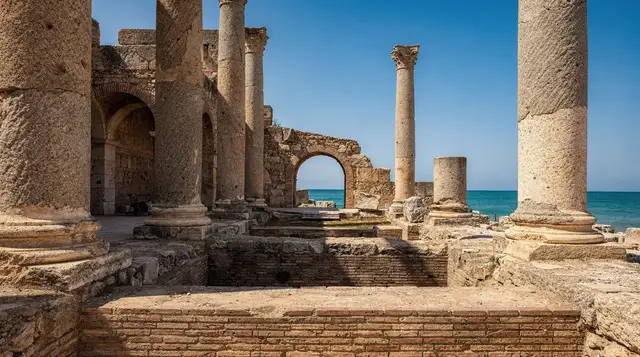
El Djem is a small farming town in the Sahel, roughly halfway between Sousse and Sfax, that exists in most travellers’ minds for one reason: a Roman amphitheatre that rises out of flat wheat fields like nothing else in Tunisia. It was built in the early third century AD, seated around 35,000 people, and today stands as one of the best-preserved Roman amphitheatres anywhere, ranked alongside the Colosseum and the arena at Verona for scale.
Beyond the amphitheatre and a modest archaeological museum on the edge of town, there is very little to see — El Djem is a half-day stop, not a destination to build a multi-night trip around. Most visitors combine it with Kairouan, Sousse, Mahdia or a longer loop through Roman Tunisia. This page covers what the amphitheatre actually looks like inside, the museum, realistic timings, and every practical way to get there.
| Where | El Djem, Mahdia governorate, about 60km south of Sousse |
| Cost | Amphitheatre entry around 12-14 TND (about €3.50-4.50); museum ticket separate, around 8 TND (about €2.50) |
| Time needed | 1-2 hours for the amphitheatre, 30-45 minutes for the museum |
| Getting there | Train from Tunis or Sousse (Tunis-Sfax line), louage from Sousse or Kairouan, or an organised day tour |
| Best time | Early morning, before the heat and the tour-bus groups arrive mid-morning |
A colosseum in a wheat field
Nothing prepares you for the scale of the thing against its setting. Rome’s Colosseum sits inside a dense city, surrounded by other ruins and modern buildings that give it context and, in a way, dilute its impact. El Djem’s amphitheatre stands almost alone, ringed by low houses and open agricultural land, so the stone rises out of nowhere and dominates the skyline of the whole town.
It was built under the proconsul Gordian around 230 AD, at a time when this part of Roman Africa — then called Thysdrus — had grown wealthy on olive oil exports. The amphitheatre was never quite finished; work on some of the upper tiers stopped when the Gordian dynasty’s brief bid for imperial power collapsed within weeks. That unfinished quality is part of what makes it interesting: you can see the raw construction logic of a Roman arena without centuries of later modification smoothing it over.
Inside the arena
Visitors today walk directly onto the arena floor, something that isn’t possible at the Colosseum, where the floor has been reconstructed over the underground chambers and only partial sections are viewable from above. At El Djem, wooden walkways lead you down into the hypogeum — the underground network of corridors, cages and lift shafts where animals and fighters waited before being raised into the arena through trapdoors.
Walking through these tunnels, with sunlight cutting through gaps overhead, gives a far more visceral sense of how the space actually worked than standing in the stands ever could. Back at ground level, you can climb sections of the tiered seating on stone stairways that are original, not reconstructed, and from the upper levels the view stretches over the whole town and the surrounding plain. Guides at the entrance offer commentary for a negotiable fee, and if your visit is self-guided, a short guidebook or the notes on your phone will fill in more than the sparse on-site signage does.
The archaeological museum
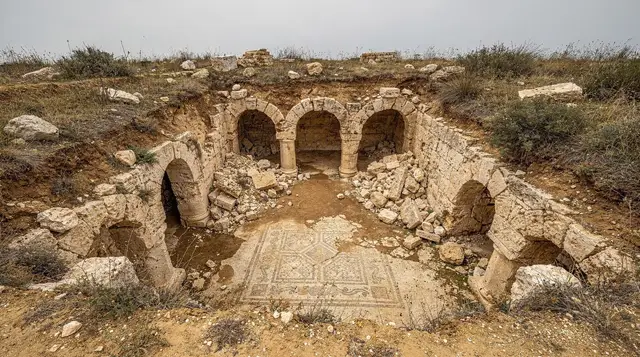
A five to ten minute walk (or a short taxi ride) from the amphitheatre, El Djem’s archaeological museum sits on the site of an excavated Roman villa and houses one of the country’s best mosaic collections outside the Bardo in Tunis. The mosaics were lifted from villas around Thysdrus and depict hunting scenes, mythological figures and geometric patterns in remarkable condition, arranged both indoors and around a peristyle garden that echoes the villa’s original layout.
It’s a compact museum — most people are through in half an hour to forty-five minutes — but it rewards a visit precisely because it explains the wealth that paid for the amphitheatre in the first place. Skip it only if you’re pressed for time; it isn’t essential in the way the amphitheatre is, but it’s the best short add-on El Djem offers.
The town itself
Away from the two sites, El Djem is an ordinary small Tunisian town — a main street with cafés, a market, a handful of basic restaurants, and not much aimed at tourists beyond a few souvenir stalls near the amphitheatre entrance. There’s no old medina to wander, no waterfront, nothing resembling the atmosphere of Sousse or Kairouan. Some visitors are surprised by how quickly there is nothing left to do once the amphitheatre and museum are ticked off; that’s normal, and it’s the reason almost nobody stays overnight here. Treat El Djem as a stop, have a coffee or a simple lunch near the main square if you’re waiting for a train or louage, and move on.
How long you actually need
Be honest with yourself about timing. The amphitheatre alone takes 45 minutes if you move briskly, or up to two hours if you linger in the underground galleries, climb to the upper tiers and read every information panel. Add the museum and a coffee break and you’re looking at three hours maximum for the full stop, door to door. Tour itineraries that allocate a full day to El Djem alone are padding the schedule — the honest slot is a half day, which is exactly why most operators bundle it with Kairouan, Sousse or Monastir rather than selling it alone.
Getting there from Tunis
El Djem sits on the Tunis-Sfax railway line, and the train is the most comfortable independent option from the capital — journey time is roughly 3 to 3.5 hours depending on the service, with the amphitheatre visible from the station platform. Louages (shared taxis) run from Tunis’s southern louage station but involve a change, usually in Sousse or Sfax, and the journey rarely beats the train on comfort. Given the distance, most people based in Tunis join an organised day trip rather than travelling independently, since a return rail journey alone eats up six to seven hours before you’ve seen anything. If you want the amphitheatre without the logistics, an organised tour is the practical choice.
a full-day tour from Tunis covering El Djem and Monastir handles the long transfer and pairs the amphitheatre with Monastir’s ribat and marina, which softens what would otherwise be a very long day on the road for one site.
Getting there from Sousse, Kairouan and Mahdia
El Djem is far easier to reach from the Sahel coast than from Tunis. From Sousse it’s about an hour by louage or roughly 75-90 minutes by train, making it a realistic half-day trip on its own or combined with Kairouan, which sits a similar distance away on a different road. From Mahdia, the drive is under an hour. Because of this, day-trip combinations built around Sousse or Kairouan tend to feel less rushed than ones starting in Tunis — you spend proportionally more time at the sites and less time in transit.
a day trip from Sousse combining Kairouan’s holy city with the El Djem amphitheatre is a good fit if you want both the amphitheatre and Kairouan’s Great Mosque without arranging transport yourself. For a shorter outing, a half-day tour from Sousse covering just the amphitheatre and museum matches the realistic time needed on site without adding a second stop that pushes the day long.
Combining El Djem with Kairouan
Kairouan and El Djem are frequently paired, and it makes sense geographically — both sit inland from the Sahel coast, roughly 60km apart by road, and a single vehicle can cover both without doubling back. The combination also works thematically as a contrast: Kairouan is one of Islam’s holy cities, home to the Great Mosque and a walled medina, while El Djem is purely Roman.
Seeing both in one day means switching context completely halfway through, which some travellers find refreshing and others find rushed. If the Great Mosque, the medina and the amphitheatre all interest you equally, budget a full day and expect a long one; if you’d rather linger in Kairouan’s medina, consider splitting the two across separate outings instead of forcing them into one itinerary. For more on Kairouan itself, see the Kairouan destination guide.
a guided tour from Tunis to Kairouan and the El Djem amphitheatre is the most popular way to see both from the capital in a single day, with a guide handling the long drive and giving context at each stop.
El Djem versus other Roman sites near Tunis
Tunisia has more Roman ruins than most visitors expect, and El Djem is only one entry point. The table below sets it against the other major sites reachable from Tunis, to help decide where to spend limited time.
| Site | Distance from Tunis | What it’s known for | Realistic time on site |
|---|---|---|---|
| El Djem | ~200km (Sahel) | Third-largest Roman amphitheatre, underground galleries | 1.5-2 hours |
| Dougga | ~110km | Best-preserved Roman town in North Africa, hilltop theatre | 2-3 hours |
| Carthage | In Tunis | Punic and Roman ruins, Antonine Baths, seaside setting | 2-4 hours |
| Bulla Regia | ~170km | Underground Roman villas with intact mosaics | 1.5-2 hours |
| Thuburbo Majus | ~60km | Forum, capitol, smaller crowds | 1-1.5 hours |
For a longer comparison of Dougga against Carthage, see the Carthage versus Dougga guide, and for a full ranking of every Roman site within reach of the capital, the Roman sites near Tunis, ranked guide covers all of them in one place.
Practicalities: heat, shade and timing your visit
El Djem’s arena has almost no shade, and the stone seating absorbs and radiates heat through the afternoon. In summer (June to August), arrive at opening time — the site gets uncomfortably hot by mid-morning and stays that way until early evening. Spring and autumn are more forgiving and are the best months for a comfortable visit without sacrificing daylight.
Bring water; there are a couple of small shops near the entrance but nothing inside the site itself. Winter mornings can be genuinely cold before the sun is up, so a layer is worth carrying even though the days warm quickly. If you’re combining El Djem with Kairouan on a Friday, note that the Great Mosque’s non-Muslim visiting hours are restricted around midday prayers, which affects how you sequence a combined day trip.
Day-trip combinations worth considering
Beyond Kairouan, El Djem pairs reasonably with a handful of other stops depending on where your trip is based.
| Combination | Best based from | Realistic day length |
|---|---|---|
| El Djem + Kairouan | Sousse or Tunis | Full day |
| El Djem + Monastir | Tunis or Sousse | Full day |
| El Djem only | Sousse or Mahdia | Half day |
| El Djem + Kairouan + Sousse (with lunch) | Tunis | Very full day |
a day trip from Tunis covering Kairouan, El Jem and Sousse with lunch included is the most complete single-day option if you only have one day to spend on the whole Sahel region, though it’s a long day on the road and better suited to travellers who prioritise ticking off sites over lingering at any one of them. If your itinerary already includes Roman sites elsewhere, the Roman Tunisia itinerary shows how El Djem fits alongside Dougga, Carthage and Bulla Regia over several days, and the UNESCO Tunisia itinerary places it in the context of the country’s other World Heritage sites.
Practical planning and nearby stops
If El Djem is one stop on a wider loop through the Sahel and central Tunisia, it’s worth reading up on the towns around it before deciding how to sequence your days. The Sousse destination guide and Mahdia destination guide both cover coastal bases within an hour of El Djem, while the Monastir destination guide is useful if you’re flying in or out of Monastir’s airport, which sits closer to El Djem than Tunis-Carthage does.
For getting between towns without a rental car, the trains in Tunisia guide and getting around Tunis guide cover schedules, ticket buying and what to expect from Tunisian rail stations, and the best day trips from Tunis guide places El Djem among the other realistic options from the capital.
For a deeper single-site guide with more detail on tickets and layout than fits here, see the El Djem amphitheatre guide and the El Djem archaeological museum guide; for a step-by-step day-trip plan, the El Djem day trip guide walks through timing in more detail. One visitor’s account of the climb to the top tier is worth reading before you go: El Djem, from the top tier.
Frequently asked questions about visiting El Djem
Is the El Djem amphitheatre worth the trip from Tunis?
For anyone interested in Roman history, yes — it’s one of the best-preserved amphitheatres in the world and the underground galleries are genuinely distinctive. The caveat is the distance: a round trip from Tunis takes most of a day, so it works best as part of an organised tour or combined with Kairouan or Monastir rather than as a solo dash from the capital.
How much does it cost to enter?
Budget around 12-14 TND (roughly €3.50-4.50) for the amphitheatre and a separate 8 TND (around €2.50) for the archaeological museum. Prices are set by the national heritage authority and do change periodically, so treat these as an order of magnitude rather than a fixed number, and expect to pay in cash.
Can you go inside the underground passages?
Yes, wooden walkways lead visitors down into the hypogeum beneath the arena floor, where the corridors and animal cages used during Roman-era events are still visible. This is one of the few places among major Roman amphitheatres where the underground level is fully open to the public rather than viewable only from above.
How does El Djem compare to Dougga?
They’re different in character rather than one being simply better. Dougga is a full Roman town with a forum, temples, baths and a hilltop theatre spread across a large hillside site, while El Djem is a single monumental building. Dougga rewards a longer, slower visit; El Djem delivers its impact faster but in a narrower way. The Carthage versus Dougga guide covers the town comparison in more depth.
Is there anywhere good to eat in El Djem?
The town has simple cafés and a few basic restaurants around the main street near the amphitheatre, adequate for a coffee or a straightforward lunch of grilled food or sandwiches. Don’t expect fine dining or much variety — most visitors eat lightly here and save a proper meal for Sousse, Mahdia or Kairouan.
Do I need a guide to appreciate the site?
A guide adds useful context, particularly around the hypogeum and the building’s unfinished construction, but the site is walkable and understandable without one if you’ve read up beforehand. Organised day tours typically include a guide as part of the package, which is often the easiest way to get that context without arranging it separately.
Is El Djem safe to visit?
Yes, it’s a well-established tourist site with a steady flow of visitors, ticket staff and some souvenir vendors near the entrance. Ordinary travel precautions apply, but there’s nothing specific to flag beyond the usual advice for visiting any Tunisian town.
Can I visit El Djem by public transport without a tour?
Yes, the train from Tunis or Sousse on the Tunis-Sfax line stops at El Djem and is the most comfortable independent option, with the amphitheatre visible from the platform. Louages are also viable, especially from Sousse or Kairouan, though a Tunis departure usually involves a change. Independent travel takes more time than a tour but costs a fraction of the price.
How does El Djem’s amphitheatre compare in size to the Colosseum?
El Djem is smaller — it held around 35,000 spectators against the Colosseum’s estimated 50,000-80,000 — but several of its structural elements, particularly the outer wall sections and the underground galleries, are in better condition than their Roman equivalents. It’s generally ranked as the third-largest amphitheatre to survive from the Roman world.