Sousse is Tunisia’s third-largest city and its most package-toured stretch of coast, but the two things are not the same place. The medina, walled and largely intact, sits a short walk from the resort strip and holds a working ribat, a Great Mosque still in daily use, and a small archaeological museum with mosaics that most visitors never bother to see. Sousse works well both as a one or two-day stop and as a base for reaching Monastir, El Djem, Mahdia and Kairouan without changing hotels. It is roughly two hours south of Tunis by train, which makes it one of the easier Sahel towns to combine with a Tunis-based trip rather than a dedicated flight.
| Where | Sahel coast, about 140 km south of Tunis |
| Cost | Budget around 15-25 TND (5-8 EUR) for museum and ribat entry combined; meals from 12 TND for a sandwich to 45-60 TND for a sit-down fish dinner |
| Time needed | Half a day for the medina and ribat, a full day with the museum and beach, 2-4 days as a base for the wider Sahel |
| Getting there | Train (SNCFT) from Tunis, about 2 to 2.5 hours; louage from Tunis, around 1.5 to 2 hours |
| Best time | April to June and September to October, when the beach is usable and the medina isn’t at July-August capacity |
A resort town that grew around a much older one
Modern Sousse is often described as a beach destination first, and the coastal strip north of the medina, built up through the 1970s and 80s for European package tourism, does dominate the city’s reputation. That strip has its place: predictable hotels, a long sandy beach, and enough restaurants and cafés to fill a week of doing very little.
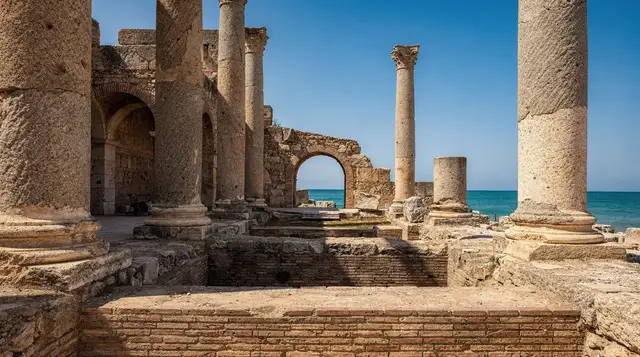
But it obscures the fact that Sousse, called Hadrumetum by the Romans and later a major Aghlabid port, has one of the best-preserved medieval medinas on the Tunisian coast. The contrast is part of what makes the city interesting rather than a flaw to work around: you can spend a morning inside 9th-century walls and an afternoon on a sunbed, and neither experience cancels out the other. Travellers who only see the resort strip from a taxi window are missing the actual reason Sousse is on the UNESCO list.
The medina and the ribat: the part that’s actually UNESCO-listed
The medina of Sousse, together with its ribat, kasbah and city walls, was inscribed as a UNESCO World Heritage Site in 1988, and it’s worth understanding that the listing covers the fortified old town specifically, not the beach hotels a kilometre north. The Ribat of Sousse, built in the late 8th century as a monastery-fortress for soldier-monks guarding the coast against Byzantine raids, is the best-preserved building of its kind in North Africa.
You can climb the Khalef tower for a rooftop view over the medina’s flat roofs and the harbour, and the entry fee is modest, typically in the 8-11 TND range, well signposted at the gate rather than negotiated. The medina itself is walled on three sides, with the fourth open to the sea, and its narrow streets are genuinely used by residents, not just staged for visitors, which is not always true of the more touristed parts of Hammamet’s old town.
a guided walk through the medina, ribat and Great Mosque of Sousse is a reasonable way to get oriented on a first visit, since the medina’s layout isn’t obvious and a guide will point out details, like the reused Roman columns in some of the older houses, that are easy to walk past otherwise. If you’d rather explore alone, a proper street plan from the tourist office near Bab el Bahr will save you circling the same three alleys twice. For more detail on the layout and a suggested walking route, see the dedicated medina guide for Sousse.
The Great Mosque of Sousse
Just below the ribat sits the Great Mosque of Sousse, built in 851 and unusual for lacking a minaret in its original form, since the ribat’s watchtower served that function for the garrison. Like most working mosques in Tunisia, the prayer hall is closed to non-Muslims, but the courtyard is open during visiting hours for a small entry fee, and it’s worth the few minutes even if you can’t go further in.
Dress modestly, cover your shoulders and knees, and avoid visiting during Friday prayers or, if travelling during Ramadan, near iftar, when the courtyard fills with worshippers rather than tourists. This is a smaller and starker building than the more famous mosques of Tunis or Kairouan, and it’s honest to say it takes ten to fifteen minutes to see properly rather than an hour.
The archaeological museum: mosaics without the queues
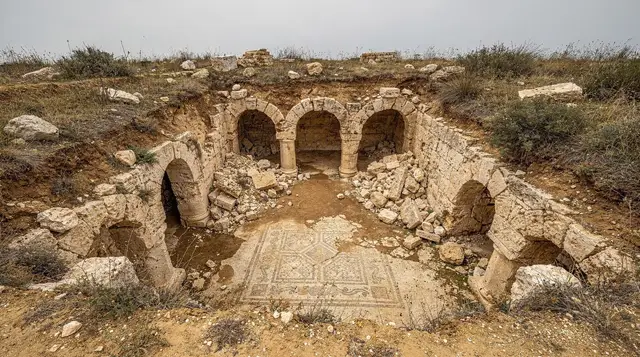
Housed inside the kasbah, the Sousse Archaeological Museum holds one of the country’s best Roman and Byzantine mosaic collections after the Bardo in Tunis, and it’s genuinely underused by comparison. Expect mosaics pulled from villas around Sousse and the wider Sahel, including hunting and marine scenes, displayed across several rooms with reasonable labelling in French and Arabic and patchier English.
Entry is usually combined with or separate from the ribat ticket depending on current pricing, so check at the gate rather than assume; budget 8-10 TND. The museum rarely takes more than 45 minutes to an hour, and unlike some smaller Tunisian museums, it does not disappoint relative to its billing. If mosaics are a particular interest, the dedicated guide to the archaeological museum covers which rooms to prioritise if you’re short on time.
Boujaffar beach and the resort strip
North of the medina, Boujaffar beach is the public heart of Sousse’s tourist zone: wide, sandy, reasonably clean by Tunisian urban-beach standards, and lined with cafés that range from fairly priced to openly aimed at extracting extra dinars from package tourists who don’t know local prices. A coffee that costs 2-3 TND two streets back from the seafront can be 6-8 TND on the beachfront terrace, and it’s worth walking a block inland if you’re budget-conscious.
The beach itself is free and public; sunbeds and umbrellas are usually rented per day at a modest rate from operators along the sand, not from the hotels themselves unless you’re a guest. It’s a functional, pleasant beach rather than a spectacular one, closer in character to the beaches of Hammamet than to the quieter coves further along the Sahel. If a beach with less resort infrastructure and calmer water appeals more, the coastline covered in our beaches and coast guide has other options along this stretch.
The souks: real trade and staged trade
The souks inside the medina walls sell everything from spices and leather to ceramics and the inevitable rows of magnets and keyrings aimed squarely at cruise-day visitors from nearby resorts. The honest advice is to separate the two: the fabric and spice sections nearer the Great Mosque tend to serve local shoppers and have posted or roughly consistent prices, while the alleys closest to the ribat entrance are priced for tourists who won’t be back to compare.
Haggling is normal and expected almost everywhere except clearly marked fixed-price shops, but starting offers from vendors targeting tour groups can be genuinely inflated, sometimes three or four times a reasonable local price. Leather goods and ceramics from Nabeul-area workshops, sold on through Sousse’s souks, are usually a fairer bet than anything marketed as “genuine Berber” without more specific provenance. For a broader sense of what’s typical across Tunisian medinas, our medina and souks guide covers general haggling norms that apply here too.
Getting to Sousse from Tunis
The train is the most comfortable and predictable option from Tunis, running from Tunis Ville station to Sousse several times a day, with a journey of roughly two to two and a half hours depending on the service. Louages (shared taxis) are faster and more frequent but leave only when full, and the experience is less predictable for a first-time visitor unfamiliar with the system; our guide to getting around Tunis and beyond explains how louage stations work. Driving is straightforward on the A1 motorway and gives the most flexibility for side trips to Monastir or El Djem, but tolls and Tunisian urban driving around Sousse’s roundabouts add friction that public transport avoids.
| Option | Approx. journey time | Approx. cost | Notes |
|---|---|---|---|
| Train (SNCFT) | 2 to 2.5 hours | 10-15 TND (2nd class) | Most comfortable, fixed timetable |
| Louage (shared taxi) | 1.5 to 2 hours | 12-16 TND | Leaves when full, no fixed schedule |
| Private car / rental | 1.5 to 2 hours | Fuel plus tolls, around 15-20 TND | Best for combining with Monastir or El Djem same day |
| Organised day tour | 1.5 to 2 hours each way | Varies by tour | Includes transport and guiding, less flexible timing |
For more detail on the rail network specifically, including which stations serve which towns, see our guide to trains in Tunisia. If Sousse is one stop on a wider loop, our best day trips from Tunis roundup and the Roman Tunisia itinerary both place it in a broader route.
Sousse as a base: Monastir, El Djem, Mahdia and Kairouan
Sousse’s real strength for a lot of travellers isn’t the city itself but its position. Monastir, with its own ribat made famous by film crews and a more manicured, less lived-in old town, is a 20 to 30-minute train or louage ride away and pairs naturally with a Sousse morning.
a full-day tour covering both Sousse and Monastir’s ribats and medinas is a sensible way to see both without managing transport yourself, particularly if your time in the Sahel is limited to a single day trip from Tunis.
Further south, El Djem holds one of the best-preserved Roman amphitheatres in the world, larger in some respects than parts of the Colosseum, and it is genuinely worth the detour even on a tight schedule.
a half-day trip from Sousse to the El Djem amphitheatre and museum covers the site properly in an afternoon. Our El Djem amphitheatre guide has more on what to expect once inside, and the combined Sousse and Monastir day trip guide is useful if you’re planning the two towns together without a tour.
Mahdia, quieter and less developed for tourism than Sousse, makes a good half-day or overnight add-on for travellers who want a calmer coastal town with its own fortified old quarter.
a tour linking Mahdia, Monastir and Sousse in one route is aimed at exactly this combination. Inland, Kairouan, one of Islam’s holiest cities, is roughly an hour and a half from Sousse and worth the trip for travellers with a genuine interest in religious architecture and history, though it demands more cultural sensitivity around dress and behaviour than the coastal towns. For a broader sense of how the region’s ribats and fortresses relate to each other, the guide to the ribats and fortresses of the Sahel ties Sousse, Monastir and Mahdia together in context.
Food in Sousse
Seafood is the obvious strength here, and restaurants along the port and medina edges serve fresh fish, grilled or fried, at prices that are reasonable away from the immediate resort strip; budget 25-40 TND for a solid fish dinner with sides, more at the handful of upmarket options nearer the marina at Port El Kantaoui. Ojja, a spiced tomato and egg dish often with merguez sausage, and lablabi, a chickpea and bread soup usually eaten for breakfast or a late-night meal, are both easy to find in the medina’s smaller local eateries rather than the tourist-facing terraces.
Brik, the thin pastry parcel usually filled with egg, tuna and capers, is a reliable and cheap option nearly everywhere. As with the beach cafés, price and quality diverge sharply between places aimed at residents and places aimed at tour groups, and a short walk away from the main tourist thoroughfares generally pays off in both.
Port El Kantaoui and day-trip options nearby
A short drive or taxi ride north, Port El Kantaoui is a purpose-built marina resort, more polished and considerably more expensive than central Sousse, with a golf course, yacht harbour and a strip of restaurants aimed squarely at hotel guests staying nearby. It’s a pleasant enough half-day out for a change of pace, particularly for families, but it has none of the historical weight of the medina and shouldn’t be mistaken for an essential stop.
If your time in the Sahel is limited, prioritise the medina, ribat and museum in Sousse itself before considering Port El Kantaoui as an add-on. Our things to do in Sousse page lays out a fuller list of activities by time available, including combinations for travellers who only have a few hours between a cruise stop and departure.
Frequently asked questions about visiting Sousse
How many days should I spend in Sousse?
A half day covers the medina, ribat and Great Mosque courtyard at a reasonable pace; a full day adds the archaeological museum and time on the beach. If you’re using Sousse as a base for Monastir, El Djem or Mahdia, three to four days lets you see the wider Sahel without long daily transfers.
Is the ribat of Sousse the same as the one in Monastir?
No, though they’re often confused. Both are Aghlabid-era fortress-monasteries and both are worth visiting, but Monastir’s ribat is more restored and more heavily used for film and photo shoots, while Sousse’s is the older and, by most assessments, the more historically significant of the two.
Can non-Muslims enter the Great Mosque of Sousse?
The courtyard is open to visitors for a small fee during visiting hours; the prayer hall itself is reserved for Muslims, which is standard practice across working mosques in Tunisia, including Ez-Zitouna in Tunis.
Is Sousse safe for tourists, including women travelling alone?
Sousse is generally considered one of the more tourism-adapted cities in Tunisia, with a visible police presence around the medina and resort areas. As anywhere with heavy package tourism, persistent touting near the ribat gate and souk entrances is the main irritant rather than a safety concern; a firm, polite decline is usually enough.
What’s the best way to combine Sousse with El Djem in one day?
The train and louage connections are direct but not frequent, so a guided half-day tour or a private car is the more time-efficient option if you only have one day, since it removes the wait time around connections and lets you spend the saved hours at the amphitheatre itself.
Is Port El Kantaoui worth visiting if I’m already staying in Sousse?
Only as a short add-on rather than a priority. It’s a manicured marina resort with none of the medina’s history, useful for a change of scenery or a family-friendly afternoon, but it shouldn’t take time away from the ribat, museum and souks if your visit is short.
Does Sousse get crowded, and when should I avoid it?
July and August bring the heaviest domestic and European tourist numbers, with beach areas at capacity and medina alleys correspondingly busier. April to June and September to October offer a more comfortable balance of good weather and manageable crowds, which is also reflected in the city’s best-time recommendation.
Are there good day trips from Sousse besides Monastir and El Djem?
Yes. Mahdia offers a quieter coastal old town with its own fortifications, and Kairouan, further inland, is a significant pilgrimage and architectural destination for travellers interested in Islamic history, though it requires a longer transfer and more attention to dress and etiquette than the coastal towns.
Should I stay in the medina or the resort strip?
It depends on priorities. Staying near the medina puts you within walking distance of the ribat, mosque and museum, with more local restaurants nearby; staying on the resort strip puts you closer to the beach and larger hotels, usually with pools and half or full-board options, but requires a taxi or a longer walk to reach the historic core.