Roman Tunisia in five days
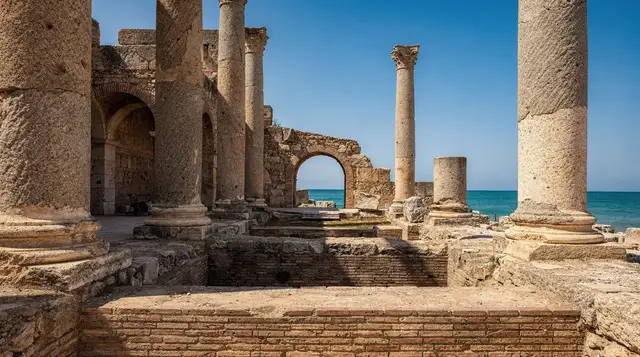
Tunisia’s Roman sites are spread across the north and centre of the country in a way that makes a single Tunis base surprisingly workable, provided each far-flung site gets a full day rather than being squeezed into a rushed loop. This route stays in Tunis for all five nights and uses organised day trips to reach Dougga, Bulla Regia, El Djem and Zaghouan, saving Carthage itself, which is inside the city, for an independent first day by train. It skips Thuburbo Majus and Uthina, the two lesser sites closer to Tunis, in favour of depth at the five destinations that matter most; both are covered separately in the roman sites near Tunis, ranked guide if you want to add a sixth day.
| Where | Carthage, Dougga, Bulla Regia, El Djem and Zaghouan |
| Cost | Roughly 700–1,100 TND (about €210–330) per person for five days, excluding flights |
| Time needed | 5 days |
| Getting there | Fly into Tunis-Carthage International Airport |
| Best time | March–May or September–November |
How the five days work
Each day trip out of Tunis is treated as its own day rather than combined with another site, which is slower than some itineraries but genuinely necessary for the two sites that need it most: Dougga and El Djem both reward unhurried time on site, and cramming either into half a day undersells them.
| Day | Site | Notes |
|---|---|---|
| 1 | Carthage | Independent, by TGM |
| 2 | Dougga and Bulla Regia | Organised day trip via Testour |
| 3 | El Djem | Organised day trip |
| 4 | Zaghouan | Shorter day, half-day site |
| 5 | Bardo museum | Wraps up the mosaic context |
Day 1: Carthage
Start in the city itself. The TGM light rail from central Tunis reaches Carthage-Salammbô and Carthage-Hannibal in about twenty minutes, and a full morning is enough to cover Byrsa hill’s museum, the Antonine baths and the Punic ports at a sensible pace. The Carthage archaeological sites guide sets out a logical order for the day, and the Carthage multi-site ticket guide is worth reading before you buy, since the combined pass covers most of what’s worth seeing in one purchase.
The Byrsa hill and Carthage museum guide and Antonine baths guide both go deeper into the two strongest individual stops. Finish the day in Sidi Bou Said, two stops further on the same train line, for a change of pace after a morning of ruins.
Day 2: Dougga and Bulla Regia, via Testour
Dougga and Bulla Regia sit roughly two hours from Tunis in different directions, which makes a driver-guide the practical choice over a rental car for a first visit. Several very similar tours cover this same route, typically differing in group size and exact pickup arrangements rather than the itinerary itself.
| Tour | Focus |
|---|---|
| VIP day tour: Dougga, Bulla Regia and Testour | Smaller-group VIP format |
| Testour, Dougga and Bulla Regia: private guided day trip | Private guided vehicle |
| Private day trip to Testour, Dougga and Bulla Regia | Private guided vehicle, alternate listing |
| Testour, Dougga and Bulla Regia private day trip | Private day trip, alternate operator |
Whichever option you book, the day itself typically starts with Testour, the small town founded by Andalusian Muslims expelled from Spain in the seventeenth century, whose main mosque has a clock face that runs anticlockwise — a detail most guides mention because it’s genuinely true and genuinely odd.
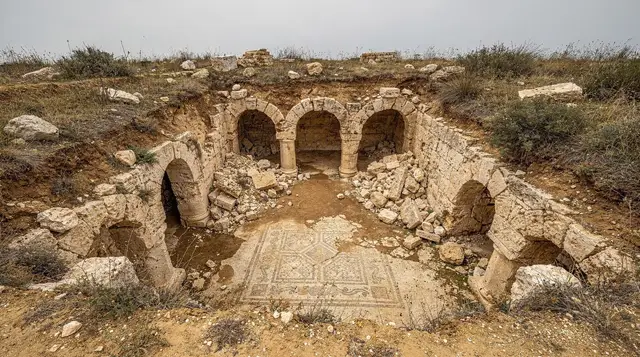
From there the route continues to Dougga, the best-preserved Roman town in North Africa, where the theatre, capitol and forum survive well enough to actually read as a town rather than a ruin field; the Dougga complete guide covers a realistic two-hour visit. The day finishes at Bulla Regia, where several villas were built partly underground to escape summer heat, some with mosaics still in their original floors; the Bulla Regia guide has detail on which villas to prioritise if the light is fading.
Day 3: El Djem
El Djem’s amphitheatre is Tunisia’s single most complete Roman structure, close in scale to the Colosseum in Rome and, unlike Rome’s version, walkable through underground galleries that give a real sense of how the building functioned. The El Djem amphitheatre guide covers the underground level in detail, and the small archaeological museum nearby, with its collection of mosaics from villas around the town, is worth the extra hour even on a day trip.
Getting here independently from Tunis by train is possible but slow; most visitors join an organised day trip that also stops in Kairouan or Sousse, which suits travellers doing a broader itinerary but adds hours to a day meant to focus purely on El Djem. Check the El Djem day trip guide for the trade-offs between a dedicated trip and one combined with other stops.
Day 4: Zaghouan
Zaghouan is a shorter day than the previous two, and pairs the Roman water temple — built around the natural spring that once fed Carthage via an aqueduct running more than seventy kilometres — with the town of Zaghouan itself and, weather permitting, a short walk on the lower slopes of the mountain above it.
The Zaghouan water temple guide covers the temple’s nymphaeum and what remains of the aqueduct’s starting point, and the climbing Jebel Zaghouan guide has options for anyone who wants to extend the afternoon with a proper hike rather than a short walk. This is also a reasonable day to add Thuburbo Majus, a quieter Roman city on the way back toward Tunis, if the pace of the previous two days has been comfortable.
Day 5: the Bardo museum
Close the trip with the Bardo, whose mosaic collection includes pieces lifted directly from villas at Dougga, El Djem and elsewhere on this route, which makes far more sense once you’ve actually stood in those buildings. The Bardo museum complete guide and the mosaics room-by-room guide both help prioritise a museum that’s easy to spend half a day in without a plan. A quieter afternoon in the Ville Nouvelle or a last pass through the medina rounds out the trip before departure.
Getting around this route
Every long day trip on this route runs as an organised tour rather than independent driving, which suits the awkward distances involved between Dougga, Bulla Regia, El Djem and Zaghouan. The car hire in Tunisia guide and driving in Tunisia guide are worth reading if you’d rather do this route at your own pace with a rental car, though road signage away from the toll motorways is inconsistent enough that most first-time visitors are better off with a guide who already knows the way.
What this trip costs
A five-day Roman-focused trip based from Tunis, with four organised day trips and no car rental, typically runs 700 to 1,100 TND per person excluding flights, most of it going to the day trips themselves rather than accommodation. The Tunis budget guide has a fuller breakdown, and the currency tool is useful for quick TND-to-euro conversions while comparing tour prices.
Common mistakes with this route
Frequently asked questions about a Roman Tunisia trip
Is five days too much for ruins if I’m not an archaeology enthusiast?
It can be. This route is built for travellers whose main interest is Roman and Punic history; anyone with more general interests would likely enjoy swapping one or two days for the medina at Kairouan or a beach day at Hammamet.
Which single Roman site should I prioritise if I only have one day?
Dougga, for the completeness of the town itself, or El Djem, for the amphitheatre’s scale — the choice usually comes down to whether you prefer a whole ancient town or a single dramatic structure.
Do I need to book the four day trips in advance?
Yes, ideally a few days ahead for the Dougga and Bulla Regia and El Djem trips especially, since both involve fixed vehicle capacity and popular time slots in the cooler months.
Can this itinerary be combined with the Sahara afterward?
Yes, though it would need extending well beyond five days. The one-week Tunis and Sahara itinerary covers a different, shorter Roman leg alongside the desert if that combination interests you more than this ruins-focused route.
Is Carthage worth a full day on its own?
Yes. Between Byrsa hill’s museum, the Antonine baths, the Punic ports and Sidi Bou Said next door, a full day is genuinely used rather than padded.
How much walking is involved at these sites?
A fair amount, particularly at Dougga and El Djem, both of which cover large, uneven ground with limited shade. Comfortable footwear matters more than general fitness.
What’s the best time of year for a Roman-focused trip like this?
Spring and autumn, for the same reason they suit most of Tunisia: the exposed archaeological sites are far more comfortable outside the peak summer heat.
Should I hire a private guide instead of joining a group tour?
Either works. A private guide gives more flexibility over pacing at each site, which matters most at Dougga; a group tour is cheaper and perfectly adequate if you’re comfortable moving at a fixed schedule.
Roman & Punic site tours on GetYourGuide
Verified deep-linked GetYourGuide tours. Book through these links and we earn a small commission at no cost to you.
These are our own photographs of Tunisia, not the operator's pictures of this tour — open the tour page to see those.