The mosaics nobody photographs
Every visitor to Tunis eventually photographs the same mosaic at the Bardo — the big fish-and-boat panel that shows up on every second postcard rack in the medina — and rightly so, it’s extraordinary. What nobody seems to photograph, or even mention, is the smaller, rougher collection of mosaic fragments sitting in the small museum attached to Mahdia’s old town, a couple of hours south of Tunis by train. I went expecting a footnote to a beach town and left thinking it was the more honest of the two experiences, precisely because almost nobody else was there to have an opinion about it.
| Where | Mahdia old town, on the Sahel coast south of Tunis |
| Cost | A few TND for the small museum; free to wander the old town itself |
| Time needed | Half a day, more if you stay for the harbour and the beach |
| Getting there | Train from Tunis via Sousse, or a direct coach |
| Best time | Morning, before the midday heat settles over the peninsula |
Why Mahdia’s mosaics get skipped
Mahdia isn’t marketed as a mosaic town, and understandably so — the Bardo has the scale and the fame, and most itineraries that make it this far south are chasing El Djem’s amphitheatre or Monastir’s ribat instead. But Mahdia sat on the same Roman and early Byzantine trade routes that produced mosaic work across the region, and the fragments that survive locally, some excavated from villas along the peninsula, ended up in a modest collection that most visitors simply don’t know to look for. Nobody’s hiding it exactly; it’s just not on the list of things people come to Mahdia expecting.
What’s actually in the collection
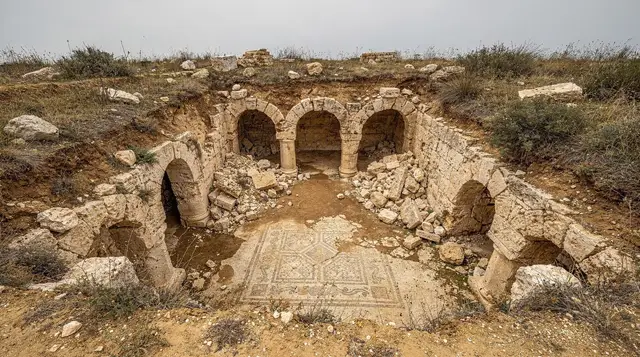
The pieces are smaller and less complete than the Bardo’s grand narrative panels — more geometric borders, partial figures, fragments that clearly once belonged to something larger now lost to time or looting. That incompleteness is part of what I found affecting about them; a mosaic missing half its scene forces you to actually look rather than just recognise, the way you might glance past a famous, familiar image. A few pieces show marine motifs echoing the coastal setting, which felt appropriate standing a few hundred metres from the harbour where fishing boats still work the same waters.
The setting matters as much as the pieces
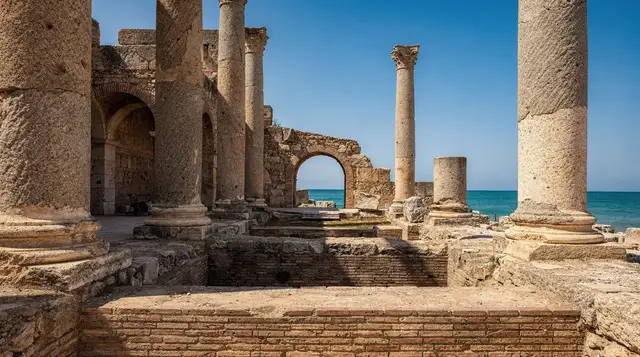
Unlike the Bardo, which is a purpose-built museum experience in a former palace, Mahdia’s collection sits within the old town’s fabric — walking distance from the medina gate, the harbour and the peninsula’s tip. That proximity changes how the mosaics land; you’re not filing past cases in a curated sequence so much as stumbling on fragments of the same coastline’s own history a short walk from where people are still mending nets. Mahdia as a whole leans into this — a working town with old-town bones rather than a site dressed up for visitors.
Walking the old town properly
A guided walk through Mahdia’s old town, rather than a self-directed wander, was what actually connected the mosaics to the rest of the place for me. A guided tour of Mahdia by train combines the journey down from Tunis with a walking tour once you arrive, which solved the logistics I’d otherwise have had to figure out alone, and meant I had someone to explain what I was actually looking at in the museum rather than guessing from a faded label.
For a faster, more physical way to cover the same ground, a city tour of Mahdia by bike or e-scooter gets you around the peninsula and the harbour more quickly, useful if the mosaics are one stop among several rather than the whole point of the visit. I’d lean toward the walking version if the museum specifically is the draw, since it’s easy to whizz past a small collection like this on wheels.
The harbour, the peninsula, and what else fills a day
Mahdia’s peninsula tip, past the old town gate, has some of the calmer stretches of coastline on this part of the Sahel, and the harbour itself is worth sitting at for longer than the mosaics take to see. The wider region rewards slowing down rather than rushing between headline sites, and Mahdia is a reasonable place to do exactly that.
A Mahdia like a local experience leans into this slower register entirely, less a checklist tour than a couple of hours spent seeing the town the way residents actually use it — which, after the museum, was the better half of my own day here.
| Activity | Time needed | Pace |
|---|---|---|
| Small museum and mosaics | 30–45 minutes | Quiet, self-paced |
| Old town walk | 1–1.5 hours | Steady |
| Harbour and peninsula tip | 45 minutes–open-ended | Slow |
| Beach nearby | As long as you like | Very slow |
Comparing it honestly to the Bardo
I don’t want to overstate Mahdia’s collection — it’s a fraction of the size and ambition of what’s in Tunis, and anyone choosing between the two for their only mosaic stop should choose the Bardo without hesitation. The Bardo museum: a complete visitor guide and the mosaics of the Bardo, room by room both make clear why it’s the region’s genuine centrepiece, and the museums of Tunis, ranked puts it in context against the rest of the capital’s own collections.
Mahdia’s version is a coda, not a rival, and it only works if you’ve got half a day to spare on a trip that’s already brought you this far south rather than a special detour built around it. The archaeological museum of Sousse, closer along the same stretch of coast, is a more direct comparison in scale if Mahdia leaves you wanting a fuller collection without heading all the way back to Tunis.
Getting here and combining it with El Djem
Most visitors reach Mahdia as part of a wider loop through the Sahel — El Djem and its amphitheatre, Monastir and its ribat, Sousse’s own medina — rather than as a standalone trip from Tunis. The El Djem amphitheatre: a complete guide is worth reading if you’re routing a day that takes in both, since El Djem and Mahdia sit close enough together to combine without much extra driving, and the wider museums and art hub is a useful starting point if ancient collections in general are what draws you south.
The train down from Tunis passes through Sousse, which makes a natural point to break the journey if a single day feels rushed, and anyone building a longer trip around the region’s ruins rather than a single day should look at Roman Tunisia in five days, which strings together most of these sites properly.
Mistakes to avoid
Frequently asked questions about Mahdia’s mosaics
Are Mahdia’s mosaics worth a special trip from Tunis?
Not on their own — they’re modest compared to the Bardo. They’re worth including if you’re already travelling south through the Sahel toward El Djem, Monastir or Sousse.
How do the mosaics compare to the Bardo’s collection?
Smaller, more fragmentary and far less visited. The Bardo remains the region’s major mosaic collection; Mahdia’s is a quieter, more local complement.
How do I get from Tunis to Mahdia?
By train via Sousse, or by direct coach. The train journey takes a few hours and can be broken in Sousse if a full day feels rushed.
Is the small museum in Mahdia easy to find?
It sits within the old town near the medina gate, an easy walk from the harbour. A local guide or a guided walking tour makes it simpler to locate and puts the pieces in context.
Can I combine Mahdia with El Djem in one day?
Yes, the two are close enough on the same stretch of the Sahel to combine, though it makes for a long day if you also want unhurried time at the harbour.
Is Mahdia worth visiting if I only care about beaches?
The peninsula has quieter stretches of coastline than the busier resort towns further north, and the old town and mosaics make a reasonable cultural break from beach time.
What’s the best time of day to see the mosaics?
Morning, both for the light and to avoid the midday heat that settles over the peninsula, particularly in summer.
Is a guided tour necessary, or can I see the mosaics on my own?
You can see them alone, but a guide adds context that the museum’s own labelling doesn’t fully provide, and helps connect the fragments to the rest of the old town’s history.
Museum & art tours on GetYourGuide
Verified deep-linked GetYourGuide tours. Book through these links and we earn a small commission at no cost to you.
These are our own photographs of Tunisia, not the operator's pictures of this tour — open the tour page to see those.