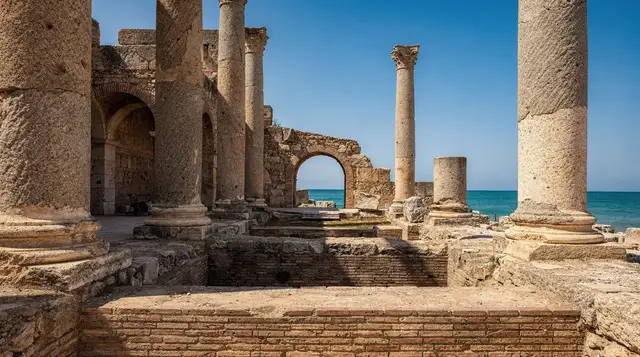
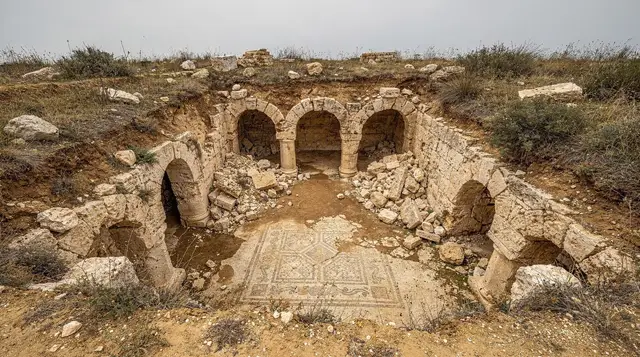
Mahdia sits on a narrow peninsula about an hour up the coast from Sousse, and it feels like a different pace of Tunisia almost as soon as you step off the train. The old medina occupies the tip of the peninsula, wrapped on three sides by the sea, with a working fishing port on one flank and open beach on the other. There is no strip of high-rise hotels here, no long promenade of bars, and that is more or less the point. Most visitors come on a half-day trip from Sousse or Monastir, walk the medina, look at the fort and the mosque, eat grilled fish by the port, and head back before dark. A smaller number stay a night or two for the quiet.
| Where | Sahel coast, roughly 65km south-east of Sousse and 210km from Tunis |
| Cost | Free to walk the medina and Skifa el Kahla; Borj el Kebir costs a small entry fee, around 8-11 TND (about €2.50-3.50) |
| Time needed | Half a day covers the main sights; an overnight stay adds a slower evening by the port |
| Getting there | Metro du Sahel train from Sousse or Monastir (around 1-1.5 hours), or louage from Sousse’s louage station |
| Best time | April to June and September to October, avoiding the peak midday heat of July and August |
A fishing town built on a peninsula
Mahdia’s shape is what makes it distinctive among Sahel towns. The medina occupies a rocky spit of land barely a few hundred metres wide, with the Mediterranean on both sides. That geography is not an accident: when the Fatimid caliph Ubayd Allah al-Mahdi chose the site in 921 CE, he wanted a capital defended by sea on three sides and cut off from the mainland by a single fortified gate. For a while, Mahdia genuinely was the Fatimid capital in Ifriqiya, before power moved east to Cairo later in the 10th century. That history explains much of the town’s layout today: the single gate, the compact grid of the old quarter, and a mosque built to face the open sea rather than tucked into a courtyard of houses.
Compared with Sousse, which has grown into the Sahel’s main resort hub, Mahdia has stayed smaller and more workaday. Fishing is still a real industry here, not a photo opportunity, and that shapes the restaurants, the smell of the port in the late afternoon, and the rhythm of the town more than tourism does.
Skifa el Kahla, the gate into the old town
The Skifa el Kahla, or “dark passage”, is the only surviving monumental gate into Mahdia’s medina and the natural starting point for any visit. It is a long, vaulted stone tunnel rather than a simple archway, originally built as part of the Fatimid fortifications and rebuilt after damage during the Spanish and Ottoman periods that followed. Walking through it, the temperature drops and the street noise falls away, then you emerge into the bright, whitewashed lanes of the medina itself. It is a small structure by the standards of Tunis’s Bab Bhar, but it marks a genuine threshold between the modern town and the old peninsula.
From the gate, the medina’s main street, Rue Ibn Fadhallah, runs roughly straight through the old quarter toward the mosque and the fort at the tip. It is lined with small shops selling clothing, household goods and some tourist-facing stalls, but it never feels as commercially aggressive as the souks of Sousse’s medina or Tunis. If you want a broader sense of how Sahel fortifications like this one fit together across the region, the guide to the ribats and fortresses of the Sahel covers Mahdia alongside Sousse and Monastir.
a half-day walking route through the medina with a local guide is a reasonable way to get the Fatimid backstory explained on the ground rather than piecing it together from plaques, since on-site signage in Mahdia is limited.
The great mosque, rebuilt on Fatimid foundations
The Great Mosque of Mahdia stands near the tip of the peninsula, its plain stone facade facing directly onto the sea. The building you see today is a 1965 reconstruction, built on the excavated foundations of the original Fatimid mosque from the 10th century, and it deliberately reproduces the austere, fortress-like style of the original rather than the more ornate architecture found elsewhere in Tunisia. There is no minaret in the conventional sense, generally explained as a deliberate Fatimid choice rather than a later omission. The result looks more like part of the town’s defences than a religious monument, which is roughly what it was designed to be.
As with virtually every functioning mosque in Tunisia, the interior of the prayer hall is not open to non-Muslims. What you can see, and what is worth seeing, is the courtyard and the exterior facade, particularly from outside where the building meets the sea wall. If you are also planning time in Tunis, the guide to Ez-Zitouna mosque and what visitors can see explains the same courtyard-only rule that applies here, along with dress expectations that are worth knowing before you go: shoulders and knees covered, and headscarves for women are generally expected rather than optional.
Borj el Kebir and the view over two seas
At the very tip of the peninsula sits Borj el Kebir, a squat, thick-walled fort built in the 16th century, when Mahdia changed hands repeatedly between Ottoman, Spanish and local forces fighting for control of the Sahel coast. It replaced older Fatimid-era fortifications on roughly the same spot. The fort itself is not heavily decorated inside, so treat it as a viewpoint rather than a museum: the real reason to pay the small entry fee is the walk up onto the ramparts, with a genuine 360-degree view of the medina, the working port, the open sea and the newer town stretching back toward the mainland. Twenty to thirty minutes is enough for most visitors, and it is one of the better free-standing viewpoints in the Sahel for the price.
Below the fort, on the seaward side, there is a small Fatimid-era cemetery cut into the rock, along with the remains of an ancient port structure, though these are easy to miss unless you are looking for them.
The port and how it shapes what you eat
Mahdia’s fishing port sits just below the medina walls and is still a working harbour rather than a marina for pleasure boats. Blue and white fishing boats come in through the afternoon and early evening, and the fish auction that follows is one of the more authentic things to watch in the Sahel if your timing lines up, usually mid to late afternoon. This working port is the reason Mahdia has a genuine reputation for seafood: grilled fish, octopus, and dishes built around whatever came in that day rather than a fixed menu written weeks in advance.
Restaurants cluster along the port-facing edge of the medina and just outside the walls. Expect to pay somewhat less than the equivalent meal in Port El Kantaoui or the resort strip in Sousse, since Mahdia’s dining scene is aimed more at Tunisian weekend visitors and returning locals than at package tourists.
| Meal type | Typical price (TND) | Approx. EUR |
|---|---|---|
| Grilled fish plate, simple café | 15-25 TND | €4.50-7.50 |
| Full seafood meal, sit-down restaurant | 30-55 TND | €9-16.50 |
| Couscous with fish, local place | 12-20 TND | €3.50-6 |
| Coffee or mint tea | 2-4 TND | €0.60-1.20 |
These are rough ranges rather than fixed prices, and it is worth asking for the price of anything sold by weight, particularly fish, before it is cooked.
Beaches that are quieter, not necessarily better
Mahdia’s beaches run along the northern side of the peninsula and continue toward Salakta and Chebba. They are noticeably less developed than the beaches and coast around Sousse’s Boujaffar or Hammamet’s main strip: fewer beach clubs, fewer jet-ski operators, and far less built-up frontage. Sand quality is good, comparable to the rest of the Sahel coast, and the water is generally calm given the sheltered bay. What Mahdia does not offer is resort-town infrastructure: expect limited sunbed rental, few beachfront bars, and services that thin out considerably outside July and August.
For travellers who have already spent a few days on Sousse’s or Hammamet’s more crowded sand, Mahdia’s beaches are a reasonable trade. For a first and only beach stop in Tunisia, most people are still better served by the denser amenities around Sousse or Monastir.
Mahdia against Sousse, side by side
| Mahdia | Sousse | |
|---|---|---|
| Medina size | Small, walkable in under an hour | Larger, UNESCO-listed, denser souks |
| Beaches | Quieter, fewer amenities | Busier, more beach clubs and hotels |
| Nightlife | Very limited | Active, especially around Boujaffar |
| Seafood | Strong, working-port scene | Good, more tourist-oriented pricing |
| Crowds | Low outside August | Moderate to high year-round |
| Best for | A calm half-day or overnight add-on | A full base for a Sahel stay |
It is easy to walk through Mahdia’s medina without registering how significant the town once was. For roughly six decades it was the seat of a caliphate that would go on to conquer Egypt and found Cairo, and the fortifications, the mosque and the choice of a defensible peninsula all trace back to that period of real geopolitical weight. If that period of Tunisian history interests you, the timeline of Tunisian history places the Fatimid century in Mahdia alongside the Aghlabids in Kairouan and the later Ottoman period that shaped the fort you see today.
Getting to Mahdia by train and louage
The easiest way to reach Mahdia from the main Sahel resort towns is the Metro du Sahel, the regional rail line connecting Sousse, Monastir and Mahdia. Trains run several times a day, and the journey from Sousse takes roughly one to one and a half hours, at a fare that is genuinely inexpensive, generally a few dinars each way. The guide to trains in Tunisia covers how to buy tickets, since this line differs from the national SNCFT network used for Tunis-Sousse services.
Louages, the shared long-distance taxis that cover most of Tunisia, also run to Mahdia from Sousse’s louage station in a broadly similar time, departing once the car fills with passengers rather than on a fixed schedule. The guide to louages explained is worth reading before your first trip, since the conventions around where to stand and how fares are agreed are not obvious to first-time visitors.
A guided day trip that includes the train ride out from Sousse removes the logistics entirely if you would rather not work out timetables on your own. If you are coming directly from the capital, see getting around Tunis and the best day trips from Tunis for how Mahdia compares to closer options like Zaghouan or Hammamet.
Combining Mahdia with Sousse and Monastir
Because Mahdia sits within easy reach of both towns, most itineraries treat it as an extension of a Sahel base rather than a destination in its own right. A common pattern is a morning in Monastir around the ribat and marina, followed by an afternoon train down to Mahdia, or the reverse. The Sousse to Monastir day trip guide covers that pairing and can be adapted to add Mahdia as a third stop for travellers with a full day to spend.
For a version that packages all three towns together, a combined excursion covering Mahdia, Monastir and Sousse in one trip saves the hassle of arranging transport between each stop, though it means less time at each site than visiting independently.
Getting around, money, and Ramadan timing
Mahdia’s medina is compact enough to cover entirely on foot, since most streets are too narrow for cars. Outside the medina, the newer town and beach areas spread out further, and a bicycle or e-scooter is a practical way to cover that ground. A bike or e-scooter tour around the wider town suits an overnight stay if you want to see districts beyond walking distance rather than just the historic core.
Small restaurants and shops deal mostly in cash, and card acceptance is patchier than in Sousse or Tunis, so the guide to money and payments in Tunisia and the guide to tipping in Tunisia are worth a quick read beforehand, since conventions follow national norms rather than anything Sahel-specific.
If you are visiting during Ramadan, expect the medina’s daytime rhythm to shift: many small cafés and food stalls close or reduce hours until the evening iftar, though the fort and the gate stay open on normal or slightly adjusted schedules. Fridays bring a similar slowdown around midday prayer time near the Great Mosque, where it is respectful to keep some distance from the courtyard during and just after the call to prayer. Neither should stop you visiting, but build some flexibility into a half-day plan rather than assuming every café will be open when you arrive.
Who Mahdia actually suits
Mistakes to avoid in Mahdia
Frequently asked questions about visiting Mahdia
How long does it take to get from Sousse to Mahdia?
By train on the Metro du Sahel line, the journey takes roughly one to one and a half hours depending on stops. A louage covers similar ground in a comparable time once the car has filled with passengers, and a private taxi or car is somewhat faster but more expensive.
Is the Great Mosque of Mahdia open to non-Muslims?
The courtyard is open to all visitors and is the main thing worth seeing from an architectural standpoint. The interior prayer hall follows the same convention as almost every functioning mosque in Tunisia and is reserved for Muslim worshippers.
Is Borj el Kebir worth the entrance fee?
Yes, mainly for the ramparts and the view over the medina, port and sea rather than for the exhibits inside, which are limited. Budget around 8-11 TND for entry and twenty to thirty minutes for the visit.
What is the best time of day to see the fishing port?
Late afternoon, when boats return and the fish auction typically begins, gives the best sense of the port as a working harbour rather than a backdrop. Mornings are quieter and less visually interesting.
Are Mahdia’s beaches suitable for families?
The beaches are generally calm and safe for swimming, but families used to the amenities of Sousse or Hammamet, including organised kids’ clubs, water parks and dense beach services, will find much less on offer here. It suits families looking for a quiet afternoon rather than a full beach-holiday infrastructure.
Is one night in Mahdia enough, or should I stay longer?
One night is enough to see the main sights at an unhurried pace and enjoy an evening seafood meal by the port without the pressure of a same-day return train. Beyond that, most travellers find the town’s limited sights and nightlife make a longer stay unnecessary unless the beach itself is the draw.
How does Mahdia compare to El Djem for a history-focused stop?
They cover different periods and are worth combining rather than choosing between: El Djem centres on a single, enormous Roman amphitheatre, while Mahdia’s interest is spread across its Fatimid-era gate, mosque and fort. Both can reasonably fit into a longer Sahel itinerary alongside Sousse and Monastir.