Monastir sits on a narrow point of the Sahel coast, sixteen kilometres south of Sousse, and most visitors know it only as the name printed on their flight ticket. That is a shame, because the town holds one of the best-preserved fortresses in Tunisia and a genuinely pleasant, low-key seafront that plenty of travellers skip entirely. It is smaller and calmer than Sousse, with a marina lined by yachts and cafés rather than souvenir stalls, and a medina that feels tidy rather than chaotic. This page treats Monastir as what it actually is: a worthwhile half-day to full-day stop, not a headline destination and not a place that needs three nights.
| Where | Sahel coast, Tunisia, 16 km south of Sousse and roughly 160 km south of Tunis |
| Cost | Ribat entry around 12 TND (about 3.5 EUR); mausoleum grounds free to view from outside, interior closed to visitors |
| Time needed | Half a day for the Ribat and marina; a full day if you add the medina and a beach afternoon |
| Getting there | Monastir Habib Bourguiba International Airport is inside the town; from Sousse, louage or taxi in 20-25 minutes |
| Best time | April to June and September to October, avoiding the peak heat and crowds of July-August |
A fortress that has starred in more films than most actors
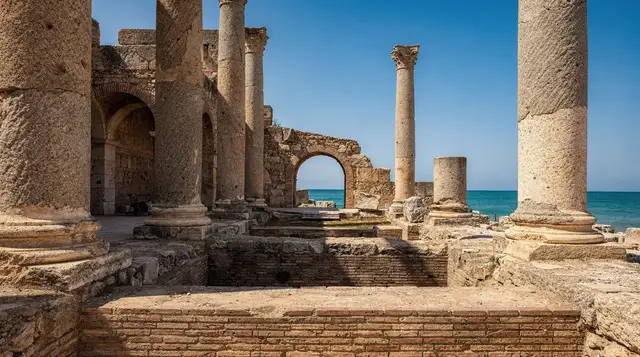
The Ribat of Monastir is the reason to come. Built from the 8th century onward as a coastal fortress against raids, it is one of the oldest and best-preserved ribats in North Africa, with thick honey-coloured walls, a watchtower you can climb, and long stone corridors that keep it cool even in summer.
Its real fame outside Tunisia comes from cinema: parts of it stood in for Jerusalem in “Monty Python’s Life of Brian” and it has appeared in several other productions, including scenes tied to the “Indiana Jones” franchise’s Tunisian shoots. Guides at the entrance are used to pointing out exactly which archway or courtyard was dressed for which film, and it is worth asking even if you are not particularly interested in movies, because it gives structure to what could otherwise be a fairly abstract walk through stonework.
Entry costs around 12 TND, and the climb to the top of the tower rewards you with a view over the marina, the old medina rooftops, and the Mediterranean beyond. Budget 45 minutes to an hour, more if you linger for photos in the early morning light, which is when the stone takes on the warmest colour and the crowds from cruise excursions have not yet arrived. For context on ribats elsewhere in the region, the guide to ribats and fortresses of the Sahel compares Monastir’s fortress with the one in Sousse, which is smaller and more central but less complete.
The Bourguiba mausoleum and what you can actually see
Next to the Ribat stands the mausoleum of Habib Bourguiba, Tunisia’s first president after independence and Monastir’s most famous son. Its golden dome and twin minarets are visible from well outside the complex and make for one of the more striking skylines on this stretch of coast.
The mausoleum itself is not open for a walk-through visit in the way a museum would be — you view it from the surrounding gardens and courtyard, which is enough to appreciate the architecture and take photographs, but do not expect to go inside the chamber. It is a working site of national commemoration rather than a tourist attraction with opening hours and a ticket booth, and treating it that way avoids disappointment. Twenty minutes here, combined with the Ribat next door, covers what most visitors need.
The marina and the old medina
Monastir’s marina is the town’s most photogenic modern addition: a horseshoe of white-and-blue buildings around a harbour full of sailing boats, built in the 1990s deliberately in a style that echoes traditional Tunisian architecture. It is unapologetically built for tourists, with restaurants, ice-cream stands and boat-trip operators lining the water, but it does the job well and makes a pleasant place to sit with a coffee after the Ribat. Boat trips around the bay run in season for a modest fee and give a different angle on the fortress walls from the water.
The medina behind the Ribat is much smaller than Sousse’s UNESCO-listed old town and does not carry the same weight of history, but it is calmer and easier to walk without feeling herded toward carpet shops. Expect a compact grid of covered lanes selling leather goods, spices and the usual tourist souvenirs, with far less bargaining pressure than you would meet in Sousse or Tunis. If souks and haggling are part of what you want from Tunisia, the Sousse medina guide is the better resource — Monastir’s medina is a pleasant twenty-minute stroll rather than a destination in itself.
Skanes and the beaches
The main beach strip runs along Skanes, a few kilometres north of the town centre, where most of the package hotels are concentrated. The sand is fine and the water shallow and calm, which suits families, though the beach is heavily built up with resort frontage and does not have the open, undeveloped feel you find further along the coast.
Public access points exist between the hotels, and you do not need to be a guest to use the sand, though sunbeds and umbrellas at the resort-run sections are typically reserved for their own guests. For a comparison of beach quality and crowding across the wider region, the beaches and coast guide covers Monastir alongside Sousse, Hammamet and Mahdia, which has notably quieter and less developed sand if that matters more to you than convenience.
Two airports, two very different transfers
This is the single most common point of confusion for anyone booking a Sahel holiday, so it is worth being precise. Monastir Habib Bourguiba International Airport sits inside the town itself, a five-to-ten-minute taxi from the Ribat and most hotels. Enfidha-Hammamet International Airport, sometimes marketed loosely as serving the same region, is a separate airport roughly 40 km north, built mainly to handle charter and low-cost traffic for Hammamet and Sousse.
Package holiday listings do not always make the distinction obvious, and travellers who assume “Sahel airport” is a single interchangeable thing sometimes end up booking a transfer to the wrong one. Always check the three-letter airport code on your ticket: MIR is Monastir, NBE is Enfidha. The Enfidha airport guide covers that second airport in detail, including transfer options into Sousse and Hammamet.
| Airport | Code | Distance to Monastir centre | Typical transfer time |
|---|---|---|---|
| Monastir Habib Bourguiba Intl | MIR | Inside the town | 5-10 minutes |
| Enfidha-Hammamet Intl | NBE | About 40 km north | 40-55 minutes |
| Tunis-Carthage Intl | TUN | About 160 km north | 2-2.5 hours by road |
If your flight lands at Monastir and your plan is to base yourself in Sousse instead, a taxi or pre-booked transfer covers the 16 km in around 20-25 minutes outside rush hour. Louages, the shared intercity taxis, also run this route frequently and cheaply, though they involve more waiting and less certainty over timing than a private transfer. For anyone continuing north to the capital afterwards, the guide to getting around Tunis explains the metro léger, TGM line and taxi conventions once you arrive.
Monastir versus Sousse: which one deserves your time
Sousse and Monastir sit close enough together that many visitors treat them as a single day out, and for good reason — the drive between them is short and the two towns complement each other more than they compete. Sousse has the larger, UNESCO-listed medina, more restaurants and nightlife, and a livelier, occasionally scruffier energy. Monastir is quieter, more manicured, and easier to see quickly, but has far less to occupy a second or third day.
If you have to choose a base for a longer stay, Sousse gives you more to do without a car; if you want a calm base for a couple of nights with an easy beach and a short list of sights, Monastir works well. The Sousse-Monastir day trip guide lays out a workable itinerary for seeing both in one day, and Hammamet vs Sousse is useful if you are weighing a third option further north.
| Monastir | Sousse | |
|---|---|---|
| Medina size | Small, calm | Large, UNESCO-listed |
| Main draw | Ribat, marina, mausoleum | Medina, Kasbah, ribat, nightlife |
| Beach style | Resort-lined, family-friendly | Mixed, more public stretches |
| Best for | Half a day, quiet 2-night stay | Longer stays, more variety |
| Airport in town | Yes (MIR) | No, use Monastir or Enfidha |
For a properly organised look at Sousse itself, including its own ribat and Kasbah, see the Sousse destination page, and for things to do beyond the two towns, the things to do in Sousse guide and the culture and heritage guide both cover ground that applies equally well to a Monastir base.
Where the day trips actually go
Most organised excursions that mention Monastir do not spend the whole day there. A typical combined tour picks up from Sousse or Monastir hotels, covers the Ribat and medina in Monastir first while it is relatively cool, then either continues to Sousse’s own medina and Kasbah or heads further afield toward El Djem and its Roman amphitheatre. The El Djem destination page is worth reading before booking anything that combines the two, since the amphitheatre is genuinely one of the best-preserved Roman structures in the world and deserves more than a rushed 45-minute stop bolted onto a beach day.
Sousse & Monastir full-day tour covering both ribats and medinas is the most efficient way to see everything described above in a single organised day, with transport and a guide handling the logistics between the two towns. If you are staying in Monastir itself and only want the local sights without the Sousse add-on, the private half-day excursion from Sousse or Monastir is a shorter, more flexible option.
Travellers based further north sometimes combine Monastir into a longer coastal loop. the Tunis-Monastir-Hammamet coastal day trip with a private driver and the same route with a guide included both cover a lot of driving for a single day out of Tunis, so they suit visitors who want a taste of the Sahel coast without changing hotels rather than anyone hoping to properly explore Monastir on foot.
For a genuinely deep dive into the wider Sahel and its Roman and medieval sites, the overnight trip from Tunis to Kairouan, El Djem, Monastir and Sousse spreads the same ground over two days, which suits the material far better than trying to cram Kairouan’s Great Mosque, El Djem’s amphitheatre and two Sahel towns into a single exhausting outing.
Practical logistics: money, transport and timing
Monastir is straightforward to navigate on foot once you are near the centre — the Ribat, marina and medina sit within a fifteen-minute walk of each other. Getting between hotels along the Skanes strip and the town centre usually means a short taxi ride, since the resort zone stretches several kilometres north and is not comfortably walkable with luggage or in midday heat. Metered taxis are inexpensive by European standards, typically a few dinars for trips within town, though it is worth confirming the meter is running rather than agreeing a flat fare with an unmetered driver at the airport rank.
Cash in TND is still the most reliable way to pay for entry tickets, taxis and small purchases, and ATMs are plentiful around the marina and town centre. Card payments are increasingly accepted at hotels and larger restaurants but should not be relied on for the Ribat ticket office or louage fares.
If you plan to rent a car to explore beyond Monastir and Sousse — toward El Djem, Kairouan or Mahdia — the car hire in Tunisia guide covers documentation, insurance and the practical quirks of driving on this stretch of coast, and the Tunisia visa and entry guide is worth checking before you travel if you are unsure whether your nationality needs a visa in advance.
During Ramadan, opening hours at the Ribat, restaurants and cafés shift, with many places closing for the afternoon and reopening after sunset for iftar. It is a genuinely interesting time to be in a smaller Tunisian town, but plan around shorter daytime hours for sightseeing and be prepared for a quieter medina before dusk. Modest dress is expected at the mausoleum grounds and appreciated at the Ribat, and Friday, the main day of prayer, can mean slightly reduced hours at some sights.
Food in Monastir
Eating in Monastir leans heavily on seafood, thanks to the working fishing harbour alongside the marina. Grilled fish, octopus salad and the ubiquitous Tunisian brik — a thin pastry parcel usually filled with egg, tuna and capers, fried until crisp — are reliable choices at the restaurants lining the marina front, where a full meal typically runs somewhere around 25-45 TND (roughly 7.50-13.50 EUR) per person depending on how much seafood you order.
The medina and streets just behind it have simpler, cheaper options aimed more at locals than tourists, including sandwich stalls and small grill restaurants where a filling meal can cost well under 15 TND. As with anywhere in Tunisia, the busiest local spots with a fast turnover of customers are usually the safest bet for freshness, more so than restaurants with English-language menus posted outside aimed squarely at tourists.
Frequently asked questions about visiting Monastir
Can you see Monastir on a stopover between flights?
If your layover is at least three to four hours and airport procedures are straightforward, a quick taxi into town to see the Ribat from outside is possible, but it is tight and risky given security queues and unpredictable transfer times. A proper visit to the Ribat and marina realistically needs the airport transfer plus a minimum of two to three hours on the ground, which most short layovers will not comfortably allow.
Is the interior of the Bourguiba mausoleum open to visitors?
No. The mausoleum is viewed from the surrounding courtyard and gardens rather than entered. Plan your visit around the exterior architecture and the adjoining Ribat rather than expecting a guided interior tour.
How do I avoid confusing Monastir airport with Enfidha airport?
Check the three-letter code on your ticket: MIR is Monastir, inside the town itself; NBE is Enfidha, roughly 40 km north and closer to Hammamet. Many charter packages route through Enfidha even for hotels that market themselves as being “near Monastir,” so confirm the airport code before booking a transfer.
Is Monastir medina worth visiting if I have already seen Sousse’s medina?
It is a pleasant but noticeably smaller stop, worth twenty to thirty minutes if you are already in town for the Ribat. If you have to choose one medina and time is limited, Sousse’s is larger, older and more atmospheric.
Are the beaches in Monastir free to use?
Yes, the sand itself is public, though sunbeds and umbrellas at the resort-run sections along Skanes are generally reserved for hotel guests. Public access points exist between the hotel frontages for anyone staying elsewhere.
What is the best time of day to visit the Ribat?
Early morning, shortly after opening, avoids both the midday heat and the tour groups that tend to arrive from Sousse and cruise excursions around mid-morning. The light is also better for photographs of the honey-coloured stone at that hour.
Do I need more than one day in Monastir if I am not interested in the beach?
No. The Ribat, mausoleum grounds, marina and medina can comfortably be covered in half a day, leaving the rest of a longer stay better spent in Sousse, El Djem or on a Kairouan day trip.
Is Monastir a good base for exploring the rest of the Sahel?
It works reasonably well given the airport and short hop to Sousse, though Sousse itself offers more transport connections and a wider choice of onward tours. For trips to El Djem, Mahdia or Kairouan, travel times from either town are similar enough that the choice mostly comes down to what kind of evenings you want.
Is tap water safe to drink in Monastir?
Tap water in Tunisian towns is treated but has a mineral taste many visitors find unpleasant; most travellers and locals alike default to bottled water, which is cheap and widely available from shops near the marina and medina.