The Bardo or the Carthage museum?
Should I visit the Bardo museum or the Carthage museum?
They're not really competing for the same slot. The Bardo is a standalone museum holding the world's largest Roman mosaic collection, worth two and a half to three hours on its own. The Carthage museum sits on Byrsa hill inside a much larger archaeological site you'll spend half a day walking around, with the museum itself taking maybe 45 minutes. If you can only manage one, the Bardo gives more per hour spent; Carthage gives you the actual ruins the Bardo's mosaics came out of.
Visitors planning a single Tunis day around Roman history usually end up choosing between two things that sound similar and aren’t. The Bardo is a purpose-visited museum: a beylical palace turned gallery, holding room after room of mosaics lifted from sites across the country. Carthage’s museum is a small, secondary stop inside a much larger day out — a hilltop building on Byrsa hill that sits above the sprawling archaeological remains of the Punic and Roman city itself.
Comparing them as if they were two versions of the same thing misses what actually separates them: one is a concentrated museum visit, the other is a half-day of walking ruins with a modest museum stop folded in. This guide breaks down what each covers, how long each genuinely takes, and which one earns a place on a tight itinerary if you can’t fit both.
| Where | Bardo: Le Bardo district, 4 km west of central Tunis. Carthage: 15 km north-east, on the coast |
| Cost | Bardo around 13 TND (about €4); Carthage multi-site ticket around 12 TND (about €3.50), covering the museum and several ruin sites |
| Time needed | Bardo: 2.5–3 hours. Carthage as a whole: half a day; the Byrsa hill museum alone is 30–45 minutes |
| Getting there | Bardo: metro léger. Carthage: TGM train to Carthage-Hannibal or Carthage-Byrsa |
| Best time | Both: weekday mornings, before coach groups arrive |
Two very different kinds of museum
The confusion is understandable, because both places get filed under “Tunis’s big Roman museum” in a lot of trip-planning shorthand, and both do involve genuine Roman-era material. But they’re structured completely differently. The Bardo is a self-contained institution: you arrive, you buy a ticket, you walk a defined circuit of galleries inside a former royal palace, and you leave. A complete visitor guide to the Bardo covers that circuit in detail.
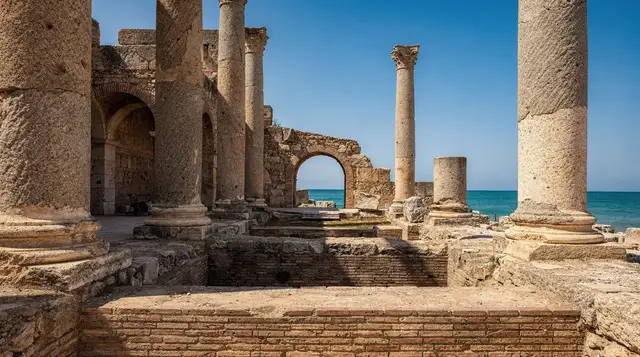
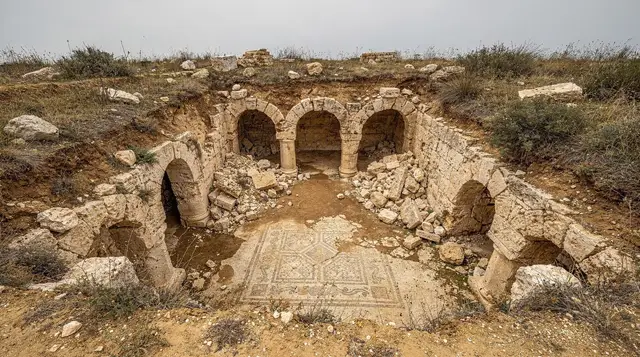
Carthage’s museum, by contrast, is one stop among several scattered across a site that once covered a significant stretch of coastline — the Antonine baths, the Punic ports, the Roman theatre and villas, the tophet, are all separate, walkable locations, with the Byrsa hill museum functioning as a modest orientation point rather than the main event. Carthage archaeological sites: a complete visitor guide lays out the full site, and Byrsa hill and the Carthage national museum covers the museum building specifically.
What the Bardo actually holds
The Bardo’s draw is depth in one subject: Roman floor mosaics, more of them and in better condition than almost anywhere else in the Mediterranean, arranged largely by the site they were excavated from so you get a sense of how individual Roman towns — Dougga, El Djem, Sousse — decorated their homes and public buildings.
Alongside the mosaics sit a Punic and Carthaginian collection, a room built around cargo recovered from a Roman shipwreck, and the palace’s own carved ceilings and marble state rooms, which function almost as a second exhibition running through the visit. The mosaics of the Bardo, room by room goes through the individual scenes worth finding, including the well-known Virgil mosaic from Sousse.
What Carthage’s museum actually holds
The museum on Byrsa hill is smaller and more of an introduction than a destination in its own right. It displays finds excavated from the surrounding site — Punic funerary items, architectural fragments, some mosaics, ceramics — with a rooftop terrace giving a genuinely good overview of the wider archaeological zone and the Gulf of Tunis beyond it.
The Carthage national museum covers what’s inside in more detail, but the honest framing is that the collection is modest compared with the Bardo’s, and most visitors treat it as a twenty-to-forty-minute stop rather than a planned centrepiece. What Carthage offers instead is scale: the ruins themselves, spread across several separate locations, are the real reason to come, and the museum is a useful but secondary layer on top of that.
| Bardo | Carthage museum (Byrsa hill) | |
|---|---|---|
| Type of visit | Standalone museum, one building | One stop inside a much larger open-air site |
| Core content | Roman mosaics, Punic finds, shipwreck cargo | Punic funerary items, architectural fragments |
| Typical time for this stop alone | 2.5–3 hours | 30–45 minutes |
| Time for the wider site it sits in | N/A — it is the whole visit | Half a day for the full archaeological zone |
| Setting | Beylical palace interior | Hilltop building with terrace views |
Ruins versus a museum building: a different kind of visit
This is really the crux of the comparison. A Bardo visit is entirely indoors, air-conditioned in summer, and paced by how quickly you move through gallery rooms — a controllable, weather-independent couple of hours. A Carthage visit is mostly outdoors, walking between separate fenced sites connected by roads and a short stretch of the TGM line, in whatever weather the day brings.
Summer heat makes a full Carthage circuit genuinely tiring in the middle of the day; the Bardo doesn’t have that problem at all. If comfort and predictability matter more than scale, that alone tips things toward the Bardo. If you want to stand in the actual footprint of a Punic and Roman city rather than see its contents displayed in cases, Carthage delivers something the Bardo, for all its mosaics, can’t — the mosaics on the Bardo’s walls came from sites like this one.
A combined tour of Carthage, the Bardo, Sidi Bou Said and the Tunis medina is the most efficient way to sidestep the choice entirely rather than picking one over the other, and it’s worth considering seriously if your Tunis time is limited to a single day.
Time needed, side by side
Budgeting time honestly is where a lot of single-day Tunis itineraries go wrong. The Bardo needs two and a half to three hours to do properly — less than that and you’re skimming rooms rather than looking at anything. Carthage’s full site, museum included, realistically needs four to five hours once you factor in moving between the separate locations, which aren’t within easy walking distance of each other, and the TGM stops along the coastal line only get you roughly close. Trying to fit both into one day without a guided combination tour is possible but tight, and it tends to mean rushing at least one of them, which defeats the purpose of visiting either.
| Scenario | Realistic time needed |
|---|---|
| Bardo only, unhurried | 2.5–3 hours |
| Carthage full site, unhurried | 4–5 hours including transfers between locations |
| Both in one day, self-guided | Full day, tight, likely rushing one site |
| Both in one day, guided combination tour | 8–9 hours, paced and transport included |
Cost and tickets compared
Neither site is expensive by international museum standards, but the ticketing structures differ. The Bardo is a single entry fee, around 13 TND for foreign visitors (about €4), covering the whole building. Carthage uses a multi-site ticket, typically around 12 TND (about €3.50), that covers entry to several of the separate ruin locations plus the Byrsa hill museum — the Carthage multi-site ticket, and how to use it well explains exactly what it includes and where it’s sold, since buying it at the wrong location is a common early mistake. Both figures are worth confirming before you travel, since state museum and site pricing in Tunisia shifts periodically.
If you only have one museum slot on your trip
For most first-time visitors with genuinely limited time, the Bardo is the stronger single choice — it’s a complete, self-contained experience that doesn’t depend on good weather or a full half-day being free, and the mosaic collection is a genuinely world-class holding that’s hard to see the equal of elsewhere.
Carthage rewards a different kind of visitor: someone with a real interest in walking an actual ancient city footprint rather than seeing its finds under glass, and with enough time in Tunis to give the site the half-day it deserves rather than compressing it into an hour between other stops. The museums of Tunis, ranked places both, along with the smaller museums in the city, into a single ordered list if you’re weighing more than these two options.
Doing both in a single day
If your schedule allows a full day and you don’t want to choose, a guided combination is genuinely the easier route rather than self-navigating both sites and the transport between them. A private tour covering the medina, Sidi Bou Said, Carthage and the Bardo packages all four into one day with a driver, which removes the logistics problem entirely — getting between Carthage’s scattered sites and across town to the Bardo without a guide or a car eats a surprising amount of the day on its own.
From the Hammamet side, a day tour from Tunis covering the Bardo, medina, Carthage and Sidi Bou Said and, departing directly from the coast, a day tour from Hammamet covering the medina, Bardo, Carthage and Sidi Bou Said both run the same combination with coastal coach pickup, useful if you’re not staying in Tunis itself.
With kids: which holds attention better
Neither is naturally built for young children, but they fail differently. The Bardo is indoor, climate-controlled and involves a lot of standing and looking at cases and floors, which tests patience quickly for children under about eight.
Carthage is outdoors with more physical space to move around in — walking between the Antonine baths, the Punic ports and the theatre gives restless kids somewhere to burn energy that a gallery circuit doesn’t — but the actual informational content, ruined foundations and low walls, is harder for a young child to read as anything interesting without an adult narrating constantly. Tunis with kids and family day trips from Tunis both cover pacing strategies that apply to either site.
As a day trip from Hammamet or Sousse
Both sites work as day trips from the coast, but the logistics differ. Carthage is the more natural coastal day trip on its own, since it sits directly on a coastal rail line and several tours combine it with Sidi Bou Said without needing to cross into central Tunis at all. The Bardo, being inland and west of the city centre, adds meaningfully more transfer time from Hammamet or Sousse, which is why most coastal-departure tours that include it bundle it with Carthage and the medina into a single long day rather than offering it alone. Carthage and Sidi Bou Said in a day is the lighter version of that day trip if the Bardo isn’t a priority for you.
Mistakes to avoid
Frequently asked questions about the Bardo and Carthage museum
Which museum has more to see, the Bardo or Carthage’s?
The Bardo, by a clear margin. Its mosaic and Punic collections are substantially larger and more varied than the modest holdings inside the Byrsa hill building at Carthage, which functions more as an introduction to the surrounding site than a destination collection.
Can I visit both in one day without a tour?
It’s possible but tight, and it usually means rushing one of them. Between transfers, ticket queues and the time each site genuinely deserves, a self-guided day covering both properly runs close to a full day rather than a half day.
Is the Carthage museum worth visiting if I’m short on time?
If your time at Carthage is genuinely limited, prioritise the outdoor sites — the Antonine baths and the Punic ports — over the museum itself, though the rooftop terrace view is worth the short stop if you pass through Byrsa hill anyway.
Which is better for someone who isn’t especially interested in archaeology?
The Bardo, generally — the mosaics are visually striking even without deep background knowledge, and the palace architecture adds its own appeal. Carthage’s ruined foundations require more imagination and, often, a guide to bring them to life for a casual visitor.
Is either site accessible by public transport without a car?
Yes. The Bardo is reachable by metro léger to the Bardo stop. Carthage is served by the TGM line, with stops at Carthage-Hannibal, Carthage-Byrsa and others depending on which part of the site you’re heading to first.
Do I need a guide for Carthage specifically?
Not strictly, but the ruins are genuinely harder to interpret without one than the Bardo’s clearly displayed mosaics. A guide adds real value at Carthage, more so than at the Bardo, where the objects mostly speak for themselves.
Which is the better choice for a rainy day?
The Bardo, without question — it’s entirely indoors. A rainy day at Carthage means walking between exposed outdoor sites with limited shelter, which is a genuinely different experience from a dry, sunny visit.
Should I do Carthage before or after the Bardo if I’m combining both?
Most guided combinations do Carthage first, since its outdoor sites are best visited before the midday heat, then move to the Bardo, medina or Sidi Bou Said later in the day when an indoor stop is more comfortable.
Roman & Punic site tours on GetYourGuide
Verified deep-linked GetYourGuide tours. Book through these links and we earn a small commission at no cost to you.
These are our own photographs of Tunisia, not the operator's pictures of this tour — open the tour page to see those.