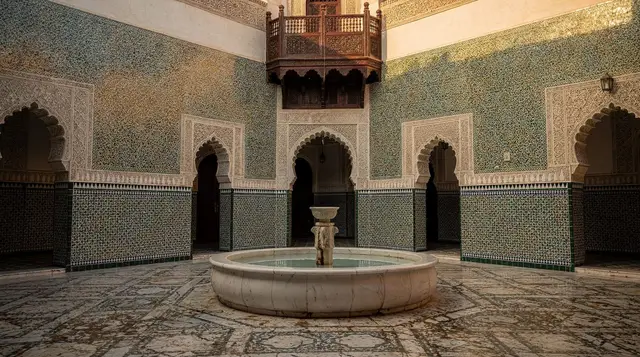
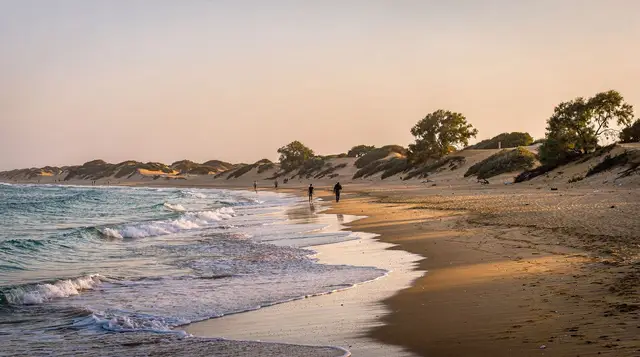
The beaches of Hammamet
Which Hammamet beach should I choose?
The old town's beach, right below the medina, is the most convenient and has genuine character; Yasmine Hammamet's beach further south is longer, more resort-developed, and better suited to a full day at a beach club with young children. Both are wide, sandy and reliably clean for most of the season.
Hammamet is Tunisia’s most established beach resort town, and unlike Tunis’s own coastline, its beaches are genuinely built for a full day in the sun rather than a half-day stop between sightseeing. The town splits roughly into two beach zones: the old town, with its medina rising directly behind a public stretch of sand, and Yasmine Hammamet, a newer, larger development further south lined with resort hotels and beach clubs. This guide compares the two, covers water sports and other activities actually available along the coast, and is honest about which parts of the marketing — “golden sand,” “crystal water” — hold up and which are standard resort-brochure language that doesn’t always match reality on a busy August afternoon.
| Where | Hammamet old town and Yasmine Hammamet, on Tunisia’s Cap Bon-adjacent coast |
| Cost | Public beach access is free; beach club loungers typically run 20–50 TND (about €6–15) per person, more at high-end resorts |
| Time needed | A full day for either beach; a week or more if it’s your main base |
| Getting there | Roughly an hour from Tunis-Carthage airport; closer still from Enfidha-Hammamet airport |
| Best time | May to October for swimming; July and August are the busiest and hottest |
If you are still deciding whether the coast deserves more than a day, the Hammamet destination page and the Yasmine Hammamet page set out the wider picture, while the Hammamet day trip guide is the one to read if you are coming from the capital for a single day. The Hammamet medina guide covers the old town that sits behind the first beach described below.
Hammamet old town: sand with a medina behind it
The beach directly below Hammamet’s medina walls is the more atmospheric of the town’s two main stretches, combining a genuinely wide, sandy shore with the old town’s fortress and narrow streets rising immediately behind it. It’s more public and less exclusively resort-controlled than Yasmine Hammamet’s beach, meaning access is straightforward for anyone staying in the older part of town or visiting as a day-tripper, without needing to be a guest at a specific hotel. The trade-off is that facilities are more basic here — fewer of the elaborate beach-club setups found further south — though a handful of cafés and casual restaurants along the shore cover food and drink without needing to leave the sand.
Yasmine Hammamet: the resort strip
Yasmine Hammamet, a purpose-built resort district a short distance south of the old town, is where most of Hammamet’s large all-inclusive hotels sit, each typically fronting its own section of a long, continuous beach. The sand here is generally wider and more consistently maintained than the old town’s, in part because it’s more directly managed by the hotels themselves, and the area is built around a full day of resort-style beach use — loungers, umbrellas, water sports counters and beachfront bars are all standard rather than exceptions.
It’s the better choice for families wanting a self-contained day without much need to leave a single stretch of sand, and it’s also busier and more built-up in feel, without the medina’s older architecture as a backdrop.
| Hammamet old town | Yasmine Hammamet | |
|---|---|---|
| Setting | Medina walls directly behind the beach | Purpose-built resort district |
| Access | More public, less hotel-exclusive | Largely tied to resort hotel frontage |
| Facilities | Basic — a handful of cafés and casual spots | Extensive — loungers, water sports, beach bars |
| Atmosphere | More local, more historic | More resort, more self-contained |
| Best for | Day-trippers, travellers who want character alongside sand | Families and travellers wanting a full resort beach day |
Water sports and boat trips
Hammamet’s beaches are genuinely set up for water sports in a way Tunis’s own coastline isn’t, and it’s one of the town’s real strengths beyond simply having good sand. Catamaran sailing, jet skiing, banana boats and parasailing are all commonly available through beachfront operators or hotel activity desks, particularly along the Yasmine Hammamet strip.
For a slower option, a pirate boat trip with hotel transfers is a popular choice for families, combining a few hours on the water with a lighter, more entertainment-focused format than a straightforward cruise. See water sports in Hammamet and Yasmine for the fuller range of what’s available and roughly what each activity costs.
Beyond the beach: buggy tours and desert-adjacent excursions
Hammamet’s appeal isn’t limited to the water. Inland from the resort strip, a scrubby, semi-desert landscape opens up that’s popular for off-road activities rarely available near Tunis itself. A premium buggy tour with photo stops or a quad bike ride and excursion in the heights of Hammamet both cover this terrain, giving a change of scene from a straight beach day without requiring a full day trip further afield.
These are worth considering for travellers spending several days in Hammamet who want to break up beach time with something more active, rather than for a short one- or two-day stay where beach time itself is the priority.
A family day: beach plus Friguia Park
Families based in Hammamet often split a day between the beach and Friguia Park, Tunisia’s main wildlife park, a manageable drive from either the old town or Yasmine Hammamet. A trip to Friguia Animal Park from Hammamet or Nabeul is a straightforward way to arrange this without organising separate transport, and it pairs naturally with a beach morning followed by an afternoon at the park, or the reverse depending on your hotel’s checkout and activity timing.
See Friguia park: what to expect for what the visit itself involves, and family day trips from Tunis for how this fits into a broader family itinerary if you’re also spending time in the capital.
| Activity | Best suited to | Typical duration |
|---|---|---|
| Catamaran sailing or jet skiing | Active travellers wanting time on the water | 1–3 hours |
| Pirate boat trip | Families with younger children | 2–3 hours |
| Buggy or quad tour | Travellers wanting a break from the beach | 2–3 hours |
| Friguia Park trip | Families splitting the day between beach and wildlife | Half a day |
Nabeul’s beach and pottery as a nearby alternative
Nabeul, a short distance from Hammamet, has its own beach that’s quieter and less developed than either of Hammamet’s main stretches, and it’s often visited alongside a stop at the town’s well-known pottery workshops rather than as a beach destination on its own. If Hammamet’s beaches feel too crowded during peak season, Nabeul is a reasonable half-day alternative that combines a calmer stretch of sand with a genuinely different activity. See Nabeul pottery: workshops, markets and what to buy for what else the town offers beyond its coastline. The Nabeul destination page gives the broader context for the town.
If beaches are the whole point of your trip, it is worth comparing this stretch of coast with the others on offer. Best beaches near Tunis lines up the options closer to the capital, Kelibia and Cap Bon beaches covers the quieter shoreline further around the peninsula, and family beaches in Tunisia is the better starting point if you are travelling with young children and want to see every option side by side.
Where to stay based on which beach you prefer
Choosing between the old town and Yasmine Hammamet as a beach base is really a choice about the kind of trip you want. Staying in the old town puts you within walking distance of the medina’s souks, restaurants and the beach directly below the walls, and it suits travellers who want to move on foot between sightseeing and sand without much planning. Yasmine Hammamet’s hotels are built specifically around all-inclusive, resort-style stays, with the beach as one part of a larger package that usually includes pools, evening entertainment and multiple restaurants within the same property — genuinely convenient for families who don’t want to leave the grounds much, but a noticeably different kind of holiday from a walkable old-town stay.
Neither is objectively better; it depends on whether you want a trip built around the resort itself or one where the beach is one stop among several things to see and do each day. Travellers splitting time between Hammamet and Tunis should also weigh how far each base is from the capital — the old town and Yasmine Hammamet are both roughly the same distance from Tunis, so proximity to the city isn’t a deciding factor either way.
Sand quality and what the season actually does to it
Hammamet’s sand is genuinely good by regional standards — fine, pale and wide across most of both beach areas — but it’s worth being realistic about how it changes through the year rather than relying only on marketing photography taken in ideal conditions. In peak summer, both stretches are raked and maintained daily by hotel and municipal staff, which keeps them in good condition despite heavy footfall.
Outside the main season, maintenance is less intensive, and the old town beach in particular can show more seaweed and debris after autumn storms than a summer visitor would ever see. None of this makes an off-season visit not worth it — quite the opposite for anyone who prioritises quiet over polish — but it’s worth setting expectations correctly if pristine, freshly raked sand specifically is what you’re after outside of July and August.
Restaurants and eating near the beach
Eating options differ meaningfully between the two areas in a way that mirrors their broader character. The old town has genuine variety within a short walk of the beach — small family-run restaurants, casual grill spots, and cafés serving strong coffee and pastries along streets that predate the resort development entirely.
Yasmine Hammamet’s dining is more concentrated within hotel grounds and a handful of larger standalone restaurants built for the resort district’s scale, generally more polished and more expensive, with less of the old town’s variety in walking distance of any single beach club. Neither is wrong, but travellers who value food as part of a beach day, rather than an afterthought booked through a hotel package, will likely get more out of basing themselves near the old town.
| Hammamet old town | Yasmine Hammamet | |
|---|---|---|
| Dining variety | High — many small independent spots | Lower — concentrated in hotels and larger restaurants |
| Typical price level | Moderate | Higher |
| Walking distance from beach | Short, through the medina and surrounding streets | Varies by hotel; often within the resort grounds |
When the beaches are busiest — and when to avoid that
July and August are unambiguously the peak of Hammamet’s season, when both the old town beach and Yasmine Hammamet’s resort strip see the heaviest crowds and the highest beach club prices of the year. Late spring, particularly May and early June, and early autumn through September and into October offer a genuinely more comfortable balance — warm enough water for swimming, noticeably fewer people, and lower accommodation and activity prices across the board. Winter beach visits are for walking rather than swimming, though the old town’s beach still has its own quiet appeal outside the summer months, without the crowds of the high season and with the medina largely to yourself in the mornings.
For a first-hand account of the quieter months, the blog post Hammamet out of season describes what the town feels like once the crowds have left. If you are weighing Hammamet against the other big resort town on this coast, Hammamet vs Sousse sets the two side by side. And if you want to fold the beach into a longer route, the Tunis and Cap Bon in four days itinerary shows one way to combine the capital with this coast, while the Enfidha airport guide is worth a read if you plan to fly straight to the resorts.
Mistakes to avoid
Frequently asked questions about Hammamet’s beaches
Which is better, Hammamet old town beach or Yasmine Hammamet?
It depends on priorities. The old town offers more character and public access with a medina backdrop; Yasmine Hammamet offers a longer, more consistently maintained resort strip with extensive facilities, better suited to families wanting a self-contained day.
Is the beach free to access in Hammamet?
Public beach access is free everywhere along the coast. Loungers and umbrellas at beach clubs and resort hotels typically cost extra, more so during the July–August peak season.
What water sports are available in Hammamet?
Catamaran sailing, jet skiing, banana boats and parasailing are all commonly available, particularly along the Yasmine Hammamet strip. See water sports in Hammamet and Yasmine for the full range.
Is Yasmine Hammamet’s beach only for hotel guests?
Much of the frontage is tied to specific resort hotels, but stretches remain accessible to the public. It’s worth checking locally rather than assuming full public access if you’re not staying at one of the resorts.
When is the best time to visit for fewer crowds?
May, June, September and October offer warm swimming weather with noticeably fewer people and lower prices than the July–August peak.
Can I combine a beach day with Friguia Park?
Yes, easily — Friguia Park is a manageable drive from either Hammamet beach area, and many families split a day between the two. See Friguia park: what to expect for details.
Is Nabeul’s beach worth visiting instead of Hammamet’s?
It’s a reasonable, quieter alternative if Hammamet feels too busy, particularly when combined with the town’s pottery workshops, though it’s less developed for a full resort-style beach day.
Are buggy and quad tours available directly from the beach?
They typically depart from operators based in or near Hammamet rather than directly from the sand, but they’re easy to book as a half-day add-on to a beach-focused stay.
How far is Hammamet from the airports?
Roughly an hour from Tunis-Carthage airport, and considerably closer from Enfidha-Hammamet airport, which is the more common arrival point for travellers heading straight to the coast.
Beach & coast tours on GetYourGuide
Verified deep-linked GetYourGuide tours. Book through these links and we earn a small commission at no cost to you.
These are our own photographs of Tunisia, not the operator's pictures of this tour — open the tour page to see those.