The best beaches near Tunis
What's the best beach near Tunis?
Gammarth has the most reliably clean, well-maintained sand within easy reach of the capital, backed by resort hotels and beach clubs. For something quieter and less developed, Ghar el Melh and Sidi Ali El Mekki, about an hour north, trade convenience for open coastline with far fewer people.
Tunis isn’t a beach destination in the way Hammamet or Djerba are marketed, but the capital sits directly on the Gulf of Tunis, and a genuine stretch of coastline runs from the city’s northern suburbs up towards Cap Bon. None of it matches the resort infrastructure further south, and it’s worth saying plainly: if beach time is your main priority, Hammamet or the Kelibia coast will serve you better. But for travellers based in Tunis who want a half-day or a full day by the sea without leaving the greater metropolitan area, there are real options — some crowded and convenient, some quiet and a genuine trip out of the city. This guide ranks them honestly, including which ones aren’t worth the trip.
| Where | La Marsa, Gammarth and Ghar el Melh, along the Gulf of Tunis and just beyond it |
| Cost | Public beach access is free; beach clubs and loungers typically run 20–50 TND (about €6–15) per person for the day |
| Time needed | Half a day for La Marsa or Gammarth; a full day for Ghar el Melh or Sidi Ali El Mekki |
| Getting there | TGM train to La Marsa; taxi or car for Gammarth and points further north |
| Best time | June to September for swimming; May and October are pleasant but the water is cooler |
Gammarth: the closest thing to a resort beach
Gammarth, on the northern tip of the bay past La Marsa, is where Tunis’s beach infrastructure is most developed — a run of resort hotels, beach clubs and restaurants along a genuinely attractive stretch of sand that’s noticeably cleaner and better maintained than the more central city beaches. It’s the honest answer to “where’s the best beach near Tunis” for most visitors, not because it’s untouched or dramatic, but because it’s reliably good: managed sand, lifeguards at the resort beaches, and enough food and drink options nearby that a full day there doesn’t require planning ahead. It’s also the most expensive option on this list if you want a lounger and umbrella at one of the beach clubs, though the public stretches of sand remain free.
La Marsa: convenient, crowded, and honestly mixed
La Marsa’s beach is the most accessible option for anyone staying centrally in Tunis, reachable directly by the TGM light rail without a taxi or car. That convenience comes at a cost: the beach here is more crowded, particularly on weekends when Tunis residents themselves head to the coast, and the sand quality is more variable than Gammarth’s — fine in stretches, less appealing in others depending on recent conditions and how close you are to the town’s built-up waterfront. It’s a reasonable choice for a couple of hours between sightseeing rather than a destination beach day, and its real strength is the cafés and restaurants lining the corniche rather than the beach itself.
| Beach | Distance from central Tunis | Crowd level | Best for |
|---|---|---|---|
| Gammarth | 20–25 minutes by car | Moderate to high in summer | A proper beach day with facilities |
| La Marsa | 35–40 minutes by TGM | High, especially weekends | A short break between sightseeing |
| Ghar el Melh / Sidi Ali El Mekki | 60–75 minutes by car | Low | Escaping the crowds entirely |
| La Goulette | 25–30 minutes by TGM | Moderate | Passing through rather than a destination |
Ghar el Melh and Sidi Ali El Mekki: the quiet option
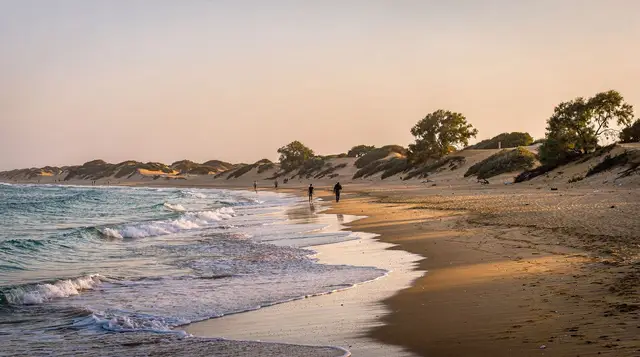
For a genuinely different experience from the developed northern suburbs, Ghar el Melh and the nearby beach at Sidi Ali El Mekki sit about an hour north of Tunis, past Bizerte’s direction but reachable as their own excursion. This stretch trades convenience for open, largely undeveloped coastline — a working fishing town, far fewer people on the sand, and a landscape that feels considerably more remote than anything within the city’s immediate suburbs, despite being under an hour and a half away.
A Captain El Bounta beach experience at Sidi Ali El Mekki is a practical way to see this stretch without arranging your own transport, combining the beach with some time around Ghar el Melh’s harbour. It’s the right choice for travellers who’ve already done a beach day at Gammarth or La Marsa and want something quieter for a second outing, or for anyone who finds resort-style beach clubs uninteresting to begin with.
Beaches that aren’t worth the trip
Honesty matters more here than a complete list, so it’s worth naming what to skip. La Goulette’s beach, while historically significant as Tunis’s old port town, isn’t a swimming destination in its own right — the town is worth visiting for its seafood restaurants and Sicilian-influenced architecture, covered in seafood in La Goulette and La Marsa, but treat any beach time there as incidental rather than the reason to go. Hammam Lif, further south along the bay, has a beach that’s more industrial in feel given its proximity to greater Tunis’s port and manufacturing areas, and it’s not a place most visitors would choose to spend a beach day even though it’s technically coastal.
Combining a beach day with a boat trip
If you’d rather see the coastline from the water than just sit on it, a special cruise exploring the secrets of Tunis covers the bay from a different angle, giving a sense of how the city’s coastline connects from Carthage’s headland round to Gammarth without needing to drive between each stop separately. It’s a reasonable alternative for travellers who want a half-day on the water rather than a half-day on sand, and it can be combined with time at Gammarth or La Marsa afterwards if you still want to swim. For general boat options along this coast, boat trips from Tunis and the bay covers the fuller range.
Diving and water sports beyond swimming
Tunis’s own beaches aren’t a diving destination, but Hammamet, about an hour south, has a more developed diving scene, including wreck sites that are a reasonable add-on for travellers extending their coastal time beyond Tunis itself. A scuba dive at the Takrouna wreck near Hammamet is one option worth considering if diving is a priority for your trip, though it requires factoring in the extra travel south. For general diving context across the wider region, diving in northern Tunisia covers where the more established dive sites actually are, most of which sit closer to Tabarka and the north-west coast than to Tunis itself.
A family day: beach plus Friguia park
Families splitting time between a beach day and something more structured for children sometimes combine a morning at Gammarth or La Marsa with an afternoon at Friguia Park, Tunisia’s main wildlife park, roughly forty-five minutes south of the city. A Friguia park family package is a straightforward way to add that second stop without arranging separate transport, and it’s covered in more detail in Friguia park: what to expect. It’s worth noting that Friguia itself isn’t a beach destination — pairing it with beach time means treating the two as separate halves of a single day rather than expecting one site to cover both.
Water quality and what to actually expect
Gulf of Tunis water quality varies by location and season, and it’s worth being realistic rather than promotional about this: the water off Gammarth and the more northern stretches is generally cleaner than the water directly off La Goulette or the more industrial parts of the bay, owing to proximity to shipping and port activity further south. This isn’t unique to Tunis — most capital-city coastlines share some version of this pattern — but it’s a real factor in choosing where to spend a beach day rather than an assumption to skip past. If pristine water is the priority over convenience, Ghar el Melh and Sidi Ali El Mekki, or the Cap Bon coast further beyond, are the better answer than anywhere directly in the city’s suburbs.
| Beach | Water quality | Facilities | Realistic time from Tunis centre |
|---|---|---|---|
| Gammarth | Generally good | Extensive — resorts, beach clubs, restaurants | 20–25 minutes |
| La Marsa | Mixed, variable by section | Cafés and restaurants along the corniche | 35–40 minutes |
| Ghar el Melh / Sidi Ali El Mekki | Good, less developed | Minimal — a working town, not a resort strip | 60–75 minutes |
| La Goulette | Not a swimming priority | Restaurants, not really beach infrastructure | 25–30 minutes |
Who should base themselves near the beach versus in central Tunis
If beach access is a genuine priority for your trip rather than an occasional half-day, it’s worth considering staying in Gammarth or La Marsa rather than central Tunis, since both put you within walking distance of the coast and cut out the daily commute to and from the sand. Gammarth in particular has a concentration of resort-style hotels built specifically around beach access, which suits travellers who want to alternate between city sightseeing and lounging without much friction.
Central Tunis, by contrast, puts you closer to the medina, the Bardo and the transport hub for day trips further afield, at the cost of a 20 to 40 minute journey each time you want the sea. Most visitors on a trip of five days or fewer are better served staying centrally and treating the beach as one afternoon among several priorities, while longer stays of a week or more can reasonably justify splitting the trip between a central base and a few nights on the coast. See where to stay in Tunis for the fuller breakdown of neighbourhoods and what each suits.
Beach etiquette and what locals actually do
Tunisian beach culture is more conservative than a traveller arriving from a purely European resort context might expect, particularly away from the most touristed strips of Gammarth. Swimwear is generally fine on the sand itself, but it’s worth covering up when walking through town to and from the beach, and it’s common to see a wide range of dress on Tunisian family beaches, from full swimwear to women swimming fully clothed — neither is unusual, and neither should draw comment.
Alcohol is available at some beach clubs and resort hotels but isn’t universally sold, particularly at more modest public access points, so don’t assume it will be available everywhere. Friday afternoons and the period around religious holidays can also see quieter beaches as families prioritise other plans, which is worth knowing if you’re hoping for a quieter day and can shift your schedule slightly.
Practical notes: transport, timing, and what to bring
The TGM light rail reaches La Marsa directly and is the easiest way to get to that stretch of coast without a car; see the TGM: Tunis to La Marsa by train for the details. Gammarth and the beaches further north require a taxi or rental car, since the TGM line doesn’t extend that far.
Taxis in Tunis and hiring a car in Tunisia both cover the practical options. Bring your own umbrella or towel if you’re planning to use a public stretch of beach rather than a paid club, since not every access point rents equipment, and expect beach club prices to rise noticeably in July and August, the peak of the domestic Tunisian summer season.
Where to read next
Each of the main stops here has its own page if you want more detail before choosing. The Gammarth destination page and the La Marsa destination page describe the towns behind the sand, while Gammarth and La Marsa beaches compares the two stretches side by side. For the quieter option, Ghar el Melh and Sidi Ali El Mekki goes into the harbour town and the open coast beyond it.
If the capital’s beaches leave you wanting more, Hammamet beaches and Kelibia and the Cap Bon beaches are the natural next step, and travelling with children is covered in family beaches in Tunisia. Anyone weighing the coast against the rest of the trip will find Tunis in summer useful for deciding how much sea time to plan.
Mistakes to avoid
Frequently asked questions about beaches near Tunis
What’s the closest good beach to central Tunis?
La Marsa, reachable directly by TGM train in about 35–40 minutes, is the most convenient option, though Gammarth a little further north generally has better sand and facilities for a full beach day.
Is the water clean enough to swim in near Tunis?
Generally yes at Gammarth and the more northern stretches; water quality is more mixed closer to La Goulette and the more industrial parts of the bay. If clean, quiet water matters most, Ghar el Melh and Sidi Ali El Mekki are the stronger choice.
Can I get to Gammarth without a car?
A taxi is the practical option, since the TGM line doesn’t extend that far north. It’s a reasonably short ride from central Tunis or La Marsa, typically 20–25 minutes from the city centre.
Is La Goulette worth visiting for its beach?
Not really — go for the seafood restaurants and the town’s Sicilian-influenced architecture instead. See seafood in La Goulette and La Marsa for what actually makes it worth the trip.
How far is Ghar el Melh from Tunis?
Roughly an hour to seventy-five minutes by car, depending on traffic. It’s a genuine day trip rather than a quick add-on, but it’s the best option near Tunis for travellers who want to avoid resort crowds entirely.
Are there diving options near Tunis’s beaches?
Not directly at the Tunis beaches themselves. Hammamet, about an hour south, has more developed diving including wreck sites, and the more established dive region overall is further north-west near Tabarka.
When is the best time of year to swim near Tunis?
June through September for reliably warm water; May and October are pleasant for a beach day but swimming is cooler. Winter beach visits are for walking and views rather than swimming.
Do I need to pay to access the beach?
Public beach access is free everywhere on this list. Beach clubs with loungers and umbrellas at Gammarth and some parts of La Marsa typically charge 20 to 50 TND per person for the day.
Is a boat trip a good alternative to a beach day?
Yes, for a different perspective on the coastline — a bay cruise shows Carthage’s headland and the run up to Gammarth from the water, and can be combined with beach time afterwards if you still want to swim.
Beach & coast tours on GetYourGuide
Verified deep-linked GetYourGuide tours. Book through these links and we earn a small commission at no cost to you.
These are our own photographs of Tunisia, not the operator's pictures of this tour — open the tour page to see those.