Hammamet or Sousse?
Should I stay in Hammamet or Sousse?
Hammamet is closer to Tunis, around an hour, and works best for a straightforward beach stay with a small, easily-covered medina. Sousse is further, about two hours, but has a genuinely significant UNESCO-listed medina and ribat, plus a stronger position as a base for Monastir, El Djem and Mahdia. Beach-first, short-trip travellers usually prefer Hammamet; travellers wanting more history and a wider Sahel base often prefer Sousse.
Hammamet and Sousse are the two coastal towns travellers most often weigh against each other when choosing a beach base within reach of Tunis, and the two overlap more than they differ for a short trip: both offer long sandy beaches, package-oriented resort infrastructure, and an old town worth at least a few hours. Where they genuinely diverge is in how much historical weight that old town carries, how far each sits from Tunis, and how useful each is as a base for reaching other towns nearby. This page sets out the real differences so the choice reflects what you actually want from a coastal stay rather than picking whichever name is more familiar.
| Where | Hammamet: Cap Bon coast, 60-65 km from Tunis. Sousse: Sahel coast, about 140 km |
| Cost | Broadly similar; Sousse’s museum and ribat entry adds a modest cost Hammamet doesn’t have |
| Time needed | Hammamet: 2-4 days. Sousse: 1-2 days, or 3-4 as a wider Sahel base |
| Getting there | Hammamet: about 1-1.5 hours by louage, bus or car. Sousse: 2-2.5 hours by train |
| Best time | April-June and September-October for both, avoiding peak summer heat and crowds |
The medinas: small and pretty versus genuinely significant
This is the clearest single difference between the two towns. Hammamet’s medina, ringed by walls standing since the fifteenth century, is small and can genuinely be covered in an hour or two, pleasant for its setting rising almost directly from the beach but modest in scale and historical weight. Sousse’s medina, together with its ribat, kasbah and city walls, was inscribed as a UNESCO World Heritage Site in 1988, and it’s a working old town in daily use, not a compact tourist loop.
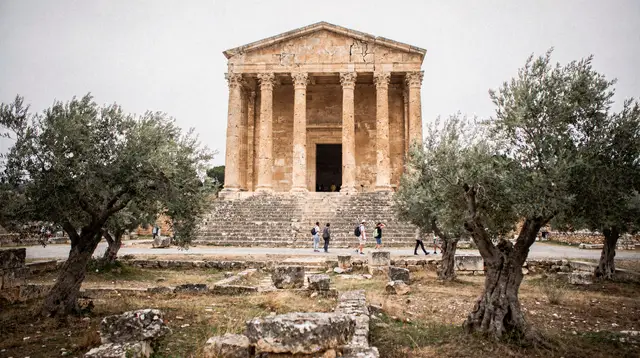
The Ribat of Sousse, an eighth-century monastery-fortress, is the best-preserved building of its kind in North Africa, and the Great Mosque, built in 851, is still in active use. Travellers who want a genuine, significant piece of medieval history alongside their beach time should weigh this difference seriously; travellers who mainly want a pleasant old-town backdrop to a beach holiday will find Hammamet’s smaller medina entirely sufficient.
Distance from Tunis: Hammamet is closer
Hammamet sits 60 to 65 km south-east of Tunis, roughly an hour to an hour and a half by louage, bus or car, close enough to work equally well as a day trip or a multi-night base. Sousse is about 140 km south, a two to two-and-a-half-hour train ride from Tunis Ville station, still very manageable but a meaningfully longer commitment, particularly for a short trip where transit time eats into time actually spent at the destination. For travellers with limited days who want to minimise transfer time, Hammamet’s proximity is a real practical advantage; for travellers planning a longer stay or already building a Sahel-focused leg into their trip, Sousse’s extra distance matters less.
Side-by-side comparison
| Hammamet | Sousse | |
|---|---|---|
| Medina | Small, walled, 1-2 hours to see | UNESCO-listed, ribat and Great Mosque, half a day |
| Distance from Tunis | 60-65 km, about 1-1.5 hours | About 140 km, 2-2.5 hours by train |
| Beach | Long sandy stretches, hotel-backed | Boujaffar beach, functional rather than spectacular |
| Museum | None comparable | Archaeological museum with major mosaics |
| Best as a base for | A relaxed coastal stay near Tunis | Monastir, El Djem, Mahdia, Kairouan |
| Resort character | Split between older centre and Yasmine Hammamet | One town, medina and resort strip side by side |
Beaches: broadly similar, neither a standout
Neither town’s beach is dramatically better than the other’s, and both fall into the same category: long, pleasant, hotel-backed sand suited to a straightforward beach holiday rather than a remote or particularly scenic stretch of coast. Hammamet’s beaches run for kilometres along the bay, with hotel beach clubs and public stretches both available. Sousse’s Boujaffar beach is the public heart of its tourist zone, wide and reasonably clean by urban standards, lined with cafés that range from fairly priced to clearly aimed at tourists who don’t know local rates.
If beach quality alone were the deciding factor, the choice would come down to which hotel and stretch you book rather than the town overall, since the difference between the two at this level of comparison is genuinely marginal. Water sports operators, jet skis, banana boats, parasailing, cluster around the main resort beaches in both towns in roughly equal measure, so travellers prioritising active beach days over quiet sunbathing won’t find a strong reason to prefer one town over the other on this specific point either.
Using each as a base for day trips
This is where the two towns diverge most for travellers planning more than a pure beach stay. Sousse’s position makes it a strong base for the wider Sahel: Monastir is a 20 to 30-minute ride away, El Djem’s amphitheatre is a realistic half-day trip, and Mahdia and Kairouan are both within reasonable reach without changing hotels.
A full-day tour from Hammamet covering Sousse and Monastir with lunch shows how travellers based in Hammamet instead can still reach this same cluster of towns, just as a day trip rather than from a closer base. Hammamet’s own day-trip strength runs the other direction, toward Nabeul’s pottery workshops and the wider Cap Bon peninsula, a different region entirely from Sousse’s Sahel connections.
Combining both towns with a Sahara excursion
Both Hammamet and Sousse function as departure points for Sahara excursions, since most desert tours depart from the coast rather than Tunis itself, and this is one area where the two towns are functionally interchangeable rather than genuinely different.
A 2-day Sahara exploration departing Yasmine Hammamet or Sousse and a private 2-day Sahara express tour from Tunis, Hammamet and Sousse both draw from either coastal base, so if a desert add-on is part of your plan, the choice between Hammamet and Sousse doesn’t meaningfully affect that portion of the trip. Sahara tours from Tunis, compared covers this departure logistics question in more detail.
Museums: a clear point in Sousse’s favour
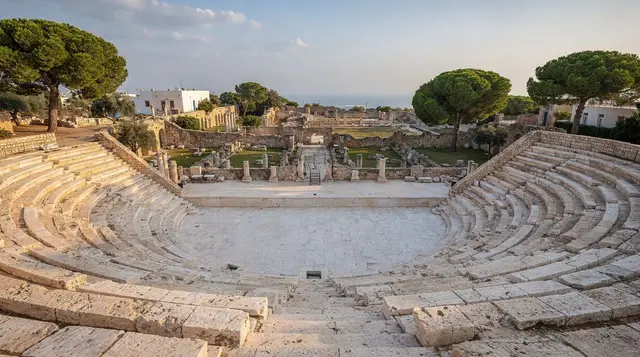
Sousse holds one advantage Hammamet doesn’t attempt to match: the Sousse Archaeological Museum, housed inside the kasbah, holds one of the country’s best Roman and Byzantine mosaic collections after the Bardo in Tunis, genuinely underused relative to its quality. Hammamet has no comparable museum, its main indoor cultural stop being Dar Sebastien’s gardens and amphitheatre rather than a collection of artefacts. For travellers with an interest in mosaics or Roman-era art who don’t have time to reach the Bardo itself, this tips meaningfully toward Sousse, and the dedicated guide to the museum covers which rooms to prioritise if time is short.
Hotel prices and accommodation style
Both towns skew toward mid-range and all-inclusive resort hotels, a legacy of decades of European package tourism in each, and prices are broadly comparable at similar quality tiers, generally in the 80 to 250 TND range for a double room depending on season and proximity to the beachfront.
Hammamet splits more clearly into two distinct zones, the older centre near the medina and the newer Yasmine Hammamet resort belt, giving a wider spread of atmosphere to choose between at similar price points. Yasmine Hammamet in particular suits travellers who want a fully self-contained resort stay with minimal need to leave the hotel grounds, an option Sousse doesn’t offer in quite the same purpose-built form.
Food: similar strengths, different specialities
Seafood is a strength in both towns, given their coastal position, with grilled and fried fish widely available at reasonable prices away from the immediate tourist strips in each. Sousse leans slightly more toward dishes tied to the wider Sahel, ojja and lablabi turn up reliably in its medina’s smaller local eateries, while Hammamet’s food scene follows a similar coastal Tunisian pattern without a strongly distinct local specialty of its own. Neither town disappoints on food, and the Tunisian food guide covers the dishes common to both in more general depth than either town-specific page needs to repeat.
Nightlife and evening atmosphere
Hammamet, particularly the Yasmine Hammamet zone, leans toward organised bars, clubs and entertainment built for package holidaymakers, a livelier and more overtly geared-toward-tourists evening scene than Sousse offers in its equivalent areas. Sousse’s evenings centre more around restaurants and cafés near the medina and the beachfront, generally calmer and less nightlife-focused, though the city does have its own resort-oriented strip catering to a similar crowd as Hammamet’s. Neither town is a genuine nightlife destination on the scale of a European resort city, but travellers specifically seeking a livelier evening scene will find Yasmine Hammamet the stronger of the two options.
Which one suits which kind of traveller
Travellers wanting a straightforward, low-effort beach holiday within easy reach of Tunis, without much interest in significant medieval history, are generally better served by Hammamet: closer, simpler, and its modest medina is enough old-town character for most short trips. Travellers who want their coastal stay to include a genuinely significant historical site, and who value a strong base for reaching Monastir, El Djem and Mahdia without switching hotels, should lean toward Sousse. A Sahara express tour departing from Tunis, Hammamet or Sousse works from either base equally well, so the desert portion of a trip needn’t factor heavily into this specific choice.
Can you visit both
Given that Sousse and Hammamet sit on the same general coastline, roughly 75 km apart, visiting both within one trip is entirely realistic, either as a day trip from whichever you’re based in or as a short move partway through a longer coastal stay. Travellers with limited time who can only manage one should weigh the priorities above rather than trying to force both into a rushed single day, since the medina and ribat in Sousse alone deserve at least half a day to see properly, and a day trip from Hammamet that also tries to cover Monastir the same day makes for a genuinely long day on the road.
The Sousse and Monastir day trip guide lays out that specific combination if it’s part of your plan, and general transport logistics between the two coastal towns are covered in getting around Tunis, useful background regardless of which base you end up choosing.
Mistakes to avoid
Frequently asked questions about choosing between Hammamet and Sousse
Which is closer to Tunis, Hammamet or Sousse?
Hammamet, at 60 to 65 km and roughly an hour to an hour and a half by road. Sousse is about 140 km away, a two to two-and-a-half-hour train journey.
Which has the better medina, Hammamet or Sousse?
Sousse’s medina is the more historically significant, UNESCO-listed alongside its ribat and Great Mosque. Hammamet’s is smaller and more modest, pleasant for its setting but not comparable in scale or weight.
Is the beach better in Hammamet or Sousse?
Both are broadly similar: long, sandy, hotel-backed stretches suited to a standard beach holiday. Neither stands out as clearly superior to the other on beach quality alone.
Which town is a better base for day trips?
Sousse, for reaching Monastir, El Djem, Mahdia and Kairouan without switching hotels. Hammamet is the stronger base for Nabeul and the wider Cap Bon peninsula instead.
Can I visit both Hammamet and Sousse in one trip?
Yes, they’re about 75 km apart on the same coastline, and visiting both as a day trip or a short move partway through a longer coastal stay is entirely realistic.
Which town has better nightlife?
Hammamet, particularly the Yasmine Hammamet zone, leans more toward organised bars and clubs built for package tourism. Sousse’s evenings are generally calmer and more restaurant and café-focused.
Is Sousse worth the extra travel time if I only have a short trip?
It depends on priorities. If significant medieval history and Sahel connections matter to you, yes. If a simple, close beach stay is the priority, Hammamet’s shorter transfer makes more sense for a short trip.
Do both towns get equally crowded in summer?
Yes, both are major package-tourism destinations and see their heaviest crowds and highest prices in July and August, with April to June and September to October offering a more comfortable balance for either.
Hammam & wellness experiences
Verified deep-linked GetYourGuide tours. Book through these links and we earn a small commission at no cost to you.
These are our own photographs of Tunisia, not the operator's pictures of this tour — open the tour page to see those.