The Carthage international festival
What happens at the Carthage international festival?
An open-air arts programme of music, theatre and dance runs through July and into August in the restored Roman theatre inside the Carthage archaeological zone, a venue rebuilt from the 1960s specifically to host it. Big regional and international names appear alongside Tunisian acts, in a seating bowl that traces an ancient footprint even though most of the visible stonework is twentieth-century reconstruction.
For most of the year, the Roman theatre inside the Carthage archaeological zone is a sightseeing stop on the multi-site ticket, a compact semicircular bowl you walk through in twenty minutes on the way to the villas quarter next door. Every summer it becomes something else entirely: a working concert venue, staged and ticketed, hosting the Carthage international festival, an open-air arts programme running since the 1960s that draws some of the biggest names in regional music alongside international acts and Tunisian performers.
It’s one of the more atmospheric settings for live performance anywhere in North Africa, built specifically to give the ancient theatre a second life rather than leave it as a static ruin. This page covers what the festival actually is, how the theatre changes character between a daytime visit and an evening show, and how to plan around it if the summer programme lines up with your dates.
| Where | The Roman theatre, Carthage archaeological zone, north-east of Tunis |
| Cost | Ticket prices vary widely by act, from modest to premium for headline names |
| Time needed | A single evening per show; the season runs through July and August |
| Getting there | TGM train to Carthage-Hannibal or Carthage-Dermech, then a short walk |
| Best time | Evenings, once the day’s heat has eased and the stage lighting comes on |
A theatre rebuilt to host a festival, not just preserve a ruin
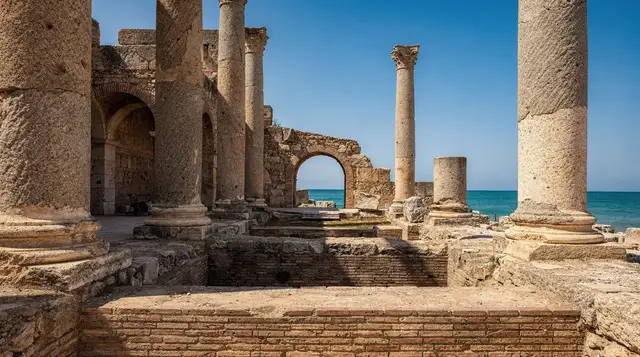
The Roman theatre at Carthage was originally built in the late first or early second century AD, then fell into ruin over the centuries like most of the city’s Roman-era structures. What visitors and festival-goers see today is largely a twentieth-century reconstruction: new tiered seating, a rebuilt stage wall, and modern lighting and sound infrastructure added from the 1960s onward specifically so live performance could return to the site. That’s worth stating plainly, since it changes what kind of experience a festival evening actually is.
This isn’t an untouched ancient ruin pressed into modern service almost by accident; it’s a deliberately restored venue, built on an authentic Roman footprint, designed from the outset to host exactly the kind of festival that now fills its calendar every summer. The Roman theatre and villas of Carthage guide goes into more detail on what’s original stonework and what’s modern reconstruction, useful background before a festival visit.
What the festival programme looks like
Running through July and into August most years, the programme mixes major regional Arabic-language music acts, international performers on wider European or global tours who add Carthage as a stop, and Tunisian theatre and dance companies presenting new or touring work.
The exact lineup changes year to year and is announced closer to the season, so there’s no fixed roster to expect, but the general pattern holds: a handful of genuinely major names anchor the highest-demand evenings, while a wider spread of smaller, still well-regarded acts fill out the rest of the programme across the roughly six-week run. Evenings vary in atmosphere depending on the act, from large-scale concert energy for headline music evenings to a quieter, more contemplative mood for theatre and dance performances.
Buying tickets
Ticket prices vary considerably by act and by seating position within the theatre, from relatively modest prices for smaller programme slots to a meaningfully higher cost for the season’s headline concerts. Tickets for the best-known names sell out ahead of time, sometimes weeks in advance, while smaller or less internationally known acts often still have availability closer to the date. The official festival channels publish the season’s schedule and ticketing details closer to the summer, and checking that schedule before finalising travel dates is worth doing if a specific act is the reason for the trip, rather than assuming tickets will be available on arrival.
A daytime visit versus an evening show
| Daytime visit | Evening festival show | |
|---|---|---|
| Access | General sightseeing, part of the Carthage multi-site ticket | Ticketed entry for the specific performance |
| Atmosphere | Quiet, archaeological, self-guided | Full concert or performance energy, staged lighting |
| Site condition | Standard seating and stage visible as a ruin-venue hybrid | Temporary staging, sound and lighting rigs in place |
| Photography | Generally unrestricted | Often restricted during performances, depending on the act |
| Best for | Understanding the theatre’s history and Roman-era layout | Experiencing it as the living venue it’s actually built to be |
What to bring for an evening at the theatre
The seating is stone, largely without cushions unless a specific show provides rented seat pads at the entrance, so a light cushion or folded jacket to sit on makes a genuine difference over a two-to-three-hour evening. Temperatures drop noticeably once the sun goes down, even after a hot July or August day, so a layer for later in the evening is worth having even if it feels unnecessary at the start of the show.
Water is generally available from vendors around the site, but prices climb sharply for anything sold inside the venue itself compared with a shop or café picked up beforehand in Sidi Bou Said or La Marsa. Comfortable, closed shoes matter here as much as at a daytime archaeological visit, since the paths in and around the theatre are uneven stone rather than a smooth modern venue floor.
The festival’s place in Tunisian culture
The Carthage international festival isn’t an isolated tourist event bolted onto a ruin; it’s a genuinely significant fixture in the wider Tunisian and regional Arabic-language cultural calendar, with performers treating an appearance on the Carthage stage as a notable booking in its own right rather than simply a tourist-facing gig.
Tunisian audiences make up a meaningful share of any given evening’s crowd, particularly for well-known regional acts, which gives the festival a different atmosphere from a purely tourist-oriented event, closer to a genuine shared cultural occasion than a staged spectacle for visitors. For travellers with a wider interest in the country’s musical traditions beyond the festival programme itself, Tunisian music and the malouf tradition covers a different, older strand of the country’s musical heritage that predates the festival by centuries.
Visiting the theatre outside festival season
Outside the festival window, roughly September through June, the theatre reverts to a standard stop on the Carthage multi-site ticket, entered alongside Byrsa hill, the Antonine baths and the Punic ports on the same combined pass. It’s a quicker, quieter visit at this time of year, twenty to twenty-five minutes to walk the seating bowl and look at the salvaged column fragments displayed at the site’s edges, without the staging, sound rigs or crowds of a festival evening.
Some travellers prefer seeing it this way first, understanding the site’s actual archaeology before experiencing it as a performance venue, and a Tunis tour taking in the medina, Carthage amphitheatre and Sidi Bou Said covers exactly this kind of daytime combination.
Getting to a festival evening from central Tunis
The TGM light rail line running out to La Marsa is the simplest way to reach Carthage for an evening performance, with Carthage-Hannibal and Carthage-Dermech both a short walk from the theatre depending on which entrance is in use for the show. Trains run into the evening, though it’s worth checking the last return service against the expected end time of a performance, since some shows run later than a standard theatre programme and a taxi back to central Tunis is a sensible backup to have in mind rather than relying entirely on the train’s last departure.
Taxis from central Tunis take twenty to thirty minutes depending on traffic and are the more reliable option for a late return, particularly for a headline evening when the TGM can get crowded with other festival-goers making the same journey at once.
Combining a festival evening with a full day at Carthage
Because the theatre sits within the wider Carthage archaeological zone, a lot of visitors build a full day around an evening show rather than making a single, isolated trip out for the performance alone. A tour covering Carthage, the Bardo museum, Sidi Bou Said and the Tunis medina spends the day at the wider set of sights before an evening festival performance rounds things off, making efficient use of a single trip out to the area rather than a separate later visit.
For a version focused specifically on Carthage and Sidi Bou Said with a private guide, a private day covering Carthage, Sidi Bou Said and the medina is a similarly efficient option, and either pairs naturally with dinner in Sidi Bou Said or La Marsa before heading to the theatre as the evening cools.
Dinner and the evening, before or after the show
Sidi Bou Said and La Marsa, both a short taxi or TGM ride from the theatre, have a reasonable spread of restaurants suited to an early dinner ahead of a festival evening, generally a more relaxed and less rushed option than trying to eat near the venue itself immediately before a show. For a broader sense of the wider Carthage archaeological zone beyond the theatre, the Carthage archaeological sites guide and the Roman Carthage category page both cover the other stops worth pairing with a festival evening.
A private day trip taking in the medina, Carthage and Sidi Bou Said with lunch included works well earlier in the day if a festival evening is the plan for later, since it covers the sightseeing and a proper meal well ahead of the performance rather than needing to rush a dinner reservation around a fixed showtime. Sidi Bou Said and La Marsa both have more detail on the towns themselves if either is on the day’s route regardless of the evening’s plans.
How the heat affects a summer festival trip
July and August, the festival’s core months, are also the hottest stretch of the year across the Tunis region, and that’s worth factoring into how you plan the daytime hours around an evening show. Tunis in summer covers how to manage the heat generally, and the practical upshot for a festival trip specifically is to front-load sightseeing into the morning, rest through the hottest part of the afternoon, and treat the evening performance as the day’s main event rather than trying to pack in a full day of walking beforehand.
The best time to visit Tunis weighs the festival season against the more comfortable but festival-free spring and autumn windows if heat tolerance is a genuine concern.
Is the festival worth planning a trip around
Mistakes to avoid
Frequently asked questions about the Carthage international festival
When does the Carthage international festival take place?
Typically through July and into August each year, with the exact dates and lineup announced closer to the season. It runs at the restored Roman theatre inside the Carthage archaeological zone.
Is the theatre the same one you visit on the Carthage multi-site ticket?
Yes, it’s the same site. Outside festival season it’s part of the standard multi-site ticket alongside Byrsa hill, the Antonine baths and the Punic ports; during the festival it operates as a ticketed performance venue instead.
How do I buy tickets for a performance?
Through the official festival’s ticketing channels, published closer to the season alongside the full programme. Headline acts sell out ahead of time, while smaller programme slots often have availability closer to the date.
Is the theatre still an authentic Roman structure?
Partly. The general seating bowl shape and some lower tiers trace the ancient original, but much of what’s visible today, including most of the upper seating and the stage wall, was rebuilt from the 1960s onward specifically to host the festival.
How do I get to an evening show from central Tunis?
The TGM light rail to Carthage-Hannibal or Carthage-Dermech is the simplest option, with a short walk to the theatre from either stop. A taxi is a more reliable choice for a late return after the last scheduled train.
Can I visit the theatre during the day if I have festival tickets for that evening?
Usually yes, though access can be restricted closer to showtime while staging is finalised. Arriving earlier in the day for a general sightseeing visit, then returning for the performance, is a common approach.
Is the festival suitable for children?
It depends entirely on the act and the length of the evening. Music concerts can run late, and seating is stone rather than cushioned, so it suits older children and teenagers better than very young ones on a school-night schedule.
Is it worth visiting Carthage just to see the theatre, without attending a festival show?
Yes, as part of a wider Carthage visit on the multi-site ticket rather than as a standalone destination. The theatre alone takes twenty to twenty-five minutes to see properly and pairs naturally with the Antonine baths or Byrsa hill on the same outing.
Roman & Punic site tours on GetYourGuide
Verified deep-linked GetYourGuide tours. Book through these links and we earn a small commission at no cost to you.
These are our own photographs of Tunisia, not the operator's pictures of this tour — open the tour page to see those.