Sidi Bou Said sits on a headland above the Gulf of Tunis, about twenty minutes north of the capital by train. Every wall is whitewashed, every door and window frame is painted the same shade of blue, and the effect is deliberate: a municipal ordinance from the 1920s locked the colour scheme in place, and it has held ever since. The village is compact enough to see on foot in an afternoon, though the steep cobbled lanes and the crowds at midday make an early start worthwhile. Most people arrive from Tunis or Carthage, spend two or three hours wandering and drinking coffee with a sea view, then continue on to La Marsa or back into the city.
| Where | Clifftop village, Carthage coast, roughly 20 km north-east of central Tunis |
| Cost | Free to walk around; cafés and the Ennejma Ezzahra palace charge separately |
| Time needed | 2 to 3 hours, longer with a sit-down lunch |
| Getting there | TGM train from Tunis Marine (Sidi Bou Said station), or taxi |
| Best time | Early morning or after 5pm, outside July–August weekends |
A village built around one narrow street
The heart of Sidi Bou Said is Rue Habib Thameur, which climbs from the main square past souvenir shops, art galleries and the Café des Nattes, a woven-mat teahouse that has been serving mint tea and almond pastries to visitors since the nineteenth century. The street is narrow enough that cars rarely enter, which is one reason the village photographs so well and also why it gets uncomfortably crowded between 11am and 3pm in high season.
Side alleys branch off with less foot traffic and are often more interesting than the main drag: painted doors studded with iron nails, bougainvillea spilling over walls, cats asleep on window ledges. If you only have an hour, walk the main street once for orientation, then peel off into the side lanes for the photographs that actually look like Sidi Bou Said rather than a queue of tourists.
The village takes its name from a thirteenth-century Sufi saint, Abou Said al-Baji, whose tomb and zawiya (shrine) still stand near the top of the hill, though like most religious sites in Tunisia it is not generally open to non-Muslim visitors beyond the exterior. What draws people today is less the religious history than the setting: French and European artists and writers settled here through the twentieth century, drawn by the light and the views, and their presence shaped the village into something closer to an open-air gallery than a working fishing town.
If the cafés are what interest you most, our guide to the cafés of Sidi Bou Said compares the terraces, and the complete Sidi Bou Said guide goes deeper on the lanes and viewpoints. For a quieter impression of the village, a winter afternoon in Sidi Bou Said shows how different it feels outside the busy months. If mint tea is part of the plan, mint tea and café culture in Tunisia explains what to order and how the ritual works.
Ennejma Ezzahra and the Baron d’Erlanger
The one paid attraction that rewards the detour is Ennejma Ezzahra, a Moorish-revival palace built in the 1910s and 1920s by Baron Rodolphe d’Erlanger, a French-British painter and musicologist who settled in Sidi Bou Said and became one of the earliest serious scholars of Tunisian and Andalusian music. The palace now houses the Centre des Musiques Arabes et Méditerranéennes and is open for guided visits, with tiled courtyards, painted ceilings and one of the best terrace views over the gulf anywhere in the village.
Entry costs a modest amount, somewhere around 10 to 12 TND (roughly 3 to 4 euros), though opening days can be irregular outside peak season, so check locally before making it the centrepiece of a visit. It sits a ten-minute walk from the main square, up and away from the crowds, which alone makes it worth the climb.
For travellers who want the history explained rather than self-guided, a walking tour that also covers Carthage and the Bardo bundles the sites together with a guide, which removes the guesswork about what is and isn’t open on a given day.
Getting there: the TGM is the easy way
The TGM (Tunis-Goulette-Marsa) light rail line is the standard way to reach Sidi Bou Said from central Tunis, running from Tunis Marine station along the coast through La Goulette and Carthage before reaching Sidi Bou Said, then continuing to its La Marsa terminus. The ride takes about 25 to 30 minutes and costs a small flat fare, generally under 1 TND.
The station itself sits at the bottom of the hill, which means a steep ten-minute walk uphill to reach the village — manageable for most people but worth knowing in advance if you have mobility concerns or are travelling with small children in a stroller. Taxis will drop passengers closer to the top, and a metered ride from central Tunis runs somewhere in the range of 15 to 25 TND depending on traffic, though drivers sometimes try to negotiate a flat rate with tourists rather than using the meter — insist on the meter or agree a price before getting in.
| Transport option | Approx. time from Tunis centre | Approx. cost |
|---|---|---|
| TGM train | 25–30 minutes | Under 1 TND |
| Taxi (metered) | 20–35 minutes depending on traffic | 15–25 TND |
| Organised tour with transfer | Half day | Varies by tour |
| Rental car | 20–30 minutes, limited parking | Fuel + parking |
For the wider picture of the line, read our guide to the TGM train from Tunis to La Marsa, and see getting around Tunis if you are mixing trains, taxis and walking. Our notes on taxis in Tunis cover the meter question in more detail, and the account of the tram to La Marsa gives a feel for the ride itself.
Combining Sidi Bou Said with Carthage
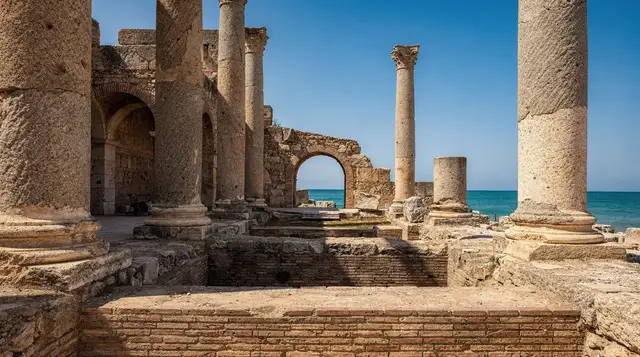
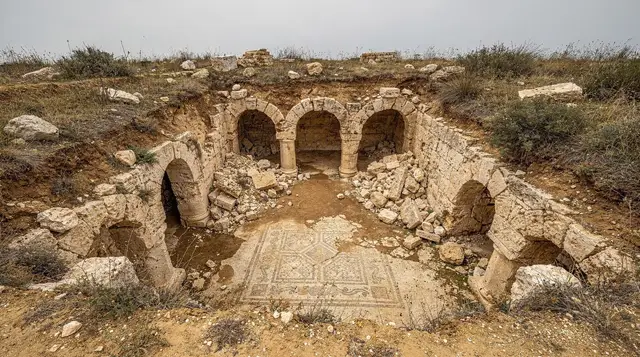
Because the TGM line runs through both, Sidi Bou Said and Carthage are almost always visited together, and the logic of doing so is sound: Carthage supplies the ancient history (the Antonine Baths, Byrsa Hill, the Punic ports) while Sidi Bou Said supplies the visual set piece.
Several guided options package the two along with a stop at the Bardo museum, such as the Old Medina, Bardo, Carthage and Sidi Bou Said tour, which covers a full day of the region’s highlights with transport included — useful if you’re staying in Hammamet and don’t want to arrange trains and taxis yourself. If you’re already based in Tunis, doing it independently by TGM is cheaper and lets you set your own pace; see our Carthage and Sidi Bou Said day trip guide for a suggested order of stops.
Travellers based further south, in Sousse for example, can also reach the combination in a single long day. The Sousse: Sidi Bou Said, Carthage, Medina of Tunis daytrip covers the same ground with pickup from Sousse hotels, though it makes for a long day on the road — expect an early start and a late return.
The destination pages for Carthage and La Marsa sit on the same line and are worth reading before you plan the day. If you are deciding where to spend your time on the coast, Sidi Bou Said versus La Marsa lays out the trade-offs, and a ready-made one day in Tunis itinerary shows how the village can slot into a short stay.
Sunset, and why timing matters more than the season
Sidi Bou Said’s most photographed moments happen at either end of the day, when the light softens and the crowds thin. The cafés along the clifftop, particularly those near Café Sidi Chabaane below the main square, fill up in the hour before sunset with people ordering mint tea or a plate of brik and settling in for the view over the Gulf of Tunis.
This is arguably the best single reason to visit in the late afternoon rather than midday: not just fewer people, but genuinely better light on the whitewashed walls. A dedicated sunset outing, such as the Sidi Bou Said at sunset tour from Hammamet, is built around exactly this window and includes transport, which spares you the return taxi negotiation in the dark.
Note that café prices here run noticeably higher than in central Tunis — a coffee that costs 2 TND in the medina might be 6 to 8 TND on a Sidi Bou Said terrace with a sea view. That premium buys the view and the setting, not necessarily better coffee, and it’s worth knowing before you sit down.
Beyond walking: the water below the cliffs
Less obviously, the coastline beneath Sidi Bou Said offers a few active options for visitors who want more than a walking tour. A guided paddleboarding and kayaking outing along the base of the cliffs gives a different angle on the village — looking up at the whitewashed houses from the water rather than down at the gulf from a café terrace — and runs a few hours, usually in the cooler part of the morning before the wind picks up.
For visitors who prefer to stay on foot but want more structure than a self-guided wander, an interactive walking adventure turns the village into a small self-paced trail with clues and local history worked in, which can be a good way to keep children engaged for the couple of hours it takes.
Whichever season you choose, the best time to visit Tunis helps you match the village to the weather, and Tunis in autumn is a good companion read if you are travelling in the calmer months.
Shopping: what’s actually local
The souvenir shops lining the main street sell a predictable mix of ceramics, ironwork bird cages (a genuine local craft, some hand-made and some mass-produced), jasmine flower sellers on the street corners, and textiles that range from Tunisian-made to imported. Prices are aimed squarely at tourists and rarely marked, so light bargaining is normal and expected, though nowhere near as intense as in the medina souks of Tunis. If carpets or ceramics are on your list, Nabeul and the Tunis medina generally offer better prices and a wider selection than Sidi Bou Said’s tourist-facing shops — see our guide to bargaining in Tunisian souks before buying anything here at the first price offered.
What Sidi Bou Said is not
It’s worth being direct about the limits of the place. Sidi Bou Said is not a beach destination — the coastline below the village is mostly rock and cliff, not sand, and swimming access is limited. It’s not a place to find cheap food or authentic neighbourhood restaurants; nearly everything within the village is priced for visitors. And it’s small: once you’ve walked the main street, the side lanes, and had a coffee with a view, you’ve largely seen it. Trying to stretch a Sidi Bou Said visit into a full day usually means padding it with a long lunch rather than more sightseeing, which is fine if that’s what you want, but worth knowing going in.
Frequently asked questions about visiting Sidi Bou Said
Is Sidi Bou Said free to visit?
Walking through the village and its streets costs nothing. The one notable paid site is the Ennejma Ezzahra palace, with a modest entry fee, and individual cafés and restaurants set their own prices, which run higher than elsewhere in the Tunis area.
How do I get from Tunis to Sidi Bou Said without a tour?
Take the TGM light rail from Tunis Marine station; it runs directly to the Sidi Bou Said stop in about 25 to 30 minutes for a small flat fare, then it’s a steep ten-minute walk uphill into the village.
Can I combine Sidi Bou Said with Carthage in one day?
Yes, and most visitors do. The TGM line connects both, Carthage’s sites (Byrsa Hill, the Antonine Baths, the museum) sit between Tunis and Sidi Bou Said, and the two together make a natural half-to-full-day itinerary.
Is Sidi Bou Said safe to walk around, including at night?
The village is generally considered safe and is heavily visited by day. In the evening, once the shops close and the crowds thin, it becomes quiet quickly; most visitors head back to Tunis or La Marsa before late evening rather than staying after dark.
What’s the best time of day to photograph Sidi Bou Said?
Early morning, roughly 8 to 10am, and the hour before sunset both give softer light and fewer people in the frame than the midday hours.
Are the beaches near Sidi Bou Said good for swimming?
Not really — the immediate coastline below the village is rocky rather than sandy. For swimming, La Marsa or the beaches further along the coast are better suited, and are a short TGM ride away.
How much should a coffee or mint tea cost in Sidi Bou Said?
Expect somewhere around 5 to 9 TND for a coffee or tea with a view, noticeably more than the 2 to 3 TND typical in central Tunis, reflecting the premium location rather than any difference in quality.
Is it worth staying overnight in Sidi Bou Said rather than Tunis?
A few small guesthouses exist in the village, and staying overnight does let you experience it after the day-trip crowds leave. Most travellers, however, base themselves in Tunis or La Marsa and visit Sidi Bou Said as a half-day trip, since the village itself is small and options for evening dining are limited compared to the capital.
Do I need a guide to visit Sidi Bou Said?
No — the village is small, well signed, and easy to explore independently. A guide adds most value if you’re combining it with Carthage and the Bardo in a single organised day, where transport and timing between sites becomes the main logistical challenge.