Private or group tours in Tunisia?
Should I book a private or a group tour in Tunisia?
Group tours are cheaper per person, run on a fixed schedule, and suit travellers happy to share a vehicle and a pace with strangers. Private tours cost more, sometimes double or more for the same route, but let you set the start time, skip or extend stops, and travel with only your own group. For a first short trip focused on headline sights like Carthage or the Bardo, a group tour is usually fine. For multi-day desert routes, families with young children, or anyone with mobility needs or a tight schedule, the flexibility of a private tour tends to justify the extra cost.
Almost every organised excursion in Tunisia, from a half-day Carthage tour to a week-long Sahara loop, is sold in two versions: a group departure sharing a coach or minivan with other travellers, and a private version with a dedicated vehicle and driver for just your party. The sights covered are often identical, sometimes down to the same operator running both formats on the same route, which makes the real decision less about what you’ll see and more about how you want to spend the day getting there. This guide compares the two formats directly across cost, flexibility, comfort and pace, and covers which kinds of trips in Tunisia specifically tend to benefit most from paying the private premium.
| Where | Applies across Tunisia: day trips from Tunis or the coast, and multi-day Sahara routes |
| Cost | Group tours typically 40–60% cheaper per person than the private equivalent of the same route |
| Time needed | Both run similar total durations; private tours flex start times and stop lengths |
| Getting there | Group: shared coach or minivan with a fixed pickup schedule. Private: dedicated vehicle and driver |
| Best time | Either works year-round; private tours matter more in shoulder or off-peak season when group departures can be sparse |
What actually changes between the two
The core difference isn’t the itinerary on paper — a private and a group version of “Carthage, Bardo and Sidi Bou Said in a day” will usually stop at the same places — it’s control over pace and timing. On a group tour, the schedule is fixed by the operator and shared across everyone on board: if half the group lingers over lunch or a shop, everyone waits; if you want fifteen more minutes at a viewpoint the itinerary has moved past, you generally don’t get it.
A private tour puts that control back in your hands, at a real cost premium that varies by route and group size. For a day built around fixed-hour sights like museums, the difference matters less. For a day with genuinely variable stops — a souk, a beach, a desert camp — it matters considerably more.
Cost: the actual gap
The price difference between group and private isn’t small, and it’s worth seeing the scale of it before deciding. Group tours benefit from splitting the vehicle, driver and guide costs across a full coach, which typically brings the per-person price down to a fraction of what a private version of the same route costs. A four-day tour discovering southern Tunisia illustrates the group format at a multi-day scale — a fixed itinerary, shared vehicle, and a price that reflects the cost being split across the group rather than absorbed by one party.
| Trip type | Typical group price (per person) | Typical private price (per person, 2 travellers) |
|---|---|---|
| Half-day city tour | 30–60 TND (about €9–18) | 100–200 TND (about €30–60) |
| Full-day combination tour | 80–150 TND (about €24–45) | 250–500 TND (about €75–150) |
| 2-day Sahara excursion | 250–450 TND (about €75–135) | 600–1,200 TND (about €180–360) |
| Multi-day southern loop (4+ days) | Varies widely by route and inclusions | Often 1.5–2.5× the group price per person |
These figures move with season, operator and exactly what’s included, so treat them as an order of magnitude rather than a quote — always check the specific listing for what’s bundled in before comparing prices directly. The private premium tends to shrink, proportionally, the more people share the private vehicle; a private tour for four or five people splits the fixed vehicle-and-driver cost much more favourably than a private tour for two.
Flexibility: where private tours genuinely earn their premium
The clearest case for paying more is a multi-day route where flexibility compounds day over day rather than mattering for a single afternoon. A two-day private desert adventure covering a Sahara camp and ancient ruins is a good example: on a private version of this kind of route, a late-afternoon light at a ruin site, an unplanned stop for a photograph, or simply starting earlier to beat the heat are all real options in a way they aren’t on a fixed-schedule group coach.
Multi-day trips also mean accumulated waiting time on a group tour compounds across several days rather than a single afternoon, which is part of why private options are disproportionately popular for longer southern Tunisia loops compared with single-day city excursions, where the gap matters less.
If the desert is the centre of your trip, it helps to settle the length of the route before the format. Two-day versus three-day Sahara tours explains what each length lets you see, and desert camps and bivouacs in Tunisia describes what the overnight stop is actually like, which is useful whichever format you choose.
Comfort and vehicle type
Group tours typically use a coach or larger minivan, which means more seats but also more stops for pickups and drop-offs at the start and end of the day, and less legroom and personal space during longer drives — a real factor on routes involving six or seven hours on the road, as most Sahara trips do. Private tours use a smaller vehicle, usually a car or small van sized to the party, with a single pickup and drop-off point and considerably more comfort on long drives. For travellers prone to motion sickness, anyone with mobility limitations, or families managing young children through a long transfer, this comfort difference is often as significant as the flexibility argument.
Group size and who you’re travelling with
A group tour puts you alongside other travellers you haven’t chosen, which is either a feature or a drawback depending on temperament. Some people genuinely enjoy the social element — shared meals, conversation during long drives, the sense of a shared experience — and for solo travellers specifically, a group tour can be a comfortable way to see more of the country without navigating logistics alone.
Travelling solo in Tunis covers this angle in more detail. A private tour, by contrast, keeps the day entirely within your own party, which suits families, couples wanting privacy, or any group with specific interests — extra time at a particular Roman site, or a food-focused day, for instance — that a fixed group itinerary won’t accommodate.
| Group tour | Private tour | |
|---|---|---|
| Cost per person | Lower | Higher, though gap narrows with group size |
| Schedule | Fixed by operator | Flexible, adjustable on the day |
| Vehicle | Coach or larger minivan | Car or small van, sized to your party |
| Social element | Shared with other travellers | Just your own group |
| Best for | Budget-conscious trips, solo travellers wanting company | Families, tight schedules, specific interests, comfort priorities |
Longer routes: where the format matters most
On an ambitious multi-day itinerary, the format decision compounds significantly. An eight-day tour covering the wonders of Tunisia runs at group-tour scale, with a large fixed itinerary spanning much of the country’s headline sights — genuinely good value for the ground covered, but locked to a schedule shared with the rest of the group for over a week.
For travellers wanting the same broad scope with more control over pacing, the private equivalent of a similar route allows adjusting how long you spend in the south versus the north, at a materially higher cost. The best day trips from Tunis and Sahara tours from Tunis, compared both cover specific route options in either format.
When a group tour is genuinely the better choice
It isn’t simply a budget compromise. For straightforward, fixed-content sights — a museum, a well-defined archaeological site, a single clear viewpoint — a group format loses very little compared with a private one, since there’s not much flexibility to exercise even if you had it.
An overnight camel trek into the Sahara desert is a reasonable example of an experience that’s largely the same regardless of format, since the activity itself — riding out, a night in camp — follows a set pattern either way. Solo travellers on a budget, first-time visitors wanting a low-effort way to see the headline sights, and anyone comfortable with a shared schedule generally do just as well on a group departure, and save a meaningful amount of money doing so.
When a private tour is worth the extra cost
The clearest cases are multi-day southern routes, trips involving young children where nap schedules or patience limits matter, travellers with mobility needs who benefit from a smaller vehicle and more flexible stops, and anyone with a genuinely tight window who needs to start unusually early or skip a stop that doesn’t interest them. Family day trips from Tunis and Tunisia for female travellers both touch on situations where the added control of a private tour tends to matter more than the cost saving of a group one.
A third option sits between the two: skipping the organised tour for some days altogether. Car hire in Tunisia and getting around Tunis cover the independent alternatives, and many travellers mix formats, joining a group for one long excursion and travelling alone on the rest of the trip. Planning the whole stay first, with the Tunis trip planning guide, makes it easier to see which days really deserve a private vehicle.
Language and guiding quality
Guide quality varies by operator far more than by format, but there are some general tendencies worth knowing. Group tours typically use guides fluent in several languages who deliver a fairly standardised commentary aimed at a mixed audience, which works well for headline facts but leaves less room for follow-up questions specific to your own interests, since the guide is managing a full coach rather than a conversation with one party.
Private tours, particularly with smaller operators, more often pair you with a single guide-driver who can genuinely adapt the commentary and pacing to what you’re asking about, whether that’s more detail on Punic history at Carthage or a longer stop to talk about desert ecology in the south. Neither arrangement guarantees quality on its own — reading recent reviews for the specific listing matters more than the format itself — but the private setup gives more room for a personalised conversation if that’s something you value.
Weather and seasonal availability
Format availability shifts somewhat with season. In peak winter months, when Sahara demand is highest, group departures run frequently and reliably, often daily on the most popular routes, which makes booking straightforward even close to your travel dates. In quieter shoulder-season months, group departures can be sparser or require a minimum number of bookings to run at all, which occasionally means a scheduled group tour is cancelled or rescheduled if too few people sign up.
Private tours don’t have this dependency, since they run regardless of how many other travellers have booked the same day, which makes them meaningfully more reliable for anyone travelling in the quieter months or on a fixed schedule that can’t easily absorb a last-minute cancellation.
Whichever format you pick, it pays to know the usual pitfalls before you hand over any money: tourist traps and scams in Tunis lists the situations to watch for, and the Roman tour of Tunisia itinerary shows how a multi-stop route can be sequenced, whether a group operator runs it or a private driver does.
Booking logistics: what to check either way
Regardless of format, a few practical checks apply. Confirm the pickup point and time precisely, since coastal group tours in particular sometimes involve an earlier-than-expected start to collect from multiple hotels before the day properly begins. Check what’s actually included — entry tickets, lunch, water — since these vary between otherwise similar-looking listings and materially affect the real cost comparison.
And for private tours specifically, confirm the vehicle size matches your party, since a private tour for a larger family group sometimes still means a minivan rather than a car, which changes the comfort calculation somewhat. What a trip to Tunis actually costs and the budget planning tool both help place either format’s cost within a wider trip budget.
Mistakes to avoid
Frequently asked questions about private and group tours in Tunisia
How much more expensive is a private tour, roughly?
Typically 1.5 to 3 times the group price per person, though the gap narrows the more people share the private vehicle. A private tour for four or five people is proportionally much cheaper per head than one for two.
Is a group tour safe for a solo traveller?
Yes, and it’s often a genuinely good option — group tours are a common, comfortable way for solo travellers to see more of Tunisia without arranging transport and logistics independently, with the added benefit of company along the way.
Do private tours let me change the itinerary on the day?
Generally yes, within reason — extending time at one stop, skipping another, or adjusting the start time are all realistic requests on a private tour, though major itinerary changes should ideally be discussed with the operator in advance rather than assumed on the day.
Are private tours worth it for a single half-day city excursion?
Less so than for multi-day routes. For a fixed-content half-day, like a museum visit or a single archaeological site, the flexibility a private format offers has less to actually apply to, narrowing the practical benefit.
Which format is better for a family with young children?
Private tours generally suit families better, since nap schedules, bathroom stops and shorter attention spans are easier to accommodate without holding up a full coach of other travellers.
Do group tours in Tunisia run to a reliable schedule?
Generally yes, though pickup times can run later than advertised when multiple hotels are involved, particularly on coastal departures. Building in some buffer around the stated start time is sensible.
Is it possible to switch from group to private after booking?
Usually not directly — it typically means cancelling and rebooking under the other format, subject to the operator’s cancellation terms, so it’s worth deciding on format before booking rather than after.
Does the private premium apply the same way to multi-day Sahara routes as to single-day tours?
The proportional cost gap is often similar, but the absolute value of flexibility is higher on multi-day routes, since scheduling friction compounds across several days rather than affecting a single afternoon.
Popular Tunis experiences on GetYourGuide
Verified deep-linked GetYourGuide tours. Book through these links and we earn a small commission at no cost to you.
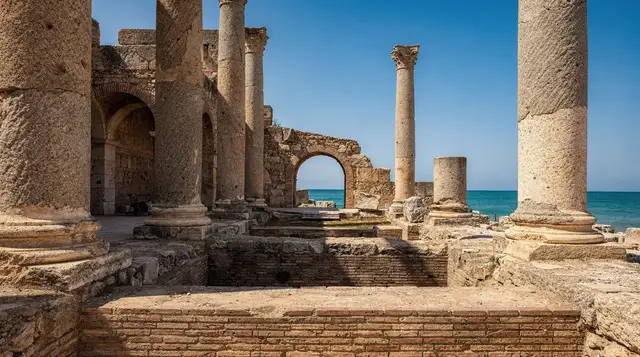
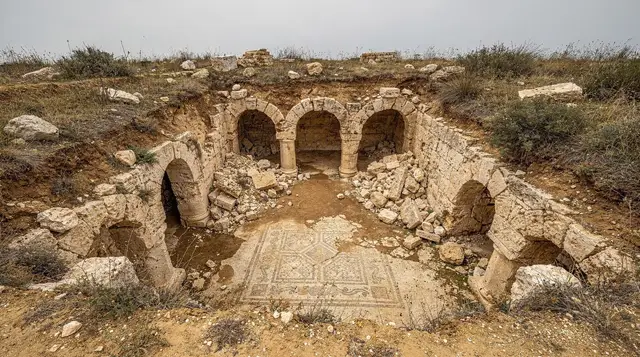
These are our own photographs of Tunisia, not the operator's pictures of this tour — open the tour page to see those.