Sahara tours from Tunis, compared
Should you book a 2-day or 3-day Sahara tour from Tunis?
A 2-day tour gets you one night at the edge of the erg near Douz, but roughly two thirds of it is spent on the road. A 3-day tour adds Matmata and sometimes Ksar Ghilane and feels much less rushed, for a proportionally higher price. If the extra day and budget are there, take the 3-day version.
Every Sahara tour sold out of Tunis starts the same way: a very long drive south, usually before sunrise, in a coach or a shared 4x4. The dunes and salt flats around Douz and Tozeur sit roughly 450 to 500 kilometres from Tunis, six to eight hours away depending on traffic, roadworks and how many stops the driver makes. That single fact shapes every version of this trip. A 2-day tour is mostly a road journey with one night in the desert attached to the end of it, while a 3-day tour finally has enough slack to add Matmata, and sometimes Ksar Ghilane, without feeling like a relay race. This guide compares the four main Sahara tours booked from Tunis, what each one genuinely shows you, and where the trade-offs are worth knowing before you pay.
| Where | Douz, Chott el Jerid, the Tozeur region, and Matmata on the 3-day version |
| Cost | Roughly 350–450 TND (around €100–130) for 2 days; 550–700 TND (around €160–200) for 3 days |
| Time needed | 2 or 3 full days, with 12 to 18 hours of that spent on the road |
| Getting there | Coach or 4x4 pickup from your Tunis hotel, sometimes with a stop in Hammamet or Sousse |
| Best time | October to April; avoid June to August, when desert daytime heat regularly passes 40°C |
Why “the Sahara from Tunis” means Douz and Tozeur, not the deep south
When a tour from Tunis is sold as a Sahara trip, it almost never means the deep, dune-only Sahara of postcards. It means the northern edge of the Grand Erg Oriental, reached through Douz, and the flat, cracked expanse of Chott el Jerid on the way to Tozeur. Both are genuinely part of the Sahara desert system, and both are worth seeing, but they are the accessible edge of it, not its heart. The deeper, more dramatic dune fields around Ksar Ghilane sit a further two to three hours south of Douz, which is why they only show up on the longer tours, or as a paid add-on. Anyone expecting the kind of towering, isolated dunes seen in films about the deep Sahara should read that as a different, longer trip, not this one.
The road itself runs down the A1 motorway past Kairouan or through Gafsa, depending on the operator, before turning onto slower single-carriageway roads for the final stretch into Douz. It is a real, working road, past palm groves, phosphate towns and long stretches of scrubby pre-desert, not a scenic drive designed for tourists. Most operators build in one or two short stops, typically at a roadside café or a viewpoint over the chott el jerid salt lake. Douz itself, often billed as the gateway to the Tunisian Sahara, is where nearly every one of these tours actually reaches the desert, and where the camel rides and desert camps are based.
How the four tours from Tunis differ
Several versions of this trip depart Tunis, and the differences between them are not always obvious from the tour name alone. Two are built around a fixed 2-day itinerary from Tunis; two others run the same broad route but add a pickup option from Hammamet and Sousse, with one sold as a private tour. None of the four routinely include the deep dunes near Ksar Ghilane, and only the 3-day version reliably includes Matmata.
The 2-day Sahara tour from Tunis is the baseline option: departure from a central Tunis pickup point, the long drive south, one night near Douz, and a return the following evening. It is the tour most people mean when they say “the Sahara trip from Tunis,” and it is worth reading the next two sections closely before booking it, because the honest arithmetic on how much of it is actually desert time matters more than the marketing photos suggest.
The 3-day version, and the two express options
The Tunis: 3-day Sahara desert tour covers the same ground as the 2-day tour but adds a full extra day, usually spent at Matmata’s troglodyte houses and, on some departures, a detour to Ksar Ghilane. It costs more and takes longer, but it removes most of the rushed feeling that comes with cramming Douz, Chott el Jerid and the road in and out into 36 hours.
For travellers based in Hammamet or Sousse rather than Tunis, two further options exist. The From Tunis, Hammamet & Sousse: Sahara Express 2-Day Private Tour runs a similar two-day route with a private vehicle and guide, and pickup from any of the three cities.
The From Tunis, Hammamet & Sousse: Sahara Express Tour covers the same itinerary and pickup, without the exclusive vehicle, priced closer to the standard group tour. Longer formats also exist through some operators, running to four, six or even eight days and combining the Sahara with the Sahel coast or Djerba, but those sit outside a straightforward Tunis comparison.
The tour-by-tour comparison
The table below sets out what each of the four tours actually delivers, rather than what the listing photos imply. Prices are approximate ranges in Tunisian dinars, since exact pricing moves with season, group size and current promotions.
| Tour | Duration | What you actually see | Where you sleep | Approx. price | Best for |
|---|---|---|---|---|---|
| 2-day Sahara tour from Tunis | 2 days, 1 night | Chott el Jerid crossing, Douz, one desert camp, camel ride | Desert camp (fixed rooms or shared tent) | 350–450 TND (~€100–130) | A quick taste of the desert on a short trip |
| Tunis: 3-day Sahara desert tour | 3 days, 2 nights | Chott el Jerid, Douz, Matmata, sometimes Ksar Ghilane | Desert camp plus a hotel night in Douz or Tozeur | 550–700 TND (~€160–200) | Travellers who want more than a rushed overnight |
| Sahara Express 2-Day Private | 2 days, 1 night | Same route as the standard 2-day, with private vehicle | Desert camp | 700–900 TND (~€200–260) per group | Small groups or families wanting flexibility |
| Sahara Express Tour (Hammamet & Sousse) | 2 days, 1 night | Same route as the standard 2-day, shared vehicle | Desert camp | 400–500 TND (~€115–145) | Travellers based on the coast rather than Tunis |
The honest maths on a 2-day tour
A typical 2-day departure leaves Tunis between 5am and 6am and does not reach Douz until early afternoon, after six to eight hours on the road. The afternoon is usually given over to a camel ride at the edge of the erg, timed for sunset, followed by dinner and a night at a desert camp. The return leg the next morning heads back north with a stop at Chott el Jerid or occasionally Tozeur, and the coach is back in Tunis by early evening, sometimes later if traffic on the A1 is bad.
Add it up and a 2-day tour runs close to 36 hours door to door, of which something like 14 to 16 hours is spent on a coach or in a 4x4. What is left for the desert itself, once meals and check-in are subtracted, is closer to eight or nine hours: one camel ride, one sunset, one night, one morning. That is not a criticism so much as an honest description of the geography.
It is a legitimate way to see the Sahara on a short trip, but anyone booking it as “two days in the Sahara” should understand that it is closer to one afternoon and one evening in the desert bookended by two long drives. The comparison of two-day and three-day Sahara tours covers this trade-off in more detail if the decision is close.
The table below breaks down roughly where the hours actually go on each version, based on typical departure and return times.
| Stage | 2-day tour | 3-day tour |
|---|---|---|
| Tunis to Douz (road) | 6–8 hours | 6–8 hours |
| Time in Douz / desert camp / camel ride | Afternoon and evening, day 1 | Afternoon and evening, day 1 |
| Matmata visit | Not included | Half a day, day 2 |
| Douz to Tunis (road) | 6–8 hours, day 2 | 6–8 hours, day 3 |
| Approx. total road time | 14–16 hours | 14–18 hours |
| Approx. time actually in the desert or at Matmata | 8–9 hours | 18–20 hours |
What three days adds: Matmata, and sometimes Ksar Ghilane
The extra day on the 3-day tour is spent almost entirely at Matmata’s troglodyte houses, underground Berber dwellings dug into the hillsides rather than built above ground, and still inhabited by some families today. Several homes double as guesthouses or cafés open to visitors, and one, the Hotel Sidi Driss, was used for exterior filming of the Lars family homestead in the original 1977 Star Wars film.
Some itineraries mention this in passing; the Star Wars filming locations in southern Tunisia are spread across several sites near Matmata, Tozeur and Nefta, not one place, so it is worth checking an itinerary’s exact stops rather than assuming everything is included.
Some 3-day departures also push on to Ksar Ghilane, a genuine desert outpost with a natural hot spring at the edge of the dunes, reached by a further stretch of piste rather than sealed road. This is the closest most tourists get to the deeper, higher dunes of the erg, and it is a different experience from the relatively tame, well-trodden sand near Douz. Not every 3-day tour includes it as standard, so it is worth checking the exact itinerary before booking if Ksar Ghilane is the reason for choosing the longer trip. Either way, three days gives the trip room to breathe: a proper look at Matmata in daylight rather than a photo stop, and one fewer stretch of the drive done in the dark.
Hard room or bivouac: what “a night in the desert” really looks like
Tour listings often use the words “desert camp” and “bivouac” as if they mean the same thing, and on the tours compared here, they mostly do not. Most 2-day and standard 3-day tours put guests up in a fixed desert camp near Douz: simple rooms built from wood, brick or canvas over a solid frame, with shared or basic en-suite bathrooms, electricity for a few hours in the evening, and meals served in a communal tent. It is basic, but it is a hard-walled room with a bed, not a tent pitched on open sand.
A true bivouac, sleeping in a canvas tent on the dunes themselves with no fixed structure nearby, is closer to what the Ksar Ghilane extension or some private, higher-end departures offer. The distinction matters most for warmth: a fixed camp room holds heat far better than an open tent once desert temperatures drop overnight, which they do sharply even in months that feel mild during the day. The guide to desert camps and bivouacs in Tunisia sets out what to expect from each in more detail.
Camel rides, 4x4 stretches and what the price includes
Every one of the four tours includes a camel ride, typically an hour or so at sunset from the edge of Douz out into the first line of dunes and back, led by a local guide on foot. It is a short, guided walk rather than a trek, and should not be mistaken for camel trekking proper, which involves several hours or overnight routes further into the erg and is usually a separate, bookable add-on.
Most listed prices include transport, the desert camp accommodation, the camel ride and at least dinner and breakfast at the camp; lunch on travel days is often at the traveller’s own cost, paid in cash at a roadside restaurant. Entrance fees, tips for the camel guide and driver, and bottled water beyond what is provided are rarely included, and worth budgeting a further 30 to 50 TND per person for across a 2-day trip.
Private pickup from Hammamet and Sousse: is it worth the difference
Both express tours solve a real problem for travellers not staying in Tunis: without them, someone based in Hammamet or Sousse would need to get to a Tunis pickup point before dawn just to join a standard departure. The trade-off is that a multi-city pickup route usually adds 45 minutes to an hour and a half onto an already long drive.
The private version removes the group-schedule constraint and the shared vehicle, which matters for families or anyone who wants to set their own pace, but it costs noticeably more per person for a small group, and considerably more for a solo traveller, since the vehicle cost is not shared across a full coachload. For a couple or a family already planning to spend more, the private option is a reasonable trade; for a solo traveller on a tighter budget, the standard shared express tour will cover the same ground for less. The comparison of private and group tours in Tunisia covers this trade-off for excursions generally, and the logic holds here too.
When to go: heat, cold nights and the shoulder seasons
Every one of these tours is far more pleasant between October and April than in the height of summer. Daytime temperatures in the desert around Douz and Tozeur regularly exceed 40°C from June through August, and a camel ride or a walk across the dunes at that point becomes an endurance exercise rather than a pleasant one. The Sahara in summer is genuinely tough for most visitors, and several operators either drop departures or push start times earlier in July and August because of the heat.
Winter brings the opposite problem: desert nights can drop close to freezing between December and February, even though Tunis itself stays mild, and a fixed-room camp without central heating gets genuinely cold after sunset. Packing for a Sahara tour means packing for two different climates in one 48-hour window, and the guide to what to pack for the Sahara is worth reading before the trip. Spring and autumn, roughly March to May and October to November, offer the most comfortable balance of warm days and tolerable nights.
Taking children, or choosing a shorter trip on purpose
None of the four tours are physically demanding in themselves, since most of the “activity” is riding in a vehicle or on a camel led by a guide, but the length of the drive is the real obstacle for families. A 2-day tour with two long drives either side of one short night is a long ask for young children, and the Sahara with kids guide sets out which age groups tend to manage it well and which do not.
For anyone whose priority is simply to see Chott el Jerid and stand on Saharan sand without committing two full days, it is worth checking the broader desert and Sahara category, since some operators sell shorter day trips from Tozeur or Douz for travellers already in the south, rather than departing from Tunis at all.
Frequently asked questions about booking a Sahara tour from Tunis
How early do these tours leave Tunis, and how late do they get back?
Most departures collect passengers between 5am and 6am from central Tunis hotels, since the six-to-eight-hour drive south needs to start early to reach Douz before the afternoon camel ride. Return times vary more, typically landing back in Tunis anywhere from late afternoon to around 9pm or 10pm depending on traffic on the A1.
Is the express tour from Hammamet or Sousse better for coastal travellers, or should they get to Tunis first?
For anyone staying in Hammamet or Sousse, the express pickup tours are almost always the better option, since travelling into Tunis first just to join a standard departure adds an extra transfer with no benefit. The trade-off is a slightly longer overall drive, since the vehicle collects passengers from more than one town before heading south, but that is still shorter than a separate trip into Tunis beforehand.
What is actually included in the price of a Sahara tour from Tunis?
Transport, the desert camp accommodation, the camel ride and at least dinner and breakfast at the camp are included on all four tours compared here. Lunch on travel days, site entrance fees, tips for the driver and camel guide, and bottled water beyond what is provided are usually extra, paid in cash locally.
Is a private tour worth the extra cost over a shared departure?
It depends on group size and priorities. For a family or a small group of three or four, splitting the private vehicle’s cost across several people brings the per-person premium down to a level that buys real flexibility on stops and timing. For a solo traveller, the same private tour costs several times more per person than the shared version for a broadly similar itinerary, which makes the standard group departure the better value in most cases.
Can you avoid the long drive by flying closer to the desert first?
Flying into Tozeur-Nefta airport and joining a shorter, locally based desert excursion cuts the road time, but it is a different trip from any of the four compared here, all of which depart from Tunis by road. It only makes sense as part of a wider itinerary that already includes flying south.
Are the Star Wars filming locations included on every tour?
Not automatically. Some 3-day itineraries stop at the Hotel Sidi Driss in Matmata, used for exterior filming in the original Star Wars film, but the 2-day tours generally do not detour for it, and none of the four tours guarantee a stop at every filming location in the region, since these are spread across several sites near Matmata, Tozeur and Nefta. Anyone specifically interested in this should check the listed stops on an itinerary before booking rather than assuming it is covered.
What should you actually wear for a night in the desert?
Layers are the honest answer, whatever the season. Daytime temperatures even in winter can feel warm in direct sun, while desert nights drop sharply once the sun sets, sometimes close to freezing between December and February. A warm jacket, a hat, closed shoes rather than sandals, and a scarf against blown sand are worth packing regardless of how mild Tunis feels on departure day.
Is it worth booking the 3-day tour just for Ksar Ghilane, or should that be arranged separately?
Since not every 3-day departure includes Ksar Ghilane, anyone who specifically wants the hot spring and the deeper dunes there should check the itinerary before booking on that basis. Where it is included, it is the best single reason to choose the 3-day tour over the 2-day one; where it is not, arranging a separate excursion from Douz or Tozeur once already in the south is more reliable.
Sahara desert tours on GetYourGuide
Verified deep-linked GetYourGuide tours. Book through these links and we earn a small commission at no cost to you.
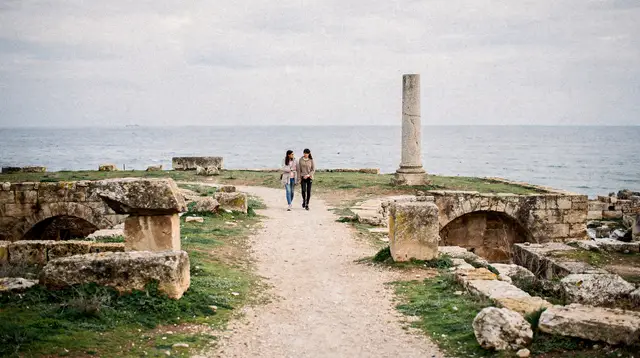
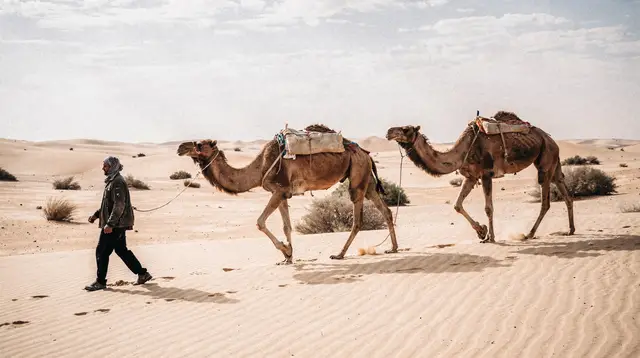
These are our own photographs of Tunisia, not the operator's pictures of this tour — open the tour page to see those.