Two-day or three-day Sahara tour: which one to book
Is a two-day or a three-day Sahara tour better from Tunisia?
Two days covers a night in a desert camp and a camel or 4x4 outing into the dunes near Douz, and it's enough if you only want to say you've seen the Sahara. Three days adds Matmata's troglodyte houses and, on some routes, the hot spring at Ksar Ghilane, at the cost of a longer trip and roughly 100–200 TND more. Neither departs from Tunis itself — both start from the Hammamet, Sousse or Monastir coast.
Most Sahara tours booked from the Tunisian coast come in two lengths: a fast two-day round trip and a fuller three-day version that adds one more stop before or after the dunes. The difference isn’t really about how much open desert you see — both versions get you a night in a camp near Douz and a camel or 4x4 outing into the Grand Erg Oriental.
What the extra day buys is Matmata, the troglodyte village used as a filming location decades ago, and on some itineraries a stop at the hot spring of Ksar Ghilane. This page compares what each version actually includes, what a third day changes in practice, and which one suits a short coastal holiday versus a longer trip. None of the tours covered here leave from Tunis itself, which matters for planning and is covered in detail below.
| Where | Departs Hammamet, Sousse or Monastir; travels to Douz, the Grand Erg Oriental and Matmata |
| Cost | Roughly 250–450 TND (about €75–135) for two days; add 100–200 TND (about €30–60) for a third day |
| Time needed | Two full days, or three with Matmata and, on some routes, Ksar Ghilane |
| Getting there | Coach pickup from coastal hotels; not usually offered from Tunis directly |
| Best time | Late October to April; the summer months make the desert leg genuinely hard |
What a third day actually buys you
A two-day Sahara tour and a three-day one share the same backbone: a long coach transfer south, a night in or near Douz, and time in the dunes at sunset or sunrise, usually by camel for a short stretch and by 4x4 for the rest. Where they diverge is what happens with the extra day.
On most three-day itineraries, that day is spent at Matmata, the Berber troglodyte settlement where homes are dug into the ground around a central courtyard rather than built above it — a genuinely different kind of place from anything else in coastal Tunisia, and reasonably close to the desert route rather than a detour. Some three-day tours substitute or add Ksar Ghilane, a spring-fed pool at the edge of the erg where you can actually swim, framed by a small stretch of genuine dune landscape.
The two-day version skips both. You still get a camp, a camel ride, and dunes, but the itinerary is built to get you there and back inside 48 hours, which means more driving per day and less time built in for anything beyond the core desert experience. Neither length is a “fake” desert trip — the sand, the camp and the night sky are the same — but the three-day version is the one that adds a genuinely different sight rather than more of the same one.
Where these tours leave from — and why not Tunis
It’s worth being precise here, because it’s easy to assume every desert tour advertised to a Tunisia-bound traveller starts from the capital. It doesn’t. The tours compared on this page depart from the Hammamet, Sousse and Monastir area, roughly 60 to 140 km south-east of Tunis, which puts them a couple of hours closer to Douz than a Tunis departure would be. A two-day Sahara tour with accommodation from Hammamet and a two-day Tunisian Sahara tour from Sousse or Monastir both fit this pattern: same rough itinerary, different coach pickup point.
If you’re based in Tunis for your whole trip, this means factoring in either a transfer to the coast the night before, or simply treating the desert leg as a separate booking that starts once you’ve relocated to Hammamet or Sousse for a few days, which many travellers building a longer itinerary do anyway. For a wider look at how Sahara options compare when Tunis genuinely is your base, see Sahara tours from Tunis, compared. If your route already includes both the coast and the desert, an itinerary like one week: Tunis and the Sahara shows how the pieces fit together over several days rather than as an isolated add-on.
The two-day tour: what’s actually included
A typical two-day departure leaves the coast early in the morning, with several hours of driving before the first proper stop — often Kairouan or a roadside break, depending on the operator, though the day is mostly transit. By late afternoon you reach the Douz area, transfer into 4x4 vehicles for the run into the dunes, and settle into camp before sunset. Dinner is usually a set Tunisian menu, sometimes with music around a fire, and the night is spent in a tent, either a fixed camp tent with a real bed or something closer to genuine bivouac canvas depending on the specific tour. The second day covers the return leg, often with a short stop or two on the way back, arriving at the coastal hotel again in the evening.
What you get for two days: a real night in the Sahara, a sunset or sunrise over dunes, a camel segment, and a set of photographs that look exactly like a longer trip’s would. What you don’t get: Matmata, any meaningful time to actually rest during the trip rather than travel, or much flexibility if the coach schedule runs late, which happens more often than operators like to admit on long desert routes.
The three-day tour: Matmata, and sometimes Ksar Ghilane
The three-day structure keeps the same desert core — camp, camel, dunes, a night under canvas — and adds a full extra day around it, most commonly spent visiting Matmata on the way south or on the return leg.
Matmata’s troglodyte houses are dug several metres into soft rock, with rooms arranged around a sunken circular courtyard that keeps interiors cool through the heat of the day; several are still lived in, and a handful are set up for visitors, including one used decades ago as a filming location for an early Star Wars instalment, which some tours mention and some don’t bother with. It’s a genuinely different landscape from the dunes themselves — dry, hilly, ochre-coloured — and gives the trip a second distinct visual character rather than more of the same terrain.
Some three-day routes instead, or additionally, stop at Ksar Ghilane, a natural hot spring pool at the southern edge of the Grand Erg Oriental, reachable by a short 4x4 run through genuine dune terrain rather than the flatter approach used near Douz. Bathing in a warm spring with real dunes rising immediately behind it is, for a lot of travellers, the single most memorable moment of the whole trip — more so than the main camp near Douz, which can feel slightly organised and repeat-visitor in comparison. Not every three-day itinerary includes Ksar Ghilane, so it’s worth checking the specific route before booking if that stop matters to you.
Two days versus three days, side by side
| Two-day tour | Three-day tour | |
|---|---|---|
| Extra stop | None | Matmata, and often Ksar Ghilane |
| Night in the desert | One, in a camp near Douz | One or two, depending on route |
| Time on the road per day | Long — most of two days is transit | Spread more evenly across three days |
| Typical price | 250–450 TND (about €75–135) | 400–650 TND (about €120–195) |
| Physical toll | Higher per day, shorter overall | Lower per day, longer overall |
| Best suited to | Short beach holidays, tight budgets | Trips of 8+ days, travellers who want Matmata |
The price ranges above are rough and vary by operator, season and whether accommodation is included in the coastal city before or after the trip — treat them as an order of magnitude rather than a quote, and check the specific listing for what’s bundled in. The jump from two to three days is usually driven by an extra night’s accommodation, a full additional day of transport and guiding, and, on some routes, entry to Matmata’s troglodyte houses or the Ksar Ghilane spring area.
Group tours are consistently cheaper per person than private departures, and prices tend to rise in the peak winter season (December to February), when demand for Sahara trips is highest despite the cooler desert nights. For a broader sense of how a Sahara add-on fits into overall trip costs, see what a trip to Tunis actually costs and the budget planning tool.
The road itself: how long, and how tiring
This is the part that’s easy to underestimate from a brochure description. The drive from the Hammamet or Sousse area down to Douz is genuinely long — realistically six to seven hours each way once you account for a fuel stop, a lunch break and the state of the roads south of Kairouan, which are fine but not fast. On a two-day tour, that means both days are dominated by driving, with the actual desert portion compressed into a single afternoon, evening, and following morning. It’s not a relaxed pace, and travellers prone to motion sickness or who dislike long coach journeys should know what they’re signing up for before they book.
A three-day tour doesn’t remove the driving — the distance is the same either way — but it spreads it more evenly, and the Matmata stop breaks up what would otherwise be a long uninterrupted transit day. In practice, most travellers who’ve done both report that the three-day version feels less exhausting overall, even though it takes longer in total, simply because no single day is purely “get in the vehicle and sit for most of it.” If fatigue is a real concern, that’s a point in favour of the longer option rather than the shorter one, which runs counter to the instinct that fewer days means less strain.
A night in the desert: tent or something closer to a hotel
“A night in the Sahara” covers a real range of comfort levels, and it’s worth checking which one a specific tour is selling before you book, because the phrase gets used loosely. Some camps are semi-permanent structures with proper beds, electricity for a few hours in the evening, and shared washroom blocks — comfortable by any reasonable standard, if basic.
Others are closer to genuine bivouac camping: mattresses on rugs under open canvas, no electricity, and a long walk to a shared toilet block if there’s one at all. A two-day Sahara tour with meals and a night in a tent is explicit about the tent format in its name, which is more honest than some listings that only clarify the sleeping arrangement in the fine print.
Either version means a cold night — desert temperatures drop sharply after dark even when the day has been hot — so bringing a layer beyond what feels necessary at 4pm is worth doing regardless of which tour you book. For a fuller packing rundown specific to this trip, see what to pack for a night in the Sahara, and for more detail on what the different camp formats actually look like once you’re there, desert camps and bivouacs: what a night really looks like is worth reading before you commit to a specific operator.
Season and heat: when a third day gets harder to justify
Timing matters more for a desert trip than for almost anything else on a Tunisia itinerary. Between late October and April, daytime temperatures in the Douz and Matmata area are manageable and nights are properly cold rather than dangerously so, which is the ideal window for either tour length. From May onward, and especially through June to August, daytime heat in the desert routinely climbs well past what’s comfortable for hours of driving and camp activities, and a third day spent partly outdoors at Matmata during the hottest part of the afternoon becomes something to actively plan around rather than casually add on.
Some operators adjust summer timing to front-load activity into the early morning and evening, but the core problem — a long exposed midday period — doesn’t go away. For more detail, see the Sahara in summer: how hot is too hot and the best time to visit tool.
Who two days suits, and who three days is worth it
A two-day tour fits best if your trip to Tunisia is a week or less and mostly built around the coast — Hammamet’s beaches, a couple of day trips, some time in Sousse or Monastir — since it doesn’t dominate the rest of the schedule. It also suits a tighter budget: the price gap between two and three days, while not enormous, is real, and a shorter tour means one less night of accommodation and one less day of tour fees.
If the main goal is simply to have stood on a dune and slept a night in the desert, rather than adding a second distinct landscape to the trip, two days delivers that core experience without asking much more of your itinerary. It also suits anyone who’d rather compress the discomfort of the road into two days than stretch it across three, even though, as covered above, the per-day fatigue is often higher on the shorter version.
Three days makes more sense for travellers with eight days or more in Tunisia, where an extra day doesn’t come at the direct expense of coastal or Tunis time, and for anyone specifically drawn to Matmata’s troglodyte architecture, which is genuinely unlike anything else on a standard Tunisia itinerary and easy to regret skipping once you’ve seen photographs of it afterwards.
It also suits travellers who want Ksar Ghilane’s hot spring rather than just the standard Douz camp — swimming with real dunes behind you is a different kind of memory from a camp dinner and a camel ride, and it’s the part several travellers who’ve done both report as the highlight of the whole desert leg. If you’re already committing to the long drive south, spreading it across three days rather than two is also simply the more comfortable way to do it.
Beyond two or three days: the four-day option
For travellers who aren’t pressed for time and want to go further than either of the tours compared here, a 4-day Sahara desert and Berber culture tour adds more time in the south generally, with a slower pace and typically more of the Berber heritage sites around Matmata and the surrounding hill villages than a bolted-on single day allows.
It’s a meaningfully different trip rather than just “three days plus one” — worth considering if the desert and Berber culture are a primary reason for visiting Tunisia rather than a two- or three-day add-on to a beach holiday, and if the extra cost and time genuinely fit your schedule. For readers weighing tour size as well as length, private or group tours in Tunisia? covers a related decision that applies to any of these lengths.
Mistakes to avoid
Frequently asked questions about choosing a Sahara tour length
Do any Sahara tours actually depart from Tunis?
Some exist, but the tours compared on this page depart from the Hammamet, Sousse or Monastir coast, not Tunis. If a Tunis departure matters to you, check Sahara tours from Tunis, compared before booking, since the pickup city changes both the price and the total travel time.
Is the desert camp the same on the two-day and three-day versions?
Usually yes — the core camp near Douz and the dune activities are essentially the same experience on both lengths. The difference is what surrounds that core, mainly Matmata and, on some routes, Ksar Ghilane, rather than the camp itself.
How much extra does a third day actually cost?
Roughly 100 to 200 TND per person (about €30 to €60), on top of a two-day price that typically runs 250 to 450 TND. Treat both ranges as an order of magnitude rather than a fixed quote, since operator pricing and season both move them.
Is Matmata worth it if I’ve already seen desert dunes elsewhere?
Yes, in the sense that it’s a completely different landscape and architecture, not more of the same terrain. The troglodyte houses dug into the rock around sunken courtyards don’t resemble anything on the coast or in the dunes themselves.
Which tour is more tiring, two days or three?
Counterintuitively, the two-day version is often more tiring per day, since the same long drive is compressed into a shorter trip with almost no break in the transit. The three-day version spreads the road time out and adds a stop that breaks up the journey.
Can children handle either of these tours?
It depends more on age and tolerance for long car journeys than on which length you pick, since both involve several hours of driving each way. See taking children into the Tunisian Sahara for a more detailed answer before booking with a family.
What should I pack that isn’t obvious from the itinerary?
A warm layer for the night is the one most people forget, since desert temperatures drop sharply after dark even following a hot day. The full list is in what to pack for a night in the Sahara.
Is it better to book a private tour instead of a group departure for either length?
Group departures are cheaper and are the standard way most travellers do this trip; private tours cost more but allow more flexibility on timing and stops. Private or group tours in Tunisia? covers the trade-offs in more detail.
Does the three-day tour ever include Ksar Ghilane instead of Matmata, rather than both?
On some routes, yes — check the specific itinerary rather than assuming both stops are included, since operators vary on this. If the hot spring is your main reason for choosing three days over two, confirm it’s on the route before booking.
Sahara desert tours on GetYourGuide
Verified deep-linked GetYourGuide tours. Book through these links and we earn a small commission at no cost to you.
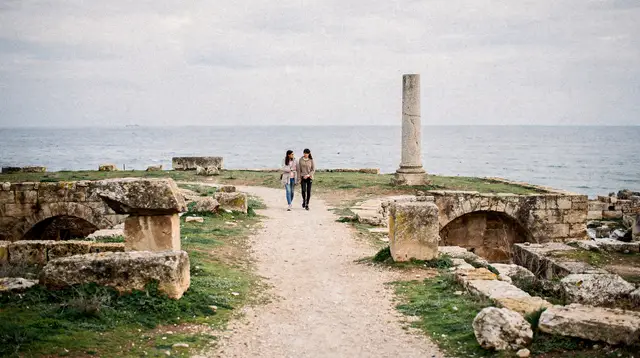
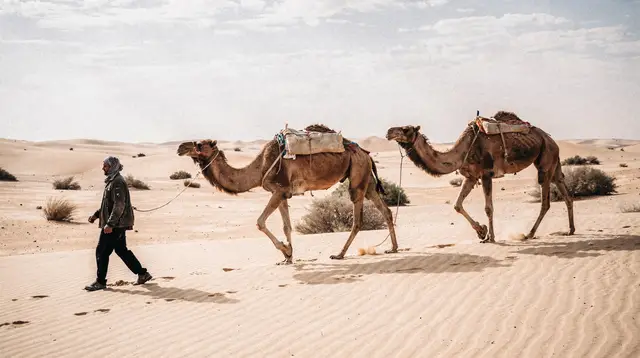
These are our own photographs of Tunisia, not the operator's pictures of this tour — open the tour page to see those.