Desert camps and bivouacs: what a night really looks like
Is a night in a Tunisian desert bivouac comfortable, or is it very basic?
It sits closer to basic than to a hotel. A standard bivouac means a shared Berber tent, a mattress on a rug rather than a bed, and toilets that are either a short walk to a shared block or a hole in the sand behind a dune. A luxury bivouac adds a proper bed, an en-suite or nearby private toilet, and better food, but even then it's still canvas, not concrete.
The photos that sell desert camps in southern Tunisia — golden light, an empty dune, a single tent glowing from within — are real, but they’re the best five minutes of a much longer, dustier evening. Most visitors arrive tired after a long drive, use a toilet that isn’t what they pictured, eat a simple but genuinely good dinner around a fire, and go to bed earlier and colder than expected. None of that makes the night bad; it just isn’t the night the marketing implies. This guide sets out, tier by tier, what actually happens between arrival and the next morning around Sabria, Douz and Ksar Ghilane, so the choice between a standard bivouac and a luxury one is made with real information rather than a brochure.
| Typical camp type | Fixed Berber-tent camp (bivouac) near Douz, Sabria or Ksar Ghilane |
| Cost per night | Roughly 60–120 TND (about €18–36) standard, 250–500 TND (about €75–150) luxury |
| Sleeping setup | Shared tent, mattress on a rug (standard) to a proper bed with linens (luxury) |
| Toilets | Shared basic block or none at all (standard); private or near-private (luxury) |
| Best season | October to April; summer nights are hot, not cold |
What “bivouac” actually means on the ground
“Bivouac” gets used loosely by tour operators, and it’s worth untangling before booking. In its strictest sense, a bivouac is a temporary overnight camp set up specifically for the group passing through — tents pitched fresh, taken down the next morning, with no permanent structure at all.
In practice, most tours booked from Tunis, Sousse or Hammamet actually sleep guests in a semi-permanent camp: canvas Berber tents that stay pitched in the same spot for a season, with a fixed cooking area, a generator for a few hours of light, and sometimes a basic toilet block that doesn’t move either. A genuinely temporary, pitch-it-yourself bivouac further out in the erg does exist, mostly on the luxury tours with camel or 4x4 access, but it’s the exception rather than the norm for a standard two-day desert trip.
The difference matters for comfort more than for atmosphere — both versions look similar in photos, lit by fire and stars, but a semi-permanent camp has more infrastructure behind the scenes, which usually means a marginally better toilet situation and food that’s cooked on a proper stove rather than entirely over embers.
Standard bivouac vs fixed camp vs luxury camp
| Tier | What it actually means | Realistic price per person, per night |
|---|---|---|
| Standard bivouac | Shared canvas tent, mattress on the ground, shared or very basic toilets | 60–120 TND (about €18–36) |
| Fixed mid-range camp | Semi-permanent tents, slightly better bedding, a proper toilet block a short walk away | 120–250 TND (about €36–75) |
| Luxury bivouac | Private tent with a real bed, linens, en-suite or near-tent toilet, better food, sometimes a generator-run light | 250–500 TND (about €75–150) |
Prices vary with season and with whether the tour is booked as part of a longer package from the coast, which is usually cheaper per night than booking a single desert night in isolation. For readers still deciding between camp tiers and trip lengths, two-day and three-day Sahara tours compared and Sahara tours from Tunis compared both cover how the desert night fits into the wider itinerary.
Arrival in the late afternoon
Most groups reach camp in the final one or two hours before sunset, having spent the day driving through Douz, across parts of the Chott el Jerid salt lake, or in from Tozeur or Matmata depending on the exact route.
The last stretch to the camp is usually by 4x4 or occasionally by camel for the final short leg, and it’s this part — bumping over sand tracks as the light turns orange — that produces most of the photos people arrive expecting to recreate that evening. Tents are usually already up and assigned by the time the group arrives, so there’s little to do on arrival beyond dropping bags, using the toilet if there’s a queue building, and finding a spot to watch the sunset.
Staff at fixed and luxury camps typically have mint tea ready within the first half hour, which is as much a practical gesture — everyone is dusty and thirsty after the drive — as a cultural one. At more basic bivouacs run with a smaller crew, that first tea sometimes waits until dinner starts cooking instead.
The sunset ritual, and why it’s shorter than expected
Sunset itself lasts closer to twenty minutes than the lingering golden hour implied by camp photography, and the sun drops fast once it nears the horizon in a way that catches first-timers off guard mid-photo. Guides at most camps know the best nearby dune for the view and will walk or drive the group there, then straight back once the light has gone, since temperatures fall quickly and there’s genuinely nothing to see in the dark beyond the camp’s own firelight. It’s worth bringing a layer for this walk specifically, even in the desert’s warmer months, because the drop from a hot afternoon to a cool dusk happens within the same hour.
Dinner: what’s actually served
Dinner is the part of the evening that tends to exceed expectations rather than fall short of them. A tagine — usually chicken or lamb with vegetables, cooked slowly over coals in a covered clay or metal pot — is the most common main course, sometimes rotated with couscous topped with vegetables and a light broth. Bread is baked in the sand under hot coals at some camps, a genuinely interesting process worth watching if the guide offers to show it, and it tastes noticeably different from bakery bread — denser, slightly smoky. Dessert, where it’s included at all, is usually fresh fruit or a simple pastry rather than anything elaborate.
Mint tea follows dinner and continues for as long as the group stays around the fire, poured from height in the traditional style and refilled without much prompting. Vegetarian options are generally available if flagged in advance through the tour operator, though the substitution is often simply a vegetable tagine rather than a distinct dish, so anyone with more specific dietary needs should confirm details before booking rather than assume on arrival.
From Tunis, Sousse and Hammamet: 2-day desert tour with a night under canvas covers exactly this kind of standard-tier evening, including the tagine dinner and fireside tea, for readers deciding whether the mid-range experience matches what they want.
Sleeping arrangements: the part people underestimate
This is where expectations and reality diverge most. In a standard bivouac, the tent is a shared canvas structure — sometimes shared with your own travel companions only, sometimes with other solo travellers from the same tour group, depending on numbers and how the operator allocates space. The mattress is usually a foam pad or a rolled mattress laid directly on a rug over the sand, not a raised bed, and blankets are provided but can be thin; the desert cools faster than most people expect once the sun is fully down. Pillows are typically included but are often flatter and firmer than a hotel pillow.
A fixed mid-range camp usually improves on this only slightly — a marginally thicker mattress, sometimes a low frame instead of ground-level bedding, and tents that are a little more weatherproofed against wind. It’s the luxury tier where the difference becomes real: a proper bed frame with a real mattress, cotton linens rather than a single blanket, and a tent large enough to stand up and move around in comfortably, sometimes with a small table or rug-covered floor rather than bare sand underfoot.
Packing and temperature guide for a desert night
| Time of night | Typical temperature | What to bring |
|---|---|---|
| Sunset (around 6–7pm) | Mild, 18–24°C | A light jacket for the dune walk |
| Evening by the fire | Cooling fast, 10–16°C | A warmer layer, closed shoes |
| Overnight (winter months) | Can fall to 3–8°C | Thermal layer, warm socks, a hat |
| Overnight (summer months) | Rarely below 18–20°C | A light blanket is usually enough |
Winter nights (December to February) can genuinely surprise people who associate the Sahara only with heat — a clear desert sky loses warmth quickly with nothing to hold it in, and a night that started at a comfortable 20°C at sunset can drop close to freezing by 4am on the coldest nights of the year. Readers packing for a wider trip should also check what to pack for the Sahara for a fuller list beyond just the overnight essentials.
Toilets and washing facilities: the honest part
This is the detail tour descriptions gloss over most consistently, so it’s worth being direct about it. At a standard bivouac, toilet facilities are frequently a simple long-drop or basic cubicle set some distance from the sleeping tents, sometimes without reliable lighting after the generator switches off for the night; some of the most basic setups have no built structure at all, and guests are simply directed behind a dune with a torch. Running water for washing is often limited to a jug or a small basin rather than a tap, and a proper shower is unlikely to be available.
Mid-range fixed camps usually improve on this with a shared toilet and shower block that has actual plumbing, even if the water isn’t heated and the walk from tent to block is a few minutes in the dark. It’s only at the luxury tier that an en-suite or near-tent private toilet, and occasionally a warm shower, becomes a realistic expectation. Anyone with mobility concerns, a strong preference for privacy at night, or simply low tolerance for basic sanitation should treat this single factor as the deciding one between tiers, more than the bedding or the food.
Tunis: South Tunisia tour with luxury desert bivouac stay is the option worth comparing directly against the standard tour for exactly this reason — the toilet and washing situation is the single biggest quality-of-life jump between the two.
The night sky, and why it’s worth the discomfort
Once the generator (where there is one) switches off, usually by 10 or 11pm, the darkness away from any town is close to total, and on a clear night the Milky Way is visible without any equipment, along with a density of stars that genuinely surprises visitors coming from cities. This is the part of the experience that consistently earns the trip its reputation, even from guests who found the toilets or the mattress underwhelming. No special skill or app is needed to enjoy it — stepping a short distance from the fire for ten minutes is usually enough, though a guide can point out visible planets or constellations if asked.
Light pollution from the camp’s own fire and any remaining lanterns does reduce the effect somewhat near the tents themselves, so the best view is usually a minute or two’s walk away, ideally with a torch to find the way back rather than relying on starlight alone.
Noise and light through the night
Camps vary considerably in how quiet they actually are. A generator, where present, is usually switched off by 10 or 11pm, but shared bivouacs with multiple tour groups sleeping in adjoining tents can carry noise between canvas walls more than a hotel wall would block it — conversations, zips, and the odd late arrival are all audible. Wind is the other factor: canvas tents flap audibly in a stronger breeze, which some guests find part of the atmosphere and others find disruptive to sleep. Earplugs are a genuinely useful, low-effort addition to any packing list for this reason, luxury tier included.
Dawn: the quieter, less-hyped highlight
Sunrise over the dunes tends to be less crowded and, in the view of many repeat visitors, more atmospheric than sunset, simply because fewer people make the effort to get up for it after a cold night. Camps generally offer a simple breakfast — bread, jam, sometimes eggs, and coffee or tea — before the group packs up and begins the return drive or continues on to the next stop, whether that’s Tozeur and the mountain oases or back towards the coast. The temperature at dawn is close to its lowest point of the whole 24 hours, so the same warm layer needed at midnight is worth keeping on hand for the walk to watch it.
Luxury versus standard: what the extra money actually buys
Stripped of marketing language, the jump from standard to luxury buys three concrete things: a private or near-private toilet instead of a shared basic one, a real bed instead of a mattress on the ground, and more personal space in the tent itself. Food improves modestly rather than dramatically — a standard tagine dinner is already good at most camps, so the luxury version tends to add variety and presentation more than a step-change in quality.
The stargazing, the silence, and the basic shape of the evening — arrival, sunset, dinner, fire, sleep, dawn — are essentially identical across tiers, which is worth remembering before assuming the luxury option buys a fundamentally different experience rather than a more comfortable version of the same one.
Tunisia: the wonder of the desert in 4 days is worth considering for anyone who wants more than a single night to properly settle into the rhythm of desert travel, combining a bivouac stay with a longer route through the south, including areas covered in the Ksar Ghilane hot spring guide.
Who this suits, and who won’t enjoy it
Couples and solo travellers with realistic expectations, and anyone genuinely drawn to a clear night sky, tend to come away rating the desert night among the best parts of a Tunisia trip regardless of which tier they book. Families with young children can manage a standard bivouac reasonably well provided the child is comfortable with a shared toilet setup and a cooler night than a hotel room, and the Sahara with kids guide covers the specific considerations in more detail; a luxury bivouac removes most of the friction points for families who can afford the difference.
Anyone with limited mobility, a strong need for a private, reliable bathroom, or a low tolerance for cold and dust is better served by the luxury tier or, in some cases, by skipping the overnight stay altogether in favour of a day trip that returns to a hotel by evening — a reasonable and common choice covered under day trips.
Common regrets after a desert night
From Mahdia: Sahara Desert Adventure - 2-Day/1-Night Excursion is a practical option for travellers based on the coast near Mahdia who want the same standard-tier bivouac experience without first travelling to Tunis, Sousse or Hammamet to start the tour.
Frequently asked questions about desert camp comfort and facilities
Are the toilets really as basic as described, even on a paid tour?
At the standard tier, yes, in many cases — a shared basic cubicle or a designated spot away from the tents is common, particularly at smaller, less-established camps. It’s worth checking the specific tour’s inclusions or asking the operator directly if a proper toilet block is a firm requirement, since the difference between camps varies more than most listings make clear.
Is it cold enough at night to actually need a jacket, even in a warm month?
Yes, most of the year. Desert air loses heat quickly after sunset regardless of how hot the day was, and even in shoulder-season months a light jacket for the evening and a warmer layer for overnight is worth packing. Only in the height of summer does the overnight temperature stay consistently mild.
Can I charge my phone or use it overnight in the camp?
Charging is usually limited to a few hours while a generator runs, and signal is patchy to non-existent depending on the specific camp’s distance from the nearest town. A power bank, charged in advance, is the more reliable option for anyone who wants to take photos of the night sky or simply keep a phone usable.
What’s the actual difference between sharing a tent and having a private one?
A shared tent usually means sleeping alongside your own travel companions, or occasionally other solo travellers assigned by the operator if numbers require it; a private tent, generally only guaranteed at the mid-range and luxury tiers, means the space is yours alone. If privacy matters, confirm this specifically when booking rather than assuming it.
Do desert camps serve alcohol?
Rarely, and it shouldn’t be assumed. Some luxury camps catering heavily to international tourists may offer it, but the more common standard and mid-range camps typically don’t serve alcohol, in keeping with the wider norms covered in is Tunis safe and other planning guides. Bringing your own is possible in some cases but worth confirming with the specific operator first.
Is one night in the desert enough, or should I book two?
One night is enough to experience the core of it — sunset, dinner, stars, dawn — and is what most two-day tours from the coast include. Travellers who want more time to properly relax into the pace, rather than driving in one afternoon and out the next morning, tend to prefer the longer four-day routes that build in additional stops.
How does a bivouac near Ksar Ghilane compare to one near Douz or Sabria?
The core experience — tents, fire, dinner, stars — is broadly similar across the region, though Ksar Ghilane has the added draw of a natural hot spring nearby, genuinely worth the visit if the itinerary includes it, and tends to sit slightly further into true erg dune scenery than some camps closer to Douz. Neither location is meaningfully more or less comfortable on its own; the camp tier matters more than the exact location.
Will a light sleeper get a decent night’s rest?
Not always. Canvas tents carry sound between neighbouring groups more than solid walls do, and wind can make the tent fabric flap audibly through the night. Earplugs are a small, worthwhile addition regardless of which tier is booked, and a private or luxury tent reduces but doesn’t eliminate the issue.
Should I book the desert night as part of a longer route or on its own?
Most travellers combine it with a broader southern Tunisia route rather than treating it as an isolated add-on, since the drive south is long enough that pairing it with stops like Matmata’s troglodyte houses or the salt lake crossing makes better use of the travel time. The Tunis and the Sahara in one week itinerary sets out one practical way to structure this.
Sahara desert tours on GetYourGuide
Verified deep-linked GetYourGuide tours. Book through these links and we earn a small commission at no cost to you.
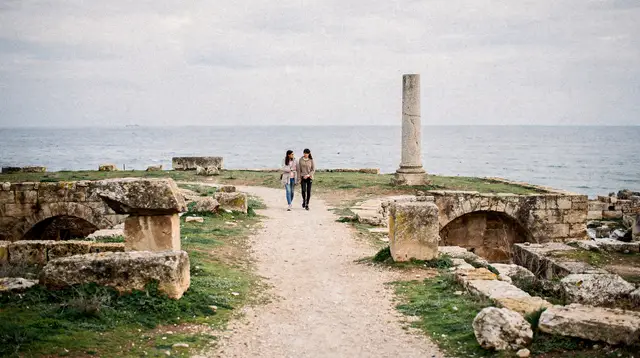
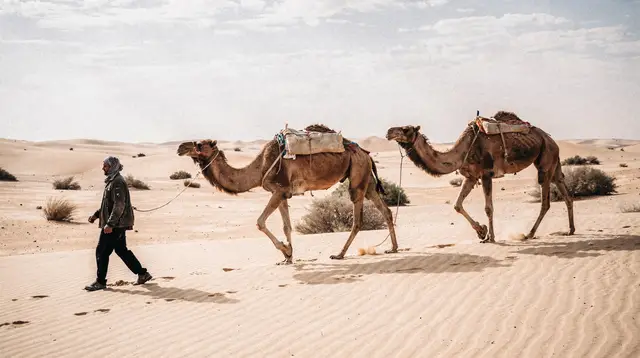
These are our own photographs of Tunisia, not the operator's pictures of this tour — open the tour page to see those.