What a trip to Tunis actually costs
How much does a trip to Tunis actually cost per day?
A mid-range daily budget covering a comfortable hotel, three meals and local transport runs roughly 180-280 TND (about €52-80) per person, before flights. Backpacker-style travel can come in under 120 TND a day; a more comfortable trip with better hotels and private day trips pushes past 350 TND a day.
Most “Tunisia is cheap” claims are true but vague enough to be almost useless for actual planning. This guide replaces the vague version with real numbers, broken down by travel style and category, so you can build an honest daily budget rather than guessing and either overspending on flexibility you didn’t need or running short partway through the trip.
Every figure here is an order of magnitude rather than a locked-in rate, since prices shift with inflation, season and exact location — a Sidi Bou Said café costs more than a neighbourhood one two streets back — but the ranges should get you close enough to plan with confidence.
These ranges hold reasonably steady across most of the year, with the clearest exceptions being coastal accommodation in peak summer and pricing around major Tunisian holidays, both of which can push costs noticeably above the figures shown below.
If you are still deciding how long to stay, how many days in Tunis is the natural companion to this page, since trip length changes the budget more than almost any other choice. The Tunis trip planning guide pulls the other decisions together.
Three budget styles, at a glance
| Category | Backpacker | Mid-range | Comfortable |
|---|---|---|---|
| Accommodation | 40-70 TND | 100-180 TND | 250 TND+ |
| Food (3 meals) | 25-40 TND | 50-90 TND | 120 TND+ |
| Local transport | 10-15 TND | 15-25 TND | 30-50 TND (private) |
| Extras/entry fees | 10-20 TND | 20-40 TND | 40-80 TND |
| Daily total | 80-120 TND (€23-35) | 180-280 TND (€52-80) | 350 TND+ (€100+) |
These totals exclude international flights and any multi-day organised tours, which are worth budgeting as separate line items given the range in cost depending on how they’re booked.
Accommodation
Booking platforms sometimes show meaningfully different prices for the same property depending on how far in advance you book and whether cancellation flexibility is included, which is worth checking side by side before committing, particularly for stays during the shoulder seasons when demand and pricing both fluctuate more than in the depths of winter or the height of summer.
Budget guesthouses and simple hotels in central Tunis or near the medina start relatively low and climb quickly once you want air conditioning, a private bathroom guaranteed, or a location closer to La Marsa or Gammarth’s beach areas. Mid-range hotels in the Ville Nouvelle or along the coast toward Sidi Bou Said offer a comfortable standard without luxury pricing, while genuinely upscale properties — particularly beachfront resorts around Hammamet or Gammarth — push costs considerably higher. Prices also shift by season, rising in summer along the coast and around major Tunisian holidays. See where to stay in Tunis for a neighbourhood-by-neighbourhood cost comparison.
Food
Grocery shopping for a partial self-catering approach, common among longer-stay travellers or those renting an apartment rather than a hotel room, can push daily food costs down further still, since supermarket prices for staples in Tunisia sit well below restaurant prices, as in most countries.
Eating well in Tunis doesn’t require a large budget. A simple café meal — a sandwich, a plate of couscous, a bowl of lablabi — costs relatively little, and even a proper sit-down dinner at a solid mid-range restaurant remains inexpensive by western European standards. Costs climb at restaurants specifically catering to tourists in Sidi Bou Said or the more upscale parts of La Marsa, where prices approach, and sometimes match, southern European levels. Street food and the central market are both reliable ways to eat well for less; our street food guide and first-timer’s food guide both point to specific, good-value spots.
Transport
Within Tunis, the TGM and metro léger cost very little per ride, and taxis remain cheap as long as the meter is used or a fare is agreed in advance — the most common way visitors overspend on transport is skipping that step and accepting whatever an unmetered driver quotes. Louages between towns cost modestly more but remain far cheaper than a private car or organised day trip, at the expense of some flexibility and comfort. See getting around Tunis and how louages work for route-specific costs.
A day trip to Kesra and Makthar with lunch bundles transport, guiding and a meal into a single upfront price, which is worth comparing against the equivalent cost of arranging a louage plus independent site entries and lunch separately — the organised version often works out close in total cost while saving considerable planning time.
Money habits matter as much as prices. Cash and cards behave differently depending on where you are, so read money and payments in Tunisia before you travel, and keep an eye on tourist traps and scams in Tunis, because the most avoidable extra costs usually come from them. In the souks, bargaining in Tunisian souks will save you more than any other single skill.
Site entry fees and the Carthage question
Archaeological site entry fees are individually modest but add up across a trip that includes several sites. Carthage in particular is best handled with the multi-site ticket, which covers several of the scattered ruins across the modern suburb for a single combined price lower than paying separately at each entrance. The Bardo museum, Dougga and El Djem each charge their own separate entry, and it’s worth budgeting for these specifically rather than assuming a blanket “sites are cheap” estimate covers a day involving several of them. See the Carthage multi-site ticket guide for the specific combination that saves the most.
Day trips: organised versus independent
This is where budget planning gets genuinely nuanced. An independently arranged day trip — a louage or rental car plus separate site entries and a self-arranged lunch — is usually the cheapest option in raw cost, but it costs more in planning time and carries more logistics risk (a louage that doesn’t fill up, a site that’s further from the drop-off point than expected). An organised day trip bundles transport, a guide, entry fees and often lunch into one upfront price that’s higher than the raw independent cost but removes essentially all the planning and logistics burden.
A day trip to Kairouan, El Jem and Sousse with lunch illustrates this well — three separate towns and a meal bundled into a single price, versus independently coordinating a louage route between three destinations plus meals and entries at each stop. For most first-time visitors without a rental car, the organised option’s added cost is a reasonable trade for the reduced friction, particularly for a longer, multi-stop day like this one.
| Approach | Typical cost | Trade-off |
|---|---|---|
| Independent (louage + entries) | Lowest raw cost | More planning, more logistics risk |
| Organised day trip | Moderate to higher | Fixed price, no planning, guide included |
| Private driver/tour | Highest | Full flexibility, door-to-door |
If you are weighing the last two rows, private vs group tours in Tunisia sets out the trade-offs, and best day trips from Tunis helps you decide which excursions are worth paying for at all. Travellers considering a rental car should also read car hire in Tunisia before assuming self-driving is the cheaper route.
Combining Tunis with a coastal extension
A coastal day trip to Monastir and Hammamet with a driver is a useful budget comparison point for travellers weighing whether to add a coastal stretch to a Tunis-based trip or treat it as a separate leg entirely — a single well-organised day often costs less overall than relocating accommodation for a night or two purely to see the coast, if a day trip covers what you actually want to see there.
For a more central-Tunis-focused day, a private day trip covering the medina, Carthage and Sidi Bou Said with lunch bundles the region’s core highlights into a single organised day, which is often cheaper in total than three separately arranged half-days once transport and lunch across each are factored in.
How budget shifts with trip length
A short two or three-day trip concentrated in central Tunis carries a different cost structure than a longer week that extends into day trips and coastal time. Shorter trips lean more heavily toward accommodation and food as a share of total cost, simply because there’s less transport and fewer entry fees involved.
Longer trips shift the balance toward transport and day trip costs as a growing share of the total, particularly once one or two organised excursions to Dougga, Kairouan or the coast enter the budget. This matters when comparing cost estimates from other travellers online — a week-long trip’s per-day average often looks higher than a weekend trip’s, not because daily living costs rose, but because the week includes proportionally more paid excursions.
To see how these costs play out on a real schedule, compare the Tunis in three days and Tunis in one week itineraries, and the blog post is Tunis expensive for a more personal account of spending on the ground.
Group size and shared costs
Solo travellers generally pay the full per-person rate for accommodation, since single-occupancy pricing rarely halves cleanly from a double room rate. Couples and groups sharing rooms and private day trips see the per-person cost drop meaningfully, particularly for private tours and drivers, where the vehicle cost is fixed regardless of whether one or four people are travelling in it. A family or small group splitting a private full-day tour, for instance, often ends up paying less per person than the equivalent group would spend on individual seats on separate organised excursions, which is worth factoring in when comparing a private option against a shared group tour price.
Seasonal cost swings beyond the coast
While coastal accommodation prices are the most visible seasonal swing, other costs shift more subtly with season too. Summer’s heat pushes some travellers toward air-conditioned transport options they might skip in the cooler shoulder seasons, adding a modest but real cost difference. Winter, conversely, sometimes brings lower accommodation rates outside the main holiday periods, but also shorter opening hours at some smaller sites and restaurants, which can mean a slightly less flexible day even at a lower headline cost. None of these shifts are dramatic on their own, but together they mean a budget calculated for a spring trip won’t transfer exactly to a summer or winter one without some adjustment.
Comparing a Tunis trip’s cost to nearby alternatives
Travellers weighing Tunis against other short-haul destinations from Europe often find it compares favourably on a like-for-like basis — comparable or lower daily costs than similar city-plus-day-trips itineraries in southern Spain or Portugal, and generally lower than an equivalent trip built around Marrakech’s more internationally priced riads and tours. This isn’t a reason to choose Tunis over another destination on cost alone, since the experiences differ meaningfully, but it’s a useful data point for travellers building a shortlist based partly on budget.
Hidden and easy-to-forget costs
A few costs catch first-time visitors off guard: photography permits at some museums and sites, separate from the standard entry fee; bottled water, which adds up over a hot week if bought individually rather than in larger multi-bottle packs from a supermarket; and tipping, which, while modest per instance, becomes a real recurring line item across a week with several taxi rides, restaurant meals and a guided day trip or two. None of these are large individually, but budgeting a small daily buffer for them avoids the trip running slightly over a tightly calculated plan.
Mistakes to avoid
Frequently asked questions about Tunis trip costs
Is Tunis cheaper than Marrakech for a similar trip?
They’re broadly comparable, with Tunis often coming in slightly cheaper for food and local transport, though hotel pricing varies more by specific neighbourhood and season than by city overall.
How much should I budget for a week in Tunis?
A mid-range week, including a couple of day trips but excluding flights, typically lands somewhere in the range of 1,300-2,000 TND per person (roughly €370-570), depending on hotel choice and how many organised excursions are included.
Do prices spike during peak season?
Yes, particularly for coastal accommodation in summer and around major Tunisian holidays, when hotel rates in Hammamet and Sousse in particular can rise noticeably above shoulder-season pricing.
Is it cheaper to book day trips in advance or arrange them locally in Tunis?
Both can work; advance booking guarantees your date and secures pricing ahead of potential seasonal increases, while local arrangement sometimes allows negotiation, particularly outside peak season.
What’s the single biggest cost driver in a Tunis trip budget?
Accommodation choice, by a wide margin — the gap between a budget guesthouse and a beachfront resort dwarfs the variation in food, local transport or even day trip costs.
Are museum and site entry fees included in most organised tours?
Usually, yes, though it’s worth confirming per tour, since some list entry fees as included while others itemise them separately, which changes the effective comparison against independent planning.
How much extra should I budget for a family of four versus a solo traveller?
Costs don’t simply multiply by four — accommodation is often per room rather than per person, and some sites offer family or child pricing, so a family trip typically costs less per person than a solo trip once accommodation is shared.
Is it worth budgeting for travel insurance separately?
Yes, and it’s not typically included in the cost estimates above — factor it in as a fixed pre-trip cost rather than a daily spending item.
Does self-driving work out cheaper than organised day trips over a longer trip?
For a longer trip with several day-trip destinations, a rental car can work out cheaper per day than repeated organised excursions, provided you’re comfortable navigating unfamiliar roads and parking. For a single day trip or two, the convenience of an organised option usually outweighs the modest savings from self-driving.
Trip-planning essentials on GetYourGuide
Verified deep-linked GetYourGuide tours. Book through these links and we earn a small commission at no cost to you.
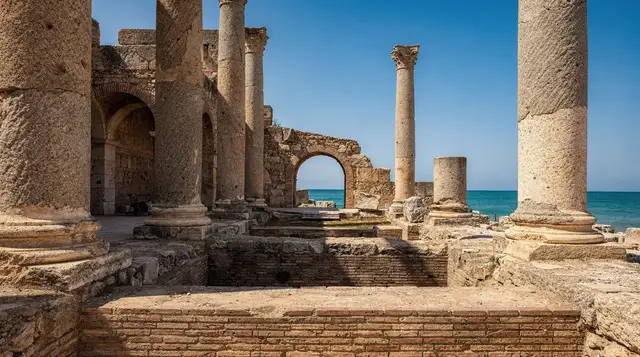
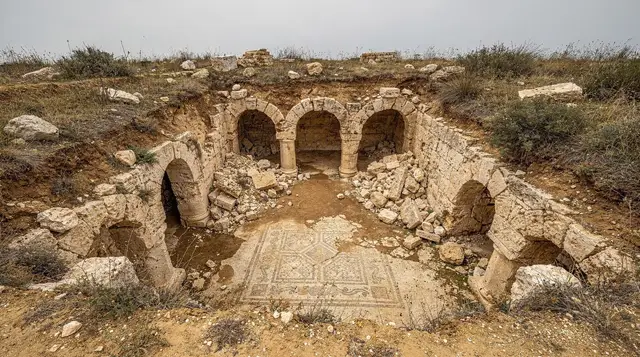
These are our own photographs of Tunisia, not the operator's pictures of this tour — open the tour page to see those.