A day trip to Dougga
How do you get to Dougga from Tunis on a day trip?
By rental car or organised tour, since there's no direct train and public transport involves at least one change and a long final stretch. The drive takes roughly ninety minutes to two hours each way depending on traffic and route. Most day trips combine Dougga with either Testour or Bulla Regia, both roughly on the way, rather than visiting Dougga alone, since the extra detour to either adds relatively little driving time for real additional content.
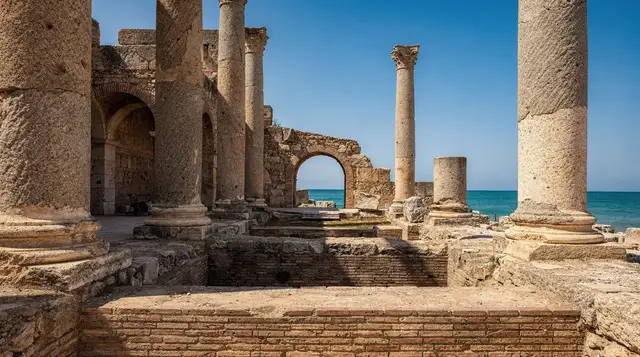
Dougga is the best-preserved Roman town in North Africa, a genuine hillside city with its theatre, capitol, forum, temples and residential streets still recognisable as a place people lived rather than a scattered field of column bases. It sits far enough from Tunis — roughly ninety minutes to two hours by road — that reaching it takes real planning, and most visitors combine it with a second site on the same route rather than driving out and back for Dougga alone. This guide covers the route, the cost, and how Testour and Bulla Regia fit into the same day.
| Where | Northern Tunisia, roughly 110 km west of Tunis |
| Cost | Around 12 TND (about €3.50) entry; more for transport |
| Time needed | Full day, including 3 to 5 hours travel |
| Getting there | Rental car or organised tour; no direct rail |
| Best time | Spring or autumn, with an early morning start |
Why Dougga needs a proper day, not a detour
Unlike Carthage, which can be folded into a half-day loop by train, Dougga’s distance and lack of public transport make it a commitment in its own right. The site itself is large — allow at least two to three hours to walk it properly — and the drive alone eats up three to four hours round trip, which means an early start matters more here than for almost any other day trip from Tunis. Travellers who underestimate the drive time and leave mid-morning often end up rushing the site itself just to make it back before dark. The Dougga complete guide covers what the site includes and what to prioritise if time does run short.
The route from Tunis
The most direct route runs west from Tunis toward Téboursouk, the small town nearest the ruins, on roads that are generally in reasonable condition but wind through hill country for the final stretch. Traffic around Tunis itself in the first thirty minutes is the main variable in total journey time, so leaving before the morning rush eases considerably worth the earlier alarm. The car hire in Tunisia guide and the driving in Tunisia guide both cover what to expect on rural roads like this one if you’re self-driving rather than booking a tour.
Testour: the natural stop on the way
Testour, a small town founded by Andalusian Muslims expelled from Spain in the early seventeenth century, sits close enough to the Dougga route that adding it costs relatively little extra driving time for a genuinely distinct stop. Its main mosque has a clock with numerals running in reverse, a small but memorable oddity, and the town’s architecture carries visible Andalusian influence unlike almost anywhere else in Tunisia.
Testour, Dougga and Bulla Regia: private guided day trip and Private day trip to Testour, Dougga and Bulla Regia both build this three-site combination into a single guided day, with a driver handling the navigation between all three. The Testour and the Medjerda valley day trip guide and the Andalusian towns of Tunisia guide cover the town’s history in more depth.
Bulla Regia: the underground villas
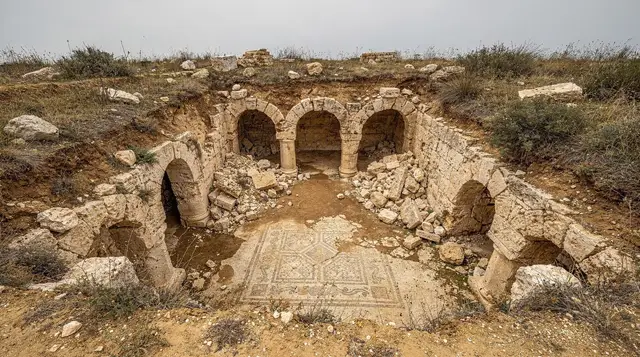
Bulla Regia sits a further thirty to forty minutes past Dougga and offers something genuinely different: Roman villas built partly underground to escape the summer heat, with mosaic floors still in place in some of the subterranean rooms. It’s a smaller site than Dougga and takes less time to see properly, which makes it a natural second stop for a day that starts with Dougga’s larger ruins.
Testour, Dougga and Bulla Regia private day trip covers all three sites in sequence with a private guide, while From Tunis: Dougga and Bulla Regia day trip skips Testour for a tighter two-site day focused purely on the Roman ruins. The Bulla Regia underground villas guide has the full detail on what makes the site distinct from Dougga’s more conventional above-ground layout.
| Combination | Sites covered | Approximate time needed |
|---|---|---|
| Dougga only | Dougga | 5–6 hours including travel |
| Dougga + Testour | Dougga, Testour | 7–8 hours |
| Dougga + Bulla Regia | Dougga, Bulla Regia | 8–9 hours |
| All three | Testour, Dougga, Bulla Regia | 9–10 hours |
What Dougga itself involves
Once on site, Dougga rewards a genuine walk rather than a rushed loop — the theatre, still used for performances during the annual summer festival, the well-preserved capitol with its distinctive columned facade, the forum, and residential streets with visible drainage and paving all sit across a genuinely large hillside area. Shade is limited across most of the site, so timing and water matter as much here as at Carthage’s more exposed stretches. The roman sites near Tunis ranked guide puts Dougga’s preservation in context against Carthage, El Djem and the smaller sites covered elsewhere on this site.
Costs for the day
Entry to Dougga itself runs to roughly 12 TND (about €3.50), with Bulla Regia and Testour’s sites priced separately and modestly on top if you add them. The bigger cost variable is transport: a self-driven day with a rental car costs the rental and fuel, typically the cheapest option if you’re already planning to hire a car for part of the trip, while an organised private day with a driver and guide runs higher per person but removes the navigation and language questions entirely. The Tunis budget guide has the wider cost picture for comparing this against other day trips.
Doing it independently versus with a tour
Self-driving to Dougga is entirely feasible with a rental car and gives full control over how long you spend at each stop, which matters given how much larger Dougga is than most single-site day trips from Tunis. The main downside is navigation on unfamiliar rural roads and the extra planning needed to figure out ticket logistics at each site independently. A guided day removes both concerns and typically includes all three sites’ entry fees in the price, which suits travellers who’d rather not self-navigate or who are combining this with other guided days elsewhere in the country. The private versus group tours in Tunisia guide covers this trade-off in more general terms.
The Medjerda valley along the way
The drive out to Dougga cuts through the Medjerda valley, Tunisia’s most fertile agricultural region and the historic breadbasket that made Roman North Africa such a valuable province in the first place. Wheat fields and olive groves line much of the route, and the valley’s productivity is part of why Dougga and the smaller towns nearby grew wealthy enough to build the monuments still standing today. It’s worth treating the drive itself as part of the day rather than simply the means of getting there — the scenery shifts noticeably from the coastal plain around Tunis into genuine hill country the closer you get to Téboursouk.
Téboursouk itself, the small town at the foot of the Dougga site, has a handful of cafés worth a stop for coffee or a light lunch either on the way in or the way back, and is typically where a driver or guide will suggest a break if the day includes all three sites. It’s a modest, unpolished town rather than a tourist destination in its own right, but that’s part of what makes it a useful, honest waypoint rather than a manufactured stop.
Weather and seasonal timing
Spring, from roughly March through May, gives the most comfortable conditions for the amount of walking Dougga demands, with wildflowers across the surrounding hillsides adding to the visual appeal of the drive itself. Autumn offers similar comfort with slightly different light. Summer is workable but demanding — the site has minimal shade and temperatures in the interior can run hotter than the coast, so a genuinely early start becomes less optional and more necessary.
Winter brings cooler, sometimes wet conditions that can make the site’s uneven paving slippery, though it also means far fewer visitors sharing the ruins with you. The Tunis weather month by month guide has the fuller seasonal detail if you’re choosing when in your trip to schedule this excursion.
Practical tips for the day
Fuel up before leaving Tunis rather than assuming stations are frequent along the rural stretch of the route, and carry cash in smaller denominations for site entry fees and any roadside stops, since card acceptance thins out considerably once you’re off the main highways.
A picnic lunch is a reasonable option for anyone self-driving, since restaurant choices directly at the Dougga site are limited to a couple of small cafés rather than a proper selection, though Téboursouk offers slightly more choice if you’d rather sit down properly. Mobile signal is generally reliable along the route but can weaken in the hillier stretches near the site itself, worth bearing in mind if you’re relying on a phone for navigation rather than a dedicated GPS or offline map.
Mistakes to avoid on a Dougga day trip
Frequently asked questions about the Dougga day trip
How long does it take to drive from Tunis to Dougga?
Roughly ninety minutes to two hours each way, depending on traffic through Tunis at the start of the journey and the exact route taken.
Is Dougga worth visiting if I’ve already seen Carthage?
Yes — Dougga’s preservation is significantly better than Carthage’s Roman sites, with entire streets, a theatre and a capitol still standing rather than reduced mostly to foundations.
Can I combine Dougga with Testour and Bulla Regia in one day?
Yes, and it’s a common combination, though it makes for a long day of nine to ten hours including travel; most visitors pick one additional site rather than both if time is limited.
Is public transport a realistic way to reach Dougga?
Not really. There’s no direct train, and bus or louage connections are slow and indirect enough that a rental car or organised tour is the practical choice for most visitors.
How much time should I allow at the Dougga site itself?
At least two to three hours for a proper walk through the theatre, capitol, forum and residential streets; the site is larger than most first-time visitors expect.
What makes Bulla Regia different from Dougga?
Bulla Regia’s Roman villas were built partly underground to escape summer heat, with mosaic floors still visible in some subterranean rooms — a genuinely different experience from Dougga’s above-ground townscape.
Is a guided tour better than self-driving for this trip?
It depends on your comfort with rural roads and independent navigation; a guided tour removes that concern and bundles site entry fees, while self-driving gives more control over pacing at each stop.
What should I pack for a Dougga day trip?
Water, sun protection, and sturdy closed shoes for uneven ancient paving, since much of the site is exposed with limited shade across a genuinely large area.
Roman & Punic site tours on GetYourGuide
Verified deep-linked GetYourGuide tours. Book through these links and we earn a small commission at no cost to you.
These are our own photographs of Tunisia, not the operator's pictures of this tour — open the tour page to see those.