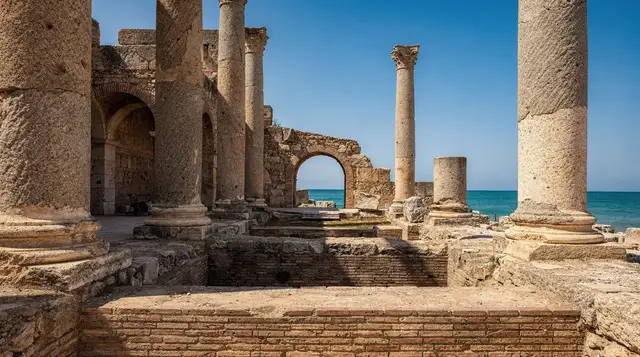
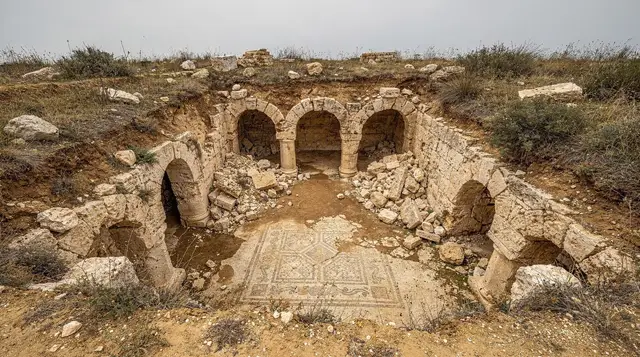
Gammarth occupies the northern tip of the Tunis coastline, past La Marsa, where the shoreline turns rockier and the développement shifts from residential villas to resort hotels. It’s the kind of place travellers choose for comfort rather than character: international hotel chains, private beach access, a golf course, and quiet streets with little of the street life found in Sidi Bou Said or central Tunis. Most people who stay here treat it as a base, sleeping and relaxing in Gammarth while taking taxis or organised day trips into the capital and its historic sites.
| Where | Northernmost coastal suburb of Tunis, beyond La Marsa |
| Cost | Free beach access varies by hotel; mid-to-high hotel price bracket |
| Time needed | Best as a multi-night base rather than a day visit |
| Getting there | Taxi or rental car (TGM does not reach Gammarth) |
| Best time | May to October for beach weather |
A resort suburb, not a sightseeing stop
Unlike Sidi Bou Said or Carthage, Gammarth doesn’t have a historic core, a medina, or a museum to anchor a visit. What it has is a concentration of hotel resorts, many with their own private beach frontage, built up over recent decades to serve both international tourists and well-off Tunisians looking for a weekend escape from the capital. The coastline here is more varied than the sandy stretches of La Marsa — cliffs and coves alternate with beach, which makes for attractive views but means beach quality varies noticeably from one hotel to the next. If a beach is central to your trip, it’s worth checking hotel reviews for the specific stretch of coast rather than assuming all of Gammarth offers the same experience.
The practical consequence is that Gammarth rewards a certain kind of traveller: someone who has already seen, or is about to see, the headline sites and wants somewhere calm to recover between them. If you are still deciding where to sleep across the whole trip, our guide on where to stay in Tunis compares the neighbourhoods side by side, and the beaches near Tunis puts Gammarth’s coves in context with the sandier options further along the coast. For a closer look at the stretch immediately south of here, see Gammarth and La Marsa beaches.
Golf and quieter pursuits
Gammarth is home to a well-regarded 18-hole golf course, one of a handful in the Tunis area, drawing a mix of resident expatriates and visiting golfers. Outside of golf and the beach, activity options are limited compared to more central destinations — this is a place for slower mornings and evenings rather than a packed sightseeing schedule. Some hotels offer spa and thalassotherapy facilities, an established Tunisian speciality covered in more depth in our guide to thalassotherapy in Tunisia, which pairs naturally with a Gammarth stay for travellers prioritising rest over ruins.
A typical Gammarth day has a gentle rhythm: a late breakfast, a few hours by the water, a long lunch, and an evening that stays close to the hotel. That rhythm suits couples and anyone travelling after a demanding stretch of sightseeing, and it is a good counterweight to the busier days spent in the medina of Tunis. Families can make it work too, though the lack of things to do on foot means planning around the hotel’s own facilities; our notes on Tunis with kids and family beaches in Tunisia cover what to look for.
Using Gammarth as a base for Tunis and Carthage
The real value of staying in Gammarth is proximity to the capital’s headline sites without being in the middle of the city. A short taxi ride reaches La Marsa and the TGM line, and from there the whole Carthage-Sidi Bou Said corridor opens up. For a full day covering the capital’s highlights without arranging transport yourself, the Tunis, Carthage and Sidi Bou Said tour is built for exactly this — pickup from hotels across the northern suburbs, including Gammarth, makes it a practical option for visitors staying here rather than in central Tunis.
A similar half-day option, the cultural walk through the capital’s most beautiful sights, focuses more tightly on central Tunis itself for those who’ve already covered Carthage separately.
| Distance from Gammarth | Approx. taxi time | Approx. taxi cost |
|---|---|---|
| La Marsa / Sidi Dhrif | 10–15 minutes | 10–15 TND |
| Sidi Bou Said | 15–20 minutes | 15–20 TND |
| Central Tunis | 25–35 minutes | 25–35 TND |
| Tunis-Carthage airport | 20–30 minutes | 20–30 TND |
If you would rather build your own day, the neighbouring places are each worth a separate visit. La Marsa is the nearest lively seafront and the end of the TGM line, Sidi Bou Said is the postcard village on the cliff, and Carthage holds the ruins. A sensible pattern is to give each a half day rather than cramming all three together; the Carthage and Sidi Bou Said day trip lays out one way to link them, and the TGM train guide explains how the line works once you reach La Marsa.
Getting there and getting around
Unlike La Marsa, Sidi Bou Said and Carthage, Gammarth is not served by the TGM light rail, which stops at La Marsa. That makes a rental car or taxis the practical options for getting around, and it’s worth budgeting for regular taxi trips if you plan to sightsee actively during a Gammarth stay, since walking to the nearest TGM station isn’t realistic from most hotels. Renting a car for the duration of a stay makes particular sense if you plan to range further afield — north toward Cap Bon’s beaches and the fortified town of Kerkouane, or south toward the Roman sites near Tunis.
Whichever way you travel, a few habits make taxis less stressful. Agree the fare or confirm the meter before setting off, ask your hotel to write down your destination in Arabic or French if you are unsure of the pronunciation, and keep small notes handy. Our guides to taxis in Tunis, getting around Tunis and car hire in Tunisia go through each option in more detail, and driving in Tunisia is worth reading before you commit to a rental.
Excursions further afield from a Gammarth base
Because Gammarth attracts travellers who value comfort and organised logistics, it’s also a reasonable base for booking full-day excursions with hotel pickup, sparing the need to drive yourself to unfamiliar rural roads. Beyond the city highlights, the Dougga and Bulla Regia via Testour private tour covers two of the best-preserved Roman sites in the country in a single day, while the Houaria Cliffs, Kelibia and UNESCO Kerkouane private tour heads out onto the Cap Bon peninsula for coastal scenery and the Punic ruins at Kerkouane.
Travellers with more time and an interest in getting off the well-trodden route can also consider a day trip to Kesra and Makthar with lunch, which reaches inland Roman and Berber heritage sites rarely covered by shorter city-based itineraries.
Choosing between these excursions comes down to what you want from the day. The Roman sites suit travellers who like ruins and mosaics, and the Roman sites near Tunis ranked helps you decide how far to go; the Cap Bon route suits those who prefer coast and open scenery, and the Cap Bon loop day trip shows what that landscape offers. Our overview of the best day trips from Tunis gathers the rest, and private versus group tours in Tunisia will help you choose a format that fits your pace.
How Gammarth fits into a longer itinerary
Because Gammarth is a place to rest rather than to tick off sights, it slots most naturally at the start or end of a trip. Arriving here after a long flight means you can settle in quietly before tackling the capital, and finishing here gives you a soft landing before heading home. If you are mapping out the days, the itinerary for four days in Tunis and the five-day plan both work with a coastal base, while Tunis and Cap Bon in four days pairs well with a rental car from a Gammarth hotel. For shorter stays, the Tunis weekend break is easy to adapt. And if you are weighing how long to allow overall, see how many days in Tunis.
Seasonality is worth a thought as well. The beach side of Gammarth is at its best in the warmer months, while outside that window you are paying for the hotel, the quiet and the access rather than the sand. Our best time to visit Tunis guide explains how the seasons shape a trip, so you can decide whether a resort base makes sense for your dates.
An honest read on who Gammarth suits
Gammarth is not for travellers chasing authenticity, street life, or a walkable historic centre — for that, Sidi Bou Said, La Marsa or central Tunis are all better choices, and closer to public transport. Where Gammarth earns its place is as a comfortable, resort-standard base for travellers who want beach downtime bookended by day trips into the capital, or for business travellers and golfers who have their own reasons to be in the area. If your trip is built around sightseeing density, you’ll likely spend more time and money on taxis living in Gammarth than you would basing yourself closer to the TGM line in La Marsa or Sidi Bou Said.
There is also the question of what you are giving up. A base in the middle of the action means shorter journeys and more spontaneous evenings; a base here means more planning, but also quieter nights and a sense of being away from it all. Neither is wrong, and the Tunis trip planning guide can help you weigh them against the rest of your plans.
Dining in Gammarth
Restaurant options in Gammarth lean toward hotel dining and a handful of standalone upscale restaurants, generally priced higher than equivalent options in central Tunis or even La Marsa, reflecting the resort clientele. Casual, budget dining is scarcer here than almost anywhere else on this stretch of coast — worth knowing if cost matters, since a meal out in Gammarth typically runs noticeably more than the same meal in La Goulette or the Tunis medina. For visitors who want variety without high prices, a taxi into La Marsa or Sidi Bou Said for dinner is a common workaround.
If you want to eat well without paying resort prices, it helps to know what you are looking for. Our guides to seafood in La Goulette and La Marsa, Tunisian food and street food in Tunis explain the dishes worth seeking out, so you can order with confidence when you leave the hotel. Hotel dining is perfectly adequate for a quiet evening, but the more memorable meals tend to be found a short ride away.
Frequently asked questions about Gammarth
Is Gammarth a good base for a first trip to Tunis?
It can work well if comfort and beach access matter more to you than walkability, but travellers prioritising easy access to sightseeing on foot or by train are generally better served basing themselves in La Marsa or central Tunis instead.
How do I get from Gammarth to central Tunis?
By taxi or rental car — the TGM line doesn’t extend to Gammarth, so plan on a 25 to 35 minute taxi ride or drive into the city centre.
Is there anything historic to see in Gammarth itself?
Very little — Gammarth is a modern resort suburb without a historic medina or major monuments. History and sightseeing are found nearby in Carthage and Sidi Bou Said rather than in Gammarth itself.
What’s the golf course in Gammarth like?
An established 18-hole course popular with residents and visiting golfers, one of the more developed golf facilities in the greater Tunis area.
Are the beaches in Gammarth good for swimming?
Generally yes, though quality varies by stretch of coast — some areas are sandy and well maintained by hotels, others rockier. Checking a specific hotel’s beach access before booking is worthwhile.
Is Gammarth expensive compared to other parts of the Tunis coast?
Yes, on the whole — hotels and restaurants here tend to be priced at the upper end of the Tunis coastal market, reflecting the resort-focused development.
Can I book day trips to the Sahara or southern Tunisia from Gammarth?
Yes, though most such trips run as multi-day tours rather than single-day excursions given the distance; day trips from Gammarth are better suited to nearby destinations like Carthage, Dougga, or Cap Bon.
Do I need a car to enjoy staying in Gammarth?
Not strictly — taxis cover most needs — but a rental car gives more flexibility for exploring the wider Cap Bon coast and inland Roman sites without relying on organised tours or taxi negotiations each time.