The beaches of Gammarth and La Marsa
Gammarth or La Marsa for a beach day near Tunis?
Gammarth has better sand and more resort-style facilities, while La Marsa is easier to reach by TGM train and doubles as a pleasant place to eat and walk regardless of whether you swim. For a dedicated beach day, choose Gammarth; for convenience alongside sightseeing, La Marsa.
Gammarth and La Marsa sit next to each other along the northern arc of the Gulf of Tunis, and visitors planning a beach day from the capital almost always end up choosing between them. They’re not interchangeable: Gammarth is the more developed, resort-oriented stretch, with better-maintained sand and a concentration of hotels and beach clubs; La Marsa is more central, more easily reached without a car, and functions as much as a place to eat and walk the corniche as it does a swimming destination. This guide compares the two directly, rather than treating them as a single “northern suburbs” beach option, and covers how to combine them if you have time for both. For the wider picture of the capital’s coastline, see the best beaches near Tunis, and for each suburb as a place rather than just a beach, the pages on Gammarth and La Marsa.
| Where | Gammarth and La Marsa, along the northern Gulf of Tunis coast |
| Cost | Free public beach access; loungers and beach club access typically 20–50 TND (about €6–15) per person |
| Time needed | Half a day for either; a full day to see both properly |
| Getting there | TGM train direct to La Marsa; taxi or car for Gammarth |
| Best time | June to September for swimming; year-round for the corniche and cafés |
Gammarth: resort sand and beach clubs
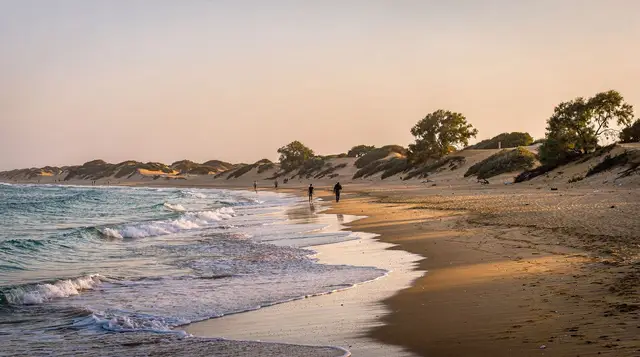
Gammarth occupies the northern tip of the bay, past La Marsa, and is where Tunis’s beach tourism infrastructure is genuinely concentrated. A run of resort hotels back directly onto the sand, and several beach clubs offer paid access to loungers, umbrellas and food service, which is the closest thing the greater Tunis area has to the kind of beach day associated with Hammamet further south.
The sand itself is better maintained here than in La Marsa, with fewer of the built-up waterfront sections that interrupt the coastline closer to the city, and swimming conditions are generally more reliable. It’s also the pricier option if you want the full beach-club experience, and it requires a taxi or car, since the TGM line doesn’t reach this far north.
La Marsa: the convenient, mixed option
La Marsa is the beach most visitors staying centrally in Tunis actually end up at, simply because it’s the terminus of the TGM light rail and requires no other transport arrangement. The beach itself is more variable than Gammarth’s — some stretches are genuinely pleasant, others less so depending on proximity to the built-up parts of town — and it gets considerably more crowded, particularly on weekends when Tunis residents themselves head to the coast.
What La Marsa does better than Gammarth is everything around the beach: a lively corniche lined with cafés, ice cream stands and restaurants that makes the area worth visiting even for travellers who have no intention of swimming, plus easy onward access to Sidi Bou Said, a short taxi or walk from the same TGM line.
| Gammarth | La Marsa | |
|---|---|---|
| Sand quality | Better maintained, more consistent | Mixed, varies by section |
| Crowd levels | Moderate to high in summer | High, especially weekends |
| Getting there | Taxi or car (20–25 minutes from central Tunis) | TGM train (35–40 minutes) |
| Facilities | Resort hotels, beach clubs, restaurants | Corniche cafés and restaurants |
| Cost for a full day | Higher, if using a beach club | Lower, mostly free public access |
| Best for | A dedicated beach day | Convenience, sightseeing, food |
Combining both in a single day
If you have a full day and want to see both, the practical sequence is La Marsa first, since it’s on the direct TGM line from central Tunis, followed by a short taxi ride north to Gammarth for the afternoon once the corniche visit is done. Doing it the other way round means backtracking through La Marsa on public transport after already using a taxi to Gammarth, which is a less efficient use of the day. Alternatively, some visitors treat La Marsa as a morning stop for coffee and a walk along the water, then take a taxi directly to Sidi Bou Said rather than Gammarth, saving the resort beach for a separate, dedicated day later in the trip.
Beach clubs versus public access
Both areas have public stretches of sand that cost nothing to use, but a meaningful part of what makes Gammarth appealing — loungers, shade, food and drink service without leaving your spot — comes from paid beach club access, typically arranged directly with the resort hotels or standalone clubs along the strip. La Marsa’s public beach doesn’t have the same density of paid clubs, so a day there is more likely to mean bringing your own umbrella and towel, or simply not staying long enough for it to matter. Neither approach is wrong; it depends on whether you want a managed beach-club day or a more casual few hours by the water. If you’re travelling with children, family beaches in Tunisia is worth reading alongside this page, since the right choice often comes down to shade, calm water and easy facilities rather than sand quality alone.
Getting on the water: boat and catamaran options
For a different way to experience this stretch of coast, catamaran and boat trips departing from further south near Hammamet cover a similar type of Mediterranean coastline experience, even though they don’t sail specifically past Gammarth or La Marsa.
A catamaran cruise with hotel pickup, fruits and a drink from Hammamet or a sea trip on a catamaran with transfer from Hammamet is worth considering if your itinerary already includes time on the Hammamet coast and you’d rather add a boat afternoon there than travel further for a bay cruise from Tunis itself. For a boat trip that does cover the Tunis bay directly, see boat trips from Tunis and the bay instead.
Horse riding along the sand
Neither Gammarth nor La Marsa is set up for horse riding along the beach in the way some of the wider, quieter stretches further south are. If that’s part of what you’re looking for on a beach day, it’s more realistically arranged from Hammamet, where operators run rides directly along the shore. A horse riding experience along the beach in Hammamet or a horseback riding experience with hotel pickup from Hammamet covers this properly, and it’s worth treating as a separate excursion on the Hammamet leg of a trip rather than expecting it near Tunis. For a closer look at that stretch of coast, see the Hammamet beaches guide and Hammamet itself.
Sidi Bou Said as a natural add-on
Whichever of Gammarth or La Marsa you choose, Sidi Bou Said sits close enough to either to fold into the same day — a short taxi ride from Gammarth, or an even shorter one from La Marsa’s TGM stop. Most visitors treat the village’s blue-and-white streets and café views as the highlight of a northern-suburbs day, with the beach as a complement rather than the sole purpose of the trip. See Sidi Bou Said and the cafés of Sidi Bou Said for what the village itself offers beyond the coastline.
| Combination | Realistic time | Notes |
|---|---|---|
| La Marsa morning + Gammarth afternoon | Full day | Best sequence to minimise backtracking |
| La Marsa + Sidi Bou Said | Half a day | The more common combination for sightseeing-focused visitors |
| Gammarth only, as a dedicated beach day | Half to full day | Best for travellers prioritising beach time specifically |
Where to stay if the beach is your main priority
Travellers who want to wake up within walking distance of the sand, rather than commuting each day from central Tunis, have genuinely different options in Gammarth and La Marsa. Gammarth’s resort hotels are built specifically around beach access, with many offering their own private stretch of sand or direct arrangements with adjacent beach clubs, which suits a trip built around relaxation as much as sightseeing.
La Marsa’s accommodation options lean more towards mid-range hotels and guesthouses set back from the beach itself, closer to the corniche and the TGM stop, which suits travellers who want easy transport links into central Tunis alongside beach access rather than a resort-style stay. Neither area puts you as close to the medina and the Bardo as staying centrally would, so it’s a genuine trade-off between beach convenience and sightseeing convenience rather than a clear win either way. See where to stay in Tunis for how these neighbourhoods compare to staying centrally.
Food along the coast: where each area actually excels
La Marsa’s real strength, beyond its beach, is its food scene — the corniche is lined with cafés serving strong coffee and pastries, and the surrounding streets hold a wider spread of restaurants than Gammarth’s more hotel-centric dining options. It’s genuinely worth visiting La Marsa even on a day you don’t plan to swim, purely for an afternoon of café-hopping along the water. If fish is what you’re after, seafood in La Goulette and La Marsa covers the options, and Sidi Bou Said versus La Marsa helps if you’re deciding which of the two to base an afternoon around.
Gammarth’s dining, by contrast, is more concentrated within the resort hotels and their attached restaurants, which tend towards a more polished, tourist-oriented style of service at correspondingly higher prices. Neither approach is better outright, but it’s worth knowing before you choose where to spend a half-day: La Marsa rewards wandering and stopping wherever looks interesting, while Gammarth rewards picking one resort restaurant or beach club and settling in for the day.
A note on the wider Cap Bon coast
If neither Gammarth nor La Marsa quite delivers the beach day you’re after — whether because of crowds, cost, or simply wanting something further from the city — it’s worth knowing that the Cap Bon peninsula, roughly an hour to ninety minutes east of Tunis, offers a genuinely different and often less crowded coastline, particularly around Kelibia.
That’s a longer trip than either of the beaches covered on this page, and better suited to travellers with a full day or more to dedicate to it rather than a spontaneous half-day plan, but it’s worth having in mind as a next step if Tunis’s own northern suburbs don’t fully satisfy a craving for open coastline. See Kelibia and the beaches of Cap Bon for what that stretch offers in more detail.
Practical notes: getting there and timing your visit
The TGM light rail runs from central Tunis directly to La Marsa in around 35 to 40 minutes, and is genuinely the easiest way to reach that stretch of coast without arranging separate transport — see the TGM: Tunis to La Marsa by train for the practical details. Gammarth requires a taxi or rental car, since the line doesn’t extend that far; taxis in Tunis covers fares and how to book one without overpaying.
If you’re fitting a beach day into a longer stay, how many days in Tunis and the best time to visit Tunis help you decide where the beach belongs in the plan.
Weekends bring noticeably larger crowds to both areas, particularly La Marsa, so a weekday visit is worth prioritising if avoiding crowds matters to you. Summer beach club prices at Gammarth rise through July and August, the peak of the domestic season, and it’s worth booking a lounger in advance during that period if a specific resort or club matters to your plans.
Mistakes to avoid
Frequently asked questions about Gammarth and La Marsa beaches
Which beach is better for swimming, Gammarth or La Marsa?
Gammarth generally has better-maintained sand and more consistent water conditions. La Marsa’s beach is more variable and better suited to a shorter visit alongside sightseeing than a dedicated swimming day.
How do I get to Gammarth without a car?
By taxi — the TGM light rail doesn’t extend that far north, so a taxi from central Tunis or from La Marsa is the practical option, typically a 20 to 25 minute ride from the city centre.
Is La Marsa beach free to use?
Yes, public access is free. Paid beach clubs with loungers exist but are less concentrated than in Gammarth, so bringing your own towel or umbrella is common practice.
Can I visit both Gammarth and La Marsa in one day?
Yes — the most efficient order is La Marsa first by TGM, then a short taxi ride north to Gammarth for the afternoon, avoiding backtracking through La Marsa a second time.
Is Sidi Bou Said close to these beaches?
Yes, it’s a short taxi ride from Gammarth and an even shorter one from La Marsa, and most visitors combine a beach stop with time in the village on the same day.
Are there beach clubs at both locations?
Gammarth has a much higher concentration of resort-affiliated beach clubs. La Marsa has some options but relies more on its public beach and corniche cafés than paid club access.
Is it worth arranging a boat trip from this area instead of the beach?
If you want to see the coastline from the water, a bay cruise from Tunis covers Gammarth and the surrounding coast from offshore, which is a different but complementary experience to a beach day.
When is the best time to avoid crowds?
Weekday mornings, particularly outside July and August, see noticeably fewer people at both beaches than weekends and the peak domestic summer season.
Does either beach offer activities beyond swimming?
Not directly — horse riding, catamaran cruises and diving are more readily available from Hammamet, further south, rather than at Gammarth or La Marsa themselves.
Beach & coast tours on GetYourGuide
Verified deep-linked GetYourGuide tours. Book through these links and we earn a small commission at no cost to you.
These are our own photographs of Tunisia, not the operator's pictures of this tour — open the tour page to see those.