One day in Tunis
One day in Tunis is enough to see three genuinely different places — the old medina, the scattered Roman and Punic ruins of Carthage, and the blue-and-white streets of Sidi Bou Said — but only if the day is planned with some discipline. Visitors who improvise tend to lose the morning in the medina’s side streets and then rush Carthage into a 20-minute drive-by that leaves nothing memorable behind. This itinerary sequences the three stops in the order that keeps travel time short and avoids doubling back across the bay.
| Where | Tunis medina, Carthage suburb, Sidi Bou Said village |
| Cost | Roughly 40-60 TND per person for entry tickets, transport and lunch |
| Time needed | A full day, from mid-morning to early evening |
| Getting there | TGM light rail between Carthage and Sidi Bou Said; taxi or on foot within the medina |
| Best time | Spring or autumn; a summer day works too if you start early |
Starting in the medina, before the heat builds
The day works best starting in the medina of Tunis, ideally by 9am, before the souks fill up and before the midday sun makes the narrow, largely unshaded lanes uncomfortable. Enter through Bab Bhar, the sea gate that marks the medina’s edge against the modern Ville Nouvelle, and head toward Ez-Zitouna mosque along Rue Jamaa Ez-Zitouna, the medina’s main covered artery lined with souvenir stalls, perfume sellers and the occasional genuinely old shopfront worth a second look.
A walking route through the medina of Tunis lays out a loop that takes in Ez-Zitouna’s courtyard, the souk quarters organised by trade — the souk el-attarine for perfume, the souk des chéchias for the traditional red felt hats — and one or two of the medina’s dar house-museums, without doubling back on yourself. Budget around ninety minutes here; longer and the rest of the day gets squeezed.
Ez-Zitouna’s interior is reserved for worshippers, though non-Muslim visitors can view the courtyard from just inside the gate, which is enough to appreciate the scale of Tunisia’s oldest and most important mosque. Ez-Zitouna mosque: what visitors can and cannot see explains exactly where the line falls, which avoids an awkward moment at the entrance.
| Stop | Time to allow | What it covers |
| Medina and Ez-Zitouna | 90 minutes | Souks, mosque courtyard, one dar museum |
| Carthage | 2-2.5 hours | Byrsa hill, Antonine baths or villas |
| Sidi Bou Said | 90 minutes | Café des Nattes, lookout point, blue streets |
Getting from the medina to Carthage
From the medina, a taxi to Tunis Marine station takes ten to fifteen minutes depending on traffic, and from there the TGM light rail runs directly to Carthage in around 25 minutes. This is the single most useful piece of logistics for the day: the TGM line runs along the whole route this itinerary follows, so once you’re on it you don’t need a car or a series of separate taxis until the return leg.
If getting around Tunis without a rental car feels daunting on paper, this particular day is one of the easier ones to do independently, since the medina, Carthage and Sidi Bou Said all sit on or near the same TGM corridor.
Carthage: pick two sites, not five
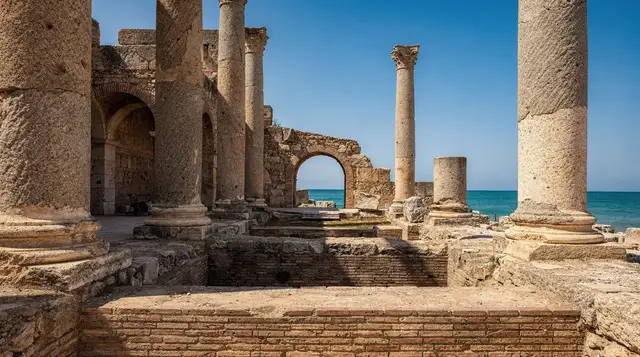
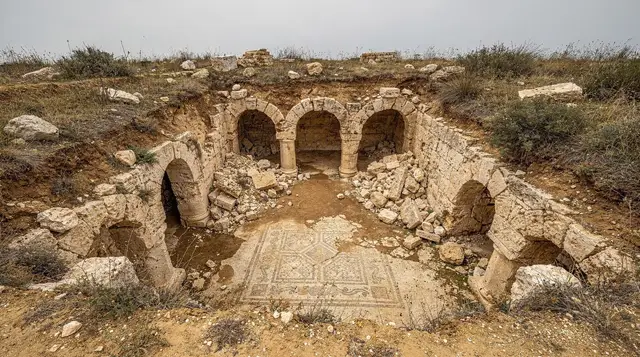
Carthage is not a single ruin but a scattered set of archaeological sites across a modern, wealthy suburb, and trying to see all of them in two hours produces a rushed, unsatisfying visit to each. Carthage covers the full picture, but for a one-day itinerary the realistic choice is Byrsa hill — with its national museum and panoramic view over the Gulf of Tunis — paired with either the Antonine baths or the Roman villas, depending on whether ruins-as-engineering or ruins-as-domestic-life interests you more.
A complete visitor guide to the Carthage archaeological sites and the Carthage multi-site ticket, and how to use it well are worth skimming before you arrive, since the ticket system covers several sites at once and buying it at the wrong booth means paying twice.
A guided tour covering Sidi Bou Said, Carthage and the medina compresses exactly this itinerary into a single organised outing with a driver and a guide, which removes the TGM timing entirely if that’s more appealing than managing it yourself.
Sidi Bou Said: the closing stretch
From Carthage, the TGM continues to Sidi Bou Said station, from where it’s a short uphill walk into the village itself. Sidi Bou Said is deliberately kept for the end of the day: its blue-and-white streets and sea views photograph best in the softer late-afternoon light, and after an intellectually demanding morning among Carthage’s ruins, a village built almost entirely for wandering and coffee makes a natural, lighter close.
The cafés of Sidi Bou Said covers Café des Nattes and the handful of terraces with sea views, useful for deciding where to sit down for twenty minutes rather than just walking through. The winter afternoon in Sidi Bou Said journal entry gives a feel for the village outside peak season, when the crowds thin considerably.
If you’d rather not manage the logistics yourself
A private day tour covering Carthage, Sidi Bou Said and the medina handles transport, ticket queues and pacing for you, with a driver moving between the three stops instead of the TGM and taxis this self-guided version relies on. It costs more than doing it independently but removes essentially all of the planning above.
A private day trip with lunch included is worth considering if you’d rather not hunt for a restaurant mid-itinerary, since it builds a proper sit-down meal into the schedule between Carthage and Sidi Bou Said.
Where to eat along the route
Lunch fits naturally either in the medina, before heading to the TGM, or in Sidi Bou Said toward the end of the day, and both options work well depending on which stop you’d rather linger at. Where to eat in the medina of Tunis covers a handful of reliable options near Ez-Zitouna, mostly serving couscous, grilled meats and salads at reasonable prices, while a seafood plate on a Sidi Bou Said terrace with a sea view costs more but suits the day’s closing stop.
Street food in Tunis: what to eat and where is worth reading if a quicker, cheaper lunch between the medina and the TGM appeals more than a sit-down meal — a fricassé sandwich or a plate of brik eaten standing up keeps the day moving without cutting into Carthage time.
| Medina souks and mosque courtyard | Free to enter; small fee for some dar museums |
| TGM ticket, Tunis Marine to Carthage | A few dinars each way |
| Carthage multi-site ticket | Around 12 TND, covering several sites |
| Sidi Bou Said | Free to walk; cafés charge standard tourist-area prices |
| Lunch | 15-30 TND per person depending on where and what |
What one day leaves out
Honestly, one day skips the Bardo museum entirely, and that’s a real trade-off — the Bardo holds one of the world’s best collections of Roman mosaics and would need at least half a day on its own. It also skips La Marsa, Carthage’s Punic ports, and any day trip beyond the immediate Tunis area, such as Dougga or Hammamet. How many days do you need in Tunis? and two days in Tunis both address what a longer stay adds, and if the Bardo’s mosaics are the priority, that itinerary is worth reading before committing to a single day.
Is one day actually enough?
Mistakes to avoid
Frequently asked questions about doing Tunis in one day
Is one day enough to see Tunis properly?
For the medina, Carthage and Sidi Bou Said, yes — this itinerary is a realistic, well-tested combination. It is not enough if the Bardo museum or a day trip further afield is a priority; those need additional days.
Do I need a car for this itinerary?
No. The TGM light rail connects Tunis Marine, Carthage and Sidi Bou Said directly, and taxis cover the short medina leg. A rental car adds parking complications without meaningfully saving time on this particular route.
What’s the best order to do the three stops in?
Medina first, since it’s most pleasant before the midday heat and crowds, then Carthage, then Sidi Bou Said last, both because the TGM runs in that direction and because the late afternoon light suits Sidi Bou Said’s streets best.
Can I fit the Bardo museum into this same day?
Not comfortably. The Bardo deserves at least half a day on its own for its mosaic collection, and adding it here turns a well-paced day into a rushed one covering four stops instead of three.
How much does a day like this cost?
Independently, budget roughly 40-60 TND per person for entry tickets, TGM fares, taxis and lunch. A private guided version costs considerably more but removes all the logistics.
Is the medina safe to walk through alone?
Yes, the medina is a busy commercial area during the day with a constant flow of locals and visitors. Standard city-centre awareness applies, particularly around bag security in the busiest souk lanes.
What if it’s Friday?
Friday is the main prayer day, and the medina and Ez-Zitouna’s surroundings get notably busier around midday prayer time. Starting earlier, or shifting the medina visit to the afternoon, avoids the busiest window.
Should I book the guided version or do it independently?
Independent travel suits confident, budget-conscious visitors comfortable with a train and a bit of walking. A guided private day tour suits anyone who’d rather not manage tickets, timing and navigation themselves, at a higher cost.
tours.1 days
Verified deep-linked GetYourGuide tours. Book through these links and we earn a small commission at no cost to you.
These are our own photographs of Tunisia, not the operator's pictures of this tour — open the tour page to see those.