Two days in Tunis
Two days changes the Tunis equation considerably, mainly because it makes room for the Bardo museum without squeezing it against the medina, Carthage and Sidi Bou Said. Cramming all four into a single day, as some rushed itineraries suggest, means giving the Bardo’s Roman mosaic collection — one of the largest in the world — barely an hour, which does it no favours. Splitting the visit across two days lets each stop breathe, at the cost of one extra night in the city.
| Where | Tunis medina, Bardo museum, Carthage suburb, Sidi Bou Said village |
| Cost | Roughly 90-140 TND per person across two days, including tickets, transport and meals |
| Time needed | Two full days |
| Getting there | Taxi or metro léger to the Bardo; TGM for Carthage and Sidi Bou Said |
| Best time | Spring or autumn; both days work in summer with an earlier start |
Day one: the medina and the Bardo
Start day one in the medina of Tunis, entering through Bab Bhar and following a walking route through the medina of Tunis toward Ez-Zitouna mosque and the souk quarters. Ninety minutes to two hours here covers the main souks, the mosque’s courtyard — the interior is reserved for worshippers — and one dar house-museum such as Dar Ben Abdallah, which shows how a wealthy Tunis family lived in the medina’s grander houses.
| Day | Morning | Afternoon |
| One | Medina, Ez-Zitouna, souks | Bardo museum |
| Two | Carthage | Sidi Bou Said |
After lunch near the medina — where to eat in the medina of Tunis covers reliable options — head to Le Bardo, roughly a 15-20 minute taxi ride or a longer metro léger journey from the city centre. The Bardo museum: a complete visitor guide is worth reading beforehand, since the museum’s scale and layout — a former beylical palace converted into galleries — can be disorienting without some sense of the route.
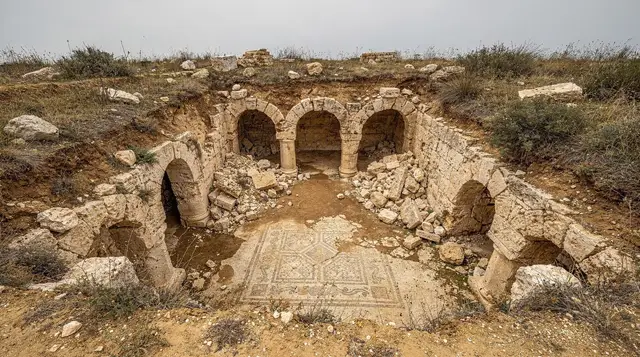
The mosaics of the Bardo, room by room highlights which rooms hold the collection’s genuine standouts, including large-format mosaics recovered from Roman villas across Tunisia, useful if two hours rather than four is all the day allows. Most visitors need at least ninety minutes for a satisfying visit and closer to three hours for a thorough one.
Day two: Carthage and Sidi Bou Said
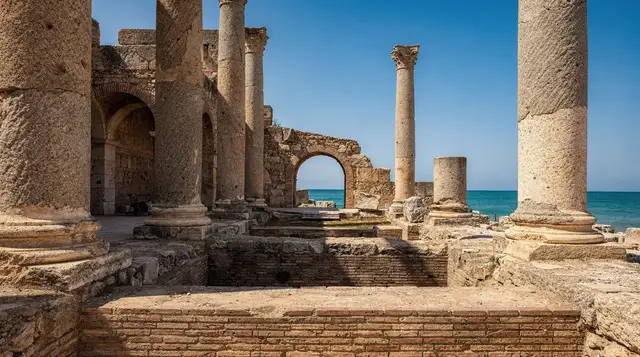
Day two follows the classic Carthage and Sidi Bou Said route, reached via the TGM light rail from Tunis Marine station. Carthage is not a single ruin but a scattered set of Punic and Roman sites across a modern suburb; realistically, pick two — Byrsa hill with its museum and panoramic view, plus either the Antonine baths or the Roman villas — rather than attempting all of them.
A complete visitor guide to the Carthage archaeological sites and the Carthage multi-site ticket, and how to use it well cover the practical details, including which sites the ticket actually includes.
A day tour combining Carthage, the Bardo, Sidi Bou Said and the medina with lunch compresses this whole two-day itinerary into a single long guided day, which is worth considering if a shorter stay becomes necessary, though it makes for a genuinely packed day rather than the more comfortable two-day pace described here.
From Carthage, continue on the TGM to Sidi Bou Said for the afternoon. The blue-and-white streets, the lookout point over the bay and the cafés of Sidi Bou Said — Café des Nattes chief among them — make a naturally lighter close to the trip than another archaeological site would.
An alternative split: culture one day, ruins the next
Some visitors prefer grouping the Bardo with Carthage instead, since both are Roman-focused, and keeping the medina and Sidi Bou Said — the two most walkable, least physically demanding stops — together on the other day. Either split works logistically; the version above simply keeps day one entirely within the city centre and day two on the TGM corridor, which minimises backtracking.
A VIP tour covering Carthage, Sidi Bou Said, the medina and the Bardo with pickup is a private, higher-comfort version of the same combination, useful for visitors who’d rather not manage the TGM and taxis themselves across two separate days.
Where to stay for this itinerary
Basing yourself in central Tunis — Ville Nouvelle along Avenue Habib Bourguiba, or the Belvédère district — keeps both days’ logistics simple, since the medina, the Bardo and the TGM to Carthage are all within a short taxi ride. Where to stay in Tunis compares neighbourhoods in more detail, including La Marsa and Gammarth for visitors who’d rather be near the coast and commute in for the medina and Bardo days.
Evenings in Tunis
Evenings work well spent along Avenue Habib Bourguiba in Ville Nouvelle, where the wide, tree-lined boulevard and its French colonial-era buildings make for an easy after-dinner walk, or in Les Berges du Lac, the newer lakeside district with a different, more contemporary restaurant scene. Neither evening needs advance planning the way the daytime stops do, which makes them a useful buffer if either day runs long.
Mint tea and café culture in Tunisia is worth reading if the plan is simply to sit somewhere and watch the evening unfold rather than seek out a specific restaurant — café culture is a genuine part of Tunis life, not just a tourist activity, and a strong mint tea with pine nuts after dinner is a fairly standard way to close either day.
A note on cost across the two days
| Bardo museum entry | A modest fixed fee, worth checking current pricing on arrival |
| Carthage multi-site ticket | Around 12 TND, covering several sites |
| Taxis (Bardo leg, medina transfers) | 15-25 TND total across two days |
| TGM tickets (Carthage and Sidi Bou Said) | A few dinars each way |
| Two lunches and one dinner | 60-100 TND per person, mid-range restaurants |
Independent travel keeps the two days toward the lower end of this range; a private guided version, such as a private tour covering the medina, Carthage, Sidi Bou Said and the Bardo, costs more per person but bundles transport, tickets and a guide’s narration into a single booking, which some visitors find worth the premium for a short stay.
What two days still leaves out
Two days does not extend to La Marsa’s promenade, Carthage’s Punic ports, or any day trip beyond the immediate city — Dougga, Hammamet and the Sahara all need additional time. Three days in Tunis adds La Marsa without changing the pace much, and how many days do you need in Tunis? weighs the trade-offs between a compact city stay and a longer trip that reaches further into the country.
Is two days the right length?
Mistakes to avoid
Frequently asked questions about two days in Tunis
Is two days enough to see Tunis’s main highlights?
Yes, for the medina, the Bardo, Carthage and Sidi Bou Said together, two days is a comfortable, well-tested length that avoids rushing any single stop.
Should I do the Bardo on day one or day two?
Either works; pairing it with the medina on day one keeps both stops within the city centre, while pairing it with Carthage groups the Roman-focused sites together. This itinerary uses the first split.
How do I get to the Bardo museum?
A taxi from central Tunis takes 15-20 minutes; the metro léger also serves the Bardo but involves more walking at the station end and takes somewhat longer door to door.
Can I do this itinerary without a car?
Yes. Taxis cover the Bardo leg, and the TGM covers Carthage and Sidi Bou Said directly from Tunis Marine station; no rental car or driver is required.
What if the Bardo museum is closed on the day I planned?
Check current opening days before finalising your schedule, since Tunisian museums typically close one weekday. If closed, swap day one and day two so the Bardo falls on an open day.
Is this itinerary suitable for a first visit to Tunisia?
Yes, this is one of the more common first-visit combinations, covering the country’s most significant Roman and Punic heritage sites alongside the medina’s living old-town character.
How much walking is involved across the two days?
A moderate amount — the medina and Sidi Bou Said both involve sustained walking on foot-only lanes, while the Bardo and Carthage mix walking with taxi or TGM legs between points.
Would a guided tour work better than doing this independently?
Both work well. Independent travel via TGM and taxis is straightforward and cheaper; a guided tour adds narration at each site and removes the need to plan transport, at a higher cost.
Is the Bardo museum worth it if I’m not especially interested in mosaics?
Yes, though enthusiasm helps. The scale of the collection and the setting inside a former beylical palace tend to win over even visitors who arrive lukewarm about Roman-era decorative art, and the highlights room-by-room guide narrows the visit to the pieces most people find genuinely striking rather than requiring an exhaustive tour of every gallery.
tours.2 days
Verified deep-linked GetYourGuide tours. Book through these links and we earn a small commission at no cost to you.
These are our own photographs of Tunisia, not the operator's pictures of this tour — open the tour page to see those.