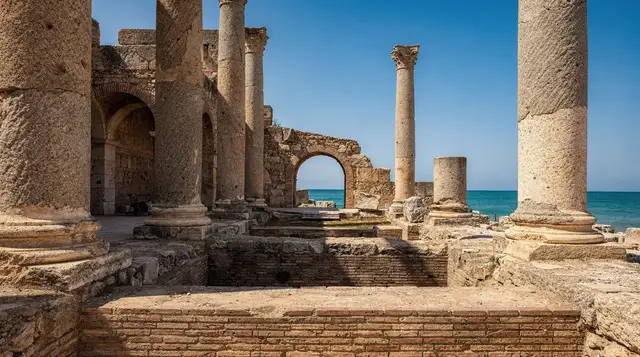
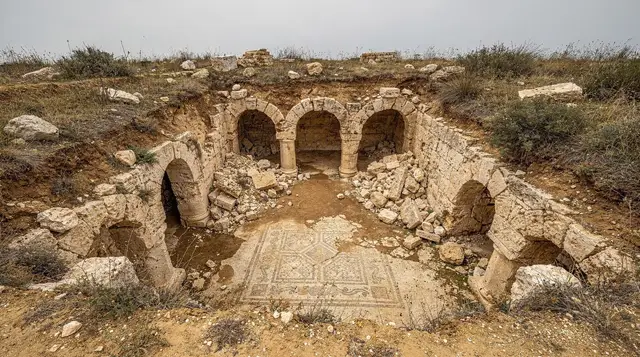
Korbous is a small village built into the cliffs of the western Cap Bon coast, known for one thing: hot mineral springs that emerge from the rock at temperatures hot enough to need cooling before you can comfortably bathe in them. People have been coming here for the water since Roman times, and the village today is still organised around it, with a public bathhouse, a couple of hotel spas and little else. It is not a place with a broader sightseeing programme, and that is the point — Korbous is a stop for the water, on a road that happens to run along one of the more scenic stretches of this coastline.
| Where | Western coast of the Cap Bon peninsula, below the hills near Zaghouan |
| Cost | Public baths from around 5 to 10 TND; hotel spa access higher, around 30 to 60 TND |
| Time needed | Two to three hours for the springs, half a day with lunch and the coast road |
| Getting there | Easiest by car or organised tour; public transport is limited and slow |
| Best time | Cooler months, when hot mineral water is actually appealing rather than uncomfortable |
A springs village, not a sightseeing town
Korbous has no medina, no significant ruins and no museum. What it has is a source of naturally hot water emerging directly from the cliff face, channelled into a public bathhouse and a couple of hotel facilities, plus a scattering of small cafés serving the people who come for the water. The road down into the village, cut into the hillside above the sea, is genuinely attractive in its own right, and for many visitors the drive is as much a part of the experience as the springs themselves. If you are coming from Nabeul or Kelibia, treat Korbous as a detour built around this one activity rather than a full stop on your itinerary.
The thermal springs and how to use them
The water at Korbous emerges from several sources along the cliff at genuinely high temperatures, historically used for treating rheumatism and skin conditions as much as for relaxation. The public baths are basic — functional pools and tiled rooms rather than a designed wellness experience — and are used mostly by Tunisians rather than foreign visitors, which keeps prices low and the atmosphere unpretentious.
Korbous-les-Bains: Relaxing day with access to the thermal baths packages a day with transport and bath access together, useful if you don’t want to work out the public bathing etiquette and opening hours on your own. For a broader look at what thermal bathing culture in Tunisia involves, and how Korbous compares to spa-hotel alternatives, see thalassotherapy in Tunisia.
Water temperature at the source can run uncomfortably hot, and the baths dilute or cool it to a bathable level; if you have a heart condition or are pregnant, check with the bath staff before going in, as they will tell you honestly whether a particular pool is too hot for you rather than assuming you know.
Getting there
Korbous sits down a winding coastal road that is scenic but slow, and it is genuinely awkward to reach without a car. Louages exist from Nabeul and occasionally from Soliman, but frequency is low and the timetable is not built around visitor convenience. This is one of the few Cap Bon destinations where an organised tour is usually the more practical choice rather than simply the more comfortable one. VIP Tour: Korbous Hot Springs and El Haouaria Day Trip pairs the springs with the cliffs and caves at El Haouaria, which makes more sense of the drive than visiting Korbous alone.
| From | Mode | Approximate time |
|---|---|---|
| Nabeul | Louage (infrequent) or car | 45 minutes to 1 hour |
| Soliman | Car | 30 to 40 minutes |
| Tunis | Car | 1 hour 15 to 1 hour 30 |
| Hammamet | Organised tour or car | 1 hour to 1 hour 15 |
A history that predates the Ottomans
Roman-era writers already described bathing at Korbous, and archaeological traces around the springs suggest organised use of the site goes back further still, making this one of the longer continuously used thermal sites on the North African coast rather than a facility built for modern tourism.
The current bathhouse infrastructure is comparatively recent, dating mostly from the twentieth century, but the underlying draw, hot mineral water emerging directly from a cliff above the sea, has not changed in two thousand years. That continuity is part of what makes a visit here feel different from a purpose-built spa resort: you are using the same natural source that Roman soldiers and, before them, Punic settlers are recorded as having used for the same basic reason.
The coast road and viewpoints
The final stretch of road into Korbous drops steeply through pine-covered hillside with the sea appearing and disappearing below, and several informal pull-offs along the way give genuinely good views back along the cliffs. This is a road best appreciated with someone else driving, or in a car you can pull over comfortably in, since the bends are tight in places. It is one of the more underrated short drives on the peninsula, and it is a large part of why a Korbous visit tends to be remembered as a pleasant half-day even by people who found the baths themselves fairly basic.
Combining Korbous with the rest of Cap Bon
Korbous sits slightly apart from the main Kelibia–Kerkouane–El Haouaria cluster, on the western rather than eastern side of the peninsula, so it does not fit naturally into every Cap Bon day trip. Hammamet: The Golden Triangle of Cap Bon - Kelibia, Kerkouane and Korbous is one of the few tours that ties Korbous into a wider loop rather than treating it as a standalone stop, useful if you want the springs without dedicating a separate day to them.
If you would rather stay closer to your hotel, a quad tour through the hills above Hammamet is a reasonable alternative half-day activity that does not require the drive out to Korbous at all: Quad Tour on the Hammamet Hills with Hotel Pick-Up.
Planning the visit around the water
Because the springs are the point of the trip, it helps to plan the day backwards from the bath rather than forwards from the road. Decide first whether you want the plain public baths or the comfort of a hotel spa, then fit the drive and any other stop around that choice. Arriving without a plan tends to mean wandering the small seafront, finding that the part of the day you came for is the shortest, and driving home with the feeling that you could have done it more thoughtfully.
Bring a swimsuit and a towel, and something light to put on afterwards. Hot mineral water leaves most people pleasantly drowsy, so it is a poor idea to schedule a demanding activity straight after a long soak. If you are new to bathing culture in Tunisia, the practical notes in what to bring to a hammam apply here as well, even though the setting is a natural spring rather than a steam room.
Korbous within a longer Cap Bon trip
Korbous works best as one stop in a wider loop of the peninsula. Anyone with a few days to spend can see how it slots in by reading the Cap Bon loop day trip and the longer Tunis and Cap Bon in four days itinerary, both of which treat the peninsula as a connected whole rather than a list of separate attractions. For the eastern side of the peninsula, the beaches described in Kelibia and Cap Bon beaches make a natural contrast to the cliffs and hot water on this western coast.
If you are staying in the resort towns, Hammamet is the most common base for a Korbous outing, and the Hammamet day trip guide explains how the surrounding area fits together. Travellers based in the capital will find the springs easier to place after reading about the best day trips from Tunis, where Korbous sits among the other options and is honestly weighed against them.
Spa hotels and the alternatives
Not everyone wants the plain tiled pools of a public bathhouse. If you would rather have a private, more comfortable setting, the hotel facilities in the village are the closer equivalent to a resort spa. For a wider comparison of places to unwind in warm water without making the trip out to Cap Bon at all, see spa hotels near Tunis, which is useful if you decide the drive to Korbous is not worth it for your particular trip.
It is also worth being clear about what kind of experience you are choosing. A natural spring, a heated urban hammam and a seawater thalassotherapy centre are three different traditions, and each suits a different mood. The springs at Korbous are the least polished of the three and the most tied to a specific place. If that sounds appealing, you will probably enjoy the visit; if you want treatments, menus and a quiet lounge, you will be happier elsewhere.
Making the drive part of the day
The road is a large part of what makes the outing memorable, so give it room. Leaving without a tight schedule means you can stop at a viewpoint when the light is good rather than pressing on to keep to a timetable. If you are driving yourself, the practical advice in driving in Tunisia and car hire in Tunisia is worth reading beforehand, particularly for the tight bends and the habits of other drivers on coastal roads.
Those who prefer not to drive can compare options in private versus group tours in Tunisia, which helps you decide whether a shared excursion or a tailored one suits a short stop like this. Either way, the aim is the same: arrive rested, spend your time in the water rather than behind the wheel, and leave without having rushed.
Where to eat
Korbous has a small number of cafés and simple restaurants clustered around the bath area and the seafront, mostly serving grilled fish and standard Tunisian dishes rather than anything distinctive to the town. Nobody comes to Korbous for the food; eat here for convenience between the drive and the baths, and save a proper meal for Nabeul or back towards Hammamet.
Frequently asked questions about visiting Korbous
Is Korbous worth visiting if I am not interested in the hot springs?
Not really. The springs are the entire reason to come; without that interest, the coast road scenery alone is pleasant but not distinctive enough on the Cap Bon peninsula to justify the detour on its own.
How hot is the water at Korbous actually?
The springs emerge from the rock at high temperatures, hot enough that undiluted contact would be uncomfortable; the bathhouses and hotel facilities cool and dilute it to a bathable temperature before you get in.
Can I visit Korbous as a day trip from Tunis by public transport?
It is possible but slow and unreliable, since louage connections to Korbous specifically are infrequent. Most visitors from Tunis either drive or join an organised tour that includes Korbous within a wider Cap Bon route.
Is the public bathhouse at Korbous clean and well maintained?
It is functional and used mainly by Tunisians rather than being run as a tourist facility, so expect basic tiled pools and changing rooms rather than a designed spa experience. It is not dirty, but it is not polished either.
Are the hotel spas in Korbous better than the public baths?
They are more comfortable and private, generally with better facilities, at a noticeably higher price. Whether that is worth it depends on how much you value privacy over the more local, unpretentious atmosphere of the public baths.
How does Korbous compare to Hammam Lif or other hammams near Tunis?
Korbous is a natural thermal spring rather than a heated hammam bathhouse, which is a different tradition and experience; see your first hammam in Tunisia for how the more common urban hammam experience works if that is what you are actually after.
Is Korbous suitable for people with health conditions?
Ask the bath staff before entering if you have a heart condition, are pregnant, or have any concern about hot water bathing; they deal with this regularly and will advise honestly rather than assume you know the risks.
What else is near Korbous worth combining into the same day?
El Haouaria’s cliffs and falconry sites are the most natural pairing given the road layout, and Zaghouan’s Roman water temple is reachable on the same general drive if you have a full day and a car.