The Cap Bon loop in a day
Can you loop the whole Cap Bon peninsula in a day?
Yes, with a car and an early start. A full loop taking in Nabeul, Kelibia, El Haouaria and Kerkouane covers roughly 150-180 km and is realistic in a long day, though it leaves little slack for lingering at every stop.
Cap Bon is the fat peninsula that juts north-east from Hammamet and Nabeul towards Sicily, and a loop around its coast road strings together pottery towns, fishing ports, a Punic city and a windswept cape in a single long drive. It is not a peninsula most first-time visitors to Tunisia get to, since it sits off the main Tunis-Sousse-Djerba axis that most itineraries follow, which is exactly its appeal for travellers who have already done Carthage and the medina and want a day that feels less scripted. Doing the full loop in a day is realistic with a car and a 7am start; without one, it needs either a tour or a decision to see only part of it.
| Where | Cap Bon peninsula, from Nabeul to El Haouaria and Kelibia |
| Cost | Fuel and tolls if self-driving; otherwise the cost of an organised tour |
| Time needed | Full day, 10-11 hours for the complete loop |
| Getting there | Car via Hammamet and the GP1/GP9, or a guided tour from Tunis or Hammamet |
| Best time | Spring or autumn; the coast road is exposed with little shade in high summer |
Why a car changes everything here
Cap Bon does not have a coherent public transport loop. Louages connect the larger towns — Nabeul, Kelibia, Menzel Temime — to Tunis and to each other, but stitching together a full circuit in one day on louages alone means multiple changes, unpredictable waits, and very little time actually at each stop. This is one of the guides on this site where we say plainly: if you do not have a car, do not attempt the full loop independently in a single day. Either book a guided route, like the full-day Cap Bon peninsula tour from Tunis or Hammamet, or scale your ambitions down to one or two towns reachable directly by louage from Tunis or Hammamet.
If you do have a car, the peninsula is compact enough that a clockwise or counter-clockwise loop starting from Hammamet works comfortably in a long day, with the interior route back through Grombalia offering a faster return than retracing the coast road.
Nabeul: pottery and the morning market
Most loops start at Nabeul, Tunisia’s ceramics capital, where entire streets are given over to pottery workshops and showrooms. The quality and style vary enormously, from mass-produced tourist pieces to genuinely skilled hand-painted work, and the difference is usually visible if you take the time to look rather than buy from the first stall. Our Nabeul pottery and ceramics guide covers what is worth buying and roughly what to expect to pay. If your visit coincides with Nabeul’s Friday market, budget extra time — it is one of the larger weekly markets in the region and draws crowds from well beyond the town itself.
The artisans and ancient history full-day Cap Bon experience is built around exactly this kind of craft-focused stop, pairing Nabeul’s workshops with some of the peninsula’s older sites for travellers who want the cultural thread rather than just a scenic drive.
Kelibia: the fort and the fishing port
Kelibia sits at the peninsula’s eastern corner, its Byzantine-era fort standing on a headland above a working fishing harbour that supplies much of the country’s fresh seafood. The fort is worth the short climb for the views alone, taking perhaps thirty to forty-five minutes including the walk up. Kelibia’s port area is a good lunch stop — the seafood here is about as fresh as it gets in Tunisia, and prices are noticeably lower than in Hammamet’s tourist restaurants for a comparable meal. See our Kelibia and Cap Bon beaches guide for the swimming options nearby if you want to build in beach time.
El Haouaria: the cape and the cliffs
At the peninsula’s northern tip, El Haouaria is a small town best known for its Roman-era stone quarries carved into the cliffs and, seasonally, for falconry — El Haouaria hosts a falconry festival each June that draws visitors from across the country. The Roman quarries (Ghar el Kebir) are an unusual, slightly eerie site worth an hour, and the cliffs above town give some of the best coastal views on the whole peninsula. This is the furthest point on the loop from Hammamet, so factor in the return drive when timing your day.
| Stop | Approx. time | Highlight |
|---|---|---|
| Nabeul | 1-1.5 hours | Pottery workshops, Friday market |
| Kelibia | 1.5-2 hours | Fort, fishing port, lunch |
| El Haouaria | 1-1.5 hours | Roman quarries, cliff views |
| Kerkouane | 45-60 minutes | Only intact Punic city site in Tunisia |
Kerkouane: the Punic city that survived
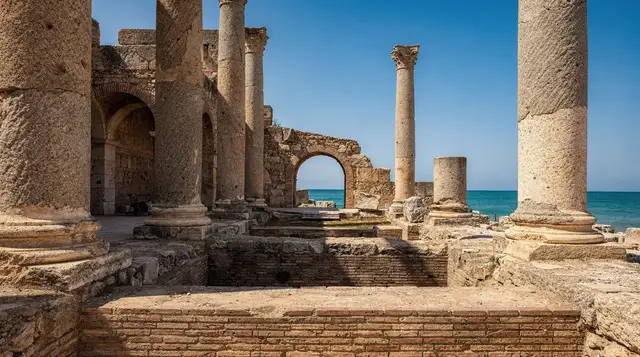
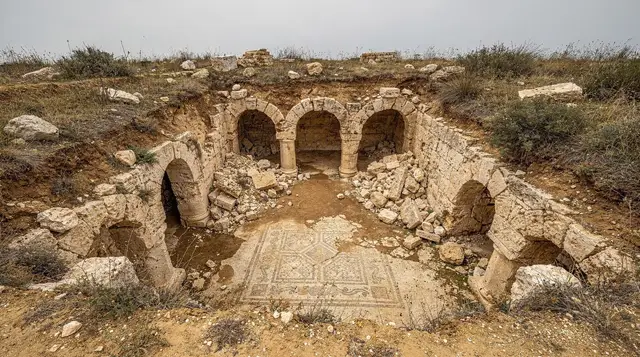
Between Kelibia and El Haouaria on the eastern coast lies Kerkouane, an archaeological site with a claim that sets it apart from every other ruin in the country: it is the only Punic city known to have survived without being rebuilt by the Romans, abandoned after the First Punic War and never resettled. The layout of streets, houses and even bathtubs is visible at ground level in a way that Carthage, rebuilt repeatedly by Rome, no longer offers. It is a smaller site than Carthage and needs less time — most visitors spend forty-five minutes to an hour — but the historical rarity makes it one of the more genuinely distinctive stops on the loop, and one that is easy to skip by travellers who have not heard of it. Do not skip it.
Building the loop and timing it realistically
A full clockwise loop from Hammamet — Nabeul, Kelibia, Kerkouane, El Haouaria, then back inland via Grombalia — covers roughly 150-180 km depending on your exact route and any detours. Driven without stops it is three to four hours of driving alone, which leaves six to seven hours for the four main stops plus lunch if you start by 8am and want to be back by early evening. This is workable but tight, and it means treating each stop as a focused visit rather than a leisurely wander. If that pace does not appeal, cut El Haouaria or Kerkouane and do a shorter eastern-half loop instead, or spread the full route over a night in Kelibia rather than a single day.
The private Cap Bon day tour from Tunis with lunch and the trip around Cap Bon and Nabeul from Hammamet both handle this timing and routing question for you, which is a real advantage on a peninsula where the driving between towns is genuinely a bigger share of the day than at, say, Carthage and Sidi Bou Said, where everything sits close together.
For readers deciding whether Cap Bon fits their trip at all, our best day trips from Tunis hub compares it against shorter, easier alternatives like Carthage or Sidi Bou Said, and the things-to-do day trips hub gives a broader sense of what else is realistic within a day of Tunis.
Beaches along the way
Cap Bon’s eastern coast, particularly around Kelibia and down towards Kerkouane, has some of the least developed beaches within reach of Tunis, without the hotel density of Hammamet. If beach time is part of your plan, build in a stop rather than treating the whole day as a driving-and-sightseeing circuit — even twenty minutes at the water breaks up a day that is otherwise mostly spent behind the wheel or in a tour van.
Counter-clockwise versus clockwise
Which direction you drive the loop changes the rhythm of the day more than it might seem. Going clockwise from Hammamet — Nabeul first, then Kelibia, Kerkouane and El Haouaria before cutting back inland — front-loads the shopping and market stop at Nabeul while your energy is freshest, and saves the dramatic cliff scenery at El Haouaria for later in the day when the light is often better for photography.
Going counter-clockwise, starting with the interior road towards El Haouaria first, gets the longest single drive out of the way early, before traffic builds on the coast road, and leaves Nabeul’s pottery shops for the end of the day when you have a clearer sense of how much luggage space you actually have left for purchases. Neither direction is objectively better; it depends on whether you would rather shop early or drive the longest stretch early.
Combining the loop with a longer Tunis-area itinerary
Travellers spending a week or more around Tunis sometimes fold the Cap Bon loop into a broader itinerary rather than treating it as an isolated day trip. Our four days in Tunis and Cap Bon itinerary spreads a version of this route across a longer stay, giving each stop more breathing room than the single-day version allows, and pairing it with time in Carthage and the Tunis medina.
If your trip includes both a Roman-heritage focus and Cap Bon, the Roman Tunisia in five days itinerary threads Kerkouane in alongside Dougga, Bulla Regia and Carthage, which makes sense of the peninsula’s Punic history within a wider historical arc rather than as a stand-alone curiosity.
Practical notes
Fuel stations thin out once you are past Nabeul and Kelibia, so fill up before setting off around the peninsula’s less developed stretches. Mobile signal is generally fine throughout but can drop in patches around El Haouaria’s cliffs. Restaurant options outside Nabeul, Kelibia and Hammamet are more limited, so do not assume you will find lunch wherever you happen to be at midday — plan your lunch stop around Kelibia’s port, which has the most reliable choice of places to eat.
Wind is a genuine factor on Cap Bon, particularly around El Haouaria and the northern cliffs, where the meeting of two seas creates conditions strong enough that the area is known within Tunisia for kitesurfing and windsurfing. A light jacket is worth keeping in the car even on a warm day, since the cliff-top viewpoints can feel considerably cooler than the sheltered streets of Nabeul or Kelibia. If you are travelling in the cooler months, from November to March, expect some restaurants and smaller guesthouses in the less touristed stretches to operate reduced hours, since the peninsula’s tourism outside Hammamet and Nabeul is more seasonal than the coast further south.
Road signage on the peninsula is in Arabic and French, consistent with the rest of the country, and place names on paper maps or older GPS data sometimes use slightly different French transliterations than current road signs — Kélibia versus Kelibia, for instance — which is worth knowing so an unfamiliar spelling on a signpost does not throw off your navigation.
Mistakes to avoid
Frequently asked questions about the Cap Bon loop
Is Cap Bon worth a full day, or just a stop at Nabeul?
If your time is very limited, Nabeul alone is a reasonable half-day add-on to a Hammamet stay. The fuller loop, including Kerkouane and El Haouaria, rewards a full day and shows a side of Tunisia most itineraries skip entirely.
Can I do the Cap Bon loop without a rental car?
Not comfortably in a single day. Louages connect Cap Bon towns to Tunis and Hammamet individually, but a full circuit needs either your own car or an organised tour.
How does Kerkouane compare to Carthage?
Kerkouane is much smaller but structurally more intact at street level, since it was never rebuilt after its abandonment. Carthage has a longer, richer history spanning multiple civilisations but far less of the original Punic layout survives there. Our Carthage archaeological sites guide covers that site in full.
Is the Cap Bon coast road safe to drive?
Yes, it is a well-maintained coastal road, though narrower and less lit than the A1 motorway. Daytime driving is straightforward; night driving on the more rural interior stretches is best avoided if you are unfamiliar with the route.
What is the best month to do the Cap Bon loop?
April, May, September and October offer the most comfortable driving and walking conditions. Midsummer heat on the exposed coast road and cliffs around El Haouaria can be tiring for a long day of stop-and-go sightseeing.
Do I need to book the artisans and history tour in advance?
Booking a day or two ahead is sensible in the shoulder and high seasons, since smaller group tours have limited capacity.
Is there anywhere to stay overnight on Cap Bon if a day trip feels too rushed?
Kelibia and Nabeul both have hotel options, and splitting the loop over two days with a night in Kelibia is a reasonable alternative if the single-day pace does not suit you.
How does the Cap Bon loop compare to a Hammamet beach day?
They serve different purposes: a Hammamet beach day is about relaxing in one place, while the Cap Bon loop is a driving-and-sightseeing day covering several towns. Combining both in the same trip, on separate days, is a common and sensible approach.
Best day trips from Tunis on GetYourGuide
Verified deep-linked GetYourGuide tours. Book through these links and we earn a small commission at no cost to you.
These are our own photographs of Tunisia, not the operator's pictures of this tour — open the tour page to see those.