Tunis in autumn
What is autumn like in Tunis?
Warm and settling gradually, from summer-like heat in September to mild, comfortable conditions by November, with daytime temperatures moving roughly from the high twenties down to the high teens Celsius. The sea stays swimmable well into October, and crowds thin steadily after the summer peak.
Autumn in Tunis, September through November, is spring’s quieter sibling: broadly the same comfortable temperature range, but arrived at from the opposite direction, cooling down from summer rather than warming up from winter, and with the considerable bonus of a sea that’s had all summer to warm and stays swimmable for weeks after the crowds have thinned. It’s consistently rated alongside spring as the best time to visit, and the two seasons genuinely do trade places depending on what you weight most: autumn wins on sea temperature, spring wins on countryside greenery and slightly more reliable dry weather. This guide covers what the three autumn months actually look like.
| Temperature range | Roughly 20–28°C by day, cooling through the season |
| Rainfall | Low in September, increasing gradually through November |
| Coastal crowds | High in early September, thinning steadily after |
| Sea temperature | Warm through September and October, cooling by November |
| Best for | Sightseeing plus late beach time, day trips, Roman sites |
September: summer’s last stretch, with fewer people
September opens still firmly in summer’s grip temperature-wise, often into the high twenties or touching 30°C in the first half of the month, but with a genuinely different feel to July and August: European school holidays have ended, coastal towns like Hammamet and Sousse noticeably quieter, and hotel prices beginning to ease from their peak-summer highs. The sea is at its warmest of the year in September, arguably better swimming than midsummer since the water has had the full season to heat up. It’s an excellent month for combining beach time with sightseeing, since the crowd pressure on sites like the medina and Carthage has already dropped from its August peak.
A guided tour to Kairouan and the El Jem Colosseum from Tunis is a good early-autumn choice, since September’s slightly lower temperatures than August make the largely shadeless walking at El Djem considerably more comfortable.
October: the strongest all-round month
If pressed to pick a single best month for a Tunis trip, many repeat visitors land on October. Temperatures settle into a genuinely comfortable range, low-to-mid twenties Celsius by day, crowds have thinned well below the summer peak, and the sea, while past its warmest, is still swimmable for much of the month along sheltered stretches of coast. It’s also a strong month for Roman sites, cool enough for extended walking at Dougga or Bulla Regia without the exhaustion that midsummer heat brings, while still warm enough that a jacket is optional rather than essential.
| Month | Avg. daytime high | Sea temperature | Crowd level | Rainfall |
|---|---|---|---|---|
| September | 26–30°C | Warm to very warm | Moderate, easing from summer | Low |
| October | 22–26°C | Warm, cooling | Low to moderate | Low to moderate |
| November | 17–21°C | Cool | Low | Moderate |
A beginner pottery workshop on a farm near Tunis is a pleasant addition to an October itinerary, an outdoor-adjacent activity that doesn’t demand the heat tolerance a similar outing would need in high summer.
November: cooling toward winter, still workable
By November, autumn is clearly giving way to the cooler months, daytime temperatures typically in the high teens, occasionally touching 20°C on a mild day, and rainfall becoming more of a feature than an occasional event. It’s not a beach month, the sea has cooled beyond comfortable swimming for most visitors by this point, but it remains a good month for the medina, museums and Roman sites, all comfortable to explore at length without either heat or crowds working against you. Carthage archaeological sites: a complete visitor guide and the Bardo museum both suit a November visit well.
Roman sites and day trips in autumn
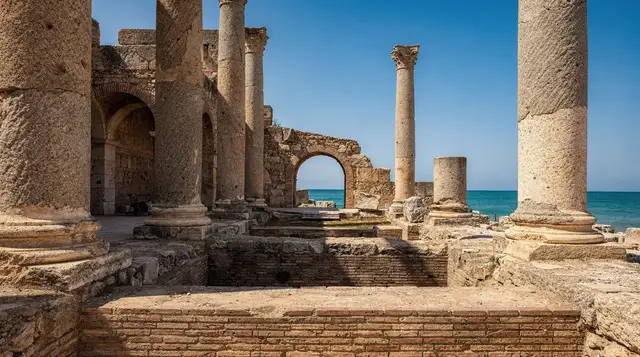
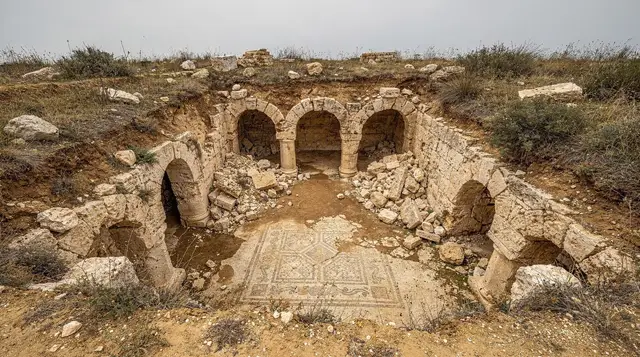
Autumn shares spring’s advantage for archaeological sites: comfortable temperatures for extended outdoor walking, without the crowds that summer brings to the more accessible locations. A private day tour covering Carthage, Sidi Bou Said and the medina is well suited to October in particular, when daylight hours are still generous enough for an unhurried full day.
It’s also, alongside spring, one of the two recommended windows for a Sahara extension; the Sahara in summer explains why the peak summer months are the harder alternative, and autumn largely avoids that problem while still offering warm, settled desert days.
Sea temperature: autumn’s real advantage over spring
This is where autumn genuinely outperforms spring for anyone weighing beach time. Because the Mediterranean has had the entire summer to warm, sea temperatures along the coast at Gammarth, La Marsa and further round the Cap Bon peninsula at Kelibia stay comfortably swimmable well into October, often several degrees warmer than the equivalent point in spring’s calendar. If a trip needs to combine sightseeing with genuine beach time rather than just a token dip, September or early October delivers both far better than April or May does.
| Priority | Better season | Why |
|---|---|---|
| Warm sea for swimming | Autumn | Water has warmed all summer; stays swimmable into October |
| Greenery around Roman sites | Spring | Wildflowers and green hillsides after winter rain |
| Lowest crowds with mild weather | Late autumn (Nov) or spring (Mar) | Shoulder edges of each season |
| Longest daylight for full days out | Early autumn (Sep) | Days are still long, temperatures easing |
A cultural walk through the capital’s most notable sights is a good lower-key option for a cooler November day, structured around a comfortable pace rather than the more ambitious full-day tours better suited to September or October’s longer daylight.
Shaping an autumn itinerary around the season
Autumn rewards a trip that shifts gear as the weeks pass. Early in the season, the sensible plan is to put outdoor effort in the morning, keep the middle of the day for the sea or a long lunch, and save the medina for the softer light of late afternoon. Later in the season the logic reverses: the middle of the day becomes the pleasant part, and the evenings turn cool enough that a late dinner outside needs a layer. If you only have a few days, a three-day Tunis itinerary or four days combining Tunis and Cap Bon both adapt easily to either end of the season, and how many days to spend in Tunis helps you decide how much to attempt.
A useful habit in this season is to leave one day deliberately loose. Autumn weather can turn from settled to showery within a day or two, particularly toward the end, and a flexible day lets you swap an exposed archaeological outing for a museum or a hammam without losing anything. Rainy day activities in Tunis is worth skimming before you arrive, and the best hammams in Tunis makes a natural fallback once evenings begin to cool.
Food, cafes and evenings in autumn
The cooler months suit the city’s café culture particularly well. Terraces that are too hot to linger on in midsummer become the best seats in town, and a slow glass of mint tea outdoors fits the season far better than it does in August. Mint tea and café culture in Tunisia explains the rituals, and the cafes of Sidi Bou Said are an easy place to put them into practice on a dry afternoon.
Heartier dishes also start to feel right as temperatures drop, which makes autumn a good moment to work through the Tunisian food guide properly rather than grazing on salads and grilled fish. For something quick between sights, street food in Tunis remains as good in November as in September, and eating while the day is still mild means you rarely have to hurry indoors.
Getting around when the weather shifts
Autumn is a comfortable time to move around on foot, which is one of the quiet pleasures of the season: the walk between sights no longer feels like an endurance test. For longer hops, getting around Tunis sets out the options, while the TGM train to La Marsa is a simple way to reach the coast on a clear day without worrying about parking. If showers are forecast, shorter legs and a covered plan for the middle of the day keep a trip on schedule, and checking the sky in the morning is usually enough to decide between an open-air site and an indoor one.
What to pack for an autumn trip
September calls for much the same as a summer trip, light clothing, strong sun protection, but by November, layers and a proper jacket for cooler evenings become genuinely necessary. Rain gear is worth packing from October onward, when showers become more frequent, even if they rarely last long. the packing list tool adjusts recommendations for the specific month you’re travelling.
Festivals and cultural events in autumn
Autumn catches the tail end of one of Tunis’s biggest annual cultural draws. The Carthage international festival, staged through summer at the Roman theatre on Byrsa hill, often runs its final performances into early September, and catching one of these later dates means the same atmospheric setting without the peak-summer heat that earlier dates in July involve.
Beyond that single festival, the wider calendar of Tunis festivals and events covers a wider spread of smaller cultural happenings that tend to cluster in the cooler months once the main summer holiday crowds have thinned, from craft markets to neighbourhood food events that rarely make it into a standard sightseeing itinerary but add real texture for anyone with a flexible schedule and a willingness to check local listings once they’ve arrived.
Beach towns beyond Tunis in autumn
The Cap Bon peninsula and the Sahel coast both hold onto summer’s warmth well into autumn, which makes September and early October a genuinely good window for combining a Tunis-based city stay with a few days on the coast. Hammamet and Nabeul are noticeably calmer than their August selves by mid-September, with beaches still busy enough to feel lively but no longer at capacity, and restaurants and shops running on a more relaxed rhythm than the peak-season crush.
Further round the peninsula, Kelibia and Korbous offer a quieter, less resort-oriented version of the same warm-sea autumn window, worth considering for anyone who finds Hammamet’s larger hotel strip a bit much even in its calmer autumn state. The best beaches near Tunis covers the specific stretches of coast worth prioritising if a few autumn beach days are part of the plan alongside the city sightseeing.
Comparing autumn to spring, directly
Both seasons land in a similar temperature range and both avoid summer’s crowds and heat, so the choice often comes down to priorities rather than one being objectively better. Tunis in spring covers the equivalent months on the other side of summer, and the best time to visit Tunis puts all four seasons side by side if you’re weighing them against each other directly, alongside Tunis weather, month by month for the specific figures.
Mistakes to avoid
Frequently asked questions about autumn in Tunis
Is September too hot, or is it a good time to visit?
September is genuinely warm, often into the high twenties or touching 30°C early in the month, but with noticeably fewer crowds than August and the warmest sea of the year, making it a strong choice overall.
Is October the best month to visit Tunis?
It’s a strong candidate: comfortable temperatures, thinning crowds and a sea that’s often still swimmable, a combination few other months match as closely.
Can I still swim in the sea in October?
Generally yes, particularly earlier in the month and along sheltered stretches of coast. By November, most visitors find it too cool for comfortable swimming.
Is autumn a good season for a Sahara trip?
Yes, alongside spring, it’s one of the two recommended windows, avoiding both summer’s extreme heat and winter’s cold desert nights.
How much does it rain in autumn in Tunis?
September and early October are typically dry; rainfall increases through late October and November, usually in short spells rather than prolonged wet weeks.
Is autumn or spring better for visiting Tunis?
Both are strong; autumn has the edge for warm-sea swimming, while spring offers slightly greener countryside around archaeological sites and more reliably dry conditions.
Are crowds still an issue in early autumn?
September can still be busy, particularly the first half, as it overlaps with the tail end of the European summer holiday season. By October, crowds have thinned considerably.
What should I pack for a November trip to Tunis?
Layers, a proper jacket for cooler evenings, and rain-ready gear, since showers become more frequent from late October onward even though they’re usually short-lived.
Seasonal experiences on GetYourGuide
Verified deep-linked GetYourGuide tours. Book through these links and we earn a small commission at no cost to you.
These are our own photographs of Tunisia, not the operator's pictures of this tour — open the tour page to see those.