One week: Tunis and the Sahara
Tunis and the Sahara feel like two different countries, and fitting both into a single week means accepting that several of these days are mostly about travel rather than sightseeing. This route keeps Tunis to a compact two days, uses a third day for Kairouan and El Djem on the way south, and then commits three full days to the desert circuit around Tozeur, Douz and Matmata before the long drive back. It’s built around organised tours rather than a rental car, since the roads south of Kairouan aren’t ones a first-time visitor should be learning at speed, and because a driver-guide who knows the sand tracks around Douz is worth far more than a map.
| Where | Tunis, Kairouan, El Djem, Tozeur, Douz and Matmata |
| Cost | Roughly 1,000–1,600 TND (about €300–480) per person for the week, excluding flights |
| Time needed | 7 days |
| Getting there | Fly into Tunis-Carthage International Airport |
| Best time | October–April; avoid the desert leg in July and August |
How the week breaks down
The shape of this route is deliberately front-loaded with a short Tunis stay, because the desert days that follow leave little energy for city sightseeing once they’re done. Two nights in Tunis, one night on the road toward the south, two nights based around Tozeur and Douz, and a final push back to Tunis for the flight home is a realistic rhythm rather than an optimistic one.
| Day | Base | Focus |
|---|---|---|
| 1 | Tunis | Medina, Bardo museum, arrival |
| 2 | Tunis | Kairouan and El Djem day trip |
| 3–5 | Tozeur / Douz | The gates of the Sahara |
| 6 | Matmata / en route | Troglodyte houses, return north |
| 7 | Tunis | Free morning, departure |
Day 1: Tunis
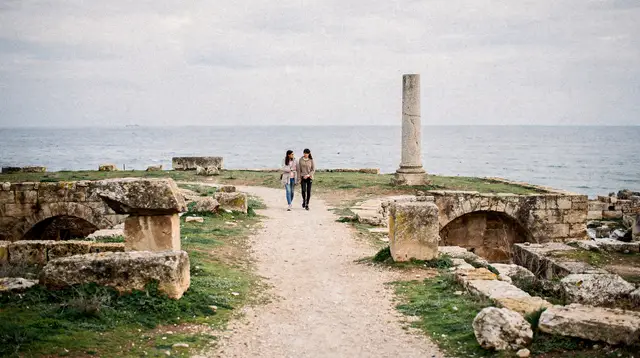
Give the first day to the city rather than rushing south immediately; the contrast is sharper if you’ve actually seen Tunis before leaving it behind. The Tunis medina walking route covers the souks and Ez-Zitouna mosque’s courtyard in a morning, and the Bardo museum guide is worth the afternoon on its own — the mosaic collection here, much of it lifted from Roman villas across the country including some near Kairouan and El Djem, gives useful context for what’s coming later in the week. The Tunis trip planning guide has a wider first-timer’s overview if this is your first stop in the country.
Day 2: Kairouan and El Djem
Kairouan and El Jem Colosseum: Guided Tour from Tunis covers both UNESCO sites in a single long day, starting with Kairouan’s Great Mosque and medina before continuing south to El Djem’s amphitheatre in the afternoon. Kairouan is Islam’s fourth holiest city and the medina here has a different texture to Tunis’s, calmer and less commercial in the non-tourist streets; the Kairouan holy city guide covers what’s actually open to visit and what isn’t. El Djem’s amphitheatre is the best-preserved Roman structure in Tunisia by a wide margin, and the amphitheatre guide covers the underground galleries most visitors miss on a rushed stop.
Anyone who’d rather build in a stop at Monastir on the way back, or who’s staying closer to the coast than central Tunis, can look at Kairouan and El Jem Private Day-Trip with Optional Monastir instead, which runs as a private vehicle with more flexibility over the return route.
Days 3–5: the gates of the Sahara
This is the heart of the trip. From Tunis to the gates of the Sahara: Tozeur and Douz in 3 days covers the long drive south, typically routing through Gafsa or Gabès before reaching Tozeur on day three, with the following two days spent working through the mountain oases, the salt lake, and on to Douz for a proper first taste of the erg. The Tozeur and the mountain oases guide covers Chebika, Tamerza and Mides, the three oasis villages built into the cliffs above dry riverbeds, which are usually visited as a half-day loop from Tozeur itself.
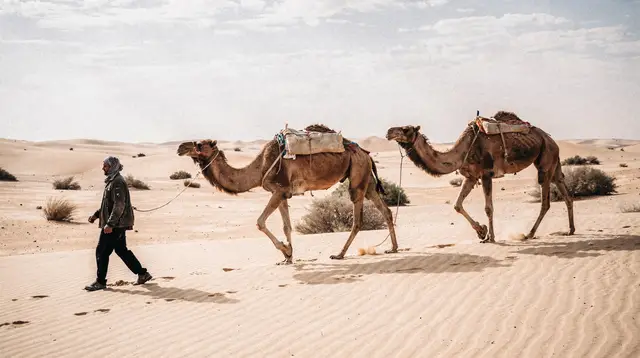
Douz, at the very edge of the Grand Erg Oriental, is where most travellers get their first real dune experience, whether that’s a short camel ride at sunset or a longer excursion further into the sand; the Douz gateway to the Sahara guide covers realistic options and prices. Along the way, the route typically crosses Chott el Jerid, the vast salt flat that turns pink and white depending on the light, and passes near several of the Star Wars filming locations scattered around this stretch of the south, which are a genuine draw for some travellers and entirely skippable for others.
A night in or near a desert camp is a common way to close out this stretch of the trip; the desert camps and bivouacs guide sets realistic expectations for what a night under canvas actually looks like, since it’s often more basic and more memorable than the marketing photos suggest. What to pack for the Sahara is worth reading before you leave Tunis, since temperature swings between day and night out here are sharp even outside summer.
Day 6: Matmata and the road north
Matmata’s troglodyte houses, dug into the hillsides rather than built on top of them, are on the way back north and make a natural stop before the long final drive to Tunis. The Matmata troglodyte houses guide covers which of the underground homes are open to visit and which are private residences that shouldn’t be treated as photo stops.
For travellers with slightly less time who want to cover El Djem, Matmata, Douz and Tozeur in a tighter loop rather than the fuller three-day version above, 2 days: El Jem, Matmata, Douz, Tozeur, Chebika and Tamerza compresses much of the same ground into two days, which suits a five- or six-day trip better than a full week.
By evening, the drive back toward Tunis is long — realistically five to six hours depending on the route and stops — so most itineraries either push through in one go or break the return with an overnight near Kairouan or Sousse rather than arriving in Tunis after midnight.
Day 7: back in Tunis
Whatever’s left of the last day tends to be a short one: a final walk somewhere you missed on day one, a last coffee in the Ville Nouvelle, or simply packing and getting to the airport with margin for the unpredictability of a week that involved several long drives. The Tunis-Carthage airport guide covers what to expect on departure.
Getting around without a car
Every long-distance leg of this route runs as an organised tour rather than a rental car, which is the right call for a first Sahara trip; the roads south of Gabès in particular include stretches where local knowledge of conditions matters more than a map. The Sahara tours from Tunis compared guide and the two-day versus three-day Sahara tour guide both go deeper into how the various desert tour lengths and routes differ if you want to adjust this itinerary’s middle section.
What this week costs
Between the length of the drives and the desert camp night, this route runs a little higher than a Tunis-only week, typically 1,000 to 1,600 TND per person for seven days excluding international flights. The Tunis budget guide breaks costs down by category, and it’s worth budgeting a little extra for bottled water and snacks during the long driving days, since roadside options thin out considerably south of Kairouan.
Common mistakes with this route
Frequently asked questions about combining Tunis and the Sahara
Is one week really enough for Tunis and the Sahara?
It’s enough, but only just. Expect two of the seven days to be largely travel, and treat this as a full, structured week rather than a relaxed holiday pace.
Do I need a 4x4 for this route?
No, standard tour vehicles and minibuses cover the sealed roads used on this route. A 4x4 only matters for excursions that go deeper into the dunes than a standard Douz camel ride or short desert drive.
Can I do this itinerary without joining an organised tour?
You can with a rental car and confidence driving long distances on unfamiliar roads, but most first-time visitors are better served by an organised tour for the desert leg specifically, given the distances and the value of local route knowledge.
What should I pack for the desert nights?
Layers. Even outside summer, temperatures can drop into single digits Celsius after dark, which surprises visitors who only planned for daytime heat. The Sahara packing guide has a fuller list.
Is Matmata worth the stop if I’ve already seen Tozeur and Douz?
Yes, it’s a genuinely different sight — underground courtyard homes rather than oasis towns — and it sits conveniently on the return route north, so it doesn’t add significant extra driving.
Should I book the desert camp night in advance?
Yes. Camp capacity is limited and demand is highest in the cooler months, which is also when most visitors are travelling, so booking a few weeks ahead is worth it in October through April.
Can this itinerary be shortened to five or six days?
Yes, by dropping the Kairouan and El Djem day and using the two-day desert loop covering El Djem, Matmata, Douz and Tozeur instead of the three-day version, which condenses the same core stops into less time.
How hot does the Sahara get outside summer?
Daytime temperatures from October to April are usually comfortable, often in the low-to-mid twenties Celsius, though nights can still be cold. Summer is a different matter and best avoided for this leg.
Sahara desert tours on GetYourGuide
Verified deep-linked GetYourGuide tours. Book through these links and we earn a small commission at no cost to you.
These are our own photographs of Tunisia, not the operator's pictures of this tour — open the tour page to see those.