Taking children into the Tunisian Sahara
Is the Sahara safe and enjoyable for children?
Yes, for most families, provided you go outside the summer months and keep the desert portion to a day trip or one night rather than a multi-day trek. Toddlers and children under five are the hardest age to manage because of heat, boredom on the long drive and toilet limitations; from about six upward, short camel rides, quad biking (with age limits) and dune sledding tend to go down well.
Parents ask about the Sahara more than almost any other part of a Tunisia trip, usually because the photos look extraordinary and the practicalities look uncertain. The honest answer is that it can be a genuinely memorable family experience, but the desert itself doesn’t adjust to a child’s tolerance for heat, long car journeys or unfamiliar toilets, so the trip has to be built around the child rather than the other way round.
This guide sets out realistic age bands, what the drive actually involves, which activities work and which don’t, and how to decide between a day trip and a night in a camp. None of it is meant to talk anyone out of going — most families who plan around the heat and the distance have a good time — but it is meant to replace the marketing-brochure version with what actually happens on the ground.
| Best age | From around 6 upward for comfort; possible with toddlers and under-5s with real caveats |
| Best season | November to March; avoid June to August entirely with young children |
| Drive time from Tunis | 6–7 hours to Douz; shorter options from Hammamet and Sousse still run 3–5 hours to the desert fringe |
| Realistic duration | Day trip or one night; multi-day treks are not a good fit for most children |
| Cost band | Family of four should budget roughly 250–600 TND (about €75–180) for a day or overnight desert excursion, transport included |
Who the Sahara actually suits
The desert rewards children who can sit through a long car journey without a meltdown, who can handle a few hours of heat and dust without constant supervision, and who get something out of landscape and novelty rather than needing constant activity. In practice that tends to mean children from about six or seven upward, and it tends to mean it goes better with an only child or a small group of siblings who can occupy each other than with a toddler who still needs naps on a schedule. None of that is a hard rule — plenty of families take three-year-olds to Douz and have a fine time — but it does mean the under-fives trip needs more planning around naps, snacks and shade than the over-sevens trip, where the main job is sun cream and water.
Toddlers and under-5s
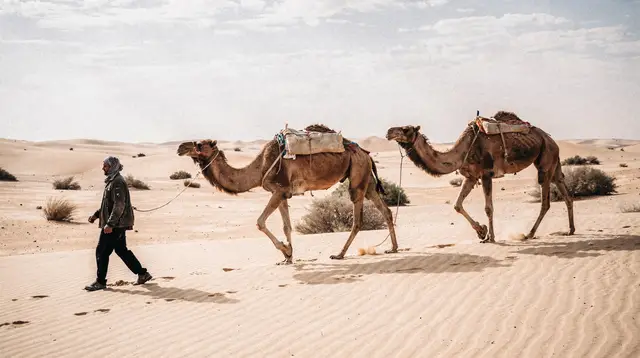
Children this age are the hardest to manage in the Sahara, not because anything there is inherently dangerous to them but because heat exhaustion sets in faster in small bodies, they can’t always tell you they’re thirsty or overheated before it becomes a problem, and a six-hour drive each way tests everyone’s patience. If you’re taking a toddler, keep the desert portion to a single day trip rather than an overnight camp, travel in the cooler months, and build in far more stops than you think you need. A short camel ride led by a handler, five or ten minutes, tends to be the ceiling of what’s worth attempting at this age — it’s the photograph rather than the adventure that matters here.
Children aged 6 to 11
This is where the Sahara starts to earn its reputation as a family highlight. Kids in this range are usually old enough to handle a short camel ride properly, get a genuine thrill from dune sledding, and are young enough that jeep tracks over the dunes still feel like an adventure rather than a bumpy inconvenience. A one-night stay works well for many families in this age band, provided expectations about toilets and food are set correctly beforehand — more on both below.
Teenagers
Teenagers are, in some ways, the easiest group: they can handle the drive with headphones and a book, they’re old enough for quad biking where operators allow it, and the Star Wars filming locations around Matmata and Tataouine (covered further down) tend to land better with this age group than with younger children who haven’t seen the films. The main risk with teenagers is boredom if the trip is pitched as scenery alone rather than activity, so building in at least one adrenaline element — a quad tour, a longer 4x4 route, or a proper sunset camel ride rather than a token five minutes — tends to keep them engaged.
If you are still deciding whether the desert is the right choice for your family at all, the family day trips from Tunis and Tunis with kids guides cover gentler options closer to the capital, and Tunis with teenagers is worth a look if your children are older. Many families end up combining the two, with a few easy days around the city before the long drive south, as in the Tunis family itinerary.
Heat and season: this is the decision that matters most
Tunisia’s Sahara reaches genuinely dangerous temperatures in summer, regularly touching 40°C and above between June and August, and it does so with very little shade once you’re away from a town. This is not a “pack more sun cream and push through” situation for children — heat exhaustion and heat stroke happen faster in kids than in adults, and a car breakdown or a delayed return in that heat with a small child is a serious problem, not an inconvenience. Our /guides/the-sahara-in-summer/ guide goes into more detail, but the short version for families is: don’t take young children into the Sahara in July or August.
Outside that window, conditions are far more forgiving. November through March brings daytime temperatures that are warm rather than punishing, generally in the low-to-mid twenties Celsius, with cool evenings that make an overnight camp genuinely pleasant rather than an endurance exercise. Spring (March–April) and autumn (October) sit in between and are good compromise months if school holidays force your hand. Our /tools/best-time/ tool and the /guides/best-time-to-visit-tunis/ guide can help match a trip to term dates if summer is the only window available — in which case, lean toward a shorter day trip with an early start and a return before the early-afternoon peak, rather than a full day out in the sun.
The drive: further than it looks on a map
This is the part families most consistently underestimate. Douz, the usual base for Sahara excursions, is around 470 km from Tunis — six to seven hours by road even with good traffic, mostly motorway south to Gabès followed by secondary roads west. Our /blog/the-long-road-to-douz/ post covers what that drive is actually like from the passenger seat. From Hammamet or Sousse the distance is a little shorter but still substantial, typically three to five hours to reach the desert fringe around Tozeur, Kebili or the edge of Douz itself, depending on the exact route and stops.
With children, the sensible approach is to break the drive rather than attempt it in one push. Kairouan or El Djem make natural stopping points on the route south from Tunis, turning a single gruelling day into two more manageable half-days.
Several operators build this into a two-day Sahara tour from Hammamet with accommodation or a two-day Sahara tour from Sousse or Monastir, which spreads the driving across two days and includes a proper night’s sleep partway through rather than asking a child to sit still for seven hours straight. If you’re self-driving, plan on stopping every ninety minutes to two hours regardless of how the child seems to be coping — dehydration and restlessness build up before they become obvious.
Whether you drive yourself or go with a driver is also a family decision. The car hire in Tunisia and driving in Tunisia guides explain what self-driving involves, while private vs group tours in Tunisia helps you weigh a private vehicle, where you control the stops, against a shared minibus on a fixed schedule. For a broader comparison of what is on offer, see Sahara tours from Tunis compared.
Activities that work with kids, and ones that don’t
Not every classic Sahara activity suits a family group, and matching the activity to the age of the child avoids a lot of disappointment on the day. The table below is a rough guide rather than a strict rule — know your own child — but it reflects what tends to go well in practice.
| Activity | Works well for | Less suitable for |
|---|---|---|
| Short camel ride (10–30 min, led) | Most ages, including toddlers with a parent alongside | None really, though very young toddlers may need to be held on |
| Dune sledding | Ages 6+ | Under-5s (control and balance are limited) |
| Quad biking | Typically 14+ to drive solo, check operator minimum age | Younger children, who usually ride as a passenger only if at all |
| Jeep/4x4 dune tour (short) | Most ages; bumpy but seated | Children prone to motion sickness on rough terrain |
| Multi-day camel trek | Teenagers with genuine stamina and interest | Under-12s generally, and anyone who dislikes heat or basic camping |
| Long 4x4 day (6+ hours off-road) | Teenagers, adults | Younger children — exhausting and physically jarring |
Multi-day camel treks deserve a specific note: they’re a wonderful experience for the right traveller, but they mean full days on a camel, basic toilet arrangements, cold nights and a genuine physical toll, none of which suits most children under about twelve. If a longer trek genuinely appeals, the three-day Sahara desert camel trek from Douz is the real version of that experience — but it’s better suited to a teenager who wants it than to a family group with a range of ages.
For more on the animals and the practicalities of riding, camel trekking in Tunisia explains how a ride is organised, and Douz, gateway to the Sahara describes the town where most of these activities start. The Douz destination page and Ksar Ghilane’s hot spring are also worth reading if your family likes the idea of a swim in the middle of the desert.
Toilets and hygiene at a desert camp
This is the detail that catches families out more than heat or distance. Desert camps range from fairly well-equipped, with proper long-drop or composting toilets in a separate tent, through to genuinely basic — a spade and a patch of dune some distance from camp. Ask the operator directly what facilities are provided before booking if you have a young child who isn’t confident using an unfamiliar toilet, or who is mid-toilet-training; this is a completely reasonable question and any decent operator will answer it plainly.
Bring your own toilet paper, hand sanitiser and wet wipes regardless of what’s promised, since supplies at a desert camp can run short. For toddlers still in nappies, pack more than you think you’ll need and a way to carry rubbish out, since bins are not a given at a remote camp.
Washing facilities are similarly variable — some camps offer a bucket shower or a basic tap, others offer nothing beyond wipes. If a proper wash is important to your family’s routine, ask before you commit rather than discovering the gap once you’ve arrived.
Food for fussy eaters
Desert camp meals are typically a set menu built around a tagine or couscous cooked over a fire, which is part of the appeal for adults but can be a hard sell for a child who eats a narrow range of foods. Pack familiar snacks — crackers, dried fruit, a favourite biscuit — as backup rather than assuming the camp kitchen will accommodate a picky eater on short notice. Bottled water is essential and worth over-packing; a hot day in the dunes gets through far more water than anyone expects, and refill options are limited once you’re away from a town. If anyone in the family has a genuine allergy, flag it to the tour operator at the time of booking, not on arrival, since kitchens at remote camps have limited scope to improvise.
Local food is part of the trip too, and children are often more adventurous than their parents expect. The Tunisian food guide and couscous and brik explained give a sense of what will be on the table, and Tunisian pastries and sweets usually settle any argument about dessert.
Safety: sensible caution, not panic
The real risks in the Sahara with children are mundane rather than dramatic: sunstroke and dehydration from underestimating the heat, a child wandering a short distance from camp and losing sight of the group among identical-looking dunes, and minor injuries from running on soft sand or falling off a camel that starts before everyone’s properly seated.
Snakes and scorpions do live in the desert, but they are shy of noise and activity and encounters with visitors are rare; the sensible precaution is closed shoes rather than sandals once the sun goes down, and shaking out shoes before putting them on in the morning at a camp — not constant vigilance. Sunstroke is the more realistic concern: a hat, high-factor sun cream reapplied regularly, and a genuine commitment to shade during the hottest part of the day matter more than anything else on this list.
Keep young children within sight at a camp after dark — dunes are disorienting even for adults once the light goes, and a wandering child can be out of earshot within a couple of minutes. A torch or headtorch for each child old enough to hold one is a cheap and effective precaution.
For general reassurance on travelling with a family, is Tunis safe and Tunisia visa and entry cover the basics before you leave, and the money and payments in Tunisia guide is useful when you are paying for camps and guides in cash far from a cash machine.
The Star Wars angle
For families with a Star Wars fan on board, the Tunisian Sahara has a genuine hook that has nothing to do with camel rides: several of the original films were shot in and around Matmata and Tataouine, including the underground troglodyte dwellings used as young Luke Skywalker’s home on Tatooine. Our /guides/matmata-troglodyte-houses/ and /guides/star-wars-filming-locations-tunisia/ guides cover the specific sites, several of which are still recognisable and visitable.
This tends to land best with children old enough to have actually seen the films — realistically eight or nine upward — but for the right kid it turns an abstract “we’re going to the desert” into something they’ve been asking to see for years, and it’s worth building a stop into the itinerary if the timing allows. The Matmata destination page is a good starting point, and the Tunis and the Sahara in one week itinerary shows how the desert can fit into a longer trip without rushing the children.
Day trip or one night: how to decide
The single biggest planning decision is whether to treat the Sahara as a long day trip from your base or commit to a night in a desert camp. Both work; they suit different families.
| Day trip | One night in camp | |
|---|---|---|
| Total time away | 1 day (long) | 2 days |
| Suits | Toddlers, families uneasy about basic facilities, shorter holidays | Ages 6+, families wanting the sunset/sunrise and stars |
| Toilet facilities | Town facilities before/after; limited en route | Basic camp facilities, variable by operator |
| Cost | Lower | Higher, but includes dinner, breakfast and transport |
| Best paired with | An early start, return before peak heat | Cooler months, so the night itself is comfortable |
A day trip keeps things simple: leave early, see the dunes, ride a camel, watch the light change, and be back in a proper bed by evening. It suits families who are nervous about the camp toilet situation or who only have a day to spare.
An overnight stay, such as a Bedouin dinner in a Tunisian Sahara camp, adds the parts that make the Sahara genuinely memorable for most people — the sunset, the fire, the stars with no light pollution, and the quiet of the desert at night — at the cost of a basic toilet, a colder night’s sleep than a hotel, and a longer overall commitment. Our /guides/two-day-vs-three-day-sahara-tour/ and /guides/desert-camps-and-bivouacs-tunisia/ guides go into more detail on what different camp standards actually look like if you want to compare options before booking.
Frequently asked questions about the Sahara with children
What’s the minimum age for a camel ride in the Tunisian Sahara?
There’s no strict legal minimum, and operators generally allow toddlers to ride a short, led camel with a parent close by. For a child to ride more independently and enjoy the experience rather than just tolerate it, six or seven upward tends to be a more realistic comfort threshold.
Is quad biking safe for kids in the Sahara?
Most operators set a minimum age, commonly around 14 to 16, for a child to drive a quad solo, and younger children usually can’t ride as a passenger on the same machine either, for safety reasons. Check the specific operator’s policy before booking if quad biking is a must for your teenager, since minimum ages and passenger rules do vary.
How hot does the Sahara actually get in summer?
Daytime temperatures regularly reach 40°C or higher between June and August, with very little natural shade away from towns and camps. This is the main reason family trips are better scheduled for November through March, or the shoulder months of spring and autumn if school holidays don’t allow it.
Can a toddler cope with a desert camp overnight?
It’s possible, but it’s the harder option at that age because of basic toilet facilities, cold nights outside the warmer months, and a long drive on either side. A day trip is generally the more comfortable choice for toddlers, with the overnight camp saved for when children are a bit older.
What should we pack specifically for kids in the desert?
Beyond the usual sun hat, high-factor sun cream and closed shoes, pack more water and snacks than seems necessary, wet wipes and hand sanitiser, a torch for camp use after dark, and a light jumper or fleece for cool evenings even in warmer months. Our /tools/packing-list/ tool and /guides/what-to-pack-for-the-sahara/ guide cover the fuller list.
Are snakes and scorpions a real danger to children in the Sahara?
They exist in the region but are shy and mostly nocturnal, and genuine encounters with visitors are uncommon. Sensible precautions — closed shoes after dark, shaking out shoes before wearing them in the morning at a camp, and not letting children turn over rocks or dig with bare hands — cover the realistic risk without needing to be alarmed about it.
Is a day trip or an overnight camp better value for a family?
A day trip is cheaper and simpler, and suits families with toddlers or limited time. An overnight stay costs more but includes dinner, breakfast and the sunset-to-sunrise experience that’s genuinely hard to replicate on a day trip — for families with children old enough to enjoy a basic camp, it tends to be the more memorable option per pound spent.
Will children who haven’t seen Star Wars still enjoy Matmata?
Yes — the troglodyte houses and cave dwellings around Matmata are striking on their own terms, quite apart from the film connection, and most children find the idea of an underground home genuinely interesting. The Star Wars link is a bonus for fans rather than a requirement for the visit to work.
How do we handle a long car journey with young children on the way to the Sahara?
Break the trip into two days rather than one long push, with an overnight stop in Kairouan or El Djem roughly halfway. Build in a stop every ninety minutes to two hours regardless of how settled the children seem, and pack entertainment, snacks and water for the car rather than relying on service stops alone.
Sahara desert tours on GetYourGuide
Verified deep-linked GetYourGuide tours. Book through these links and we earn a small commission at no cost to you.
These are our own photographs of Tunisia, not the operator's pictures of this tour — open the tour page to see those.