The Sahara in summer: how hot is too hot
Is it safe to visit the Sahara in summer?
It's possible but genuinely demanding. Daytime temperatures in the Douz and Ksar Ghilane area routinely climb into the low-to-mid forties Celsius from June through August, which is a real physical strain rather than mild discomfort. Most operators adjust itineraries around it, earlier starts, more shade breaks, activity shifted to morning and evening, but the honest advice for anyone heat-sensitive is to visit in spring, autumn or winter instead.
Most of the advice about Tunisia’s shoulder seasons treats summer heat as a matter of comfort, something to plan around with sun cream and a hat. In the Sahara, that framing understates the situation. Daytime temperatures in the Douz, Matmata and Ksar Ghilane area climb well past what’s manageable for hours of outdoor activity from June through August, and the honest answer to whether a summer Sahara trip is a good idea is more cautious than for almost anywhere else covered on this site. This page sets out what the temperatures actually look like, how operators adjust their itineraries to manage the risk, and who should genuinely reconsider a summer desert excursion rather than push through it.
| Where | Douz, Ksar Ghilane, Matmata and the wider Sahara-edge region |
| Cost | No seasonal premium; summer Sahara tours are often the same price as other months |
| Time needed | Two to three days for a standard Sahara excursion, regardless of season |
| Getting there | Coach transfer from Hammamet, Sousse or Monastir, six to seven hours each way |
| Best time | Late October to April; June through August is the genuinely difficult window |
What the temperatures actually reach
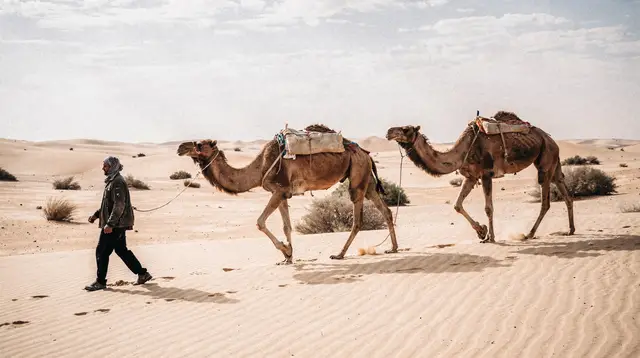
Daytime highs in the Douz and Ksar Ghilane area routinely climb into the low-to-mid forties Celsius through July and August, occasionally higher during a heatwave, with very little in the way of shade across most of the open desert terrain a Sahara excursion actually covers. Nighttime temperatures drop substantially once the sun sets, which is part of why “a night in the Sahara” remains a viable experience even in summer, but the hours between roughly ten in the morning and five in the afternoon are the genuinely difficult stretch, hot enough that sustained outdoor activity, walking dunes, a camel ride, time at an open camp, carries real physical risk rather than mild inconvenience.
Tunis weather, month by month covers the coastal picture, which is noticeably milder than the desert interior at the same time of year, worth understanding as a contrast before assuming Tunis-area summer heat gives an accurate sense of what the Sahara itself involves.
How this compares to a coastal summer
It’s worth being explicit about the gap between a hot day on the Hammamet or Sousse coast and a hot day in the desert, since the word “summer” covers both but the experience is genuinely different. Coastal towns benefit from sea breezes and the moderating effect of the Mediterranean, keeping daytime highs generally in the high twenties to mid-thirties Celsius even at the peak of summer, uncomfortable at worst but rarely dangerous with normal precautions.
The desert interior has none of that moderation, and the same summer week that’s a manageable beach holiday on the coast can be a serious heat-management challenge a few hours’ drive south. Tunis in summer covers the coastal and capital experience specifically, useful for understanding just how much the desert diverges from it.
Coastal summer versus desert summer, side by side
| Coastal towns (Hammamet, Sousse) | Sahara interior (Douz, Ksar Ghilane) | |
|---|---|---|
| Typical daytime high | 28–36°C | 40–46°C |
| Shade availability | Widespread, umbrellas and buildings | Minimal to none across most terrain |
| Sea/wind moderation | Significant, sea breeze cools the coast | None |
| Risk level | Standard sun-safety precautions | Genuine heat-illness risk without careful management |
| Recommended for most travellers | Yes, with normal precautions | Only with an operator experienced in summer adjustments |
How operators adjust a summer Sahara itinerary
Tour operators running Sahara excursions through the summer months don’t simply run the same itinerary as the rest of the year and hope for the best; the more responsible ones restructure the day around the heat specifically. Departures shift earlier, sometimes leaving the coast before dawn to cover as much driving as possible before the worst of the midday heat sets in. Camel rides and dune walks are timed for early morning or the hour before and after sunset rather than the middle of the day, and camps build in longer rest breaks during the hottest hours, sometimes with covered rest areas rather than open canvas.
A Sahara express tour from Tunis, Hammamet and Sousse and a 2-day Sahara exploration from Yasmine Hammamet and Sousse both follow this general pattern of adjusted summer timing, though it’s worth confirming the specific summer schedule with the operator directly rather than assuming every departure handles the heat identically.
Who should reconsider a summer Sahara trip
Heat-sensitive travellers, anyone with a cardiovascular or respiratory condition affected by extreme heat, and families with young children are the groups who should think hardest about a July or August Sahara excursion specifically, even if the rest of their Tunisia trip is timed for summer. The desert leg is genuinely more demanding than anything else on a typical Tunisia itinerary, more so than a hot afternoon at Dougga or the Bardo, both of which offer at least some shade and the option to retreat indoors.
Taking children into the Tunisian Sahara goes into this specifically for families, and the general advice there leans toward avoiding the peak summer months if a Sahara excursion is part of a family trip, favouring the more forgiving spring, autumn or winter windows instead.
If your trip is fixed for summer
Not every traveller has the flexibility to shift their whole trip to spring or autumn, and for anyone whose dates are genuinely fixed for July or August, a summer Sahara trip isn’t off the table entirely, it just needs more deliberate preparation than the same excursion at a milder time of year. Loose, breathable clothing that covers the skin rather than exposing it works better against direct desert sun than minimal clothing might intuitively suggest, alongside a wide-brimmed hat, high-factor sun protection reapplied through the day, and considerably more water than feels necessary at the outset, well beyond what a coastal day would require.
What to pack for a night in the Sahara covers the fuller packing list, and pairing it with a genuinely reputable operator experienced in summer scheduling, rather than the cheapest available departure, matters more for a summer trip than for any other season.
Recognising heat strain before it becomes a problem
Because the desert’s dry heat doesn’t always feel as oppressive in the moment as a humid climate might, it’s easy to underestimate how much fluid and shade the body actually needs until symptoms are already underway. Early signs of heat strain, persistent headache, unusual fatigue beyond what a long travel day would explain, dizziness or a stop in sweating despite the heat, are worth treating seriously and immediately rather than pushing through to the next stop on an itinerary.
Reputable guides and drivers on Sahara routes are generally well practised at spotting these signs in a group and will build in an unplanned rest stop if needed; it’s worth being honest with a guide about how you’re feeling rather than trying to keep pace with the rest of a tour group.
Children and older travellers are more vulnerable to heat strain than the itinerary’s pacing might assume, and it’s reasonable to ask a driver or guide to slow down or add shade breaks specifically for anyone in the group who needs it.
Ksar Ghilane’s hot spring in summer
Ksar Ghilane, the natural spring-fed pool at the southern edge of the Grand Erg Oriental included on some three-day Sahara routes, is worth a specific mention for summer visitors, since bathing in warm spring water might sound like an odd draw during already-hot weather. In practice, the pool and surrounding palm shade offer a genuine, if brief, respite from the exposed dune terrain nearby, and it’s one of the more pleasant stops on a summer itinerary precisely because it combines water, partial shade and a change of pace from walking across open sand. It doesn’t offset the broader heat challenge of a full summer desert trip, but as a single stop within a longer itinerary, it’s one of the better-managed parts of a hot-weather route.
Alternatives to a full desert excursion in summer
For travellers whose trip is fixed in the hottest months but who’d rather not commit to a demanding multi-day desert excursion, the coast offers a full holiday’s worth of activity without the same heat exposure. A scuba dive at the Takrouna wreck near Hammamet makes use of the sea’s cooling effect directly rather than fighting the season, and a Sidi Bou Said sunset trip from Hammamet times its main activity for the cooler evening hours in the same way a well-run Sahara camp would.
Neither substitutes for the Sahara itself if that’s specifically what draws you to Tunisia, but both are honest ways to fill a summer itinerary without the desert’s particular heat risk. Desert camps and bivouacs: what a night really looks like is worth reading regardless of season if a shorter, better-shaded desert stop appeals more than a full multi-day excursion.
Vehicles, air conditioning and the driving portion
It’s worth remembering that a large share of any Sahara excursion, in any season, is spent travelling rather than standing in open desert, and this cuts both ways in summer. The six-to-seven-hour coach transfer each way from the coast is air-conditioned on virtually all organised tours, which meaningfully reduces total heat exposure compared with what the daytime temperatures alone might suggest, since travellers spend a large part of the day in a cooled vehicle rather than outdoors.
The exposure that matters most is concentrated into the shorter windows actually spent outside the vehicle, at the camp, on a dune walk, or during a camel segment, which is exactly why well-run operators focus their summer adjustments on those specific windows rather than the journey as a whole. Camel trekking in the Tunisian Sahara covers what that particular activity involves in more detail, useful context for judging how much direct sun exposure a specific itinerary actually includes.
Choosing the right season instead
If your dates genuinely aren’t fixed, shifting a Sahara trip to late October through April removes the core problem rather than managing around it. Two-day or three-day Sahara tour: which one to book and Sahara tours from Tunis, compared both assume this more comfortable window as the default recommendation, and the best time to visit Tunis sets the desert’s calendar against the rest of the country’s, since Tunis and the coast can still be pleasant in months when the Sahara is at its most difficult.
The best time tool is useful for weighing a Sahara add-on against the rest of a trip’s timing if the desert isn’t the sole reason for your dates.
Mistakes to avoid
Frequently asked questions about the Sahara in summer
How hot does the Sahara actually get in July and August?
Daytime highs in the Douz and Ksar Ghilane area routinely reach the low-to-mid forties Celsius, occasionally higher during a heatwave, with very little natural shade across most of the terrain a standard excursion covers.
Is it dangerous, or just uncomfortable?
At the temperatures involved, it’s a genuine heat-illness risk for sustained outdoor activity during the hottest hours, not simply discomfort. Well-run tours manage this through timing and rest breaks, but the underlying risk is real.
Do Sahara tours still run in summer?
Yes, most operators continue running summer departures, generally with adjusted timing, earlier starts, activity shifted to cooler hours, and longer rest breaks during the hottest part of the day.
Is a summer Sahara trip suitable for children?
Generally not recommended for very young children on a full multi-day excursion; the heat risk is significant enough that spring, autumn or winter are considerably better windows for a family Sahara trip.
What should I pack differently for a summer desert trip?
More water than feels necessary, loose breathable clothing that covers rather than exposes skin, a wide-brimmed hat, and high-factor sun protection reapplied through the day. The full list is in what to pack for a night in the Sahara.
Is the night in the desert camp still cold in summer?
Nights are cooler than the day but generally milder in summer than in winter; a light layer for the evening is still worth having, though the dramatic overnight temperature drop typical of cooler months is less pronounced in July and August.
Should I avoid the Sahara entirely if my trip is only in summer?
Not necessarily, but it’s worth weighing carefully against a coast-focused alternative, and if you do go, booking with an operator experienced in summer scheduling matters more than it does at any other time of year.
When is the best time to visit the Sahara instead of summer?
Late October through April offers markedly more comfortable daytime temperatures for dune walks, camel rides and camp activities, with winter days often described as ideal: cool but not cold, with clear skies.
Sahara desert tours on GetYourGuide
Verified deep-linked GetYourGuide tours. Book through these links and we earn a small commission at no cost to you.
These are our own photographs of Tunisia, not the operator's pictures of this tour — open the tour page to see those.