Zaghouan and Thuburbo Majus in a day
Can Zaghouan and Thuburbo Majus be done together in a day from Tunis?
Yes, easily. Both sites sit within about an hour of Tunis and close to each other, so a half-day trip covers them comfortably, leaving room to add Oudhna or a mountain walk if you want a fuller day.
Zaghouan and Thuburbo Majus sit close enough to Tunis and to each other that they form one of the easiest Roman-heritage day trips available from the capital, requiring neither an early start nor a long drive. Zaghouan is a small mountain town best known for the monumental water temple that once fed Carthage’s aqueduct, while Thuburbo Majus, a short drive away, is a genuinely substantial Roman city site that receives a fraction of the visitors that Carthage or Dougga do, despite a forum, temples and bath complexes that would headline the itinerary in most other countries.
| Where | Zaghouan, 60 km south of Tunis; Thuburbo Majus a further 15 km |
| Cost | 10-15 TND (€3-4.50) for transport; site entry fees are modest, typically under 10 TND each |
| Time needed | Half day (5-6 hours); a full day if you add Oudhna or the Jebel Zaghouan hike |
| Getting there | Louage from Bab Alioua station, or car via the GP3 |
| Best time | Spring or autumn, especially if combining with a walk on Jebel Zaghouan |
Getting to Zaghouan and Thuburbo Majus
Louages to Zaghouan leave from the Bab Alioua station south of the Tunis medina, and the trip takes about an hour, with fares in the region of 7-8 TND. Thuburbo Majus lies off the main road between Zaghouan and Tunis, near the town of El Fahs, and is not well served by louage on its own — most independent travellers either drive or take a taxi from Zaghouan for the short remaining distance. This is a route where a car materially simplifies the day: you can visit Zaghouan’s water temple in the morning, backtrack slightly to Thuburbo Majus, and be back in Tunis by mid-afternoon without waiting on connections.
If you would rather not drive, the day trip from Tunis to Oudhna, Zaghouan and Thuburbo Majus covers all three in a single organised outing, adding the Roman amphitheatre at Oudhna along the way for a fuller Roman-heritage day than Zaghouan and Thuburbo Majus alone.
The temple of the waters
Zaghouan’s water temple, built under Hadrian in the second century, is a semicircular monument set against the base of Jebel Zaghouan, the mountain whose springs it was built to honour and channel. From here, Roman engineers ran an aqueduct roughly 70 km to Carthage, and sections of the arches that carried it are still visible along the modern road towards the capital — our water temple of Zaghouan guide covers the site and the aqueduct route in more detail.
The temple itself takes forty-five minutes to an hour to see properly, its niches and columns still legible despite centuries of exposure, and it is one of the more photogenic single monuments within easy reach of Tunis, set as it is against the mountain backdrop.
Thuburbo Majus: the quiet Roman city
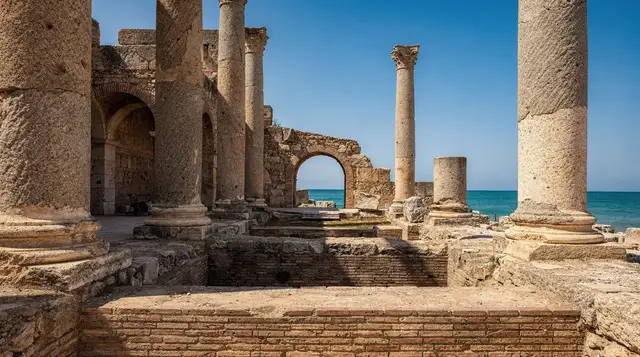
Thuburbo Majus began as a Numidian settlement before growing into a substantial Roman city under the empire, and what survives today is considerably more than a scattered ruin field — a forum flanked by a capitol with its columns still partially standing, a temple of Mercury, extensive bath complexes with surviving mosaic fragments, and a palaestra ringed by columns.
Because it draws far fewer visitors than Carthage or Dougga, you can often walk the site with nobody else in sight, which is part of its appeal for travellers who have found the more famous sites crowded. Our Thuburbo Majus guide covers the site’s layout stop by stop. Budget an hour and a half to two hours here — it rewards unhurried walking rather than a quick pass-through.
| Site | Approx. time | Highlight |
|---|---|---|
| Zaghouan water temple | 45-60 minutes | Hadrianic monument, mountain backdrop |
| Thuburbo Majus | 1.5-2 hours | Forum, capitol, baths, near-empty of crowds |
| Zaghouan old town | 30-45 minutes | Optional, small Ottoman-era quarter |
| Jebel Zaghouan hike | 2-3 hours | Optional add-on for hikers |
Zaghouan’s old town
Beyond the water temple, Zaghouan itself has a small, quiet old quarter climbing the lower slopes of the mountain, worth thirty to forty-five minutes if you have the time. It is not a major sight in its own right, but the combination of narrow streets and mountain views gives a sense of the town beyond the single monument most visitors come for.
Adding a mountain walk
For travellers with hiking interest, Jebel Zaghouan itself offers trails up into the pine and oak forest above the town, with views back down over the water temple and, on a clear day, out towards the coast. Our climbing Jebel Zaghouan guide covers route options — a shorter walk to a viewpoint takes under two hours round trip, while a fuller ascent needs closer to three. Adding this turns a half-day trip into a full one, and it is worth planning for if hiking is part of what draws you to Zaghouan specifically rather than the Roman ruins alone.
Extending to Oudhna
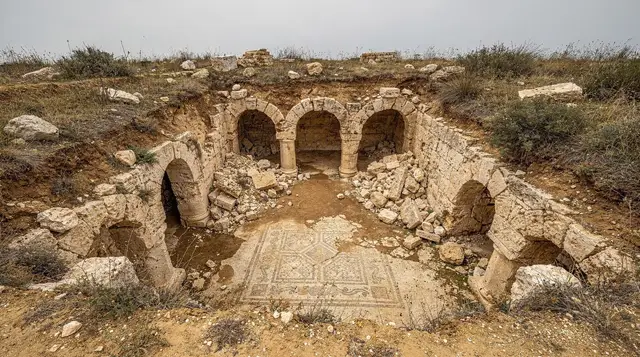
Between Tunis and Zaghouan, the Roman site of Oudhna (ancient Uthina) has its own amphitheatre and capitol, smaller in scale than Thuburbo Majus but a reasonable additional stop if you are driving the route yourself and have the time. Our Uthina (Oudhna) guide covers what to expect. The Oudhna and Zaghouan day tour with guide and lunch includes a sit-down meal as part of the day, which is a genuine convenience in this part of the country, where casual restaurant options thin out considerably compared to Tunis or the coast.
Combining with Dougga and Testour
Travellers who want to push further west can combine Zaghouan with Testour and Dougga on a single, longer day, effectively covering two clusters of Roman and Andalusian heritage sites in one outing. The day trip from Tunis to Testour, Dougga and Zaghouan is built for exactly this longer route, and our Testour and the Medjerda valley guide covers that pairing from the other direction if you would rather start there.
For a private, guided version focused specifically on the Roman sites around Zaghouan, the private Roman tour of Oudhna, Zaghouan and Thuburbo Majus keeps the day tighter and better suited to travellers who want a guide’s context without the extra driving to Testour.
For a broader sense of how these inland Roman sites compare to each other, our Roman sites near Tunis, ranked guide is a useful companion piece, and the best day trips from Tunis hub places this route alongside the coastal and desert alternatives.
A sample half-day timeline
A workable version of this trip, starting from Tunis, looks roughly like this: depart by 8.30-9am to reach Zaghouan within the hour, allowing time for the water temple and, if you want it, a short walk through the old town — call it ninety minutes to two hours at this first stop. From Zaghouan, the drive to Thuburbo Majus near El Fahs takes about twenty-five to thirty minutes on secondary roads. Plan for lunch either before or after Thuburbo Majus depending on what time you arrive, since neither Zaghouan nor El Fahs has restaurants that stay busy much past early afternoon.
Two hours at Thuburbo Majus, unhurried, brings you to mid-afternoon, leaving a comfortable drive back to Tunis with time to spare before evening. This pacing is deliberately conservative — travellers who move faster through each site, or who skip the old town in Zaghouan, can be back in Tunis by early afternoon instead, which is one reason this route works well as a half-day option for anyone also wanting to see something in Tunis itself the same day.
How this compares to other inland day trips
Readers deciding between this route and other inland options from Tunis often weigh it against the Testour-Dougga combination or the desert excursions further south. Compared to Testour and the Medjerda valley, the Zaghouan-Thuburbo Majus pairing is shorter, closer to Tunis and easier to do without an early start, though it lacks Testour’s distinct Andalusian character.
Compared to a Sahara tour from Tunis, it is an entirely different kind of day — a few hours of Roman archaeology close to the capital rather than a long-distance excursion into the desert. For travellers with only one inland day free and torn between Roman heritage and a Sahara taste, this guide’s honest answer is that Zaghouan and Thuburbo Majus suit a shorter, calmer day, while the Sahara options are a bigger commitment better suited to a two-day trip if time allows it.
Food near Zaghouan
Zaghouan and El Fahs, the town nearest Thuburbo Majus, both have simple local restaurants serving grilled meat, salads and Tunisian staples, generally at lower prices than Tunis or the coast — a full meal typically runs 10-18 TND (€3-5.50) per person. Neither town has much in the way of upscale dining, so if a more polished lunch matters to your day, a tour that includes it, such as the Oudhna and Zaghouan option with lunch, removes the guesswork.
Where this fits in a wider itinerary
For travellers building a longer stay around Tunisia’s Roman heritage, this route pairs naturally with the Roman Tunisia in five days itinerary, which also takes in Carthage, Dougga and Bulla Regia across a fuller trip than a single half-day allows. If your interest runs specifically to how the various inland sites near Tunis compare against each other in scale and preservation, our roman-carthage things-to-do hub collects the full set of guides in one place, which is a useful starting point if Zaghouan and Thuburbo Majus turn out to be just the first of several Roman sites you end up visiting during your stay.
Practical notes
Both sites are outdoors with limited shade, so sun protection and water matter in warmer months, and comfortable shoes are essential given the uneven ground at Thuburbo Majus in particular. Site entry fees are modest and typically payable in cash only at the gate. Because this route sees fewer foreign visitors than Carthage or Dougga, English signage at the sites is more limited — a guidebook, a guided tour, or some advance reading on the site’s layout adds considerably to what you get out of the visit.
Mistakes to avoid
Frequently asked questions about a Zaghouan and Thuburbo Majus day trip
How far is Zaghouan from Tunis?
About 60 km, roughly an hour by car or louage. Thuburbo Majus is a further 15 km or so, near the town of El Fahs.
Can I visit both sites without a car?
Zaghouan itself is reachable by louage from Bab Alioua station. Thuburbo Majus is harder to reach independently, since it sits off the main road and has no direct public transport connection — a taxi from Zaghouan, a rental car, or a guided tour are the practical options.
Is Thuburbo Majus worth visiting if I have already seen Dougga?
Yes. Thuburbo Majus is smaller than Dougga but shares the same forum-capitol-baths structure, and its near-total lack of crowds gives a different, more contemplative experience of a similarly significant Roman city.
How long does the Zaghouan aqueduct route take to drive?
The historic route between Zaghouan and Carthage runs roughly 70 km, and while you cannot follow the ancient aqueduct precisely by modern road, sections of the surviving arches are visible from the main road between Zaghouan and Tunis.
Is there an entrance fee at Zaghouan’s water temple?
Yes, a modest fee is charged, generally payable in cash at the site.
Can I hike Jebel Zaghouan as part of a day trip?
Yes, a shorter route to a viewpoint is achievable in under two hours round trip and fits into a half-day itinerary alongside the water temple, though it will mean skipping or shortening the Thuburbo Majus visit unless you have a full day available.
What is the best time of year for this day trip?
Spring and autumn offer the most comfortable walking conditions at both sites, and clearer visibility for anyone adding the mountain hike. Summer heat at Thuburbo Majus, with its limited shade, is considerably more demanding.
Is Oudhna worth adding to this route?
If you are driving yourself and have extra time, yes — it is a modest but worthwhile detour on the way from Tunis to Zaghouan. If your day is already full with Zaghouan and Thuburbo Majus, it is not essential.
Roman & Punic site tours on GetYourGuide
Verified deep-linked GetYourGuide tours. Book through these links and we earn a small commission at no cost to you.
These are our own photographs of Tunisia, not the operator's pictures of this tour — open the tour page to see those.