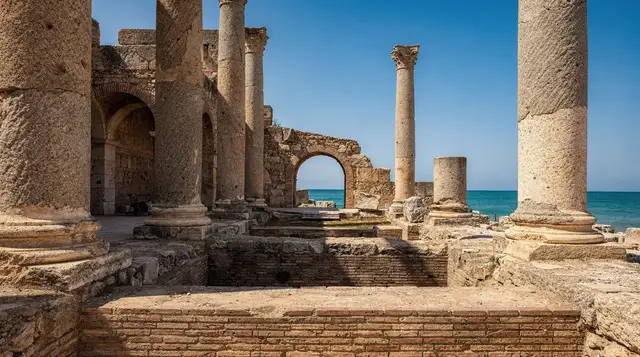
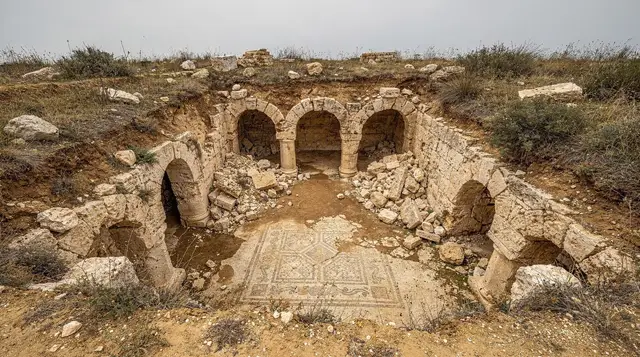
Hammam Lif sits on the southern shore of the Gulf of Tunis, at the base of Jebel Boukornine, a distinctive twin-peaked mountain that rises abruptly from the coastal plain. The town’s name literally means “hot bath,” a reference to thermal springs that once made it a fashionable resort — the Bey of Tunis kept a summer palace here in the nineteenth century. That golden period has largely passed, and today Hammam Lif is a modest, working town with little tourist infrastructure, visited mainly by hikers heading up into Boukornine National Park and by travellers curious to see a genuinely un-touristed corner of greater Tunis.
| Where | Southern shore of the Gulf of Tunis, at the foot of Jebel Boukornine |
| Cost | Free to walk the town; national park entry is a modest fee |
| Time needed | Half a day for the town, a full day including the hike |
| Getting there | Suburban train (banlieue Sud line) from Tunis, or taxi/louage |
| Best time | October to April for hiking; year-round for the town itself |
A resort town that time passed by
Hammam Lif’s thermal springs gave it its name and, in the nineteenth century, its reputation as a favoured retreat for Tunis’s ruling class. The Bey’s summer palace still stands, though in a state of disrepair that reflects decades of neglect rather than active preservation — it’s viewable from outside but not set up as a formal visitor attraction, and there’s a real chance you’ll find it fenced off or partially inaccessible depending on the year.
This is worth knowing before making a special trip: Hammam Lif rewards curiosity about faded grandeur more than it delivers a polished sightseeing experience, and travellers expecting something on the level of Dar Ben Abdallah or the Bardo’s restored halls will be disappointed.
What the town does deliver is authenticity. Unlike Sidi Bou Said or Hammamet, almost nothing here is set up for foreign visitors — menus are in Arabic and French only, prices are local, and English is rarely spoken. For travellers who’ve already covered the highlight-reel destinations and want a look at ordinary Tunisian coastal life, that’s precisely the appeal.
Jebel Boukornine and the national park
The main draw for most visitors is Boukornine National Park, covering the mountain that dominates the skyline above the town. The peak reaches roughly 576 metres, modest by international standards but a genuine climb from near sea level, with marked trails winding through Mediterranean scrubland (maquis) that stays green even when the coastal plain below turns dusty brown in summer. The reward at the top is a wide view back over the Gulf of Tunis, taking in Carthage, Sidi Bou Said and the city skyline from an angle almost no other vantage point in the region offers. Wildlife includes wild boar and a range of birdlife, and the park is genuinely popular with local hikers on weekend mornings, less so with foreign tourists.
Plan for two to three hours round trip for a moderate route, longer for a full ridge traverse. Water, proper shoes and an early start matter here — shade is limited on the upper slopes, and the climb is steep enough in places to be uncomfortable in full midday sun, particularly from May through September. Our hiking guide to northern Tunisia covers other trail options in the wider region for comparison.
| Trail option | Approx. duration | Difficulty |
|---|---|---|
| Lower loop trail | 1–1.5 hours | Easy |
| Main summit route | 2.5–3.5 hours round trip | Moderate |
| Full ridge traverse | 4–5 hours | Challenging |
The beach and the town centre
Hammam Lif’s beach is functional rather than beautiful — used by local families, particularly on weekends, but without the sand quality or facilities of resorts further south. It’s worth a walk for the atmosphere and the mountain backdrop rather than for a proper beach day; travellers seeking a swim should look to Hammamet or the Cap Bon coast instead. The town centre itself has a straightforward Tunisian market street, a handful of cafés, and little in the way of dedicated tourist shopping — most souvenirs and crafts are better sourced in Nabeul or the Tunis medina.
Shaping a day around the mountain
The simplest plan is to treat Hammam Lif as a morning on the trail followed by a slow, unhurried afternoon in town. Start early, before the slopes warm up, and keep the walk in the cooler part of the day. Afterwards, come down to the centre, find a café with a view of the street and let the pace of local life set the rhythm. Nothing here needs a ticket or a reservation, which is part of the charm: you can improvise, and if the weather turns you simply catch the train back.
If you are building a wider plan for the capital, Hammam Lif fits best as a change of pace between heavier sightseeing days. Our Tunis trip planning guide and the guide on how many days to spend in Tunis help you decide where a half-day like this belongs. For a tighter schedule, the Tunis in three days itinerary and the five-day itinerary leave natural gaps where an off-the-trail morning can slot in.
What to bring and how to dress
Boukornine is a proper hill walk, not a stroll, so dress for it. Sturdy shoes with decent grip matter more than anything else, since loose stones on the steeper stretches are easy to slip on. Carry plenty of water, a hat and sun protection, and a light layer for the summit, where the breeze can feel cooler than it did at the bottom. Cash is useful in town, and a charged phone with an offline map is a sensible backup if you wander off the main path.
In town, modest everyday clothing is the norm, as it is across most of Tunisia outside the big beach resorts. You will not need anything special, but covering shoulders and knees makes the day more comfortable and draws less attention. Our notes on female travellers in Tunisia and solo travel in Tunis cover the practical side of moving around on your own, which is relevant if you plan to hike without a group.
Why the hike suits the shoulder seasons
The mountain is at its most pleasant when the air is mild, and the cooler months are when local hikers fill the trails. If you are choosing your travel dates, look at Tunis in autumn and Tunis in spring, both of which describe the kind of weather that makes a morning on the slopes enjoyable rather than a test of endurance. For the full picture across the year, Tunis weather month by month is the better reference. In the hottest part of summer, shade is scarce and the effort of the climb is better swapped for a swim or a visit to somewhere cooler, as explained in Tunis in summer.
Pairing Hammam Lif with other stops
Because the town sits on a different rail line from the northern coast, it works best as its own outing rather than an add-on. A few combinations make sense without much backtracking:
- A relaxed day for people who like to move: hike in the morning, eat in town, and head back to Tunis for an evening in the medina or a stroll through the Ville Nouvelle.
- A coastal contrast: spend one day here and another on the opposite shore, in Carthage or Sidi Bou Said, to compare the two sides of the gulf.
- A beach day elsewhere: if the sea is the priority, our guide to the best beaches near Tunis and the page on Hammamet are better places to start.
For more ideas that take you beyond the usual highlights, browse best day trips from Tunis, which sets Hammam Lif in context alongside the bigger names.
Eating and resting after the walk
After a morning on the trail, simple food tastes better than it has any right to. Local cafés serve strong coffee and mint tea, and small restaurants offer the everyday dishes Tunisians eat at home. If you are unsure what to order, the Tunisian food guide explains the staples, and mint tea and café culture will help you read the rhythm of the café table. Take your time: nobody here is in a hurry to turn the table, and sitting for a while is part of the experience.
Getting around is straightforward once you know the options. The getting around Tunis guide and the notes on trains in Tunisia explain how the suburban line fits into the wider network, and taxis in Tunis is worth reading before you negotiate a ride back at the end of the day.
Reading the town’s past in what remains
Even without a restored monument to point at, Hammam Lif tells a story if you look for it. The mix of older buildings and later construction along the seafront hints at the resort the town once was, and the contrast with the busy, ordinary streets behind shows how much has changed. It is a quiet lesson in how fashions for holiday places come and go. For the longer view of how Tunisia’s rulers lived and left their mark, the Tunisian history timeline and the guide to medina palaces and dar museums offer places where that heritage is better preserved and easier to visit.
Getting there
Hammam Lif is reached by the “banlieue Sud” suburban rail line from Tunis, distinct from the TGM that serves the northern coast toward La Marsa — a useful distinction, since the two lines don’t connect directly and Hammam Lif can’t be added onto a Carthage-Sidi Bou Said TGM day without backtracking through central Tunis first. The train ride from Tunis takes roughly 25 to 35 minutes for a small flat fare.
Louages (shared taxis) and regular taxis also serve the route; a metered taxi from central Tunis runs somewhere around 20 to 30 TND depending on traffic. See our guide to louages explained if you haven’t used this shared-taxi system before — it’s cheap and efficient once you understand how it works, though it takes a bit of local knowhow to navigate confidently.
Excursions south from this side of the city
Hammam Lif’s position on the south side of Tunis puts it on the route toward several Roman sites that are typically approached from the capital rather than from the northern coast. The Oudhna and Zaghouan aqueduct excursion heads out this direction, covering the Roman amphitheatre remains at Oudhna and the striking water temple and aqueduct at Zaghouan.
A fuller version, the Oudhna and Zaghouan day tour with guide and lunch, adds a guided lunch stop, while the Oudhna, Zaghouan and Thuburbo Majus tour extends the day to include Thuburbo Majus, one of the better-preserved but less-visited Roman towns near the capital.
Travellers with more time can go further still with the Testour, Dougga and Zaghouan day tour, which links Zaghouan with Dougga, generally considered the best-preserved Roman town in North Africa, or a broader UNESCO World Heritage tour, which strings together several of the country’s most significant protected sites in a single organised day. None of these depart from Hammam Lif itself, but the town’s position on the southern approach to Tunis makes it a natural stop en route if you’re driving yourself.
An honest assessment
Hammam Lif is not a destination that competes with Sidi Bou Said, Hammamet or Carthage on conventional sightseeing terms, and it would be misleading to present it as a hidden must-see. Its value is specific: a genuine mountain hike with excellent views, a look at Tunisian coastal life without the tourist filter, and a curious, slightly melancholic old palace that speaks to a resort history most visitors never hear about. Go for the hike, treat everything else as a bonus, and don’t expect polished infrastructure.
Frequently asked questions about Hammam Lif
Is Hammam Lif safe to visit?
Yes, it’s a normal residential and working town without particular safety concerns, though as with anywhere off the standard tourist route, it helps to have a little French or Arabic, or a translation app, since English is rarely spoken.
How long does the Boukornine hike take?
The main summit route runs roughly 2.5 to 3.5 hours round trip for a moderate hiker; shorter loop options exist for those with less time, and a full ridge traverse can take 4 to 5 hours.
Can I visit Hammam Lif and Carthage in the same day?
It’s possible but inefficient, since the two are served by different rail lines that don’t connect directly — you’d need to change lines or take a taxi through central Tunis, adding significant time.
Is the Bey’s palace in Hammam Lif open to the public?
Access varies and is often limited to the exterior; don’t plan a visit around guaranteed interior access, and treat any museum-style visit as a pleasant surprise rather than the expectation.
What’s the best way to get to Hammam Lif from Tunis?
The southern suburban train line is the standard option, taking roughly 25 to 35 minutes, though louages and taxis also serve the route for those who prefer door-to-door transport.
Is there anywhere to eat in Hammam Lif?
Yes, a handful of local cafés and simple restaurants serve the town, priced for a local market rather than tourists — expect straightforward Tunisian fare rather than international options.
Do I need hiking experience for the Boukornine trail?
No prior experience is required for the main routes, though reasonable fitness helps given the steep sections; proper shoes and water are essential regardless of fitness level.
Why is the town called Hammam Lif?
The name references thermal hot springs that once supported a bathing and spa tradition here, which also drove the town’s development as a resort for Tunis’s elite in the nineteenth century.