Tunis or Marrakech?
Is Tunis or Marrakech better for a first North Africa trip?
Marrakech is more built for tourism, with a bigger, more visitor-oriented medina and a well-established travel infrastructure, but it's also busier and more heavily marketed. Tunis is quieter, cheaper on the ground, and pairs a genuinely calmer medina with unmatched Roman-era archaeology at Carthage and Dougga that Morocco doesn't have an equivalent of. Neither is objectively better; they suit different priorities.
Tunis and Marrakech get compared constantly, and for reasonable reasons: both are North African cities with a walled medina at their core, both sit within a few hours of genuine desert, and both are commonly framed as an accessible, relatively short-haul introduction to the region for travellers who haven’t been to North Africa before. The comparison is useful, but it also flattens two quite different trips into one question. This page sets out what each city actually offers, where the real differences in cost, crowding and character show up, and which priorities point toward one over the other, rather than treating them as interchangeable versions of the same holiday.
| Where | Tunis, northern Tunisia; Marrakech, southern-central Morocco |
| Cost | Tunis is generally cheaper on the ground for food, transport and modest hotels |
| Time needed | 4 to 7 days for either city plus a nearby excursion or two |
| Getting there | Both reachable on short-to-medium flights from most of Europe |
| Best time | Spring and autumn suit both destinations for similar reasons |
The medinas: scale versus calm
Marrakech’s medina is famous for a reason: it’s larger, denser and more intensely commercial than Tunis’s, built around Jemaa el-Fna square, a plaza that shifts from market stalls by day to food vendors and performers by night, unlike anything Tunis has as a direct equivalent. That scale comes with a trade-off, though, one that first-time visitors to Marrakech consistently mention: persistent touting, aggressive stall approaches and a medina genuinely built, at this point, around the tourist economy as much as local life.
The medina of Tunis is smaller and calmer, still a working commercial district with genuine local trade, spice stalls, tailors, metalworkers, rather than a space reshaped primarily around visitor spending. Neither is a wrong choice; it depends whether the intensity of Marrakech’s souks appeals or whether a quieter, more locally-anchored old town suits your trip better.
Roman and ancient history: an area where Tunisia stands apart
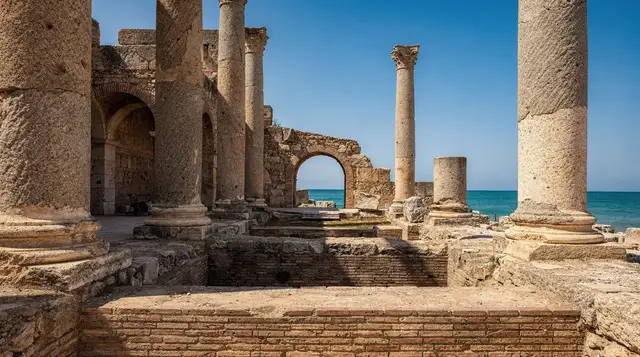
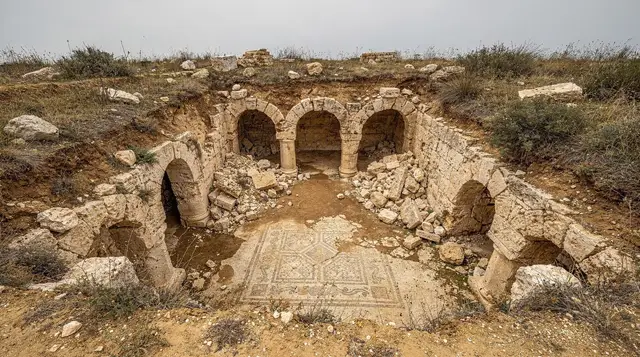
This is the clearest, least subjective difference between the two trips. Morocco has Roman-era sites, most notably Volubilis near Meknes, but nothing on the scale or density of what’s within striking distance of Tunis. Carthage sits within the city’s own suburbs, twenty to thirty minutes away, while Dougga, widely considered the best-preserved Roman town in North Africa, and El Djem’s amphitheatre, one of the best-preserved in the world, are both realistic day trips.
A Tunis-based trip can credibly build several days around Roman archaeology alone in a way a Marrakech-based one simply can’t, since Volubilis, while worthwhile, doesn’t offer the same density of comparable sites nearby.
Travellers whose main interest is ancient history rather than Islamic architecture specifically have a clear reason to lean toward Tunis on this point alone.
Cost: a real, measurable gap
Tunisia is genuinely cheaper on the ground than Morocco for most day-to-day spending, food, local transport, modest hotels and museum entry, though the gap has narrowed somewhat in recent years and both remain inexpensive by European standards.
What a trip to Tunis actually costs sets out real daily figures, and a mid-range Tunis day, hotel, three meals and local transport, tends to come in noticeably below the equivalent in Marrakech, where riad-style accommodation and the more developed tourist infrastructure both push prices upward. Neither city is expensive in an absolute sense, but for travellers weighing a longer trip or a tighter budget, the cost difference is real enough to factor in rather than treat as negligible.
Comparing the two trips side by side
| Tunis | Marrakech | |
|---|---|---|
| Medina character | Smaller, calmer, more local trade | Larger, denser, more tourist-oriented |
| Roman-era sites | Extensive: Carthage, Dougga, El Djem, Bulla Regia | Limited: Volubilis is the main site, further from the city |
| Cost on the ground | Generally lower | Moderate, riads and tours push costs up |
| Desert add-on | Sahara via Douz or Ksar Ghilane, 6-7 hours from the coast | Sahara via Merzouga, a comparable multi-day trip from Marrakech |
| Beach access | Cap Bon coast (Hammamet) within an hour | No comparable nearby beach; Essaouira is 2.5-3 hours away |
| Tourist infrastructure | Solid but less internationally developed | Highly developed, more English widely spoken |
Desert add-ons: similar structure, different starting point
Both cities work as a base for a genuine Sahara excursion, and the basic shape is similar: a long overland transfer, a night or two in a desert camp, and a return leg that dominates a multi-day trip either way.
From the Tunis side, excursions run via Douz and often Ksar Ghilane, typically departing from the Hammamet or Sousse coast rather than Tunis itself, a detail covered in more depth in Sahara tours from Tunis, compared. A 3-day tour from Tunis to the gates of the Sahara, Tozeur and Douz is a representative example of what this looks like in practice.
Marrakech’s equivalent runs via Merzouga on the Moroccan side, a similarly long overland journey with a broadly comparable desert camp experience. Neither desert add-on is dramatically better than the other; both deliver dunes, a night under canvas and a genuine sense of the Sahara’s scale, and the choice mostly comes down to which city is your base rather than a meaningful difference in the desert portion itself.
Beaches: a point clearly in Tunis’s favour
If a beach component matters to your trip, Tunis has a clear practical advantage that Marrakech doesn’t match. Hammamet and the wider Cap Bon coast sit within an hour to ninety minutes of Tunis, making a genuine beach stay, or even a beach day trip, straightforward to add onto a city-based itinerary.
Marrakech has no comparable nearby coast; Essaouira, the closest beach town, is two and a half to three hours away and has a distinctly different, cooler Atlantic character rather than the warm Mediterranean swimming Hammamet offers. For travellers wanting to combine old-town sightseeing with real beach time in one trip without a long additional transfer, this is one of the more concrete differentiators between the two destinations.
Weather and when to go
Both cities share a broadly similar seasonal logic, favouring spring and autumn over the heat of high summer, but the specifics differ enough to matter for planning. Tunis benefits from a Mediterranean coastal climate that keeps summer heat, while genuinely hot, more moderate than the desert interior a couple of hours away; the best time to visit Tunis sets out the detail.
Marrakech sits further from the coast and closer to arid, semi-desert terrain, which means its summer heat, often into the low-to-mid forties Celsius by July and August, arrives earlier in the season and hits harder than a comparable summer week in Tunis itself, closer to what the Tunisian Sahara in summer experiences than to coastal Tunisia. Winters in both cities are mild and a reasonable time to visit, though Marrakech’s evenings, given its inland, higher-elevation setting, run noticeably cooler after dark than Tunis’s in the same season.
Food: a genuinely different cuisine, not a variant of the same one
It’s worth correcting a common assumption before comparing food between the two: Tunisian and Moroccan cuisine are related but genuinely distinct, not variations on an identical North African template. Tunisian food leans more heavily on harissa and chilli heat as a baseline seasoning, uses couscous somewhat differently, and has its own specific dishes, brik, lablabi, ojja, that don’t have a direct Moroccan equivalent. Moroccan cuisine, associated abroad with tagines and pastilla, uses a different, often sweeter spice profile built around combinations like ras el hanout, and its own bread and pastry traditions.
Neither cuisine is a lesser or diluted version of the other, and travellers who’ve eaten extensively in Morocco shouldn’t expect Tunis to simply repeat the same flavours with a different setting; it’s a genuinely separate food culture worth approaching on its own terms. Tunisian food: a first-timer’s guide is a useful starting point for understanding what actually distinguishes it.
Language and everyday communication
French is widely spoken and understood across Tunisia’s tourism infrastructure, alongside Tunisian Arabic, and English coverage, while present in hotels and major sights, is less universal than in Marrakech, where the volume of long-established international tourism has pushed English fluency noticeably higher among guides, drivers and shopkeepers. Neither language gap is a serious obstacle for a first-time visitor to either city, but travellers with existing French rather than English will find Tunis marginally more comfortable to navigate independently, while those relying purely on English may find Marrakech’s tourist-facing infrastructure very slightly smoother on this specific point.
Which one suits which kind of traveller
Travellers whose main interest is ancient Roman and Punic history, who want a calmer, less touted medina experience, or who are weighing a tighter budget, have clear reasons to lean toward Tunis. A 3-day Sahara explorer tour from Tunis with meals and transfer pairs naturally with several days in the capital for exactly this kind of trip. Travellers drawn specifically to Morocco’s particular blend of Islamic architecture, the Atlas mountains as a nearby add-on, and a bigger, more intensely commercial medina experience are better served by Marrakech, which does that specific version of North Africa more thoroughly than Tunis attempts to.
Neither city is a lesser version of the other; they’re genuinely different trips wearing a superficially similar description. Travellers who’ve already visited one and are weighing a return trip versus trying the other should note that the two rarely disappoint by comparison, since the strongest features of each, Tunis’s archaeology and calmer pace, Marrakech’s scale and craft traditions, don’t directly overlap enough to make one visit redundant after the other.
Combining a beach stay with the desert from Tunis
For travellers who’ve settled on Tunis specifically, it’s worth knowing that the desert and beach elements combine more easily here than a first glance at the map might suggest, since Sahara departures already run from the Hammamet and Sousse coast rather than the capital.
A 2-day desert tour from Tunis, Sousse and Hammamet with a night under canvas or a Sahara express tour from Tunis, Hammamet and Sousse both make use of this, letting a beach stay serve as the launch point for the desert leg rather than requiring a separate return to Tunis in between. One week: Tunis and the Sahara lays out how the pieces fit together over a full week if this combination appeals.
Mistakes to avoid
Frequently asked questions about choosing between Tunis and Marrakech
Which city is cheaper to visit, Tunis or Marrakech?
Tunis generally runs cheaper on the ground for food, local transport and modest hotels, though both remain inexpensive by European standards and the gap has narrowed in recent years.
Does Marrakech have anything comparable to Carthage or Dougga?
Not really. Volubilis near Meknes is Morocco’s main Roman site, but it doesn’t match the density and preservation of what’s within reach of Tunis at Carthage, Dougga and El Djem.
Is the Sahara trip better from Tunis or from Marrakech?
Broadly comparable. Both involve a long overland transfer and a night or two in a desert camp; the choice mostly comes down to which city is your base rather than a meaningful quality difference in the desert leg itself.
Which medina is easier for a first-time visitor to navigate?
Tunis’s medina is smaller and generally calmer, with less persistent touting than Marrakech’s larger, more tourist-oriented souks, which some first-time visitors find overwhelming.
Is English widely spoken in Tunis?
Less universally than in Marrakech, though French is very widely spoken and understood across Tunisia’s tourism infrastructure, and English coverage at major sights and hotels is generally sufficient.
Can I combine a beach holiday with sightseeing more easily in Tunis or Marrakech?
Tunis has the clearer advantage here, with the Hammamet coast under 90 minutes away. Marrakech has no comparable nearby beach; Essaouira is a notably longer, cooler-water trip.
Which city suits a shorter trip better, four or five days?
Both work well for a shorter trip. Tunis fits Carthage, the medina and possibly Dougga into four to five days comfortably; Marrakech fits its medina, the Atlas foothills and perhaps a shorter desert taste into a similar window.
Is one destination safer than the other for tourists?
Both are well-established, heavily visited destinations with tourism-focused infrastructure and generally low risk for visitors exercising normal travel caution; neither stands out as meaningfully safer or riskier than the other on this basis.
Popular Tunis experiences on GetYourGuide
Verified deep-linked GetYourGuide tours. Book through these links and we earn a small commission at no cost to you.
These are our own photographs of Tunisia, not the operator's pictures of this tour — open the tour page to see those.