Utica has a claim that ought to make it more visited than it is: ancient sources suggest it was founded by Phoenician settlers before Carthage itself, making it one of the very first cities of its kind on this coast. When Rome destroyed Carthage in 146 BC, Utica, having sided with Rome, became the administrative capital of the new Roman province for a period, before Carthage was eventually rebuilt and reclaimed the role. Two thousand years of the Medjerda river depositing silt at its mouth has since pushed the coastline several kilometres away from the ruins, so a site that was once a working port now sits inland among farmland, a fact that is genuinely disorienting to take in once you know it.
| Where | Near Utique village, roughly 35 km from Tunis |
| Cost | Entry typically around 5-7 TND |
| Time needed | 1-1.5 hours |
| Getting there | Car or organised tour, around 40-50 minutes from Tunis |
| Best time | Morning, outside peak summer heat |
What survives, and what it means
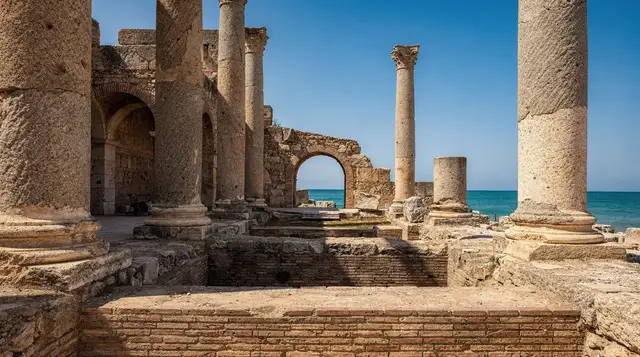
The visible ruins at Utica are mostly Roman rather than Phoenician; very little of the original Phoenician city remains above ground, partly because later Roman building reused the site and partly because so much of what would have been coastal infrastructure is now buried under farmland or lost to the shifting river mouth.
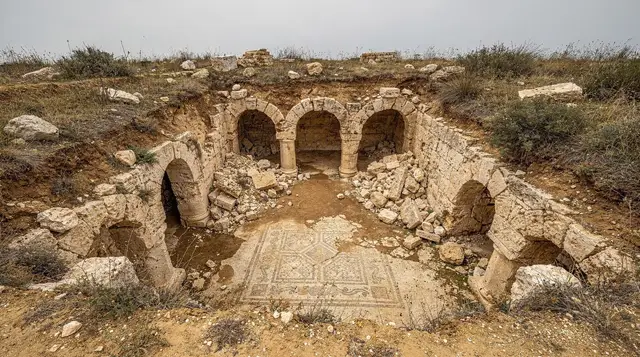
What you can see includes the remains of a Roman residential quarter, notably the House of the Cascade, named for a decorative water feature, with mosaic fragments still visible in places, along with a small on-site museum holding finds from excavations across the area. It is a modest, quiet site by the standards of Dougga or Carthage, and that quietness is genuinely part of the experience; you are likely to have long stretches of the ruins to yourself.
The gap between Utica’s historical importance and its current visitor numbers is worth being upfront about. This was one of the most significant cities on this coast for centuries, arguably older than Carthage, and today it receives a fraction of the visitors that far less historically pivotal sites see. The three thousand years of Tunisia timeline puts Utica’s founding into the wider sweep of the country’s history if you want the fuller picture beyond a single site visit. That is partly a function of the ruins themselves being less visually dramatic than Dougga’s hilltop setting, and partly just a matter of Utica sitting slightly off the more heavily marketed Tunis-Carthage-Sidi Bou Said corridor.
Getting to Utica from Tunis
Utica sits roughly 35 km from Tunis, generally a 40 to 50 minute drive depending on traffic leaving the city, on the route towards Bizerte. It is close enough to combine easily with a Bizerte day trip, and most organised tours that include Utica do exactly that, treating it as one stop within a wider loop of the north coast rather than a standalone destination.
| Option | Approx. time from Tunis | Notes |
|---|---|---|
| Private car / rental | 40-50 minutes | Straightforward, on the main road towards Bizerte |
| Louage from Tunis | Around 1 hour, with a short taxi or walk to the site | Reaches nearby Utique village; final approach to the ruins needs arranging locally |
| Organised day tour | Half or full day | Usually paired with Bizerte, Cap Angela or Ichkeul park |
| Bus | Slower, less direct | A car or organised tour is more practical for most visitors |
Utica, a Punic-Roman city, Bizerte, Cap Angela and the Ichkeul nature reserve is the most complete way to see Utica as part of a fuller day covering the far north coast, useful if you want the ancient site alongside Bizerte’s old harbour and the wetlands at Ichkeul. For a shorter version focused more tightly on the coastal stretch north of Utica, Bizerte, Utica and Cap Angela coastal discovery day trip covers similar ground with a slightly different emphasis.
The silting of the coastline, in more detail
It is worth spending a moment on the geography, since it is genuinely central to understanding the site. The Medjerda is Tunisia’s only permanent river of any real size, and for millennia it has carried sediment down from the interior and deposited it near its mouth, gradually building new land where there was once open sea.
Utica’s harbour, once busy enough to support one of the most important cities on this coast, silted up over centuries until it stopped functioning as a port entirely, a slow process that likely contributed to the city’s long decline through the late Roman and early medieval periods, well before any single dramatic event ended its importance. Similar silting affected other ancient harbours along this stretch of coast, but Utica is one of the clearest places to see the effect, since the ruins sit so far from the current shoreline that the original relationship between city and sea takes real effort to picture.
Archaeological work at the site has been intermittent rather than continuous, with periods of active excavation separated by long gaps, and current published research continues to revise details of the city’s layout and chronology. That ongoing uncertainty is worth knowing before you visit: some of what is written about Utica, including on interpretive panels at the site, reflects earlier scholarship that later work has since refined or partly revised, which is fairly normal for a site excavated in phases across more than a century.
The roman carthage things-to-do hub and the map tool are useful if you are plotting Utica against Carthage and the other Punic and Roman sites within reach of the capital.
Pairing Utica with Bizerte and the far north
Because of how close it sits to the main road north, Utica works naturally as an add-on to a Bizerte trip rather than a separate journey. Bizerte has the old fishing harbour, the kasbah and a genuinely pleasant waterfront that most people find easier to spend a longer stretch of time in than the more austere ruins at Utica. The Utica archaeological site guide covers the ruins in more depth if the history particularly interests you, and the coastal drive from Tunis to Bizerte guide covers the route as a whole, including where Utica fits along the way.
How to read the ruins once you are there
Utica rewards a slower pace and a little preparation. Before you arrive, it helps to hold three ideas in your head: the city is older than most of what you will see, the sea used to be close, and the Roman layer sits on top of earlier occupation that is mostly invisible. With those in mind, the low walls and floor fragments stop looking like a scatter of stones and start to read as a neighbourhood with streets, courtyards and a relationship to a harbour that no longer exists.
Start with the residential quarter and take your time over the floors. Mosaics at a quiet site like this are often seen without a crowd, which means you can look at the patterns, the borders and the worn edges rather than glancing over a shoulder. If the mosaics are what draw you to Tunisia in general, the Bardo Museum mosaics highlights guide gives you the comparison point, and Utica then feels like seeing the same craft in the setting it came from rather than behind glass.
From the ruins, look out across the surrounding farmland and try to place the old shoreline. This is the single most useful mental exercise at the site. The fields you are looking at were once water and quayside, and the whole logic of why a city was founded here only makes sense when you picture ships arriving where tractors now work.
Who Utica suits, and who should skip it
Utica suits travellers who like their history in layers and do not need a spectacle. It pairs especially well with a trip that already includes the bigger names, because the contrast sharpens both. After the scale of Carthage and the dramatic hilltop of Dougga, a quiet hour at Utica shows you the earlier, quieter chapter of the same story. The Carthage vs Dougga comparison is a good way to decide how to spread your Roman sightseeing, and the Roman sites near Tunis, ranked guide places Utica honestly among its neighbours.
It suits less well anyone travelling with a tight schedule and a short list of must-sees, or visitors who find ruins tiring after the first one or two. In that case, treat Utica as a brief stop on the way to the coast rather than a destination in itself. The best day trips from Tunis guide shows what else competes for the same day, and the north Tunisia road trip itinerary shows how Utica slots into a slower, more deliberate northern route.
Making a day of the north coast
The most satisfying way to use Utica is as the opening act of a longer loop. Start early, spend your first hour among the ruins while the light is good and the site is empty, then continue towards the water. The Cap Angela northernmost Africa guide covers the headland at the far end of that road, and the Ichkeul National Park guide explains the wetland that many tours add on the way back, a good option if you enjoy birds and open landscapes after a morning of stone.
If you would rather not drive yourself, an organised day trip that links Utica, Cap Angela and Bizerte is the kind of tour that handles the logistics, and the private vs group tours in Tunisia guide helps you decide which format suits your pace. For those who prefer to rent a vehicle and set their own timing, car hire in Tunisia covers the practical side.
Practical notes
The site has an on-site museum worth including in your visit, generally covered by the same entry ticket, with finds from Utica and the surrounding area including some genuinely striking mosaic fragments. There is minimal shade across the site, so a hat and water are worth carrying even for a relatively short visit. As with most smaller INP sites in Tunisia, facilities are basic, a ticket office and toilets, without food service, so plan to eat either in Bizerte or back in Tunis. The day trips hub and the Roman Tunisia in five days itinerary are worth checking if you want to fit Utica into a longer route rather than a single short outing.
Frequently asked questions about visiting Utica
Why is Utica considered older than Carthage?
Ancient sources place its founding by Phoenician settlers before Carthage’s traditional founding date, though the precise chronology is debated among historians; what is clear is that Utica was one of the earliest Phoenician settlements on this coast.
How far is the site from the modern sea?
Several kilometres, the result of two thousand years of silting from the Medjerda river, which has pushed the coastline steadily away from what was once a working port city.
Is there much to see, given how little survives?
The visible ruins are modest compared with Dougga or Carthage, but the residential quarter, mosaic fragments and on-site museum together make for a worthwhile hour to ninety minutes, particularly for anyone interested in the site’s historical significance rather than sheer visual scale.
How much does entry cost?
Typically around 5-7 TND, though prices for archaeological sites in Tunisia are periodically revised.
Can I combine Utica with Bizerte in one day?
Yes, this is the most common way to visit, since Utica sits on the direct route from Tunis towards Bizerte and adds relatively little extra driving time.
Is Utica suitable for a family visit?
It suits older children with some interest in history more than younger ones; the site is quiet and the ruins are modest, without much to actively engage very young visitors.
What is the House of the Cascade?
A Roman residential building at the site, named for a decorative water feature, with mosaic fragments still visible in parts of the floor, one of the more notable individual structures within the ruins.
Is Utica well signed for a self-guided visit?
Signage is present but limited compared with more heavily visited sites; a guide or a pre-read guide page adds useful context, particularly given how much of the site’s significance relates to history that is not obvious from the physical remains alone.