Tunis in winter
Is Tunis worth visiting in winter?
Yes. Daytime temperatures typically stay in the low-to-mid teens Celsius, rarely close to freezing, and rain arrives in short spells rather than washing out entire weeks. It's the cheapest, quietest season, ideal for museum visits and medina walks, though it's not a beach or Sahara-overnight season.
Winter in Tunis, December through February, is the season most easily overlooked, and that’s largely to its advantage for anyone who actually books it. It isn’t beach weather and it isn’t the season for an overnight Sahara camp, but for sightseeing, the medina, the Bardo, Carthage, Sidi Bou Said, it’s genuinely comfortable, and it comes with the lowest prices and thinnest crowds of the entire year. This guide sets out what the three winter months actually feel like on the ground, rather than assuming “winter” means something closer to a European December than a Mediterranean one.
| Temperature range | Roughly 12–17°C by day, cooler at night |
| Rainfall | The wettest season, though usually in short spells |
| Coastal crowds | Lowest of the year, aside from the Christmas/New Year fortnight |
| Sea temperature | Cold; not a swimming season for most visitors |
| Best for | Museums, medina walking, budget trips, quiet sightseeing |
December: mild by most standards, with a busy fortnight
Early and mid-December is genuinely quiet and mild, daytime temperatures typically in the mid-teens Celsius, comfortable for a full day of walking with a jacket for the evenings. The exception is the Christmas and New Year fortnight, when European demand for winter sun pushes prices up and the coast’s larger resorts see a noticeable, if temporary, uptick in visitors. Outside that specific window, December is one of the best-value months of the year to visit, with hotel rates well below their summer peak and the medina comfortable to explore without the queues that build later in the year at busier times.
A full-day private tour of the Cap Bon peninsula suits December well, mild enough for a comfortable day out, with far fewer other visitors competing for the same viewpoints and villages along the coast road.
January and February: the coolest, quietest, cheapest stretch
These are the two coolest months of the year, daytime temperatures typically in the low-to-mid teens Celsius, occasionally cooler on a genuinely cold snap, though frost is rare and snow essentially unheard of in Tunis itself. They’re also, without much competition, the cheapest and quietest months to visit: flights and hotels sit at their lowest annual prices, and sites that draw real queues in summer, the Bardo, Carthage, are comfortably walkable without crowds. Rain is more frequent than in any other season, but it tends to arrive in bursts rather than settling in for days at a time, and a proper waterproof jacket handles it without much disruption to a day’s plans.
| Month | Avg. daytime high | Rainy days (approx.) | Crowd level | Relative cost |
|---|---|---|---|---|
| December | 14–17°C | 8–11, more around holidays | Low, except Christmas/New Year | Low, except holiday fortnight |
| January | 12–15°C | 9–12 | Very low | Lowest of the year |
| February | 13–16°C | 7–10 | Very low | Lowest of the year |
A full-day tour across the Tunis governorate works well in January or February specifically because the sites it covers, the medina, Carthage, Sidi Bou Said, are at their least crowded, letting a single day cover considerably more ground comfortably than the same itinerary would in July.
Roman sites in winter: comfortable, if occasionally damp
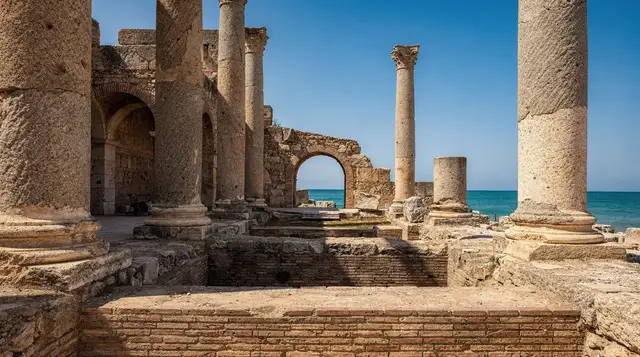
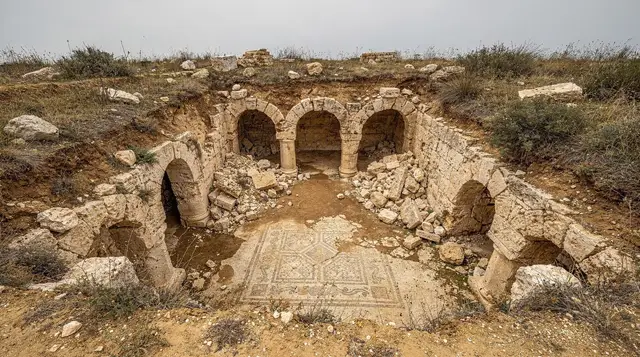
Winter avoids summer’s exhaustion problem at exposed sites entirely; walking around Dougga or Thuburbo Majus in January is genuinely pleasant, cool enough that fatigue isn’t a factor, though a wet-weather forecast is worth checking since these are open-air sites with limited shelter if a shower rolls through. A half-day tour to Dougga from Tunis remains a good option through winter, and operators generally adjust or reschedule around genuinely poor weather rather than running a soaked, miserable half-day regardless.
What winter isn’t good for
It’s worth being honest about winter’s limits. The sea is cold, genuinely too cold for swimming for the vast majority of visitors, so a beach-centred trip should be timed for a different season entirely; Tunis in summer or Tunis in autumn cover the better windows for that.
An overnight Sahara camp is also a harder proposition in winter, since desert nights away from the coast can drop close to freezing, workable with proper cold-weather gear but not the relaxed, warm-evening experience many visitors picture; daytime desert visits remain very pleasant, cool and clear rather than cold. Daylight hours are also noticeably shorter than in summer, worth factoring into how much a single day’s itinerary can realistically cover.
| Activity | How winter compares |
|---|---|
| Museum visits (Bardo, Carthage museum) | Excellent — quiet, comfortable, no queues |
| Medina walking | Excellent — cool enough for extended walking |
| Roman site visits | Good, weather permitting; check forecasts |
| Beach time | Poor — sea too cold for most visitors |
| Overnight Sahara camp | Workable with proper gear, but cold at night |
A longer winter day trip
A day trip covering Hammamet, Sousse, Kairouan and El Jem’s UNESCO sites is a long but genuinely comfortable itinerary in winter, since none of the stops involve the heat management that the same route would need in summer. It’s worth confirming daylight hours with the operator, since a winter day’s shorter light means an earlier start matters more than it would for the equivalent summer booking.
What to pack for a winter trip
A proper waterproof jacket is the single most useful item, more so than in any other season, along with layers for a temperature range that can shift several degrees between a sunny midday and a cool, damp evening. Comfortable, weatherproof walking shoes matter for the medina’s cobbled lanes, which can turn slippery after rain. the packing list tool adjusts its recommendations specifically for a winter trip.
Museums and indoor culture: winter’s strongest suit
Winter’s short, sometimes damp days actually suit museum-heavy itineraries better than any other season, since there’s no heat penalty for spending several hours indoors and no sense of wasting a rare sunny day on gallery walls. The mosaics of the Bardo, room by room is worth genuinely detailed attention in winter, when there’s no coach-tour crush pushing visitors past individual rooms faster than they’d like to move.
Dar Ben Abdallah, the museum of old Tunis housed in a restored medina mansion, and the Carthage national museum on Byrsa hill both make for comfortable, unhurried winter visits, and the museums of Tunis, ranked is a useful reference if a few wet afternoons need filling with a sensible order of priority rather than a scattered list.
Hammams: a winter-friendly indulgence
Cooler weather is, if anything, a better excuse than summer for a proper hammam session, and Tunis has a long-standing hammam culture that suits a grey winter afternoon particularly well. Your first hammam in Tunisia, step by step covers what to expect if it’s a new experience, and the best hammams in Tunis narrows down where to go. It’s a genuinely good way to build a rest day into a winter itinerary between more demanding sightseeing days, particularly if a spell of rain has made outdoor plans less appealing for an afternoon.
Building a winter day around the weather
The most practical way to handle winter is to stop planning days rigidly and treat the forecast as part of the itinerary. Keep two or three indoor options in reserve and one outdoor option for the brightest morning, then swap them as the sky dictates. A grey, showery day suits the Bardo or a slow lunch in the medina; a clear, cool one is better spent at Carthage or Sidi Bou Said, where the views are the whole point. Rainy-day activities in Tunis collects the fallback options, and the Tunis medina walking route works in either weather once the lanes have dried out.
Because winter days are short, the sensible rhythm is an early start, a long midday break indoors, and a quiet evening. Sightseeing that would fill a summer day with heat management instead fills it with comfortable walking, so most visitors find they can do more in the hours of daylight than they expected, as long as they begin early. Anyone building a first trip around these months will find Tunis in three days and Tunis in four days easy to adapt, simply by moving the open-air stops to the morning and the museums to the afternoon.
Eating and drinking in the cold months
Winter is when Tunisian food feels most at home. Warming bowls, slow-cooked dishes and glasses of hot mint tea suit the damp, cool afternoons far better than they suit a July heatwave, and the cafés that feel crowded in summer become pleasant places to sit out a shower. The Tunisian food guide explains the dishes worth seeking out, couscous and brik explained is a good primer before a restaurant lunch, and mint tea and café culture covers the habit of lingering over a glass that makes a rainy afternoon feel like part of the plan rather than a setback.
For something more hands-on, cooking classes in Tunis are a natural indoor choice when the weather turns, and restaurants in the Tunis medina helps choose somewhere warm and welcoming for a long lunch. Street snacks still work in winter too: street food in Tunis is easier to enjoy when you are not wilting in the sun.
Getting around when it rains
Wet weather changes how you move more than where you go. Cobbled medina lanes get slippery, open-air waits for transport feel longer, and a short walk can become a soaking one. Plan shorter hops between stops and keep the longer transfers for drier hours. Getting around Tunis sets out the options, taxis in Tunis is worth reading before relying on one in a downpour, and the TGM train to La Marsa is a dry, simple way to reach the coast on a day when walking the whole way would not be pleasant.
If a day trip is on the cards, a guided option removes much of the weather stress, since someone else watches the conditions and adjusts the plan. That is one reason a private format can be attractive in these months; private versus group tours in Tunisia compares the two honestly. For ideas on where to go, the best day trips from Tunis is the place to start, and Roman sites near Tunis, ranked helps decide which ruins are worth a winter morning.
A quiet winter afternoon on the coast
The coast is at its most atmospheric when it is empty. Sidi Bou Said loses its summer crowds, the cafés have space, and the whitewashed lanes can be photographed without a queue of other visitors in the frame. A winter afternoon in Sidi Bou Said captures how different the village feels out of season, and the cafés of Sidi Bou Said is useful for choosing somewhere to wait out a passing shower. It will not be a beach day, but it can be one of the most memorable afternoons of the trip.
Why winter is worth considering seriously
The case for winter isn’t just “it’s cheap,” though that’s a genuine factor covered in more detail in what a trip to Tunis actually costs. It’s that several of the city’s best experiences, a properly unhurried Bardo visit, an uncrowded walk through the medina’s souks, a Carthage visit without coach groups, are measurably better in winter’s thin crowds than at any other point in the year. The best time to visit Tunis weighs this against the other seasons directly, and Tunis weather, month by month has the specific monthly figures.
Mistakes to avoid
Frequently asked questions about winter in Tunis
Is Tunis cold in winter?
Not by most standards. Daytime temperatures typically sit in the low-to-mid teens Celsius; frost is rare and snow essentially unheard of in the city itself.
Does it rain a lot in Tunis in winter?
Winter is the wettest season, but rain generally arrives in short spells rather than settling in for days, and a good waterproof jacket handles it without much disruption.
Is winter the cheapest time to visit Tunis?
Yes, January and February in particular, outside the Christmas and New Year fortnight, which sees a temporary price and demand spike of its own.
Can I swim in the sea in winter?
Not comfortably for most visitors; the water is cold from December through February. Swimming trips are better planned for summer or early autumn.
Is a Sahara trip possible in winter?
Daytime desert visits are pleasant, cool and clear, but overnight camps can be genuinely cold; proper cold-weather gear matters if an overnight stay is part of the plan.
Are museums and archaeological sites open normally in winter?
Yes, with the same weekly closing days as the rest of the year; winter’s advantage is the near-total absence of queues and coach-tour crowding.
Is December a good month, or does it get busy?
Most of December is quiet and good value; the specific Christmas and New Year fortnight is the exception, with higher prices and more visitors on the coast.
What should I pack for a winter trip to Tunis?
A proper waterproof jacket, layers for variable daily temperatures, and comfortable, weatherproof shoes for the medina’s cobbled lanes after rain.
Seasonal experiences on GetYourGuide
Verified deep-linked GetYourGuide tours. Book through these links and we earn a small commission at no cost to you.
These are our own photographs of Tunisia, not the operator's pictures of this tour — open the tour page to see those.