Tamerza sits in the hills above the desert floor near the Algerian border, one of three mountain oases — alongside Chebika and Mides — that break up the otherwise flat, pale terrain west of Tozeur with canyons, springs and palm groves clinging to rock. Unlike the desert further south, this is a landscape of water carving through stone: gorges cut by seasonal streams, waterfalls that swell after winter rain, and an old village at Tamerza itself, abandoned after severe flooding decades ago and left standing as a genuine ruin rather than a managed heritage site. It’s one of the more overlooked stops in southern Tunisia, and one of the more rewarding for anyone willing to do some walking.
| Where | Western Tunisia, near the Algerian border, around 55 km from Tozeur |
| Cost | Free to walk the oases; small parking or guide fees possible at some entry points |
| Time needed | Half a day for one site, a full day for all three (Tamerza, Chebika, Mides) |
| Getting there | Around 1-1.5 hours’ drive from Tozeur; usually visited as part of an organised excursion |
| Best time | October to April; the waterfall and springs run fuller after winter rain |
Old Tamerza: a village left as a ruin
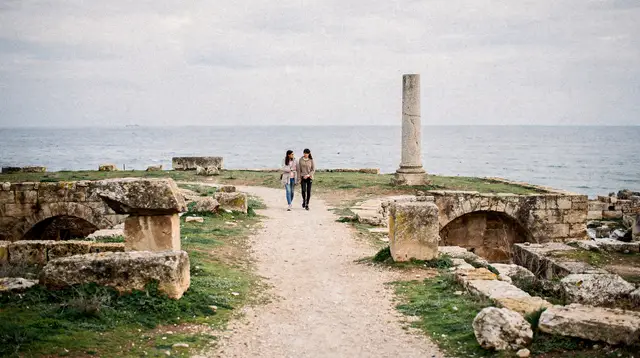
The most striking sight at Tamerza is the old village itself, a cluster of mud-brick and stone houses climbing the hillside above the current settlement, abandoned after catastrophic flooding in 1969 made the site unsafe to keep rebuilding on. Unlike many “old town” attractions elsewhere, nothing here has been restored or dressed up for visitors — walls are crumbling, roofs are gone in most houses, and you can walk freely through what were once family homes, kitchens and courtyards.
It’s an evocative, slightly melancholy place, particularly toward the end of the day when the light picks out the texture of the ruined walls against the surrounding hills, not unlike the pull of Sidi Bou Said or the old town of Kairouan elsewhere in the country, though the atmosphere here is emptier and considerably quieter.
Below the old village, a seasonal waterfall drops from the cliff into a pool, fed by the same spring system that once irrigated the oasis. Flow varies considerably with the season — a strong cascade after winter rain, reduced to a trickle or dry rock by late summer — so it’s worth setting expectations accordingly rather than assuming a dramatic waterfall year-round.
Chebika: a walk through the gorge
A short drive from Tamerza, Chebika sits at the mouth of a narrow gorge where a spring emerges from the rock and runs down through a channel shaded by palms, figs and oleander. The walk up into the gorge — following the water rather than a formal trail — takes twenty to forty minutes round trip depending on how far you go, past small pools and over rock scrambles that get progressively rougher the further in you walk. It’s an easy, low-commitment hike for most fitness levels at the lower stretches, with the option to push further for anyone wanting more of a scramble.
Chebika’s dramatic, water-carved landscape has also drawn film productions looking for terrain that reads as remote and otherworldly on screen, in the same way the Star Wars filming locations further south made use of the desert’s stranger corners.
Mides: the canyon on the border
Mides has the most dramatic scenery of the three, a deep canyon with sheer walls that runs close to the Algerian border — close enough that some approaches to the canyon edge require awareness of the frontier, and it’s sensible to stick to marked, commonly used viewpoints rather than wandering. The canyon was used as a filming location for The English Patient, among other productions, and standing at the rim looking down at the sheer, layered rock makes it obvious why: the scale and the light here are considerably more dramatic than most of the surrounding desert terrain.
| Oasis | Main draw | Walking involved |
|---|---|---|
| Tamerza | Abandoned old village, seasonal waterfall | Easy walking around the ruins and to the falls |
| Chebika | Spring-fed gorge, palm-shaded pools | Easy to moderate, 20-40 minutes |
| Mides | Deep canyon, dramatic rock walls | Easy walking to marked viewpoints |
How to pace the visit
The three oases reward a slow approach. Arrive with no fixed schedule beyond deciding which site you want to see first, and let the light and the crowds decide the rest. Old Tamerza suits the softer light of late afternoon, when the ruined walls take on colour, while the Chebika gorge is pleasant earlier in the day, when the water is cool and the palms still hold their shade. Mides works at almost any hour, though the rim is at its most photogenic when the sun lights the layered rock from the side rather than straight on.
Bring water and a hat, and leave room in the day for simply sitting. A lot of the pleasure here comes from stopping at a viewpoint, listening to the trickle of a spring and noticing how sharply the green of the palms cuts against the pale rock. If you are comparing this region with the better-known desert stops, Douz as a gateway to the Sahara offers a very different rhythm, built around dunes and open sky rather than stone and running water.
Why the mountain oases feel different
Most images of southern Tunisia show dunes, salt flats and open horizons. The mountain oases break that pattern. Here the story is water: it rises from springs, runs through narrow channels and keeps small groves of palms alive in a landscape that otherwise looks dry. Local people have long relied on this fragile supply, and the abandoned village at Tamerza is a reminder of how quickly that same water can turn from a resource into a danger.
It also helps to see these places in the wider context of the region. The oases belong to the same world as the date-palm towns around Tozeur and the mountain oases, and they add a layer to the Berber heritage of Tunisia that visitors often miss when they stay on the coast. Reading a little about the country’s past, for example in the timeline of Tunisian history, makes the ruins feel less like scenery and more like a chapter of a longer story.
Photography and quiet moments
The ruins, the gorge and the canyon each suit a different kind of photograph. In old Tamerza the subject is texture: crumbling walls, empty doorways and the contrast between mud-brick and sky. At Chebika it is the interplay of water, stone and foliage, best caught with patience rather than a rush. At Mides it is scale, with the canyon walls giving a sense of depth that a phone camera struggles to hold. Whatever you shoot, take a moment to put the camera down and look, because the stillness of these places is a large part of their appeal.
Be considerate when walking through the ruins. They are the remains of real family homes, so treat them with respect, avoid climbing on fragile walls and leave nothing behind.
Seeing all three in a day
Most visitors combine Tamerza, Chebika and Mides into a single day trip from Tozeur, since the three sites sit within a fairly compact area and the driving between them is short. A 2-day tour taking in El Jem, Matmata, Douz, Tozeur, Chebika and Tamerza is one practical way to fold the mountain oases into a wider southern Tunisia route without arranging each leg separately, and it’s a good fit for anyone who has already read up on Matmata’s troglodyte villages or is deciding between Douz and Tozeur as a base.
For a slightly different angle that pairs the oases with desert camping further into the Sahara, a 2-day private desert adventure taking in Sahara camps and ruins covers similar ground with more time spent overnight in the desert rather than back in town.
Travellers building a longer trip around several regions of the country might also look at multi-day itineraries covering the Sahara and the north together, which include the mountain oases as one stage within a much broader route. Compared with a rushed single day, this kind of longer itinerary allows for more time at each stop rather than treating Tamerza, Chebika and Mides as a single hurried checklist.
Beyond the oases: onward into the desert
For visitors who want to continue from the mountain oases straight into the deeper Sahara, a 3-day tour through authentic southern Tunisia links the canyons and springs here with the desert and Star Wars sites further south, while a 4x4 tour to Ksar Ghilane with a camel ride and time at the oasis is the natural next stop for anyone who wants to trade canyon walking for dune scenery and a warm spring.
The two landscapes — water-carved mountain oasis and open dune sea — are genuinely different experiences, and seeing both within the same trip gives a much fuller sense of what southern Tunisia actually looks like beyond the standard postcard images of Chott el Jerid and Ksar Ghilane.
Getting there and practical notes
Tamerza sits around 55 kilometres from Tozeur, roughly an hour to ninety minutes’ drive depending on conditions, with Chebika and Mides a short additional drive beyond it. The roads are generally paved and manageable in a standard rental car, unlike the sand tracks toward Ksar Ghilane, which makes this one of the more accessible half-day excursions from Tozeur for anyone without a 4x4.
Given the proximity to the Algerian border at Mides in particular, it’s worth sticking to marked paths and any guidance from local guides rather than pushing further than the established viewpoints. It’s also worth reading what to pack for the Sahara before setting out, since mornings in the hills here run noticeably cooler than the desert floor further south, even in the warmer months. Visitors driving themselves rather than joining a tour should also check general guidance on driving in Tunisia beforehand.
Fitting the oases into a wider trip
The mountain oases slot naturally into a southern loop. Many travellers pair them with a night in the desert or with the salt lake, and those who want a clearer sense of the options can compare them in the guide to Sahara tours from Tunis. If you are weighing a private arrangement against a shared one, the notes on private versus group tours in Tunisia explain the trade-offs. For a first trip that also takes in Roman and coastal sites, the UNESCO itinerary for Tunisia gives a sense of how the south complements the north.
If you are travelling with children or want to understand how demanding the desert side of the trip will be, the Sahara with kids is a useful companion read, and camel trekking in Tunisia covers another way to experience the landscape once you have finished with the canyons.
Mistakes people make at Tamerza
Frequently asked questions about Tamerza, Chebika and Mides
What’s the best of the three mountain oases if I only have time for one?
Mides has the most dramatic canyon scenery, Chebika the best short walk through a spring-fed gorge, and Tamerza the most atmospheric ruins. The choice depends on whether you’d rather hike, photograph a canyon, or explore an abandoned village.
How far is Tamerza from Tozeur?
Around 55 kilometres, roughly an hour to ninety minutes by road depending on conditions, with Chebika and Mides a short further drive beyond Tamerza itself.
Why was old Tamerza abandoned?
Severe flooding in 1969 damaged the village badly enough that residents relocated to safer, newer housing nearby, leaving the old settlement standing largely as it was, without significant restoration.
Is the waterfall at Tamerza always flowing?
No — flow depends heavily on recent rainfall and the season. Expect a fuller cascade after winter rain and a much reduced trickle, or dry rock, by late summer.
How difficult is the walk at Chebika?
The lower stretch of the gorge walk is easy and suitable for most fitness levels, taking twenty to forty minutes round trip. Going further in involves rougher rock scrambles for those wanting more of a challenge.
Is Mides safe to visit given its proximity to the Algerian border?
Yes, when visitors stick to the marked, commonly used viewpoints. It’s sensible to follow local guidance and not wander beyond established paths near the frontier.
Can I visit Tamerza, Chebika and Mides without a guide?
Yes, the roads are generally manageable independently in a standard car, though many visitors prefer an organised excursion that combines all three with other southern Tunisia stops in one trip.
Was Mides really used in film?
Yes, the canyon at Mides was used as a filming location for The English Patient, among other productions, chosen for its dramatic scale and rock formations.