Tunis and Tunisia: what people get wrong
I lost count of how many times, planning this trip, I described where I was going and got the same slightly confused pause back. “Tunis, or Tunisia?” It’s a fair question, since the two names sit one letter apart, but the confusion runs deeper than spelling, and I noticed it shaping my own planning in ways I only caught once I was there.
The basic distinction, stated plainly
Tunis is the capital city, home to roughly two and a half million people across its wider metropolitan area, sitting on the northern coast beside the Gulf of Tunis. Tunisia is the country, a strip of North Africa running from the Mediterranean coast in the north down to the edge of the Sahara in the south, bordered by Algeria and Libya. Tunis is to Tunisia roughly what a single city is to any country, an important part, often the first part visitors see, but a fraction of the whole.
| Tunis | Tunisia | |
|---|---|---|
| What it is | Capital city | Country |
| Population | Roughly 2.5 million (metro area) | Roughly 12 million |
| Size | A city | Slightly larger than England and Wales combined |
| What you find there | Medina, Bardo museum, Ville Nouvelle | Coastline, Sahara, Roman ruins, mountain towns |
Why the confusion isn’t trivial
It sounds like a pedantic distinction until you watch it shape actual trip plans. I met two separate travellers on this trip who’d booked a long weekend “in Tunisia,” meaning Tunis, and arrived expecting something closer to a full country’s worth of variety inside a 48-hour window in one city.
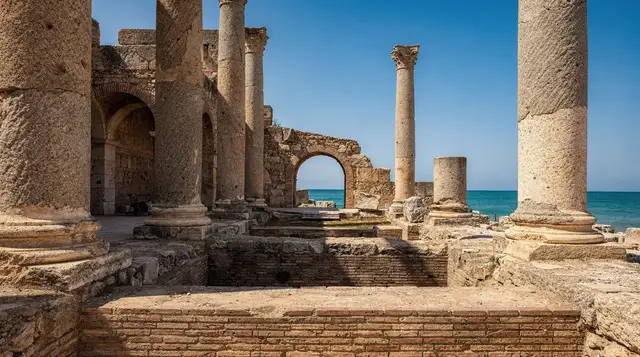
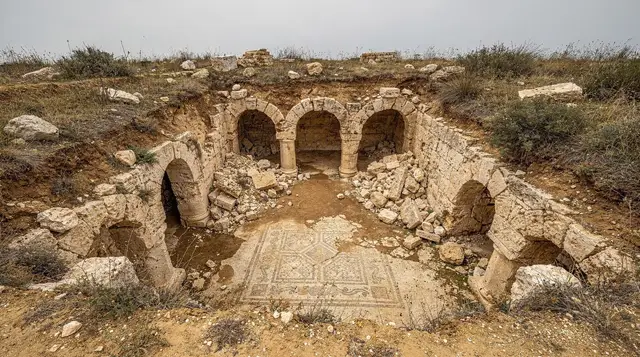
Tunis delivers plenty on its own, the medina, Carthage, the Bardo, but it doesn’t give you the Sahara, the Roman interior around Dougga and El Djem, or the coastline further south. How many days do you need in Tunis? answers the narrower question well; the wider question of how much of the country to see needs a different kind of planning entirely.
The scale problem
Tunisia is bigger than most first-time visitors expect, close in area to England and Wales combined, and the drive from Tunis to the Sahara towns around Douz or Tozeur takes the better part of a day by road. That’s not a criticism, plenty of countries are this size, but it means “seeing Tunisia” in three days is really “seeing a corner of Tunisia,” and being honest about which corner matters more than most itineraries admit.
| From Tunis to | Approximate driving time |
|---|---|
| Carthage, Sidi Bou Said | 30–45 minutes |
| Hammamet, Cap Bon | 1–1.5 hours |
| Kairouan, El Djem | 2–3 hours |
| Douz, edge of the Sahara | 6–7 hours |
| Tozeur | 6+ hours (or a short domestic flight) |
Climate and geography vary more than the name suggests
Tunis has a genuinely Mediterranean climate, mild wet winters and hot dry summers, comparable in feel to parts of southern Europe. The far south of the country, around Douz and Ksar Ghilane, is proper Sahara, arid and extreme in summer heat. Tunis weather, month by month and the best time to visit Tunis both cover the capital specifically; the same calendar month can mean a very different trip on the coast than in the desert. A visitor packing for “Tunisia in July” based only on what suits Tunis will be underprepared for how the south actually feels.
The Morocco comparison people reach for
A lot of first-time visitors mentally file Tunisia alongside Morocco, another North African country with medinas, souks and a French colonial layer to its history, and the comparison isn’t wrong exactly, just incomplete. Tunisia or Morocco for a first trip? goes into the actual differences, but the short version is that Tunisia is smaller, easier to cover in a single trip, and has a Roman and Punic layer of history, Carthage, Dougga, El Djem, that Morocco simply doesn’t offer in the same density. Tunis or Marrakech? narrows the comparison to the two capitals specifically if that’s the more useful question for your planning.
What “doing Tunisia properly” actually requires
A seven-day tour from north to south is close to the minimum I’d suggest for anyone who wants to genuinely see the country rather than just its capital, covering the coastal north, the Roman interior and a real taste of the Sahara without rushing any of it. For visitors with less time who still want to understand what lies beyond Tunis in a single day, a private full-day Tunisia highlights tour compresses several regions’ worth of context into a single guided outing, useful groundwork even if it can’t substitute for the real thing.
For visitors who genuinely have the time
If a week or more is realistic, a five-day private discovery tour strikes a reasonable middle ground, enough time to move beyond Tunis into the Roman interior and at least the edge of the desert without the seven-day tour’s full commitment.
One week: Tunis and the Sahara and Roman Tunisia in five days both lay out independent versions of similar routes if you’d rather arrange transport and stops yourself. A north Tunisia road trip in six days is the better option if the Sahara isn’t the priority and the coast and interior north of Kairouan are enough.
What Tunis alone is genuinely enough for
None of this is an argument against a Tunis-only trip; plenty of visitors, especially on a first, shorter visit, get real value from focusing entirely on the capital and its immediate surroundings. Planning a trip to Tunis covers that narrower, entirely valid version of the trip properly. The mistake isn’t choosing Tunis alone, it’s not realising that’s the choice being made, and building expectations around a country’s worth of variety that a long weekend in one city was never going to deliver.
Practical planning follows from the same confusion
Money, visas and safety questions get muddled by the same city-versus-country conflation. Visas and entry rules for Tunisia and money and payments in Tunisia are both national-level questions worth resolving before you fly, regardless of how much of the country you end up covering, and is Tunis safe? answers a narrower question than “is Tunisia safe,” which varies more by region, particularly near the southern borders, than a single answer can cover.
Mistakes to avoid
Frequently asked questions about planning a Tunis or Tunisia trip
Is Tunis worth visiting on its own, without seeing the rest of the country?
Yes. A long weekend focused entirely on Tunis, Carthage and Sidi Bou Said is a complete, satisfying trip in its own right and doesn’t need to be treated as incomplete.
How far is the Sahara from Tunis?
Around six to seven hours by road to towns like Douz on the edge of the Grand Erg Oriental, or a shorter domestic flight to Tozeur followed by a drive.
Does Tunisian weather vary much by region?
Considerably. The north and coast have a mild Mediterranean climate; the south, near the Sahara, is far hotter and drier, especially from June to August.
Is Tunisia the same size as Morocco?
No, Tunisia is notably smaller, which is part of why it suits a single trip of a week to ten days better than Morocco often does.
What’s the minimum time needed to see beyond Tunis properly?
Realistically five to seven days, enough to reach the Roman interior and at least the edge of the Sahara without a punishing pace.
Do visa rules differ for Tunis versus the rest of Tunisia?
No, entry rules apply nationally regardless of which regions you visit; check current requirements before travelling regardless of your itinerary’s scope.
Is it possible to see “everything” in Tunisia in one trip?
Not comfortably. Even a seven-day north-to-south tour covers highlights rather than everything; the country rewards a second visit as much as it satisfies a first.
Should first-time visitors choose Tunis alone or a wider Tunisia trip?
It depends on time available: three to four days suits a Tunis-focused trip well, while five days or more makes a wider national trip worthwhile without feeling rushed.
tours.Trip planning
Verified deep-linked GetYourGuide tours. Book through these links and we earn a small commission at no cost to you.
These are our own photographs of Tunisia, not the operator's pictures of this tour — open the tour page to see those.